From tailored short cuts to relaxed resort-ready fits, the brand’s latest swimwear drop proves that great vacation style starts long before you reach the water.
Some are built for swimming; others for lounging in an infinity pool with a negroni in hand. Orlebar Brown’s latest launch manages to achieve both activities effortlessly.
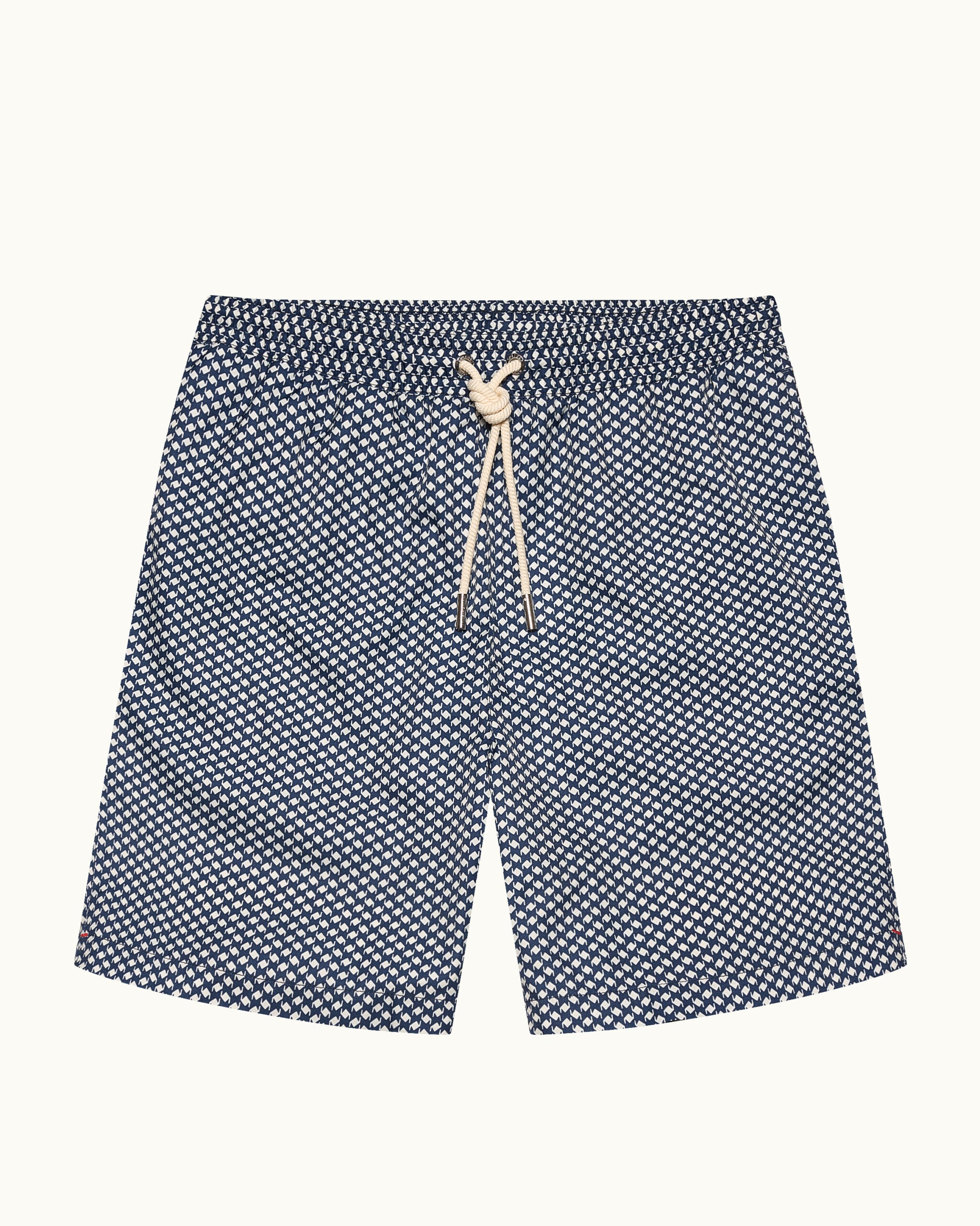
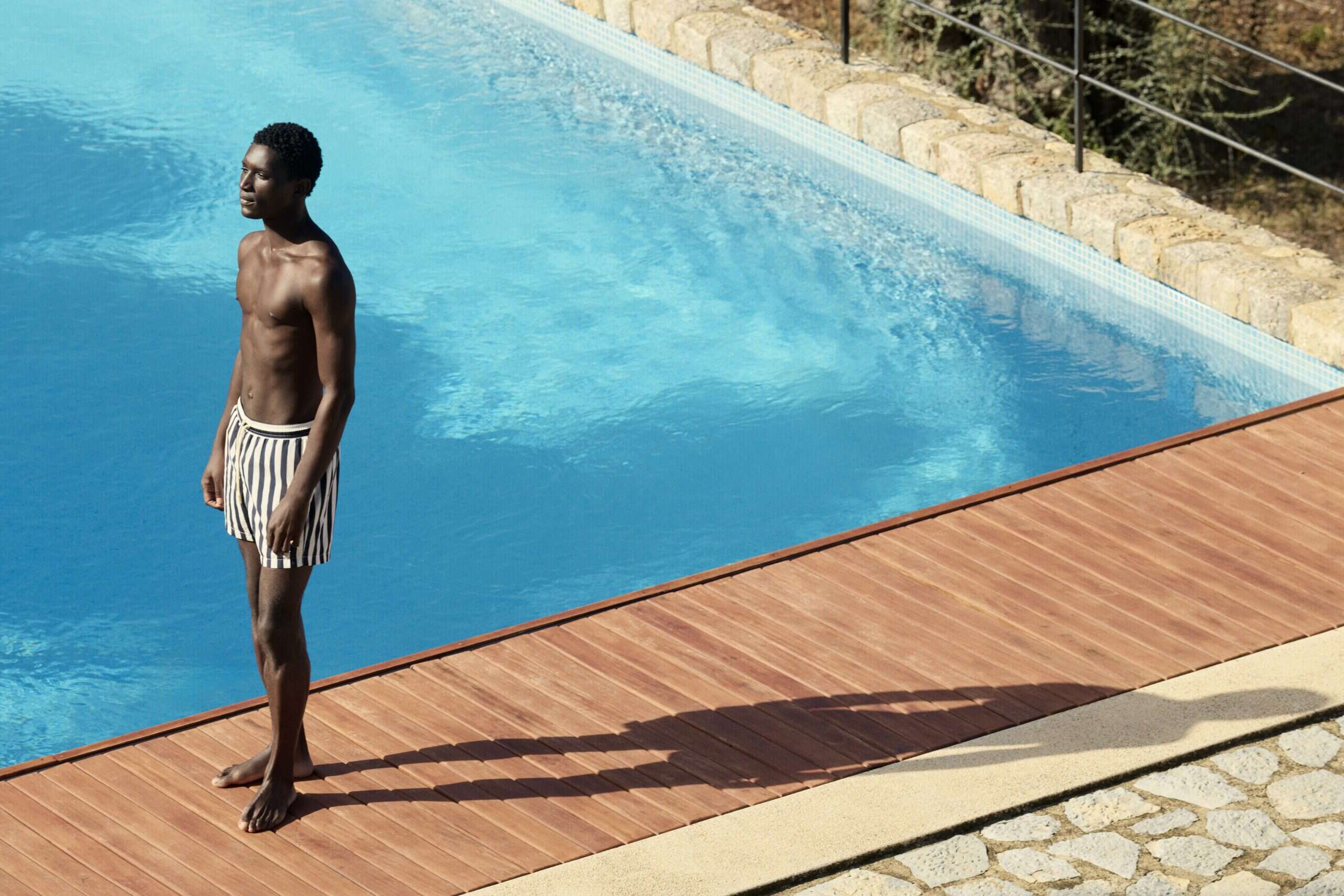
The brand is expanding upon its men’s swimwear range with three new swim short styles: the Jack, the Boxer, and the Mastiff. The names are coined from the length and shape of the briefs, rather than canine breeds. The Jack offers a short, tailored style; the Boxer, a mid-length cut; and the Mastiff, a longer, looser fit. They join Orlebar Brown’s classic, side-adjuster swim-trunk style that is based on the pattern of men’s tailored trousers.
The result of more than two years’ of experimentation and refinement, the shorts have been designed to allow for adaptability as well as an elegant silhouette. All three styles have all been engineered to sit almost flat at the front, with the gathering discreetly pushed to the back and extra room offered around the waist, hips, and legs.
Lovingly crafted in Italy, the shorts feature fabric made from recycled plastic, finished with elevated details such as eyelets and cord ends in silver or gold. The color palette ranges from timeless neutrals – think granite, elephant grey, and herbal green – to statement patterns such as Vermillion Stripe and Passetto Print. Every pair has been tested in chlorinated water, comes packaged up with a durable water-resistant drawstring bag, and is backed by a five-year guarantee.
Crucially, the collection acknowledges that no two holidays – or holiday dress codes – are the same. You might enjoy lengthy club lunches in conservative attire or perhaps you prefer more active rock pooling or ocean snorkelling sessions. With options spanning half-elasticated, side-adjusted and fully elasticated waistbands, Orlebar Brown’s latest launch offers a fit for every itinerary.
Shop Orlebar Brown’sJack and Boxers in stores and online now. The Mastiff arrives in May 2026.
Paris may have one dominant private aviation hub, but it is far from a one-airport city. Here’s where to land by private jet in the French capital, based on your aircraft, itinerary, and final destination.
Is staring mindlessly out the window the route to increased creativity? Neuroscientist and author Nicole Vignola argues that giving our brain time to breathe is the secret sauce of the most visionary leaders.
Constantly on, constantly doing, thinking that more activity means more output. But what if I told you that the secret to doing more is learning when to do less?
We often view downtime as inefficiency, so we fill every moment by sending emails between meetings, listening to podcasts while commuting, or scrolling while waiting for a coffee. Constant stimulation taxes the cognitive systems vital for insight, decision-making, and creativity — creativity that extends into problem-solving, work innovation, and appreciating family life.
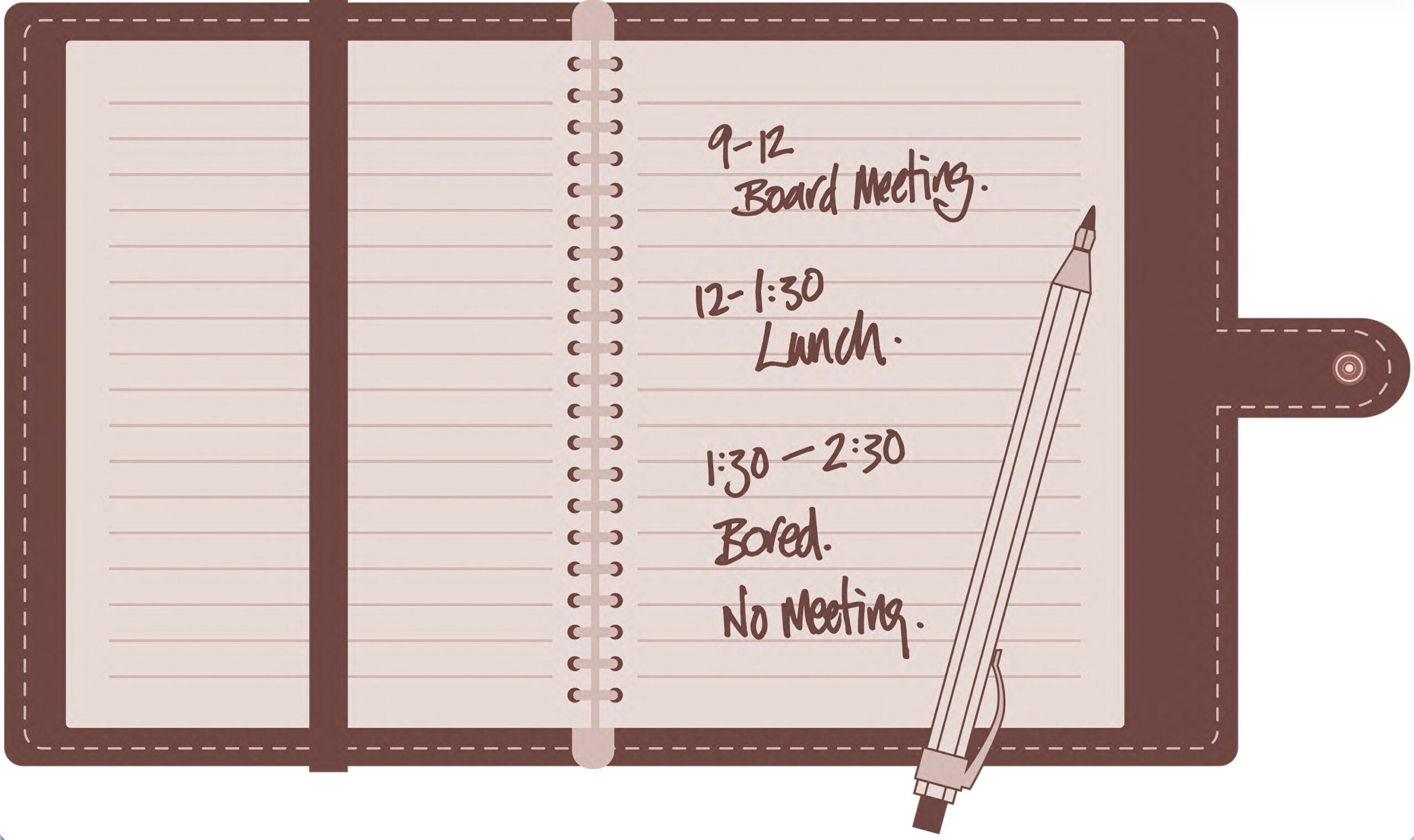
From a neuroscience perspective, when the mind is free from external input, it begins integrating information, finding creative solutions, and generating new ideas. Which is why leaders who allow space for boredom are often the ones who think more clearly, solve problems faster, and make better decisions.
This is why embracing boredom is such a pro-level brain hack. By resisting the reflex to reach for stimulation, you begin rewiring the brain to tolerate quiet moments. Sometimes the most powerful thing you can do is resist the reflex, sit with the quiet, and let your mind wander.
You know the creative thoughts and ingenious ideas that arise when you’re doing something mundane rather than highly productive? That’s the work of a network in the brain called the Default Mode Network (DMN) responsible for daydreaming and reflection that becomes active when the brain is not focused on external tasks.
On the other hand, tasks such as problem-solving or analyzing information take place in the Central Executive Network, which helps you focus, make decisions, and direct your attention toward a goal. These two networks work in tandem, meaning when one is on, the other’s off.
Allowing the DMN to fully activate is crucial because it integrates information, reflects on experiences, and connects ideas across different parts of the brain, generating valuable insights. However, if we’re constantly busy and stimulated, and never provide this network with time to operate, these thoughts accumulate and build up.
This backlog is often the source of rumination when the mind finally slows, as the brain attempts to process what it previously lacked the time to resolve. This can cause middle-of-the-night awakenings, replaying thoughts, and problem-solving, preventing you from falling back asleep. Daytime DMN activation reduces the need for your brain to process them at night.
If you never allow time for boredom, the mind never has the chance to listen to its own signals. Yet some of your most important decisions and realizations will emerge only when your mind is given space to wander.
In a world that rewards constant activity, boredom has quickly become one of the most powerful tools for protecting our mental currency. Boredom restores clarity, strengthens decision-making, and allows deeper thinking to emerge. The paradox is simple: the more space you allow the mind, the more effectively it works for you.
Your brain has a finite amount of daily cognitive resources, what I call ‘mental currency.’ Every thought, decision, action, behavior, and habit runs on tiny little electrical impulses driven by an excitatory neurotransmitter called glutamate. But recycling glutamate comes at a cost. In order to maintain an efficient supply all day, the brain must continually expend energy to clear, replenish, and recycle it — and it does this best when you give it a break.
My research looked at individuals who grab their phones with the perceived idea that they’re taking a mental break, when in fact they’re still pulling on those same cognitive resources that fuel the brain. When we compared executive function measured by reaction time and decision-making accuracy, those who took a proper strategic break of 15 minutes had higher scores.
That’s because stimulating activities cause a build-up of glutamate, which leads to mental fatigue, fragmented attention, and poor decision-making — and is why mistakes typically increase later in the day.
This is why boredom is important. The brain needs moments of mental space to reset and recover after intense focus. These short breaks restore metabolic balance, regulate neurotransmitters, and, crucially, prepare for the next cycle of high-quality thinking.
Another reason why boredom feels so uncomfortable is because of dopamine — the neurotransmitter that motivates us to seek rewards, novelty, and information. Today, this system is constantly being triggered by digital platforms designed to capture our attention. Every time you check notifications or refresh your feed, your brain receives a small but pleasurable pulse of dopamine in anticipation of something new.
The problem is that when we repeatedly stimulate the reward system, the brain gradually adapts, meaning the same stimulus produces a smaller response of enjoyment over time. So we need more novelty, more scrolling, to feel the same level of enjoyment.
This is why embracing boredom is such a pro-level brain hack. By resisting the reflex to reach for stimulation, you begin rewiring the brain to tolerate quiet moments. Sometimes the most powerful thing you can do is resist the reflex, sit with the quiet, and let your mind wander.
You know the creative thoughts and ingenious ideas that arise when you’re doing something mundane rather than highly productive? That’s the work of a network in the brain called the Default Mode Network (DMN) responsible for daydreaming and reflection that becomes active when the brain is not focused on external tasks.
On the other hand, tasks such as problem-solving or analyzing information take place in the Central Executive Network, which helps you focus, make decisions, and direct your attention toward a goal. These two networks work in tandem, meaning when one is on, the other’s off.
Allowing the DMN to fully activate is crucial because it integrates information, reflects on experiences, and connects ideas across different parts of the brain, generating valuable insights. However, if we’re constantly busy and stimulated, and never provide this network with time to operate, these thoughts accumulate and build up. This backlog is often the source of rumination when the mind finally slows, as the brain attempts to process what it previously lacked the time to resolve. This can cause middle-of-the-night awakenings, replaying thoughts, and problem-solving, preventing you from falling back asleep. Daytime DMN activation reduces the need for your brain to process them at night.
If you never allow time for boredom, the mind never has the chance to listen to its own signals. Yet some of your most important decisions and realizations will emerge only when your mind is given space to wander.
In a world that rewards constant activity, boredom has quickly become one of the most powerful tools for protecting our mental currency. Boredom restores clarity, strengthens decision-making, and allows deeper thinking to emerge. The paradox is simple: the more space you allow the mind, the more effectively it works for you.
Equipped with four Volvo Pentas good for 4,000 hp, the Zeelander 8 hit 40 knots during sea trials. Equipped with four Volvo Pentas good for 4,000 hp, the Zeelander 8 hit 40 knots during sea trials.
The mercury is rising and heat is sweltering. The last thing anyone wants right now is to turn on the cooker. Yes, take-out is an option, but what about when you still want to flex your culinary skills and keep cool?
We asked leading chefs to share their best heatwave-friendly recipes – no stove needed. From zesty, citrussy salads to soy-soaked smashed cucumbers, these dishes lean in heavy on flavor while simultaneously keeping the cook and the kitchen cool.
Six heatwave recipes to try now
The Bouquet — Petros Dimas
Hosting a dinner party and need to impress? Try The Bouquet – a simple but beautiful take on a side salad by Makris chef Petros Dimas.
Ingredients:
— 30-40 pieces of seasonal salad leaves, green, edible flowers, and herbs
— 2-3 chive stalks
For the vinaigrette:
— 10ml extra virgin olive oil from the farm
— 10 ml aged vinegar from the farm
— 5ml lemon from the farm
— pinch of salt
— pinch of pepper
— 10g macadamia nuts
— 10g parmesan-style cheese
— 10g pear pearls
Method:
For the dressing:
Stir all the ingredients of the vinaigrette so they are well combined. The goal is to combine the liquid ingredients without breaking the nuts or pearls.
Bundle the selection of leaves, flowers, and herbs together, and tie it together with chive stalks rather than string as you would a regular bouquet. Place the tied bouquet on the center of a soup plate, and pour the vinaigrette on top.
Smashed cucumber salad with soy, ginger, sesame, and fragrant basil — Luke Selby
“When the weather is hot, I always gravitate towards dishes that require very little cooking but deliver plenty of freshness and flavor,” says Luke Shelby, former head chef at Le Manoir aux Quat’Saisons, and chef partner at Pale Hall. “Smashed cucumber salads are a staple across Asia for good reason.” Selby’s cucumber salad could be used as a side for salmon or grilled chicken, or simply served alone as a light, refreshing supper.
Ingredients:
— 2 large cucumbers
— 2 spring onions, finely sliced
— 1 red chilli, finely sliced
— A generous handful of coriander leaves
— A generous handful of fragrant Thai basil leaves, torn
-1 tbsp toasted sesame seeds
— crispy shallots (optional)
For the dressing:
— 1 thumb-sized piece of ginger, finely grated
— 2 cloves garlic, finely grated
— 3 tbsp light soy sauce
— 2 tbsp rice vinegar
— 1 tbsp toasted sesame oil
— 1 tsp honey
— juice of 1 lime
Method:
Using the flat side of a large knife or a rolling pin, gently smash the cucumbers until they split. Tear them into bite-sized pieces and place in a colander with a generous pinch of sea salt. Leave for 15 minutes to draw out excess moisture before patting dry.
Whisk together the soy sauce, rice vinegar, sesame oil, honey, lime juice, grated ginger, and garlic to create the dressing.
Transfer the cucumbers to a serving bowl and gently toss with the dressing, spring onions, chilli, coriander and fragrant Thai basil. Finish with toasted sesame seeds and, if desired, a scattering of crispy shallots for extra crunch.
Allow the salad to rest for 10 minutes before serving so the cucumbers can absorb the dressing.
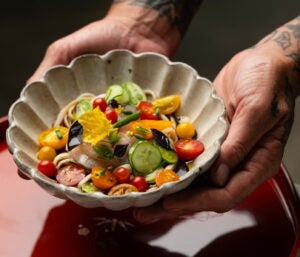
Tomato and cucumber somen with sashimi, Kyle Connaughton
“We like to lean into the Japanese concept of shokibarai, which translates to foods that ‘ward off the summer heat,’” says SingleThread owner/head chef, Kyle Connaughton. “These dishes take the best ingredients of the summer and make a cooling lunch or dinner that has an incredible, invigorating, electrolyte-like quality.” Connaughton’s fresh sashimi noodle recipe does require turning the stovetop on to boil water, but the pay off is worth it.
Ingredients:
— 1 small cucumber sliced into thin rounds
— 3 teaspoons sea salt
— 3 ½ cup dashi
— 1 cup ponzu sauce
— 2 bunches somen noodles
— 4 ounces sashimi grade hamachi/yellowtail
— 10 small cherry tomatoes, halved or quartered
— 1 tablespoon extra-virgin olive oil
— 1 tablespoon light sesame oil (untoasted)
— 2 teaspoons sesame seeds
— 12 small basil Leaves
— 8 shiso leaves, green or red or a mix, roughly torn into pieces
— Edible flower petals, such as nasturtium, or flowering baby cucumber
Method
Toss the cucumber with the salt in a small bowl and chill in the refrigerator. In a separate bowl combine the dashi, ponzu, and chill. Bring water to the boil and add the dried somen noodles to the boiling water and cook for about five minutes until tender.
Slice the hamachi sashimi into 12 thin slices. Transfer the fish to a plate and chill in the refrigerator while you prepare the bowls.
Drain the somen and then run them under cold water. Immediately portion the somen noodles into four bowls. Quickly rinse the cucumbers in cold water and gently pat them dry. Spread out the slices of sashimi evenly amongst the bowls and divide the tomatoes and cucumber evenly on top of the somen noodles.
Pour about two to three ounces of the reserved dashi ponzu mixture into each bowl, ensuring the noodles are submerged but not swimming in the liquid. Drizzle with the olive and sesame oils. Garnish with the sesame seeds, torn basil and shiso, and flower petals. Serve immediately.
Baked beetroot and Wensleydale cheese salad — Eugene Korolev
Alarm bells might start to ring when you see the words ‘preheat’ and ‘oven’ at the beginning of this recipe but fear not – less than ten minutes of heat is required for Eugene Korolev’s (of London’s upscale Ukrainian restaurant, Sino) beetroot, Wensleydale, cranberry, and fennel salad.
Ingredients:
— 1kg ripe tomatoes, cored and chopped
— 250g organic cooked beetroot
— 150g Wensleydale cheese with cranberry
— 1 bulb fennel
— 30g sunflower seeds
— Organic rocket
— 40ml walnut oil
— 1 clementine
— sea salt
Preheat the oven to 400°F. Cut the beetroot into quarters, place on a baking tray, drizzle with a little walnut oil, and a pinch of sea salt, and roast for seven minutes. Remove and allow to cool slightly.
Scatter the sunflower seeds on a separate tray and toast in the oven for two minutes until lightly golden. Set aside to cool. Thinly slice the fennel and mix with the juice of the clementine and the remaining walnut oil. Leave to marinate for five minutes, then strain, reserving the dressing.
Arrange the rocket on a serving plate. Add the fennel, then the beetroot pieces. Spoon over the reserved clementine-walnut dressing, then scatter with toasted sunflower seeds.
Finish by grating the Wensleydale with cranberry over the top to serve.
Barbecue chicken with red pepper and zucchini salad — Jun Tanaka
When it’s too hot for the hob, smart chefs turn to the BBQ. Jun Tanaka, chef-patron at The Ninth, suggests a recipe that is far more elevated than the standard hot dogs and hamburgers.
Ingredients:
— 2 baby chicken (spatchcocked)
— 50g feta cheese (crumbled)
— 2 courgettes (sliced length ways)
— 100g roasted red peppers (cut into strips)
— 1 Tropea onion (Sliced)
— 20g extra virgin oil
— 10g Balsamic vinegar
For the dressing:
Olive dressing:
— 100g Kalamata olives (chopped)
— 1 shallot (chopped)
— 1 red chilli (chopped)
— 40g capers
— 10g sherry vinegar
— 25g extra virgin olive oil
Method:
To make the olive dressing, mix all the ingredients in a bowl.
Lightly oil the skin of the baby chicken, season with salt and pepper and place skin side down on the barbeque. Cook for 10 minutes or until it is well charred. Flip over and cook for a further 10 minutes. Test the done-ness using a thermometer. It should be around 170°F. Rest for five minutes.
Place the sliced zucchini , peppers, and Tropea onions into a bowl. Season and add the balsamic vinegar and olive oil.
Place the chicken on a plate, coat with the olive dressing. Add the feta and serve with the zucchini and pepper salad.
Gazpacho by Merlin Labron-Johnson
Perhaps the most craveable summer dish, gazpacho is among the most refreshing and delicious warm-weather suppers. Plenty of high-end delis offer a pre-made version, it’s simpler than you’d think to prepare at home – and crucially, requires absolutely zero stove time.
This recipe from The Pharmacy – Merlin Labron-Johnson’s newly relaunched Somerset restaurant – packs a bit of a punch via padron peppers. Add more if you like it hot; less to turn down the heat.
Ingredients:
— 1kg ripe tomatoes, cored and chopped
— 300g padron peppers, chopped
— 1 cucumber, peeled and chopped
— Half a red onion, peel and chopped
— 2 cloves garlic
— 100ml olive oil
— 100ml pickle brine
— 2 tbsp good quality red wine vinegar
— 2 large slices of old bread, crusts removed
— 1 tsp smoked paprika powder
— Sea salt
Method:
Combine the tomatoes, onions, garlic, peppers, and cucumbers in a large mixing bowl and season generously with sea salt. Place the vegetables on a tray and put in the freezer for one hour.
Remove the tray from the freezer and leave the vegetables to thaw on the tray, collecting any juices that are extracted during the thawing process. Add the vegetables to a blender along with the bread, olive oil, pickle brine, vinegar, and the smoked paprika. Blend on full speed for a few minutes until very smooth.
Pass the mixture through a sieve and season with sea salt and a little more vinegar if necessary. Leave to chill in the fridge for a minimum of four hours and serve very cold in cold bowls with croutons, extra olive oil, and a few chive blossoms.
Turns out thousands of sweaty ravers were right all along. If you want to stay at your cognitive peak, EDM is just what the doctor ordered. It’s time to pump up the volume.
It’s well documented that music can have a near-instant impact on mood. But research in neuroscience and psychology suggest it could also play a role in quietly restructuring your brain’s architecture. Tracks in the 120– 130 beats per minute (BPM) range — often considered house music’s sweet spot — can help shape how the brain regulates attention and stress over time. The steady pulse creates a type of inner metronome — predictable, rhythmic, soothing — that supports cognitive processing without slipping into overstimulation.
For neurodiverse groups, the effect can be even more pronounced. Reports from King’s College London suggest that ADHD brains operate at a baseline level of under-arousal and therefore seek stimulation to function optimally.
Enter: techno. With its tight grid, repetitive structure, and driving 130-140 BPM, it provides organized external stimulation. It can sound intense to some, but feel stabilizing to others. Neuroimaging studies back this up: Music activates the brain’s dopaminergic pathways (the circuitry tied to motivation and reward). In other words, the right track can make effort feel that bit easier — which is why the right playlist can make your runs more enjoyable.
Auditory stimulation can also help filter out other distractions, helping to sustain attention and even improve working memory. So whether you’re looking to boost cognitive performance or simply work a little more efficiently, your playlist could help.
Paul Noble, DJ and founder/creative director of Spiritland, a music-focused cocktail bar and production studio in London, has selected his favorite tracks to keep you in your creative comfort zone.
The billionaire investor is offloading luxury properties in Los Angeles, Aspen, and Park City. The billionaire investor is offloading luxury properties in Los Angeles, Aspen, and Park City.