
This new Experimental Series release was given a secondary maturation in Japanese mizunara oak. This new Experimental Series release was given a secondary maturation in Japanese mizunara oak.
Автор: karymsakov_qq4zn395
-
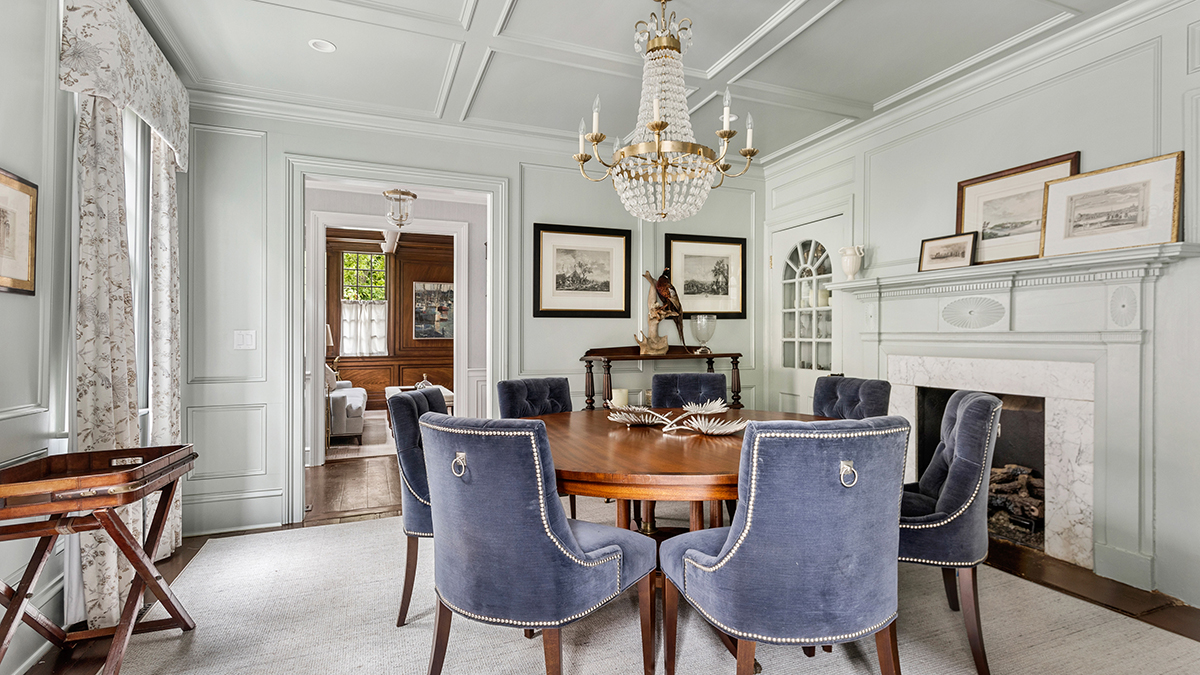
Inside a $7 Million Charleston Home That Dates Back to 1760
The three-story home pairs coffered ceilings and rich wood paneling with modern conveniences and chic design. The three-story home pairs coffered ceilings and rich wood paneling with modern conveniences and chic design.
-

Breitling Is One of Four Maisons Joining Watches and Wonders in 2027
Damiani, Gallet, and Universal Genève will also be at the show for the first time next year. Damiani, Gallet, and Universal Genève will also be at the show for the first time next year.
-

The Best Luxury Gym Equipment for a Better-Looking Workout
A well-designed home gym won’t do the workout for you, but it makes showing up feel rather more appealing.

-

Are Non-alcoholic Spirits Any Good?
Non-alcoholic spirits are growing – but the ones that stand out aren’t trying to copy alcohol at all.

You’ve probably seen the recent controversy involving Diary of a CEO host, Steven Bartlett, who went viral after claiming that two glasses of wine had effectively «ruined» the following three days of his life.
Bartlett described a “domino effect” that disrupted his sleep, nutrition, wellbeing, and podcasting abilities, attributing it to alcohol’s impact on his dopamine and cortisol levels. The claims sparked many a conversation, with some accusing him of «killing fun» and reigniting broader questions about the limits – and occasional excesses – of today’s optimization culture.
Whatever your view of that mindset, the conversation highlighted a clear trend: public awareness of alcohol’s potential health risks is growing. As more people rethink their drinking habits, interest in alternatives such as non-alcoholic spirits has risen alongside it.
See also: The Secret to the Perfect Pimm’s

©Unsplash For those looking to cut back, non-alcoholic alternatives are plentiful these days. But are they any good? One expert (who would rather not be named) described them as “all just water and herbs.”
Millie Milliken, author of Tequila: A Tasting Course, agrees: «Non-alcoholic spirits that try to mimic their full-proof predecessors are giving themselves too tough a task. When you remove alcohol, it is almost impossible to replicate the texture, flavor and nuance that drinkers are expecting from, say, whisky, rum or gin.”
But there is hope. Milliken points to Botivo as one of the UK’s most successful examples because it doesn’t try to imitate alcohol at all (“it’s a herbal and zippy base for the likes of spritzes,” she says). She is also a fan of Sylva, created by the founder of Seedlip, and describes it as a celebration of malted barley and British wood. She suggests drinkers keep an eye on products featuring adaptogens, particularly Three Spirits’ three expressions that can enhance or relax mood, depending on what you’re seeking.
Kara Newman, a food, wine and spirits writer based in New York, shares a similar sentiment: “I’ve tried a lot of non-alcoholic bottlings and most of them are… okay.” But she is a fan of Pathfinder. “It’s made in the style of an amaro, so it’s complex and bittersweet.”

The Connaught Bar, London/©Jamie McGregor Smith If you’re out at a bar, say, at London’s Connaught Bar, you might be served by Giorgio Bargiani, the director of mixology who has just been named winner of the Altos Bartenders’ Bartender Award 2026 for the inaugural edition of Europe’s 50 Best Bars.
See also: The Best Martinis in the World, According to the Experts
He’s noticed an uptick in guests ordering low- and non-alcoholic cocktails, and credits this to supply and demand — “it’s an undeniable trend that is only going to increase as we all shift towards greater quality of products and experiences.”
He says that he can find tasting notes that replicate those of specific botanicals or base ingredients of distillates and liqueurs. His preferred bottles? “There are several I use, including Sipsmith Freeglider for its freshness and crispy aromas, or the Three Spirit range which is super versatile and enables all sorts of modifier results in a cocktail.”

©Unsplash Aurélie Panhelleux, co-owner of CopperBay at the Lancaster Paris (and the pioneer of ‘liquid gastronomy’ where chef-like methods and ingredients are used in creating cocktails) thinks that non-alcoholic spirits are well established enough, and well evolved enough, that the category deserves its own name.
Her top picks are Citadelle’s 0.0 gin, Adriatico’s alcohol-free amaretto, and Giffard’s alcohol-free grapefruit liqueur. “Each of them has successfully met the challenge of preserving the profile and structure of the alcoholic version, without the alcohol,” she says.
The general consensus seems to be that non-alcoholic spirits don’t quite cut it when they try to mimic their alcoholic counterparts. But when something different is on offer – new flavors, textures, and profiles – they’re proving worthy of a place in your bar cabinet.
-

A Duplex Penthouse Crowning a Historic Upper West Side Building Lists for $22 Million
The contemporary residence atop The Chatsworth spans nearly 10,000 square feet of combined indoor and outdoor space. The contemporary residence atop The Chatsworth spans nearly 10,000 square feet of combined indoor and outdoor space.
-
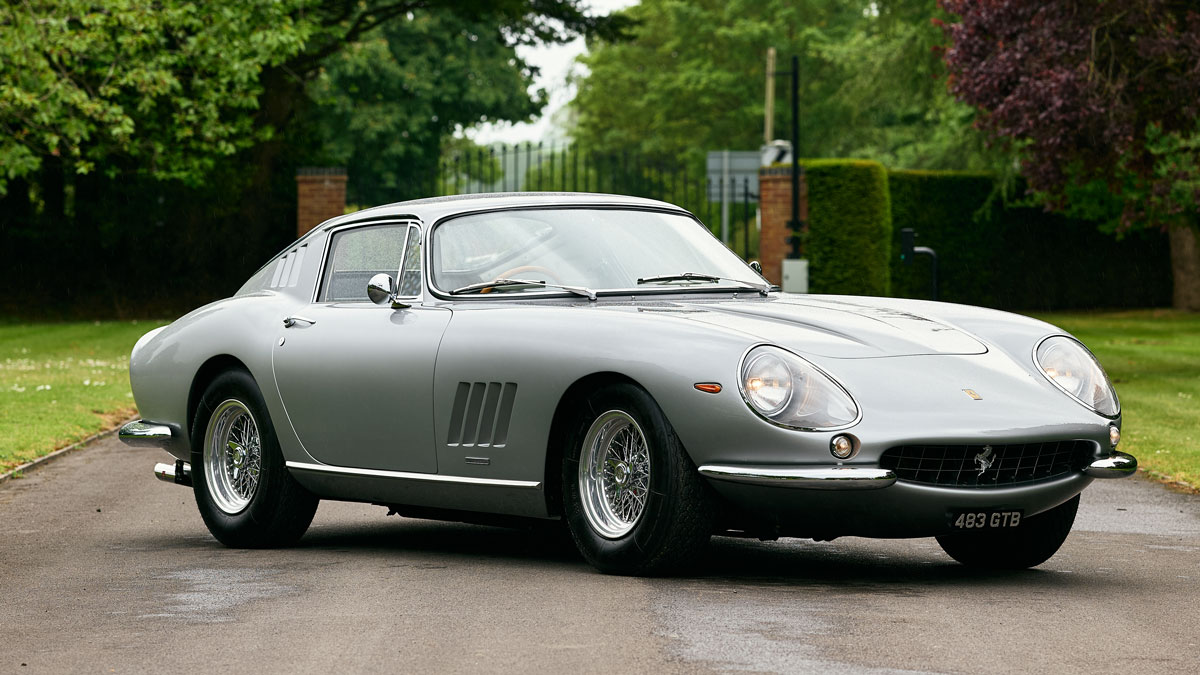
This 1966 Ferrari Was Once Owned by Eric Clapton. Now It Can Be Yours for Nearly $4 Million.
The Ferrari 275 GTB/4, given a year-long restoration under the famed guitarist’s relatively brief stewardship, is being offered through Fiskens. The Ferrari 275 GTB/4, given a year-long restoration under the famed guitarist’s relatively brief stewardship, is being offered through Fiskens.
-
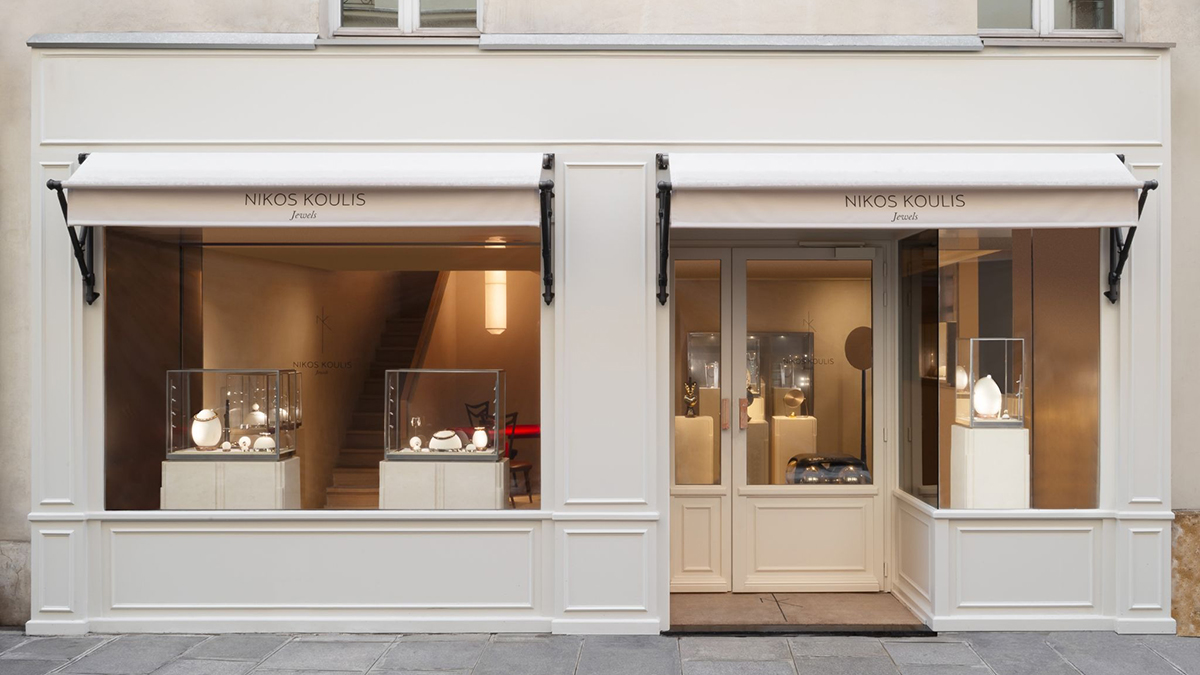
Jeweler Nikos Koulis Just Opened His First International Boutique in Paris
It is located within the exclusive Village Royal shopping district in the 8th arrondissement. It is located within the exclusive Village Royal shopping district in the 8th arrondissement.
-

A Peek Inside Thom Sweeney’s Madison Avenue Flagship
Thom Sweeney solidifies its position as one of the UK’s most US-focussed tailors with a new store opening on Madison Avenue.

Thom Sweeney may be a British tailor, but its center of gravity lies firmly in the US. While London was the first of its four stores worldwide, the rest — in New York, Los Angeles, and Miami — are all stateside. It’s a footprint that makes it one of the most US-focused tailoring houses to come out of the UK in recent years.
“The US has always been a big market for British tailoring. We started going to New York for trunk shows in year one of the business,” explains co-founder Luke Sweeney. Now, the brand’s relationship with America is set to move up a notch with the opening of a new store at 761 Madison Avenue in June.

©Brett Wood Thom Sweeney began in 2007, when Sweeney and co-founder Thom Whiddett left respected tailor Timothy Everest to go it alone. Sweeney was a made-to-measure specialist, and Whiddett a bespoke cutter. The duo set out to offer a more contemporary, style-led interpretation of the classic Savile Row suit — cut to be a little trimmer, lighter-weight, and less stuffy than old-school tailors — and it resonated with sports and TV stars, as well as American clients.
“When we first started, there were a lot of Italian brands,” says Sweeney. “Our house cut has always been British with a touch of Italian. So it wasn’t much of a shift for the American client to move over to what we were doing.”
Playing in such a big pool also gave Whiddett and Sweeney the chance to dress different kinds of clients across the country.

Co-founders Luke Sweeney and Thom Whiddett ©Thom Sweeney “The attitude from each city changes quite significantly,” says Sweeney. “New York and London are very aligned — a lot of that comes down to climate. We sell overcoats, beautiful suits, three-pieces, jackets, and trousers. Miami’s a little bit more casual, but lots of guys do wear tailoring: Think nice trousers and unstructured jackets for dinners out. LA is a completely different beast, it’s either very casual, or event-led — so you go from selling polo shirts to dinner suits. You’ve just got to be nimble.”
This depth of understanding is ultimately what’s underpinned the brand’s steady expansion. Hence the move uptown in New York from Thom Sweeney’s nine-year-old store in SoHo.
“[The area’s] changed a bit and so have we,” Sweeney continues. “If you walk around SoHo for 10 minutes, you might see one or two potential customers. But if you stay on Madison for 10 minutes, you see 30.”
What, then, can customers expect of the new store?

The boutique has a bar and lounge called Sol’s ©Brett Wood Set across 5,000 sq ft, with an additional basement level for private shopping, the boutique will showcase the ready-to-wear collection as well as keeping space for made-to-measure and bespoke fittings. You’ll also find Sol’s, a bar and lounge designed as a social space for clients. Named after Sweeney’s late father-in-law, hospitality magnate Sol Kerzner, it’s a concept that Whiddett and Sweeney first launched in London and have introduced in all their stores.
See also: Ozwald Boateng on his First Suit and the Details He Notices in Hotels

©Brett Wood “Clients want to come and hang out,” Sweeney says. “Guys come in, look at some fabrics or do a bit of shopping and want to sit down and relax for a bit.”
This is perhaps Thom Sweeney’s most powerful calling card — the founders have always worked hard to cultivate an informal, charming experience for customers, building networks of clients who treat their stores like mini members’ clubs. Be prepared to add 761 Madison to your list of NYC essential addresses.
-

The World’s Most Expensive Golden Visas
Residency-by-investment programs offer far more than a second address. They offer flexibility, security, and perhaps the ultimate luxury: choice.

A luxury property portfolio might span continents, a yacht can change ports with the seasons, and a private jet crosses borders in a matter of hours. For many internationally minded families, geography has long been a form of diversification – but increasingly, residency is becoming part of that portfolio, too.
Residency-by-investment programs that grant the right to live in a country in exchange for a qualifying financial commitment, or so-called ‘golden visas’, have become one of the most talked-about corners of global mobility. They offer access to some of the world’s most desirable destinations, from the Mediterranean coastline to the heart of Asia‘s financial capitals. And despite increasing political scrutiny, demand remains remarkably resilient.
See also: Where to Buy Luxury Real Estate in 2026
What are golden visas?
At their simplest, golden visas allow applicants to secure residency rights through investment rather than employment, family sponsorship, or entrepreneurship.
Requirements vary considerably. Some programs require investments into government-approved funds, others focus on business investment, while a handful remain linked to real estate. In return, successful applicants receive residency rights and, in some cases, a pathway toward citizenship.
They should not be confused with so-called golden passports, which provide citizenship directly or through an accelerated route. Residency and citizenship are very different propositions; one grants the right to live in a country, the other confers nationality itself.

Golden visas have become one of the most talked-about corners of global mobility for UHNWs ©Unsplash Why are they popular?
Motivations for golden visas are as varied as the destinations on offer. For some, residency is simply about flexibility. For others, it is access to education, healthcare, lifestyle, or favorable tax regimes.
«Some individuals from politically unstable jurisdictions want a second citizenship and a passport that will allow them to travel in case of any political issues with the current regime in their countries,» says Matt Ingham, partner at Payne Hicks Beach who specializes in immigration law. «It is essentially viewed as an insurance product and a ‘Plan B.’»
Demand has shifted noticeably over the past five years. Ingham points to continued interest in Portugal, Italy, and Greece, particularly among applicants relocating from the Gulf region, while Monaco increasingly attracts younger entrepreneurs and families alongside its traditional old-money residents.
What countries have golden visas, and which are the most expensive?
Singapore
When it comes to investment thresholds, Singapore sits firmly at the top of the market. The country’s Global Investor Programme requires either a minimum investment of S$10m (approx. $7.8m) into a new or existing business, or an investment of S$25m (approx. $19.6m) in one of the GIP-approved funds.It is one of the most expensive residency-by-investment routes currently available, but the attraction, however, extends well beyond the numbers. Political stability, world-class infrastructure, a sophisticated financial ecosystem, and its position as Asia’s business gateway continue to make Singapore one of the most coveted addresses in the region.

World-class infrastructure and a strong financial ecosystem make Singapore a popular relocation destination ©Unsplash New Zealand
In February 2026, New Zealand relaxed its golden visa policies, lowering the eligibility threshold and offering new investment categories for its Active Investor Plus Visa. That said, the new criteria are still among the most expensive in the world, offering a Growth Category: NZ$5m (approx. $2.9m) over three years in high-risk investments; or the Balanced Category of NZ$10m (approx. $5.8m) over five years, allowing a mix of property, bonds, and shares.Monaco
While the Principality does not operate a formal golden visa program, residency remains among the most exclusive options available. Applicants are typically expected to demonstrate substantial assets, including depositing a minimum of €500,000 (approx. $580,460) in a Monaco bank account, and have secured accommodation within the Principality, where property prices are among the highest in the world.When asked which would be his golden visa of choice, «if cost were no object,» says Ingham, «Monaco – for the tax, the location, the weather, security, discreetness, and an efficient application process.»

Applicants must demonstrate substantial assets to qualify for residency in Monaco ©Unsplash Switzerland
Like Monaco, Switzerland‘s appeal is rooted less in a formal visa scheme and more in a carefully structured residency framework. For non-EU nationals, residency can be obtained through lump-sum taxation arrangements, which can amount to hundreds of thousands of dollars annually.There is also the Swiss entrepreneurial investor scheme, where an individual agrees to a predetermined annual tax, usually starting at around CHF 200,000 (approx. $252,300), but can escalate to CHF 600,000 (approx. $756,800) per year, depending on the canton – although this arrangement prohibits employment; or the Swiss Entrepreneurial Investor Scheme, where individuals are obliged to establish a new company, or to inject capital into an existing Swiss business. With this route, the annual minimum business investment requirement is typically a minimum of CHF 1m (approx. $1.3m).

For non-EU nationals, residency in Switzerland can be obtained through lump-sum taxation arrangements ©Unsplash Mauritius
In May 2026, the Indian Ocean island nation announced it would offer 100 golden visas annually for applicants who invest at least $1m in industries such as financial technology, global treasury, artificial intelligence, biotechnology, and renewable energy.See more: Mauritius Wants Millionaires: What To Know Before Moving
Which golden visas are the most accessible?
Among European Union options, Portugal and Italy continue to dominate conversations. Portugal’s Golden Visa now requires a minimum €500,000 (approx. $580,400) investment into qualifying funds following the removal of the property route, while Italy’s Investor Visa ranges from €250,000 (approx. $290,170) invested into innovative startups to €2m (approx. $2.3m) in government bonds.
Neither is exactly inexpensive, but both offer something increasingly valuable: access to Europe and the Schengen Area alongside attractive lifestyles, strong infrastructure, and established legal frameworks.

Portugal, while offering one of the more financially attainable golden visa options, has recently tightened its requirements ©Unsplash At the more attainable end of the spectrum sits Greece, whose residency-by-investment program remains one of Europe’s most popular entry points. Investment thresholds begin at €250,000 (approx. $290,170) for certain redevelopment and commercial-to-residential conversion projects, rising to €400,000 (approx. $464,300) across much of the country and €800,000 (approx. $928,500) in sought-after destinations such as Athens, Mykonos, and Santorini.

Islands such as Santorini require higher donation sums compared to smaller Greek islands ©Unsplash Elsewhere, Caribbean citizenship-by-investment programs continue to attract attention by offering passports rather than residency permits. In Dominica, citizenship can be obtained through a government contribution starting at around $200,000 for a single applicant, while Antigua and Barbuda, Grenada, and St Kitts and Nevis offer similar routes at comparable thresholds.
But, as ever, headline figures only tell part of the story. «One potential hidden cost is the tax implications of residence in multiple countries,» says Ingham. Banking requirements, compliance checks, legal fees, and accommodation obligations can significantly increase the true cost of an application.
What are the risks of golden visas?
The investment migration landscape is constantly evolving. This year alone has seen Portugal remove the real-estate element of its program, while Malta’s citizenship-by-investment scheme was struck down following legal challenges from the European Union.
Other jurisdictions, including Italy, continue to face political pressure as governments reassess the role such programs play in their economies.
Tax remains the area most frequently misunderstood. «My advice would be for UHNW clients to obtain very good advice on the tax implications first, and then to consider obtaining a golden visa – not the other way round,» says Ingham. Because while investment thresholds are easy to compare, the long-term implications of residency are often far more complex.
Ultimately, the appeal of golden visas extends beyond residency rights alone; instead, they offer what wealth and power have always sought: choice.