
Electra’s EL9 just reached a significant milestone on the road to type certification. Electra’s EL9 just reached a significant milestone on the road to type certification.
Автор: karymsakov_qq4zn395
-

The Booming Business of Dinosaur Fossils
Despite multi-million-dollar auction sales, dinosaur fossil dealers say the market is driven by passion and provenance – not just investment value.

For most people, dinosaurs exist behind museum glass, in the pages of school textbooks, in Hollywood films, or somewhere in the landscape of childhood imagination. For a growing number of enthusiasts, however, they have become the centerpiece of private collections.
Despite the headline-grabbing auction results that have seen dinosaur skeletons sell for millions, dealers say the market is far more nuanced than price tags suggest.
«The market for high-end dinosaur fossils, especially when accompanied by the necessary provenance, is booming,» says Salomon Aaron, director at David Aaron Ltd., a gallery that specializes in natural artifacts. “It’s still a young market that is developing very fast. The interest is only growing.»

An Enigmacursor fossil ©David Brunetti / David Aaron Ltd Much of that momentum has been driven by a string of record-breaking sales at major auction houses, which have brought unprecedented attention to dinosaur fossils as collectible objects. At the same time, new museums in Abu Dhabi and across Asia have spent the past few years assembling significant palaeontological collections, adding further demand at the top end of the market.
Despite this growth, the gallery deliberately distances itself from treating fossils as investments. «We try very hard to only work with people who are passionate about the subject and are looking at this as a real privilege to be able to acquire dinosaur fossils and live with them,» Aaron says. «Of course, you want to make sure that you’re acquiring something at fair value, but we don’t want clients to think about investment value.»
Many sales, he reveals, are made directly to museums and academic institutions to keep the specimens accessible wherever possible.
What makes a dinosaur fossil valuable?
As with fine art, rarity, and quality are key – but recognition also matters. «Iconic dinosaur fossils immediately recognizable to anyone have the longest queue of clients,» Aaron explains. «T Rex, Triceratops, [all] the household names.»

A Chomper juvenile T Rex ©David Aaron Ltd Condition is equally important. The highest-value fossils are preserved and accompanied by comprehensive documentation proving exactly where and how they were excavated. Provenance, Aaron says, has become one of the market’s defining requirements. He stresses the importance of documentation proving specimens were legally excavated from private land in the US, giving buyers confidence in both their legality and scientific history.
Prices, of course, range depending on the fossil. Small bone fragments can sell for only tens of pounds, while near-complete museum-quality skeletons, like the T. Rex that is expected to fetch $20 to $30m at a Sotheby’s auction today, commands prices in the tens of millions.
Dinosaurs collectors of every generation
Unlike many areas of the art and antiquities market, dinosaur fossils appeal across remarkably broad demographics. «We have clients in their teens, we have clients in their eighties,” Aaron says. «In antiquities or Islamic art, you don’t deal as often with very young people or people in their twenties or thirties/ When you take an amazing dinosaur fossil to an art fair, you’re always inundated with people from all over the world, all different ages, genders – you name it, everybody gets excited.»
So, what’s behind the universal appeal? «I think we’ve all grown up with dinosaurs,» Aaron reflects. «They’re a very powerful educational entry point into the sciences. They inspire young people and they teach you about the planet and about preservation.»
See also: This Dutch Collector Turned His Home Into an Incredible Fossil Museum

An Edmontosaurus skull ©David Aaron Ltd Living with dinosaur fossils
For those collectors who choose to display fossils in their own homes, David Aaron remains involved long after the sale, advising clients on installation and conservation. «We regularly check up with clients on the dinosaur fossils they acquire,» Aaron explains. «We help with preservation, the setup, making sure they are installed somewhere safe, away from sunlight, with the right temperature.»
According to the dealer, some buyers purchase significant fossils specifically with the intention of donating them to local museums.
The private market debate
Whether dinosaur fossils should be sold privately remains one of palaeontology’s most contentious questions. Critics argue that scientifically important fossils risk disappearing into private collections where researchers and the public may lose access to them. Aaron believes it’s “nuanced.”
«On the one hand, I can understand why some palaeontologists or members of the public would criticize the existence of a private trade. On the other, a lot of dinosaur fossils wouldn’t ordinarily be discovered if not for the private trade. They would disappear or be damaged or destroyed by urbanization. Our responsibility is to cultivate collectors who donate to and support museums.»

Enigmarcursor fossils in conservation ©Trustees of the Natural History Museum, London One recent transaction is evidence that collaboration can work. Aaron tells Elite Traveler that after acquiring a fossil, David Aaron first showed it to the Natural History Museum, which expressed strong interest in the discovery. The specimen was placed on reserve while the gallery found a private buyer willing to purchase it specifically for immediate donation to the museum. It ultimately proved to represent a previously unknown species, which has since been formally named. «It’s an example of how the private dealer can interact successfully with museums to make science available to the public and to the best scientists.»
Advice for first-time dinosaur fossil buyers
For newcomers tempted to enter this exciting market, Aaron’s advice is straightforward: «Seek and develop a relationship with an adviser or someone you trust.” Prospective buyers should spend time understanding the market, never compromise on provenance, and carefully assess a fossil’s condition before purchasing. «Buy the best that you can afford,” he concludes.
-

Is America Losing Its Grip on Global Luxury?
Singapore’s continued dominance in Julius Baer’s Global Wealth and Lifestyle Report is less surprising than the disappearance of the United States from the top rankings.

For a long time, the luxury industry has followed a predictable map. Paris supplied the heritage, craftsmanship, and romance; New York the appetite and spending power; and China the promise of the next great wave of growth. The world’s wealthy knew where they wanted to shop, and luxury houses followed suit with where they opened their doors.
According to the Julius Baer Global Wealth and Lifestyle Report 2026, Singapore has retained its position at the top of the ranking for the fourth year running, remaining the world’s most expensive city for HNWIs for the fourth consecutive year. The report notes that Singapore’s position reflects “the high cost of residential property and cars, as well as the strength of the Singapore dollar,” while its “political stability, resilient economy, and global connectivity continue to support its appeal in an uncertain world.”

©Shutterstock For the first time, no city in the Americas, one of the industry’s most dependable engines, appears in the global top ten. Now, that doesn’t mean Americans have suddenly lost their taste for the finer things in life. The US remains one of the largest and most influential luxury markets in the world: Fifth Avenue continues to be one of the industry’s great shopping stages, and American consumers remain major buyers of fashion, watches, jewelry, and beauty products. But the way they spend their money is changing. After several years of post-pandemic enthusiasm, American luxury consumers have grown to become more selective. The rush for hard-to-find handbags, collectible watches, and once-in-a-lifetime experiences has begun to cool, while questions around value and longevity have become more important – even among HNWIs.
“The US remains one of the most important luxury markets globally, but economic pressures, changing spending habits and a greater focus on long-term value are influencing purchasing decisions,” says Kylie James, CEO of luxury auction platform LAX.BID. “Increasingly, wealthy consumers are looking beyond traditional luxury purchases and putting their money into experiences, art, collectibles, and assets that offer both enjoyment and potential appreciation.” Dr Matthias Fuchs, assistant professor of marketing at EHL Hospitality Business School argues that «large parts of why the US fell off (i.e., became more affordable relative to other places) is probably due to the current weakness of the US dollar […] and could say more about the lags of price increases relative to currency exchange rate fluctuations.»

©Shutterstock At first glance, Singapore’s city-state seems an unlikely rival to the US. With fewer than six million residents, it lacks the vast consumer base of America. But it has succeeded by creating “an environment where wealth can be preserved, grown, and enjoyed, making it an increasingly attractive destination for high-net-worth individuals from around the world,” James notes. The person walking into a luxury boutique on Orchard Road may be Singaporean, but they could just as easily be visiting from Indonesia, India, Malaysia, or elsewhere in Southeast Asia. Its luxury appeal also extends beyond shopping. International events, high-end hospitality, fine dining, and its role as a global financial center have helped transform Singapore into a destination for wealthy individuals and investors.
Its rise, she adds, reflects a broader understanding of what today’s wealthy consumers value. “It offers political stability, a strong economy, excellent infrastructure, and a business-friendly environment, all of which create confidence for those looking to live, work and invest there. The city has also established itself as a key destination for art, collectibles, and luxury assets.”
Julius Baer’s report points to this wider shift in behavior, noting that HNWIs are adapting their consumption habits in response to tariffs, currency movements, and global uncertainty. At least one in three respondents have already changed the geographic origin of some of their luxury purchases. In other words, luxury is becoming more mobile.
As such, it’s safe to say that America’s place in luxury is far from over, but, as James puts it, “the landscape is certainly changing.” Its fall from the ranking suggests that the next generation of luxury capitals may not be the largest countries or the oldest fashion cities. They may be the places that can attract global wealth, even if they fit within a much smaller footprint.
-

China Is Poised to Surpass France as the World’s Leading Foie Gras Producer
The nation has taken the caviar market by storm and is doing the same with this delicacy. The nation has taken the caviar market by storm and is doing the same with this delicacy.
-
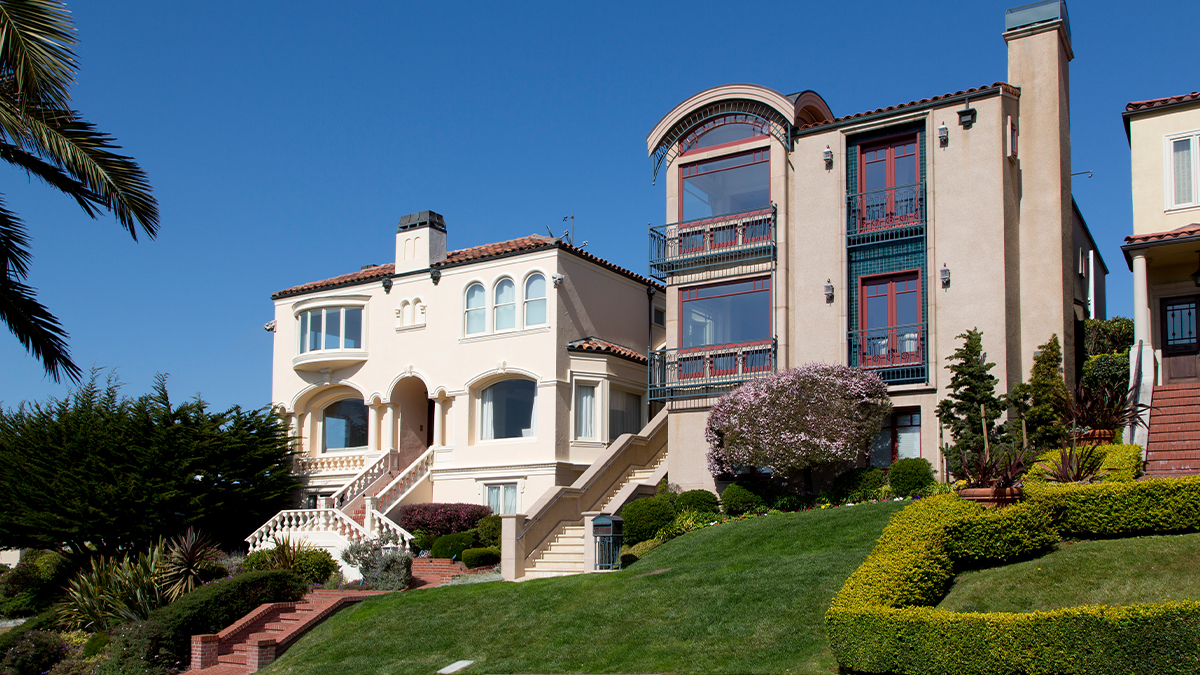
Luxury Buyers Are Driving Home Prices to Record Highs
Luxury home sales, especially in coastal cities, are contributing to record median prices nationwide. Luxury home sales, especially in coastal cities, are contributing to record median prices nationwide.
-

The Rolex Daytona Jannik Sinner Wore to Make Wimbledon History
The 24-year-old Italian just won another Grand Slam title, with a particularly flashy Rolex in tow.

In what started as a tumultuous match for Jannik Sinner, the 24-year-old Italian tennis player walked off Wimbledon’s grass courts with the Gentleman’s Singles trophy in tow. The odds weren’t in his favor when Sinner lost the first set in a tiebreak against his opponent, Alexander Zverev, but he quickly made a comeback in the second.
This marks Sinner’s second consecutive Wimbledon triumph at SW19, following his victory over Carlos Alcaraz on the same grounds the previous summer. And while his competitive serves had fans glued to the match, there was another detail that captured attention once the competition ended: the watch resting on his wrist during the trophy ceremony.
On Sunday, Sinner lifted the trophy wearing a Rolex Cosmograph Daytona, the 40mm Everose gold model with the “Sundust” dial (ref. 126515LN), which retails at £37,450 (approx. $50,163). Fittingly, it was the same watch he wore when he won the championship in 2025 – making the Daytona something of a personal victory companion for the young tennis player.
See also: Elite Traveler Hosts the Giorgio Armani Tennis Classic Welcome Party
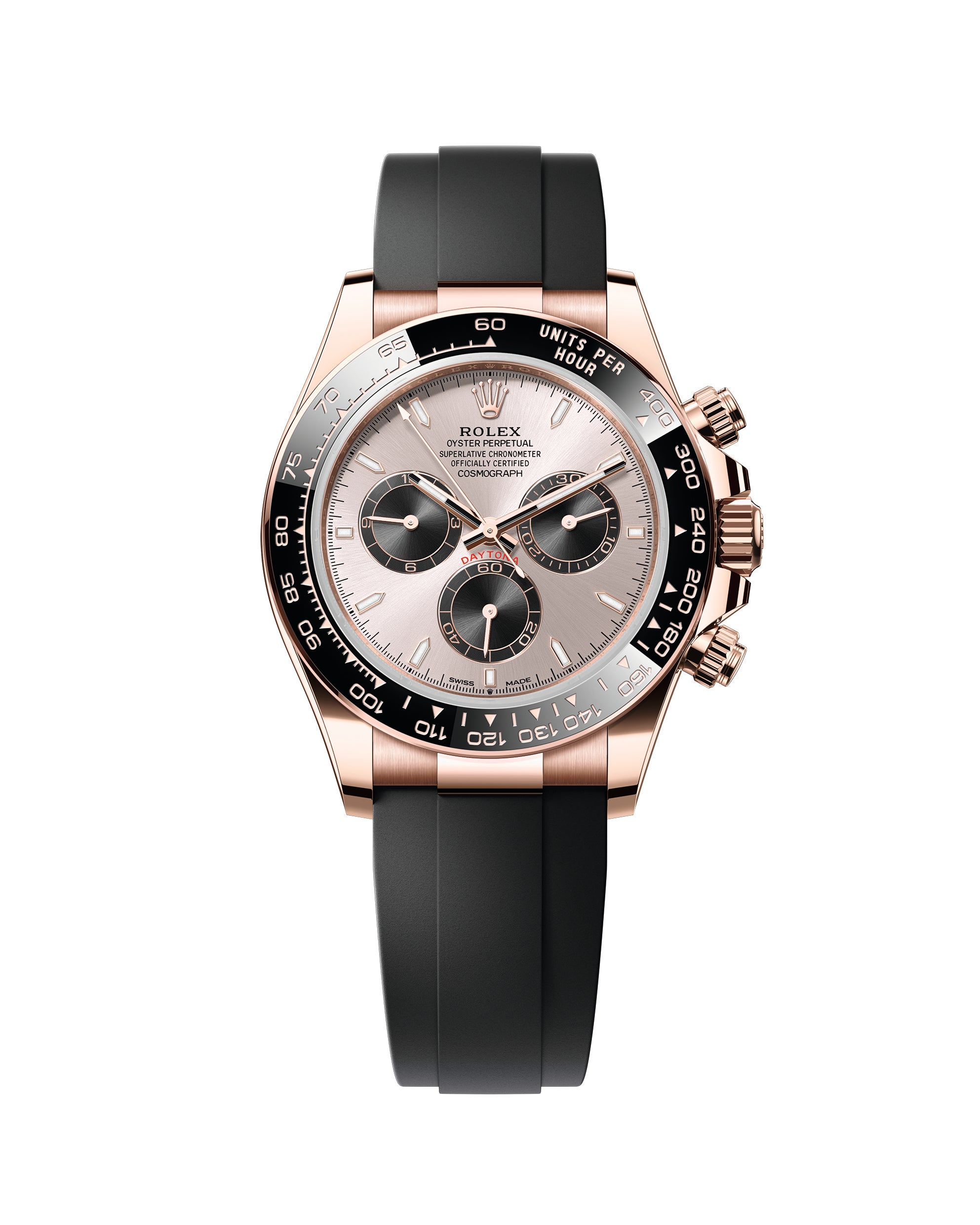
©Rolex Sinner wearing a Rolex is hardly surprising, considering he was appointed one of their ambassadors in 2020, joining a prestigious group of athletes and cultural figures associated with the Swiss watchmaker. But this particular model is special – in ways other than being the timepiece of choice of a Grand Slam champion. The champagne-pink dial is made with intricate brush techniques, and shifts from a warm rose to a metallic blush when the sun hits it.
The timepiece was originally exclusive to the Datejust line, but has since found a new home in the Daytona collection. It’s fitted with Rolex’s in-house calibre 4131, with a 72-hour power reserve and a monobloc Cerachrom bezel. A prime watch for withstanding a gruelling 3 hour and 46 minute match, if you will.
While inherently a sports watch, this particular Daytona leans more towards a fashion statement. Its appearance coincides with another notable style moment from Naomi Osaka, as she walked onto the courts for her first match in a kimono-inspired ensemble from Tokyo-based designer Hana Jagi.
As well as his horological endorsements, Sinner is also an ambassador for Gucci, where he continues to serve Italian flair off the courts. Whether future Grand Slam victories bring even rarer or more unexpected timepieces remains to be seen – but for now, his Everose gold Rolex Daytona has already earned its place as part of Wimbledon history.
-
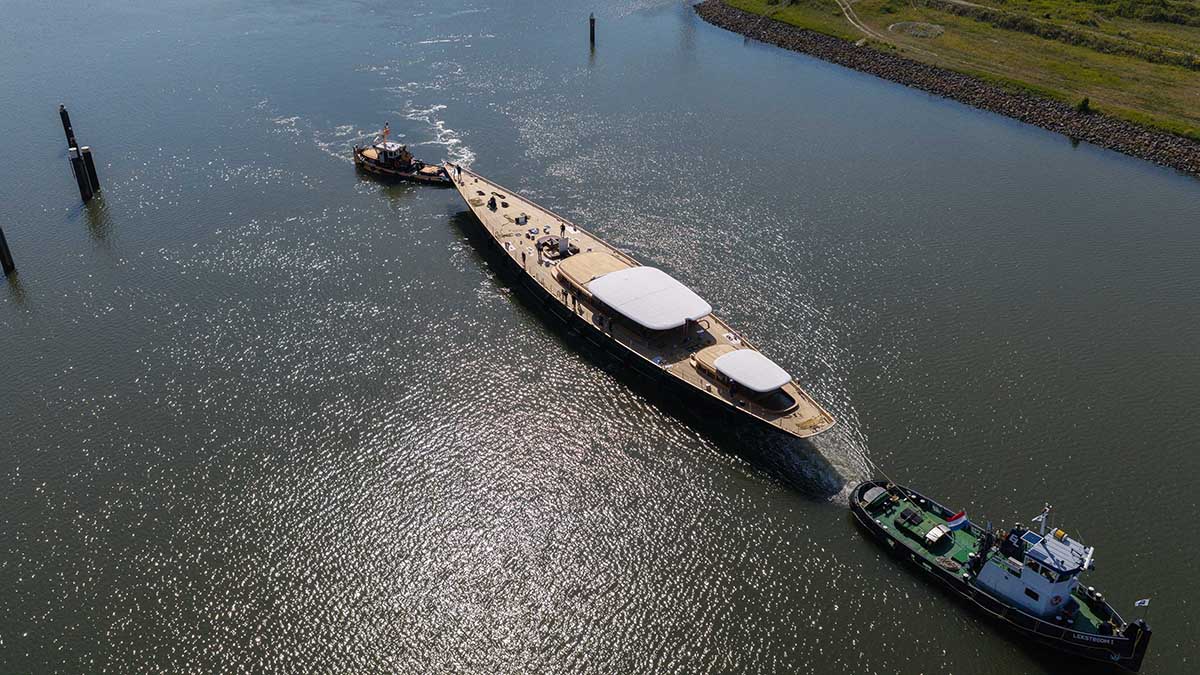
Meet ‘Zero,’ a New 230-Foot Sailing Yacht That Runs Entirely on Renewable Energy
Her 250 kW hydrogeneration system produces most of the power while she’s sailing. Her 250 kW hydrogeneration system produces most of the power while she’s sailing.
-

The Auctioneers’ Guide to Buying at Auction
Leading auctioneers reveal the strategies, preparation, and discipline behind successful bidding at the highest levels of the market.

Whether it is a Kashmir sapphire in Geneva, a Kentucky Derby-winning thoroughbred in County Kildare, or a vintage Ferrari going under the hammer, the final moments of an auction can be as much about strategy as acquisition.
Benoît Repellin, head of jewels at Phillips, and Henry Beeby, group chief executive of Goffs, believe that successful bidding is determined long before the auctioneer calls the first lot. For experienced collectors, the advantage lies in preparation: understanding the asset, assessing value, and knowing precisely when to act – and when to walk away.
From researching a lot to knowing when to walk away, here’s what auctioneers want you to know.
Understanding the auction process
«Auctions can be quite intimidating for someone who doesn’t know about auctions,» says Repellin. «But it’s really open to everyone.»
For seasoned buyers, however, the fundamentals remain critical. Beeby, of Europe’s premier thoroughbred auction house Goffs, argues that understanding the Conditions of Sale is the single most important first step before you can even think about raising your paddle. «They outline the ‘laws’ of the sale and cover subjects such as a lot’s description, payment terms, complaints procedures, commission, and much more.»
Most auction houses now offer multiple ways to participate, including bidding in person, online, by telephone, or through absentee bids placed in advance. For collectors unable to be present, absentee bidding allows them to set their maximum level in advance, while advisers and representatives can also participate on their behalf.
See also: You Could Own One of the Largest T. Rex Fossils Ever Discovered
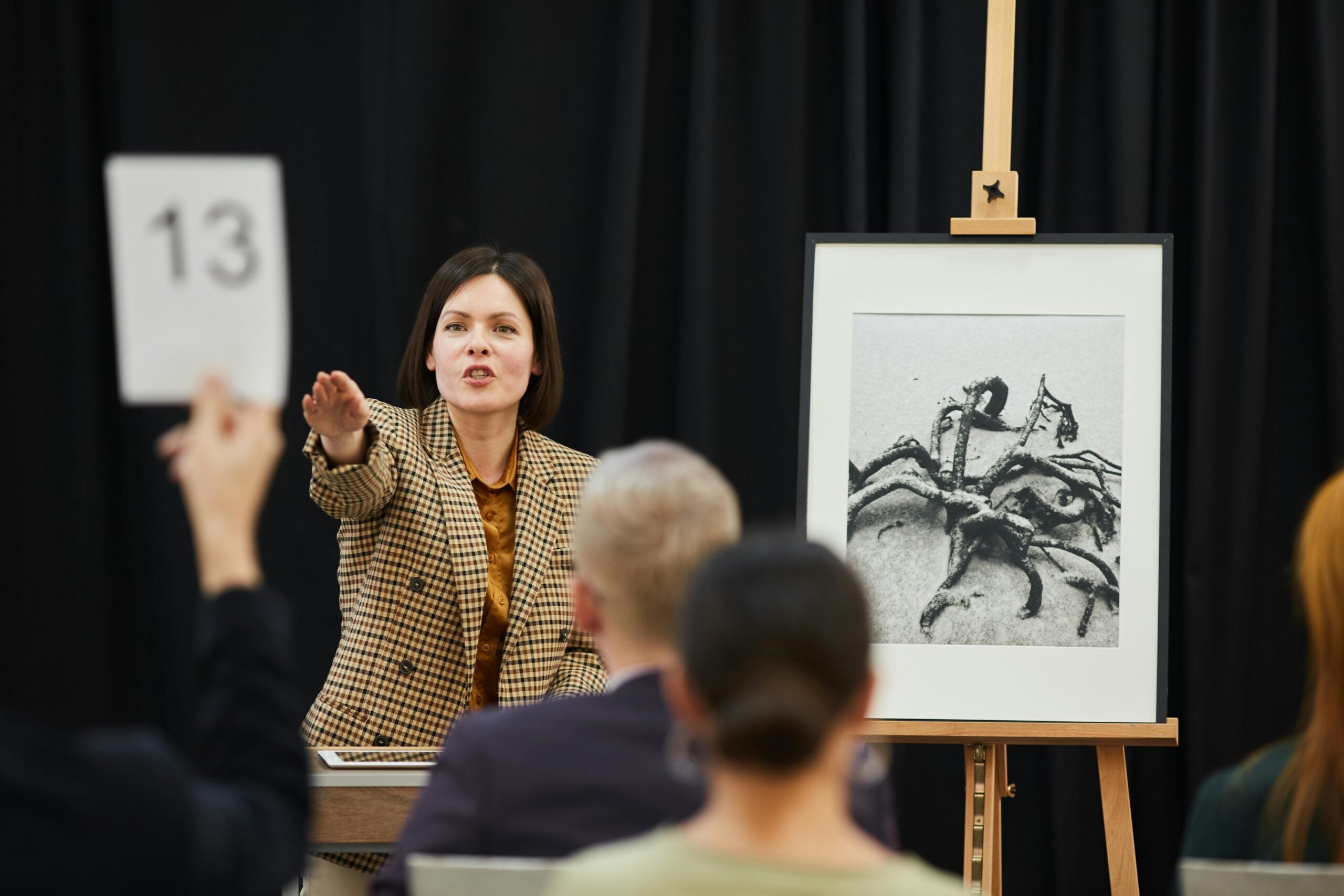
©Unsplash How should you prepare before auction day?
Among leading auctioneers, the consensus is clear: the strongest bids are built on preparation well before auction day.
For jewelry collectors, Repellin recommends going beyond the catalogue estimate and reviewing all available information about a piece. «For each piece, we mention whether there is a laboratory report, any restoration, any damage, and details about the quality of the gemstones,» he explains.
For significant acquisitions, specialists can provide additional photography, video, condition guidance, and market context. Buyers unable to attend viewings in person can also request further information directly from the auction house before committing at auction.
See also: The Psychology of Why We Collect
Importantly, buyers are not limited to the auction house’s expertise. Independent advisers are welcomed at pre-sale exhibitions, allowing collectors to undertake their own due diligence and incorporate specialist opinions before bidding.
For those entering a new collecting category, Beeby recommends relying on established expertise. «For novices, a professional adviser should be employed to guide and advise,» he says. «You wouldn’t buy a house without a survey, would you?»
Across collecting disciplines, this approach is standard practice. Bloodstock buyers often work alongside agents and trainers, while collectors of jewelry, art, and classic cars frequently rely on trusted advisers to evaluate condition, rarity, and long-term value.
What is the true cost of acquisition?
The hammer price represents only one component of the final purchase price. Buyers must also account for the buyer’s premium and any additional charges associated with the transaction, with rates varying between auction houses and sale categories. «Knowing about the commission and the buyer’s premium on top of the hammer price» is a key part of preparing for an auction, Repellin says.
Because fee structures vary between auction houses and categories, collectors should review the Conditions of Sale carefully and calculate their total acquisition cost before bidding begins.

©Unsplash How to develop an effective bidding strategy
There is no universally correct way to bid, only the method that best suits your temperament. Some buyers enjoy the atmosphere of the auction room; others prefer the distance and control offered by online or telephone bidding.
Beeby remains an advocate for attending auctions in person whenever possible. «You can see the other bidders and get a feel for the atmosphere of the auction,» he says. «It’s the most transparent way to buy.»
Digital platforms have expanded access significantly, with Repellin noting that the pandemic accelerated a shift toward online participation that continues today.
Social media has also changed how collectors engage with the market. Repellin, whose behind-the-scenes jewelry content has attracted a large following, believes digital platforms are helping to educate a new generation of bidders. «A lot of people are using these channels to learn more about jewelry, gemstones, and auctions,» he says. «They come with a better understanding of what is on offer.»
See also: This Dutch Collector Turned His Home Into an Incredible Fossil Museum
Common mistakes and how to avoid them
The most frequent mistake Repellin encounters has little to do with bidding itself. «There is a whole process of registering for a first-time buyer,» he says. «Make sure you have enough time before the auction to submit all the KYC [Know Your Customer] information and create your account.» Leaving registration until the last minute can mean missing a sale altogether.
Once bidding begins, discipline becomes equally important. «It’s good to come with your price in mind before coming to the auction,» says Repellin. «Sometimes you can get carried away with the excitement.»
«Make a shortlist, fix your maximum price in your head, and then don’t listen to the auctioneer’s exhortations,» Beeby stresses. «Stick to your price as there will always be another lot.»
That discipline matters because auctions are emotional environments, where Repellin admits competitive instincts can sometimes take over. «You can see people looking at who the other bidder is,» he says. «There’s definitely some pride in the bidding competition.»
Should you buy at auction as an investment?
While auctions increasingly attract buyers interested in asset appreciation, neither expert believes investment alone should drive a purchase. «I don’t think someone should buy purely for investment,» says Repellin. «The best collections have been built over time with passion and a discerning eye.»
Instead, he encourages buyers to focus on pieces they genuinely want to own and live with. His advice is deliberately simple: «Buy what you like.»
-

Should Cape Verde Be on Your Radar?
The World Cup 2026 has brought fresh attention to the island nation often dubbed the ‘Maldives of Africa’ – but does Cape Verde have what it takes to become a serious luxury destination?

This year, Cape Verde has become one of this year’s most talked-about destinations. After making its World Cup debut, despite being one of the smallest countries ever to qualify for the tournament, the team, ranked 67th, quickly took over the hearts, and headlines, of international media as they held their own against giants like Spain and Uruguay, and looked set on causing one of the biggest upsets the tournament has ever seen.
The team’s success culminated in pushing Argentina to extra time in the knockout stages. Sadly, the nation’s soccer dream was not to be, and Cape Verde’s run ended just short of a penalty shootout – but not before putting the country in front of a global audience.
For many viewers, the team’s success prompted the same basic question: where exactly is Cape Verde? Head to Google, and you’ll be met with clear turquoise water, endless stretches of empty white sand, and dramatic volcanic landscapes. So why hasn’t it entered the luxury travel conversation in the same way as Mauritius, the Seychelles, or even parts of Morocco?
From its location and landscape to the islands best suited to an upscale stay, here’s what to know about Cape Verde – and whether it deserves a place on your travel radar.
Where is Cape Verde?

©Le Ponant Cape Verde, also known in English by its Portuguese name Cabo Verde and officially as the Republic of Cabo Verde, is an Atlantic archipelago of ten volcanic islands, located around 350 miles off the coast of West Africa.
It’s among the 54 African countries but not on the mainland, so some maps even omit it. Humans couldn’t find it until the mid-15th century, and Portugal colonized it from 1462 to 1975. Portuguese is the official language, but the majority of the population speaks Kabuverdianu, a Portuguese-based Creole.
While nine out of ten islands are inhabited, Cabo Verde has more nationals abroad, between 1.5 to 2 million, mostly in the Netherlands, Portugal, Senegal, and the United States, than at home, where the population sits around 500,00.
Should you visit Cape Verde?
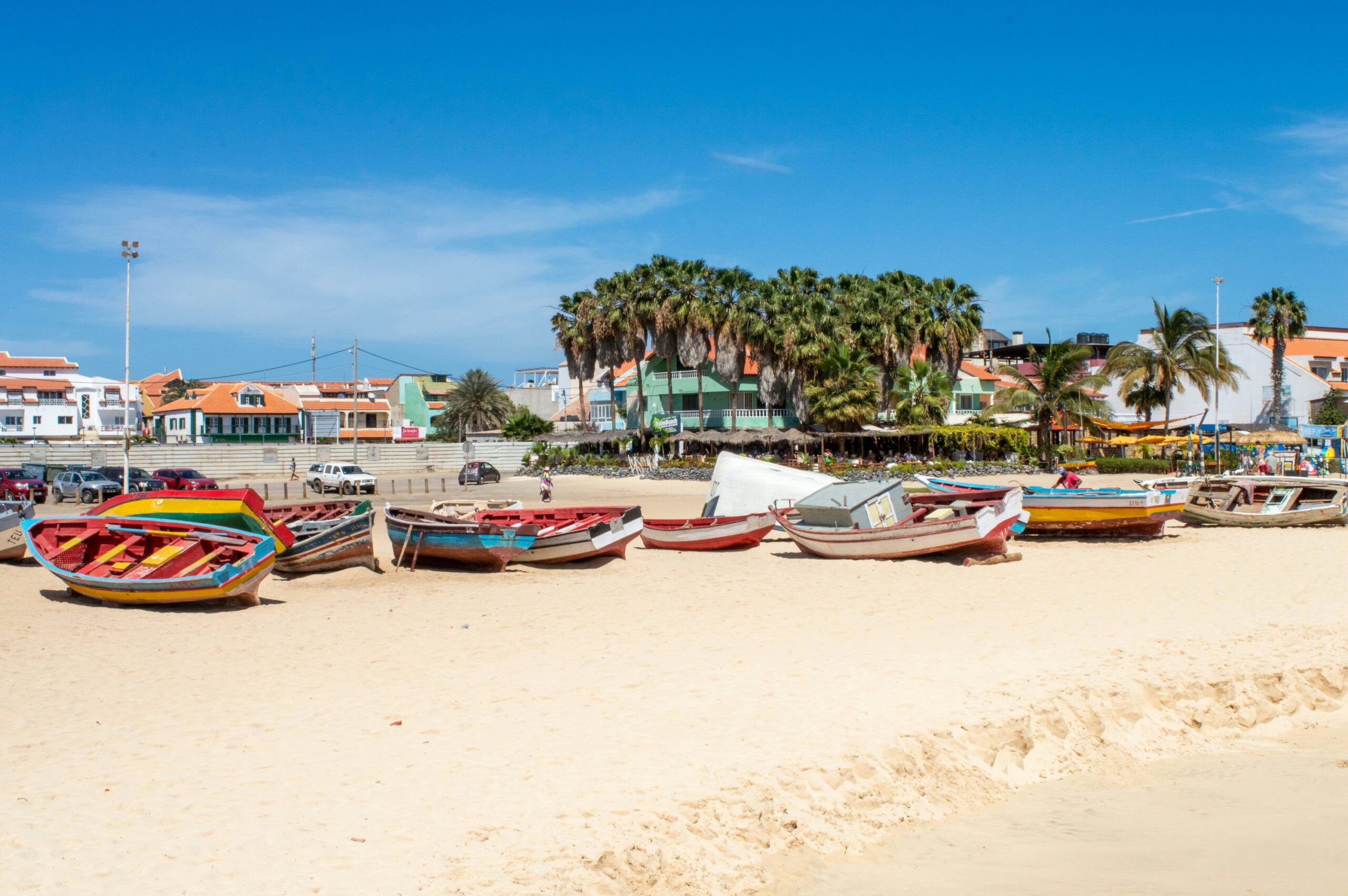
©Unsplash If you’re looking for a winter sun destination with long beaches, warm water, and a reliably breezy climate, Cape Verde is worth considering. The Atlantic archipelago has long been popular with European travelers, particularly for windsurfing, kitesurfing, and diving, with Sal and Boa Vista drawing most of the beach-focused crowd.
For those interested in wildlife, Boa Vista’s Ervatão Beach is one of the world’s most significant loggerhead turtle nesting sites, and the waters around the islands also attract humpback whales in late winter and spring.
The best time to visit depends on what you want from the trip. For turtle nesting season, plan around July to September; for whale sightings, March and April are generally the strongest months.
If you are coming purely for sunshine and sea, Cape Verde is a relatively easy warm-weather option from Europe, with direct flights from London and Manchester taking around six hours. For US travelers, the journey is slightly less straightforward, as there are no direct flights, so most itineraries route through Lisbon. We recommend staying for a couple of days in Portugal to make the trip worth it.
Where to Stay in Cape Verde
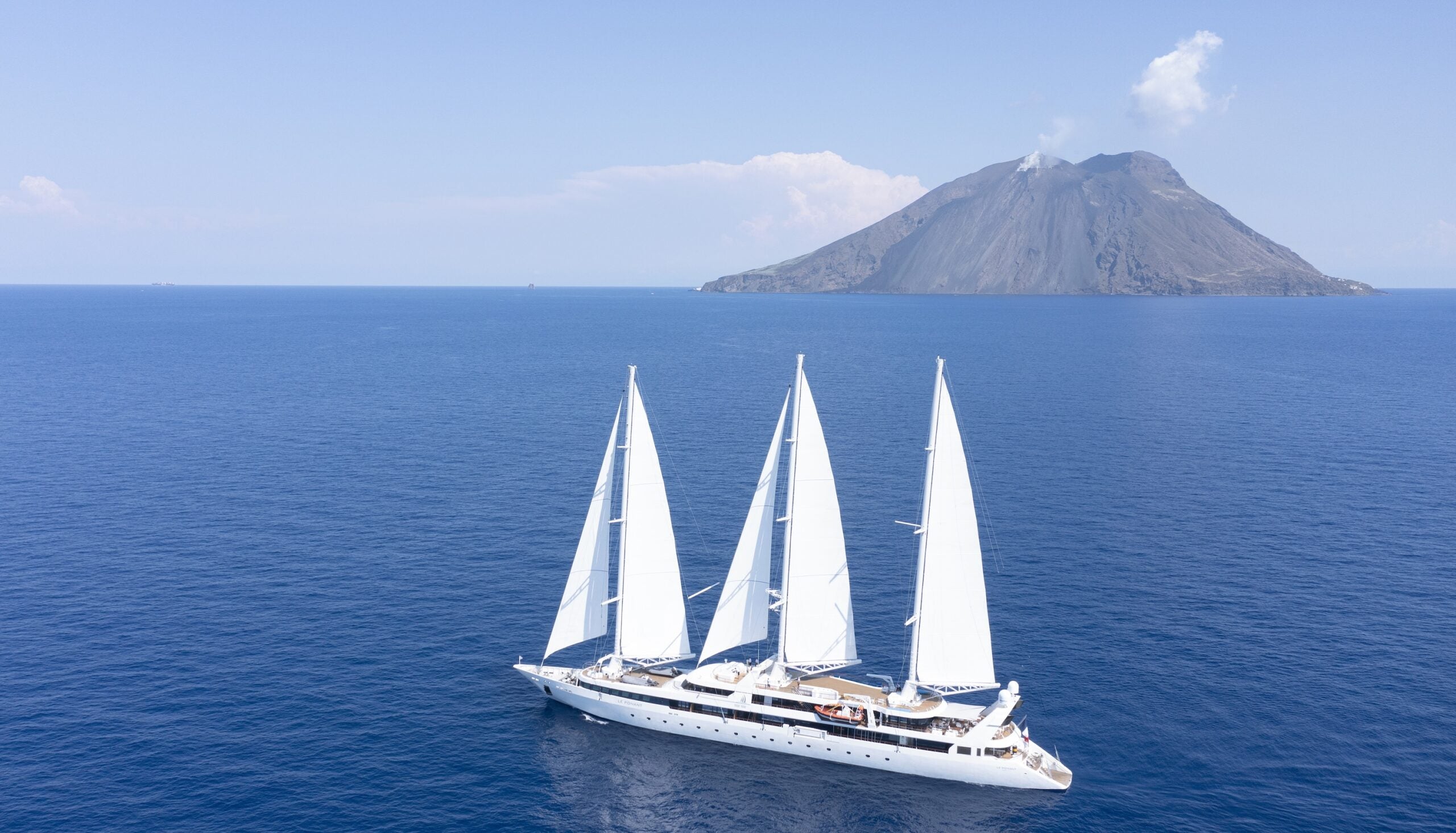
©Le Ponant Cape Verde is not short on resort hotels, particularly on Sal and Boa Vista, but genuinely high-end options remain relatively limited. If you want to see more than one island, without compromising too much on comfort, the better option is to do it by boat.
One of the most polished ways to do that is aboard Le Ponant, the first sailing yacht in the Relais & Châteaux portfolio, which offers an eight-day itinerary through the islands. Rather than limiting yourself to a single resort base, the route makes a persuasive case for seeing Cape Verde as a whole.
The journey starts in Mindelo on São Vicente, often considered the cultural center of the archipelago, before moving on to São Nicolau, Boa Vista, Praia on Santiago, Maio, and Fogo.
The route gives a much broader sense of Cape Verde than a resort stay could. In Mindelo, guests can experience bars playing morna and sip local grog, a Cape Verdean sugarcane spirit; on São Nicolau, there’s mountain trail treks and stunning green landscapes; on Boa Vista, the beaches, dunes, and marine life the country is best known for; and on Fogo, a look at the island’s volcanic interior, including the slopes of Pico do Fogo and its surrounding lava fields.
Le Ponant itself is small, with just 32 guests on board, so it feels closer to a private yacht than a cruise ship. Cabins are spread across three decks, and there is a spa, saltwater pool, and the usual watersports equipment (including glass-bottom kayaks and snorkeling and diving equipment) for swimming stops along the way. While it is not the only way to do Cape Verde, if your priority is seeing the islands properly – rather than spending a week at one resort –it is the most compelling.
-
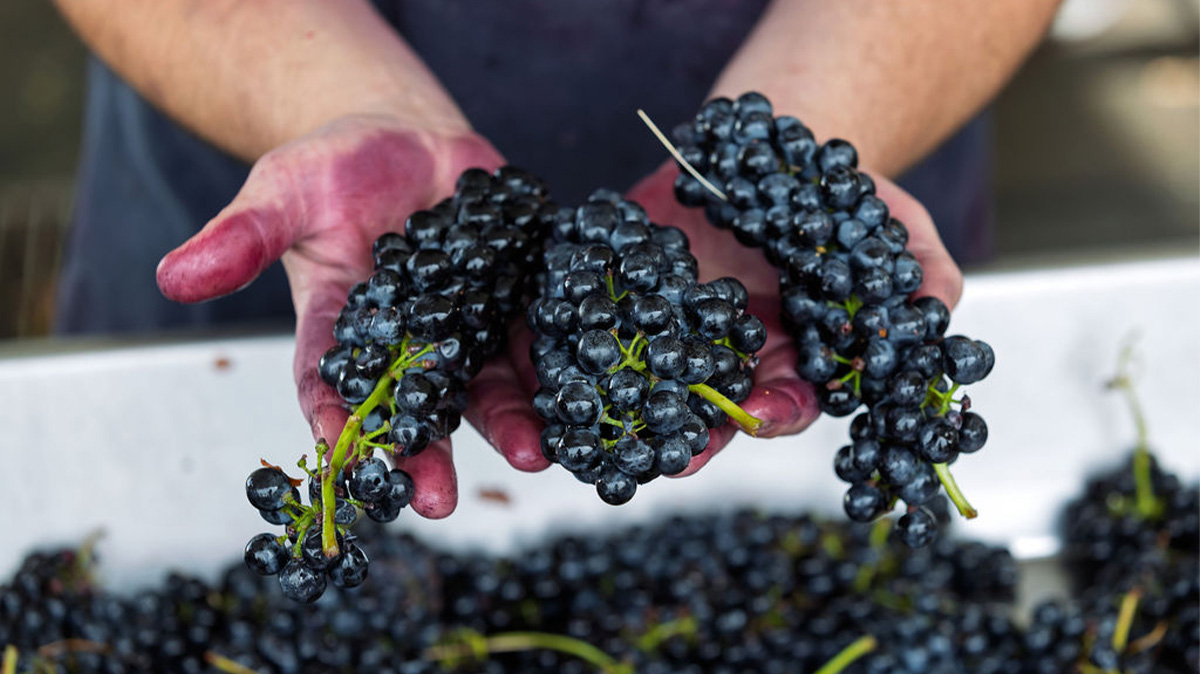
Washington Syrah Is the State’s Best-Kept Secret
Move over, Cabernet Sauvignon. It’s this Rhône varietal’s time to shine. Move over, Cabernet Sauvignon. It’s this Rhône varietal’s time to shine.