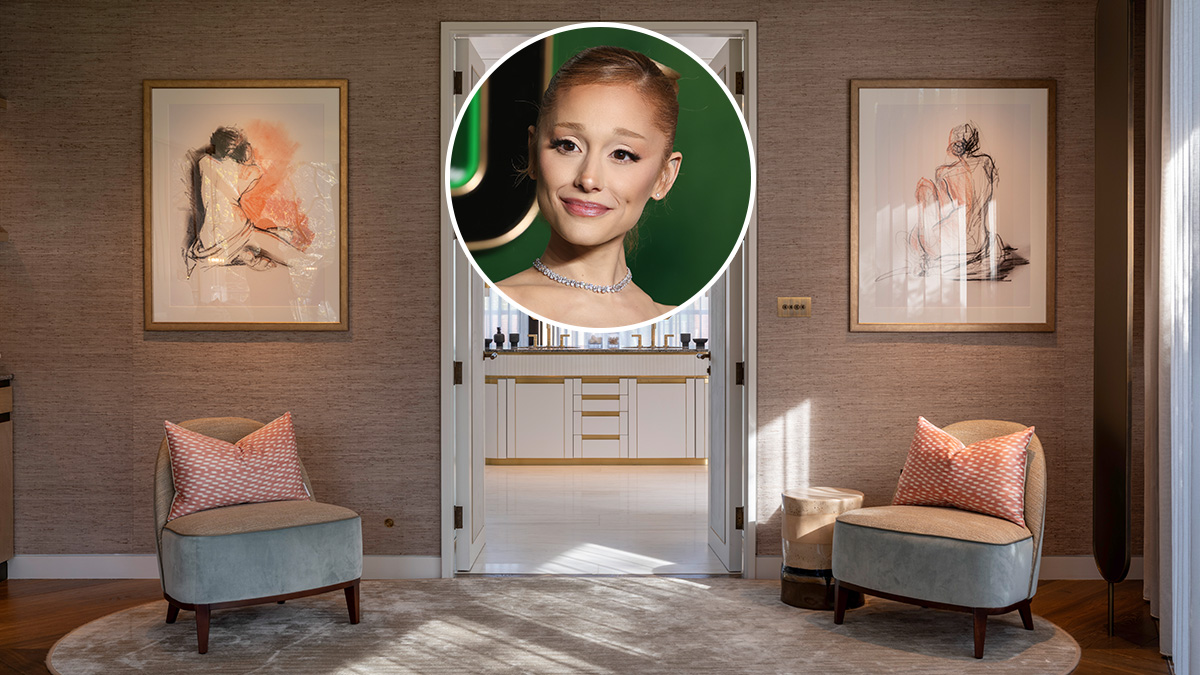
The pop star rented the nearly 10,000-square-foot apartment within Hampstead’s ultra-secure Buxmead enclave. The pop star rented the nearly 10,000-square-foot apartment within Hampstead’s ultra-secure Buxmead enclave.
Автор: karymsakov_qq4zn395
-
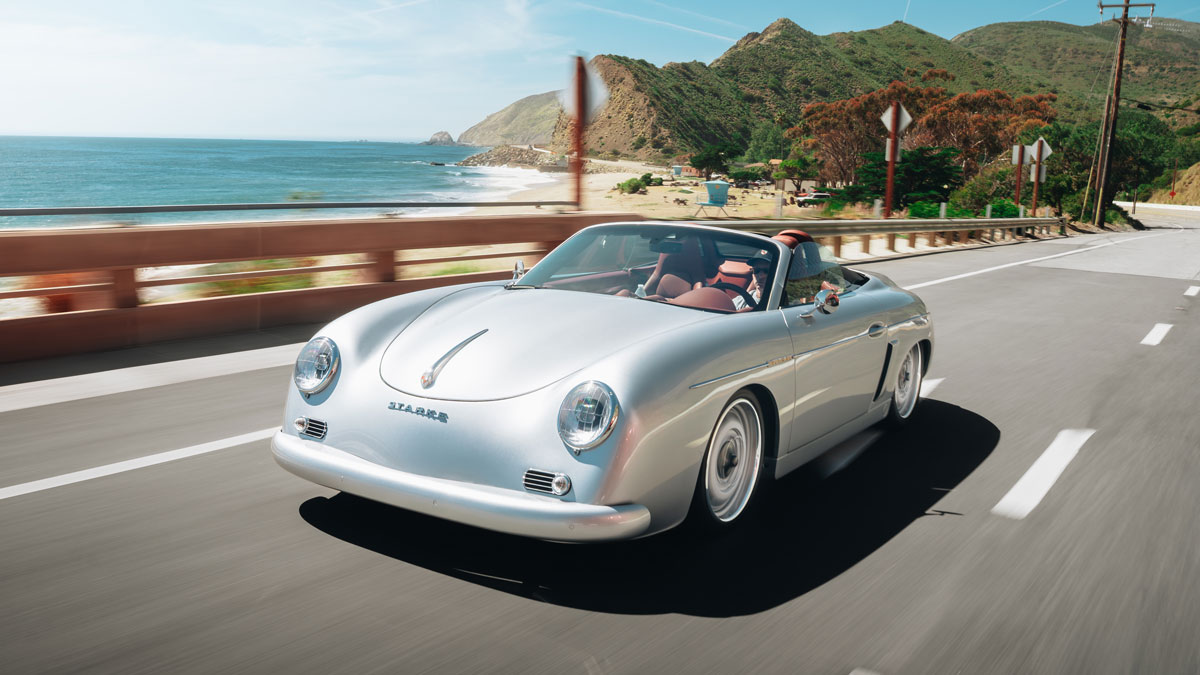
Road Test: This Stärke Speedster Pairs Porsche 356 Styling With the Performance Chops of a 718 Boxster
The tribute to Porsche’s 356 Speedster is built from the chassis of a 982-generation 718 Boxster, delivering the best of both models. The tribute to Porsche’s 356 Speedster is built from the chassis of a 982-generation 718 Boxster, delivering the best of both models.
-

Can You Copyright A Scent? And Should You?
They are odes to craftsmanship, but why aren’t perfumes protected like other art forms?

A luxury fragrance can take years to compose, yet a dupe that mimics its scent profile – and sells for a fraction of the price – can appear within weeks. It’s a phenomenon plaguing perfumers, whose largely intangible work is difficult to protect.
Trailblazing master perfumer Francis Kurkdjian recognizes it all too well, leading Christian Dior Parfums as perfume creation director, and his eponymous Maison Francis Kurkdjian, home to Baccarat Rouge 540 – the modern king of fragrance dupes. “A formula of a scent cannot be patented,” he explains, “even though a great perfume is the result of years of study, training, and creative vision, just like any other act of creation.”
See also: Why Is Hollywood Reportedly Hooked on Peptide Injections?

©Maison Francis Kurkdjian There are, of course, myriad artistic elements to scent-making beyond the commercialized packaging and presentation – all of which can carry emotional storytelling. Most central is the harmoniously structured and deftly blended juice itself, which “some would argue is culturally and creatively treated as an art form,” says Amanda McDowall, specialist brand protection and IP lawyer at Lee & Thompson, one of the UK’s leading law firms. So why is it that olfactory art is not clearly recognized under copyright law in Europe and the US? “Music can be written as a notation or recorded and paintings can exist visually on a canvas,” she tells us. “Perfumes are difficult to protect in this way because they are hard to fix in a stable expressive form, and are perceived very subjectively.”
Instead, as McDowall explains, there are types of intellectual property protection available to safeguard perfume creators’ rights. The most important form is likely trade secrets, whereby “the exact formula for a fragrance is often kept confidential, in the same way that famous soft drink formulations are.» Trade secrets work well, she continues, “because formulas are difficult to perfectly reverse engineer and secrecy can theoretically last forever.» Some perfume houses also develop sophisticated molecules to make their fragrances more difficult to replicate, says Clara Molloy, co-founder of luxury niche fragrances Memo Paris. “But ultimately, these efforts only buy time: people who truly want to copy something will always find a way.”
See also: Why Haute Fragrance Matters More Than Ever, According to Maison Margiela
There are other tricks of the trade, too. With each Memo Paris fragrance, for example, maturation and maceration times are changed, Molloy shares. “It is a know-how done by people passionate about perfume.” And like the rare ingredients they source, this expertise comes at a high cost. “Those who produce dupes don’t want to put this kind of price on a perfume,” she points out. Natalie Guselli, head of beauty at Liberty – one of the retail world’s most iconic fragrance destinations – agrees. “The reality is that the concentration, ingredients, and construction of a luxury fragrance create a depth and staying power that is very difficult to replicate with cheaper alternatives.” As Molloy quips, “you can always buy the copy of a Chanel dress, you are still not wearing Chanel.»

©Unsplash Paradoxically, this does bring about the argument for dupes: they can open the door to a world that often feels inaccessible. That said, as perfumer Pia Long highlights in her new book Demo Accords, far from “heroically Robin Hood-ing their way through perfumery’s elitism problems”, dupe companies are simply “stealing from everyone.» And besides, “there is enough perfume in the world at every possible price point to have options for all.» Quite.
Ironically, by amplifying their cultural relevance, dupes may actually reinforce the appeal of the originals they imitate. “Fragrance continues to be the strongest-performing category in Liberty’s Beauty Hall, and through our Fragrance Lounge we are seeing customers increasingly investing in highly distinctive, niche scents with strong quality and longevity,” Guselli shares. “Whilst dupe culture has undoubtedly grown online, it hasn’t had the same impact within luxury fragrance because fragrance lovers are ultimately looking for originality, craftsmanship and emotional connection – not mass appeal.”
As AI evolves, bringing the prospect of near-perfect scent replicas closer, we may see legal protections for fragrances expand. For now, Molloy remains open to what dupe culture reveals. “My heart hesitates between two positions. On one hand, I look down on copies. They are almost always poor in quality, and ultimately quite depressing. On the other, I love the fact that perfume cannot truly be protected; that it remains invisible, free, almost wild. It allows trends and creative movements to emerge naturally.” And that, perhaps, is the beauty of scent: its profound ability to help us make sense of the world.
-

Feeling The Heat? These Are The Best Luxury Rooftop Pools to Cool Off in London
From members-only rooftops to sky-high hotel pools, these are the chicest places to cool off during London’s heatwave.

-
Will Your Future Wardrobe Be Made From T-Rex Leather?
From algae-grown bioplastics to lab-grown fur and leather crafted from fish scales and jellyfish collagen, luxury fashion’s future is being engineered in the lab.

Fashion has long looked to the past for inspiration. One season it’s all ‘90s minimalism and slip dresses; the next, it’s capri pants and thong sandals. But luxury’s latest obsession reaches back further than any trend cycle yet: 68 million years, to be exact.
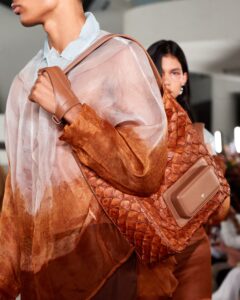
This spring, Polish fashion brand Enfin Levé unveiled a handbag it claims is made from ‘lab-grown T-Rex leather.’ Developed using reconstructed collagen sequences inspired by Tyrannosaurus rex fossils, the material was bioengineered in a lab to mimic the structure and feel of traditional leather. The team behind the project says the resulting material is traceable, biodegradable, and cruelty-free, while remaining ‘structurally identical to traditional leather.’
The bag first went on display in Amsterdam in early April, where it remained on show for six weeks before it was due to head to auction. Initial reports suggested bidding would begin at £500,000 (approx. $660,000). However, as the bag gathered attention online, experts quickly grew skeptical of its Jurassic Park-like origin story.
Live Science spoke to Thomas Holtz Jr., a vertebrate paleontologist at the University of Maryland, who thought the T-Rex leather claim was ‘misleading’ and that ‘what this company is doing seems to be fantasy.’ German publisher DW, meanwhile, spoke to scientists who claimed the resulting DNA is not dinosaur, but more chicken than anything else. No further information can be found about the auction since the first announcement, and when Elite Traveler approached for comment, the company did not reply.
See also: This Dutch Collector Turned His Home Into an Incredible Fossil Museum
For Olivia Pillock, fashion journalist and lecturer at London College of Fashion, much of this innovation is undeniably being driven by necessity. “The massive increase in consumption is placing a huge amount of strain on the resources those come from, so we need to look into alternatives that might reduce some of that strain,” she tells Elite Traveler. But for luxury consumers, it is rarely a material’s environmental credentials that sells a product.

Some scientists dispute the claims of Enfin Levi’s dinosaur leather handbag as a ‘fantasy’ ©Unsplash “Sustainability isn’t often a big driver of why we buy something,” says Pillock. “But if we can tell an exciting story about the weird and wonderful material that something is made from, that adds a benefit to the consumer.”
That shift is also beginning to redefine what luxury itself means. Traditionally, luxury fashion has been rooted in heritage craftsmanship, but could scientific innovation become part of the appeal? “Luxury can mean excellent craftsmanship, limited products, and things designed by the very best,” says Pillock. “But to me, luxury is also where everybody’s treated fairly in the supply chain, we’re limiting our impact, and it has human innovation and scientific research behind it. I think that’s also an incredibly luxurious value.”

Fish leather has already been seen on the catwalk ©Nova Kaeru From polyester alternatives grown from algae to leathers made from fish-scales, jellyfish collagen, or the by-products of wine, apple, and coconut production, this fascination with futuristic materials isn’t limited to experimental start-ups; some of luxury’s biggest names are already experimenting with our future wardrobes. For the past two years, Hermès has experimented with mushroom-based leather developed from mycelium, Stella McCartney has long championed bio-based alternatives and recycled textiles, debuting the world’s first plant-based feather alternatives in her Summer 2026 runway show last year, and Brazilian brand Nova Kaeru has produced its fish leather for the likes of Burberry, Givenchy, and Rick Owens.
Of course, not every experimental material will survive beyond the prototype stage, nor are they necessarily intended to replace leather, silk, or polyester entirely. Instead, fashion’s future may lie in broadening our palette of materials to coexist alongside more traditional textiles. “It’s not necessarily that mushroom leather is going to replace all cow leather, or algae-grown bioplastics are going to replace all polyester. It’s probably just going to be a greater variety,” adds Pillock. “Not all of them are going to make it to market, and not all of them are going to meet the needs of the fashion industry, but it’s quite fun experimenting in the meantime.”
Whether a T-Rex leather handbag ultimately proves to be a scientific breakthrough, luxury gimmick, or simply very expensive mock leather, it signals something larger taking place across the industry. Fashion’s next era of luxury may not be defined solely by what appears walking down the runway, but instead by what can be grown inside a lab.
-

BYD and Chopard Created a Custom EV That Sold for $815,000 at Auction
The Chinese automaker’s luxury sub-brand Denza made a real splash in Cannes. The Chinese automaker’s luxury sub-brand Denza made a real splash in Cannes.
-
Step Inside London’s Best Hotel Suites
The capital might be abundant with penthouse suites and duplex residences, but these are the very best of the best to book.
London — with its myriad landmarks, storied history, oodles of character, vibrant culinary scene and top-notch shopping — is always a good idea. Already home to a plethora of exceptional five-star hotels and amazing suites, London has seen a number of highly hyped new openings over the last few years. From years-long renovations, fabulous new suites and billion-dollar designs, these are the most exciting new openings in The Big Smoke.
Claridge’s
The Residence and The Penthouse
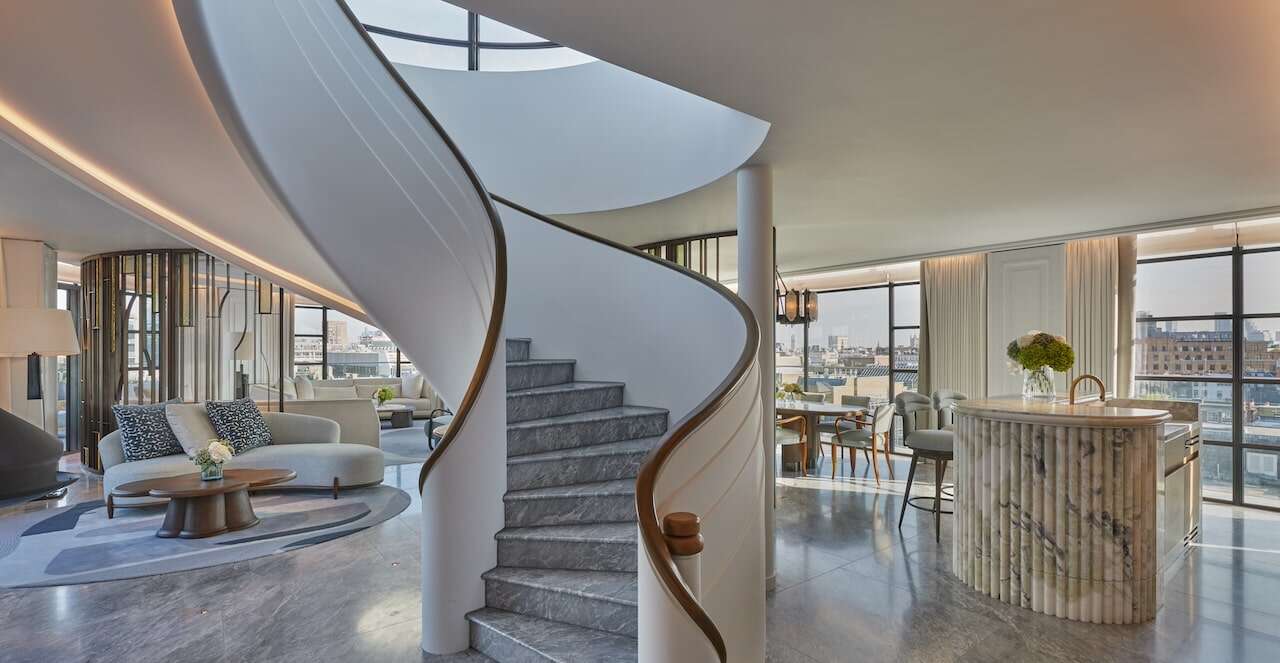
The Residence, a lavish two-bedroom duplex designed by André Fu / ©Claridge’s “Claridge’s, daaaahling” — the phrase just walks off the tongue, each syllable heavy with the weight of unabashed luxury. An icon since 1856, the hotel remains special even among London’s five-star set. But what old and new money alike both love about Claridge’s is its constant ability to offer something new. Reputation alone would surely see it weather hard times, but the hotel does something more: It constantly reinvents and replaces itself, without ever losing any of the pizzazz that made it so great in the first place.
A recently completed seven-year renovation saw the hotel’s footprint double, with a jaw-droppingly intricate feat of engineering digging down to add five new floors below ground and a further three on top. This renovation touched virtually every element of the hotel (with historical features painstakingly preserved) but some highlights naturally stand out as the real stars. The top headlinegrabbers are the newly designed restaurant, which has returned to its Claridge’s Restaurant name for the first time in two decades and serves decadent dishes in flashy Art Deco surroundings; the subterranean, 7,000-sq-ft Claridge’s Spa; and 75 new guest rooms.
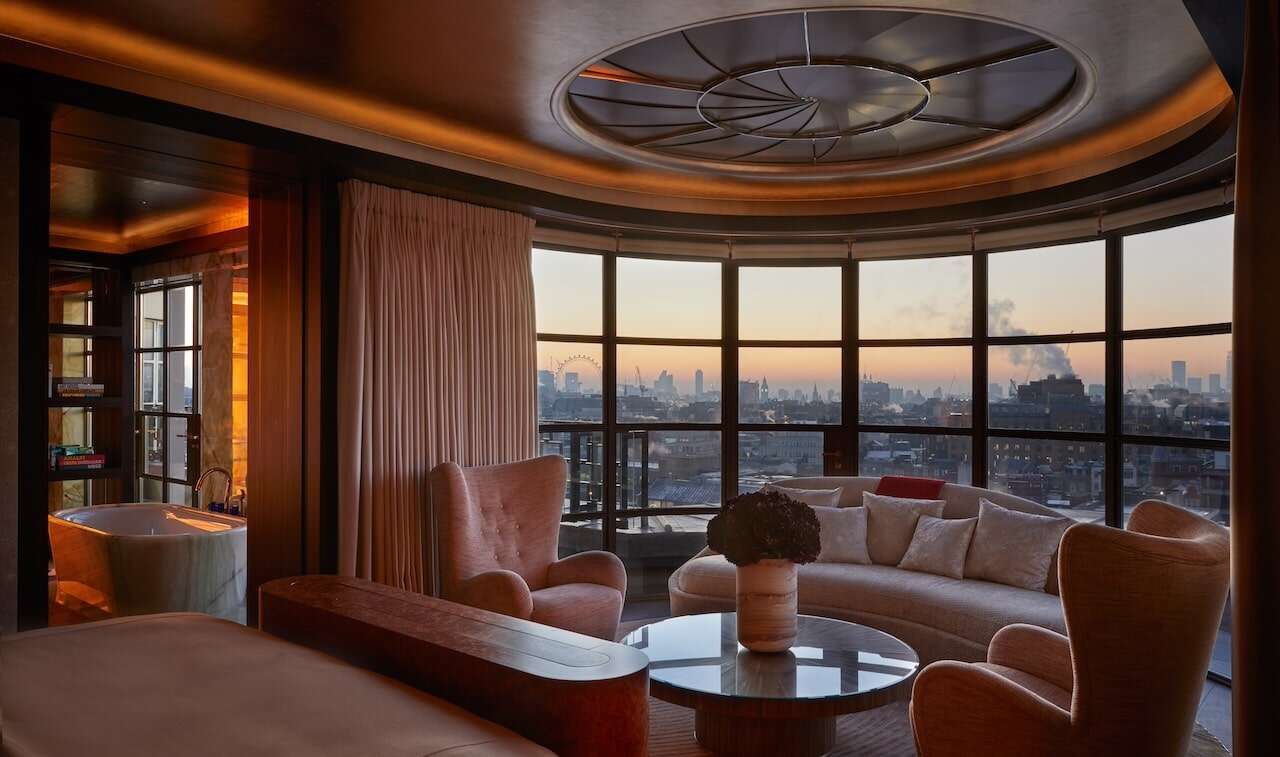
The Penthouse makes the most of its lofty position within Mayfair / ©Claridge’s Included in the new room count is The Residence — a lavish two-bedroom, André Fu-designed duplex, centered by a marvelous circular lounge space, with floor-to-ceiling windows for gazing out on the city skyline. On the second floor, accessed by a grand spiral staircase, a rooftop terrace complete with a whirlpool beckons.
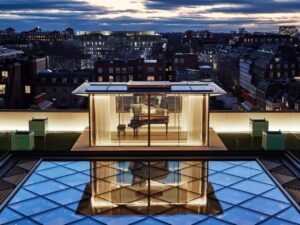
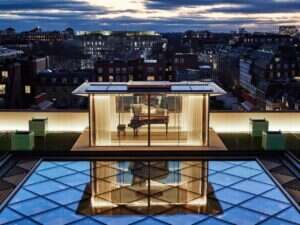
Miraculously topping even this, though, is the all-new Penthouse. Sprawling over 16,145 sq ft and occupying the entirety of Claridge’s top floor, the four-bedroom suite is accessed via a private elevator; it was envisaged by legendary yacht designer Rémi Tessier. Resplendent details are too many to list entirely, but — deep breath — the floating piano pavilion, inclusive fine wine fridge, the world’s largest private Damien Hirst collection, an outdoor ‘lake,’ 29.5-ft heated pool, private gym, marble bathtubs and 360-degree city views help paint the picture. There really is nowhere else like it in London, new or old.
Price on request. Contact info@claridges.co.uk, +44 207 629 8860, claridges.co.uk
The BoTree
The BoTree Suite
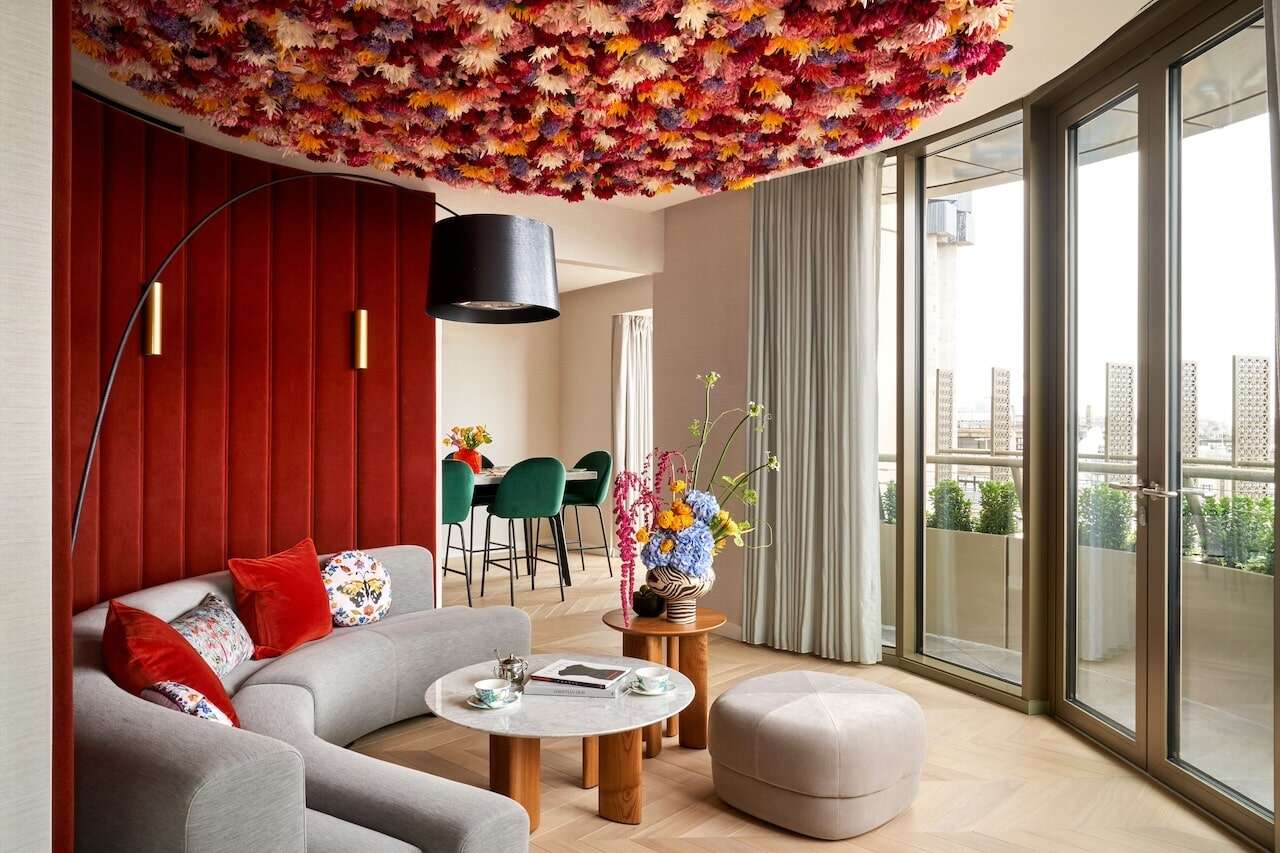
The BoTree Suite delights with vibrant interiors / ©The BoTree Fun, carefree and modern: The BoTree belongs to a new brand of London hotels. Opened September 15, 2023 to much fanfare (and with a star-studded launch party), the Preferred Hotels member property quickly swished into high regard, not least for its great location bridging Mayfair and Marylebone. As part of the hotel’s fun-loving vibe, service is intentionally informal (but always very slick) — in place of a standard check-in desk, guests are greeted by a smiling, iPad-wielding team and quickly coaxed toward a glass of champagne while they get the boring bits out the way. The impeccable service extends to your room — each floor gets its own dedicated host, on hand to press garments or explain the high-tech in-room facilities all at the push of a button.
Each of the hotel’s suites exudes the now-signature BoTree style (read: lots of delicious unashamedly pink hues and floral prints), but up on the seventh floor, the one-bedroom BoTree Suite takes things to the next level. Designed by Amsterdam-based studio Concrete, the room is a lesson in modern maximalism, with a clean, neutral base palette bolstered by a number of brilliant extra touches. What kind of brain conjures up a mohair-covered wall, a flower ceiling and a golden cocktail station? A smart one, for sure.
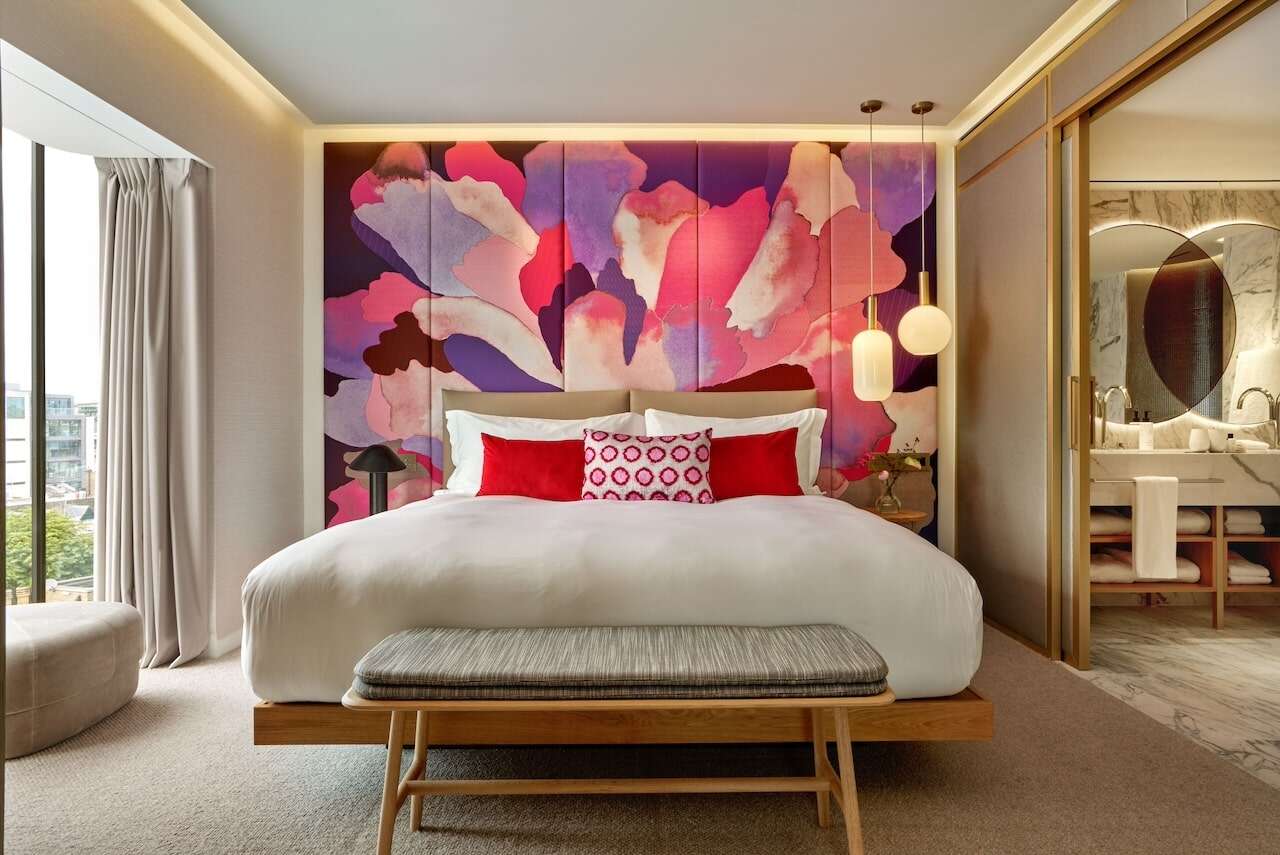
The BoTree Suite comes with eucalyptus tencel bedsheets / ©The BoTree The suite enjoys all sorts of top-notch amenities, too, including a Dyson AirWrap, Jo Loves toiletries, irresistible eucalyptus tencel bedsheets, a swanky dressing room and a freestanding marble bathtub, not to mention the great city views. Bringing the team with you? The BoTree Suite has you covered — make use of the option to interconnect nine adjoining rooms for a mammoth accommodation with space for the whole entourage.
If you can drag yourself away from the enveloping comfiness of your room, you needn’t travel far for a decent meal. The BoTree has transported Los Angeles favorite Lavo, with its signature take on Mediterannean dishes, to London’s pretty streets. Don’t be fooled by the flashy decor — the food is great. Think: fresh-out-the-fryer, fingertip-burning fritto misto; rich, tomatoey lobster pasta; and a show-stopping 20-layer peanut butter cake, which has (deservedly) been making the rounds on social media.
Price on request. Contact reservations@thebotree.com, +44 207 309 9700, thebotree.com
1 Hotel Mayfair
Green Park Penthouse
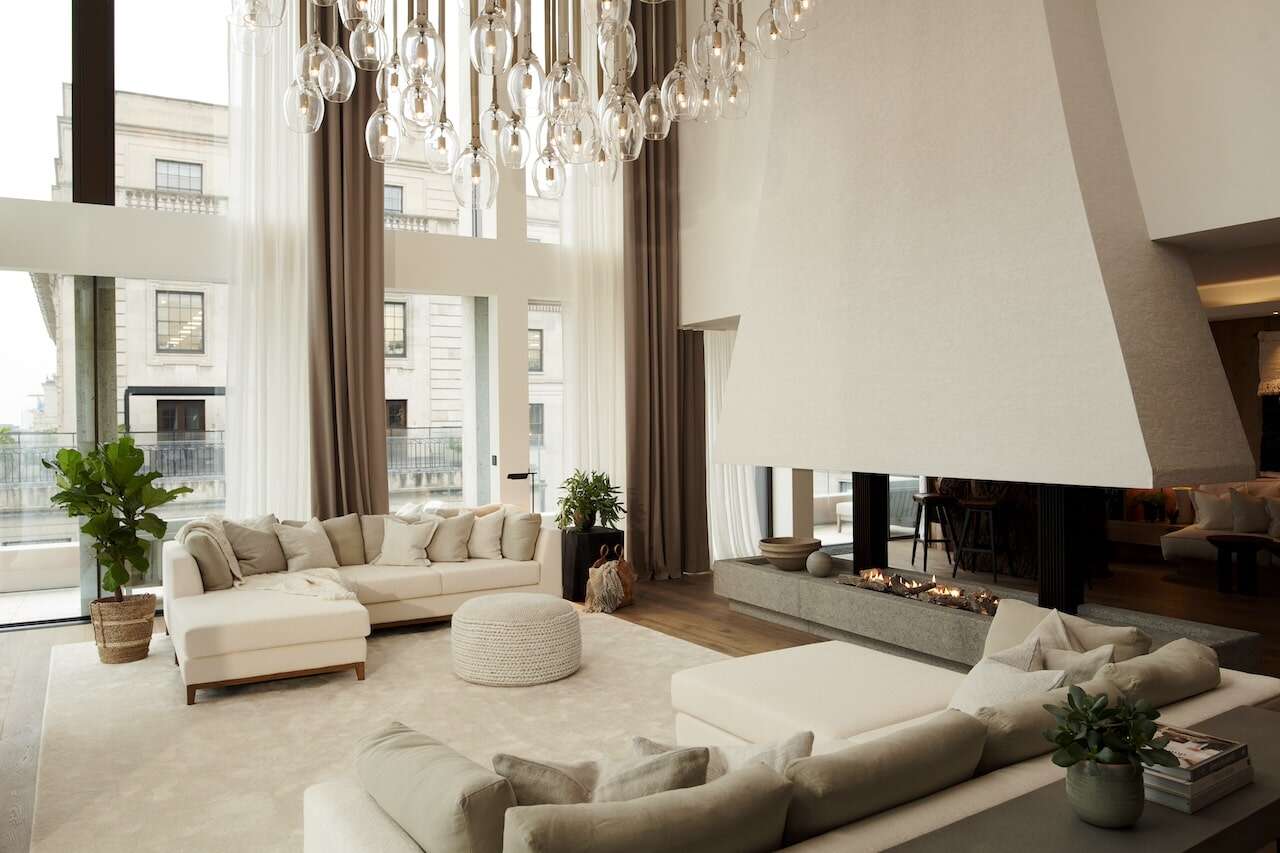
The Green Park Penthouse spans a humongous 2,949 sq ft / ©1 Hotels The antithesis to the city’s old-school glamour, 1 Hotel Mayfair has a style all its own. Decidedly cool and laid-back, the hotel is within walking distance of Green Park, Regent Street and the West End, and so attracts a smorgasbord of guests: finance bros, hipsters, well-heeled tourists, fashionistas and theater darlings. Remarkably, the eco-conscious hotel has a number of living green walls as well as 1,300 plants, shrubs and trees — there are even plants in the ceiling of the elevator and rosemary growing on one of the suite’s terraces.
More greenery can be found in the Signature Suites — the Garden Terrace Suite, a 1,873-sq-ft, one-bedroom haven, is just made for summers in the city. Its 1,097-sq-ft private terrace has an alfresco dining space and huge L-shaped sofas arranged around a trio of wooden coffee tables, plus views across the city’s skyline. The Green Park Penthouse is the top key (which is made of wood, in keeping with the hotel’s green ethos) and spans a humongous 2,949 sq ft.
Named for the park it overlooks, the suite feels like an extension of the verdant park with its natural color palette, live tree stump bar, raw timber dining table and, of course, even more plants. The one-bedroom penthouse also comes with a two-person sauna and has a stunning double-height living area with a two-sided fireplace and a spacious terrace. Both suites have filtered water taps nestled among a live garden wall; guests receive their own branded water bottle to refill.
Be sure to book in at the Bamford Wellness Spa; the Bamford Body Signature Treatment is particularly lovely and features 90 minutes of a plethora of massage techniques (Japanese shiatsu, Swedish and Indian) using a fragrant rosemary oil. (Ask for Grace.) The treatment will leave you feeling remarkably supple and more flexible — not just immediately after, but for the days following, too. Dovetale, the hotel’s restaurant, is led by Tom Sellers, whose London venue Restaurant Story has two Michelin stars. Order the Burgaud duck tortellini in brodo and the juicy steak; wash it down with one of the cocktails that uses repurposed ingredients — the Purple Roy combines The Macallan 15-year-old Double Cask, Mancino Rosso Amaranto and purple carrot tincture. It’s practically healthy.
Green Park Penthouse from $18,815 per night. Contact 1hmf-reservations@1hotels.com, +44 203 988 0055, 1hotels.com
Broadwick Soho
The Penthouse
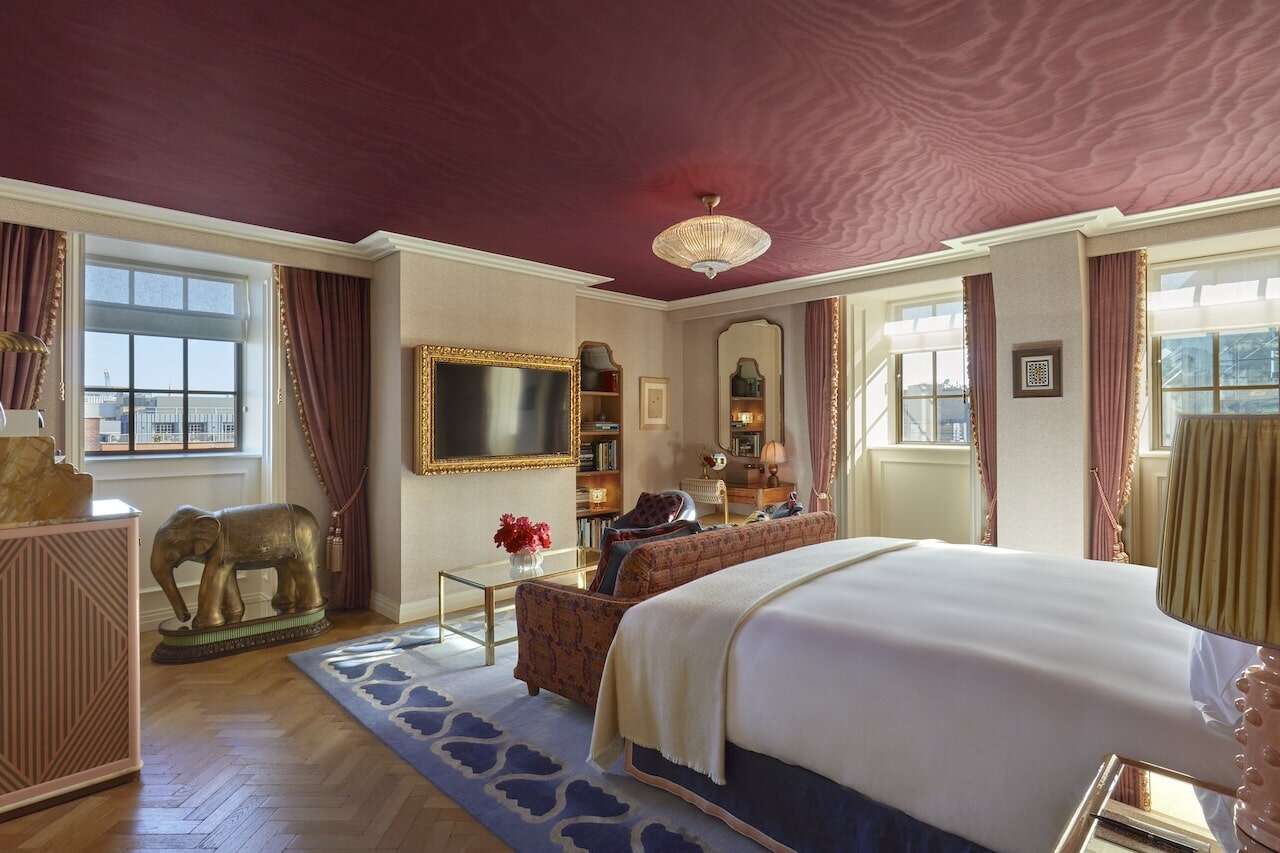
The Penthouse, including the hidden mini bar inside the elephant / ©Broadwick Soho Shushing all the whispers of quiet luxury, Broadwick Soho is a joyous scream for the maximalists. Leave stuffy British sensibilities at the door, for this boutique hotel offers bucketloads of the flair and flamboyance that this pocket of the West End is famous for. From the several hundred vintage artworks that line the walls to the corner displays of knicknacks, Broadwick Soho feels more akin to staying in an extravagant, if eclectic, relative’s townhouse — if your grandma was, say, Patsy Stone.
Reigniting that familial feeling was an intentional choice by owner Noel Hayden, after a childhood in the ’80s spent helping at his family’s seaside hotel. Now Broadwick Soho is said to be Hayden’s love letter to that former property, employing interior designer (and friend) Martin Brudnizki to bring it into raucous reality. That sense of community spirit doesn’t end there: The on-site restaurant Dear Jackie and associated Bar Jackie are named after Hayden’s mother; and family photos are emblazoned onto matchboxes at the bar at Flute, the lively rooftop bar.
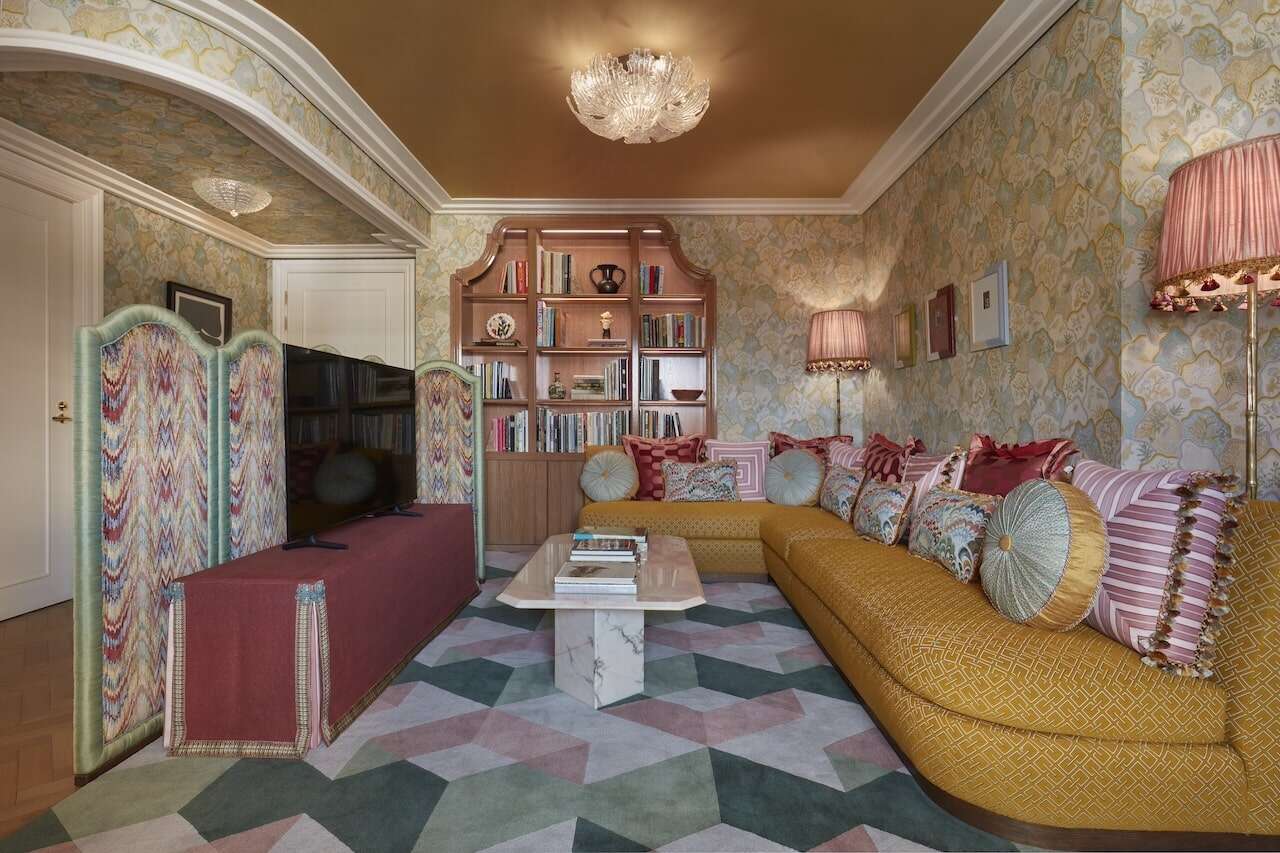
The hotel was design by Martin Brudnizki in his inimitable style / ©Broadwick Soho With all that personality bursting throughout the downstairs, it may come as somewhat of a relief (at least for the easily overstimulated) that things take a more mellow turn in the bedrooms. Toned down, yes, but The Penthouse remains far from boring. Here, wallpapers are daintier but still intricately detailed, and the color palette takes on a jewel-toned hue. Looking for the minibar? That can be found in the handmade brass elephant, of course. The TV? That’s in ornate gold framing. Soho may be the night owl’s domain, but The Penthouse makes staying in ever so tempting.
Price on request. Contact info@broadwicksoho.com, +44 207 047 4000, thebroadwicksoho.com
Raffles London at The OWO
Heritage Suites
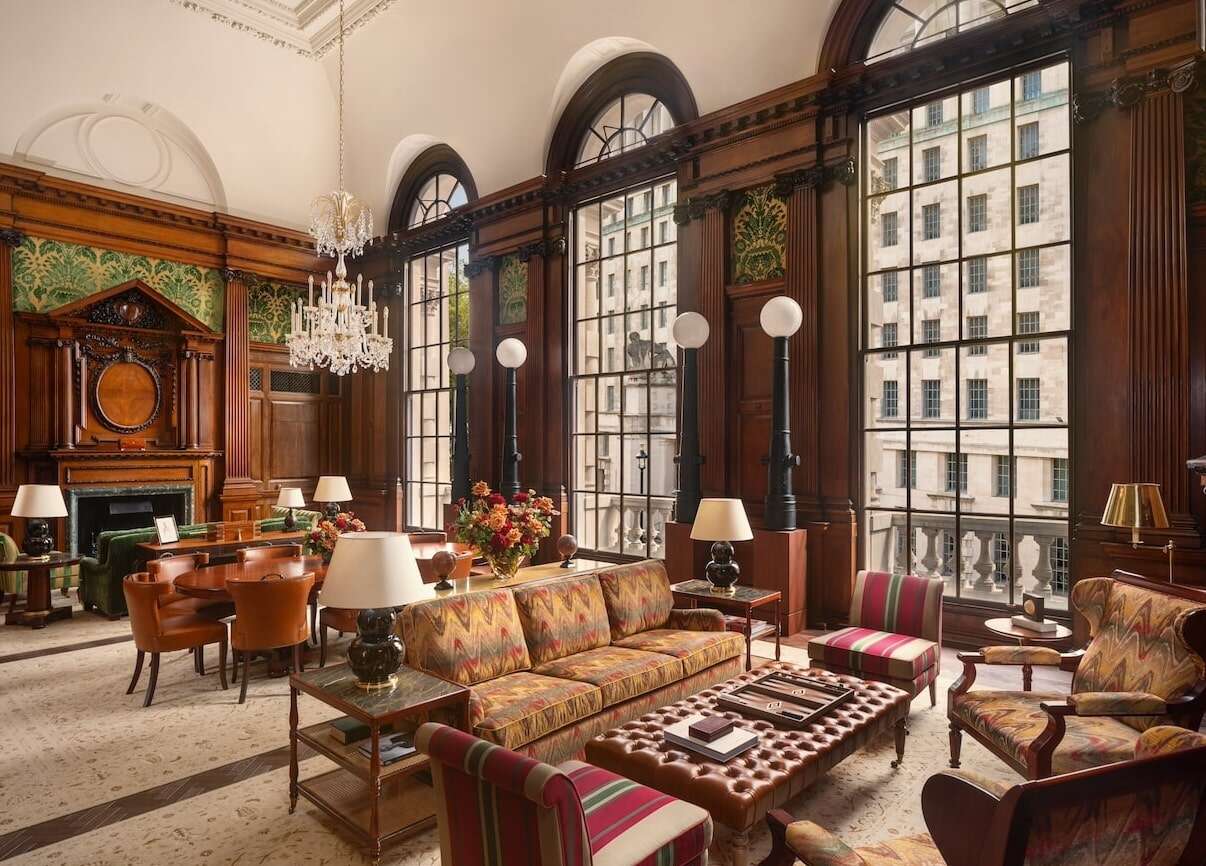
The Churchill Suite was once the Army Council Room, where major decisions were made during WWII / © John Athimaritis When a hotel is surrounded by so much history, so much hype, so much intrigue that when it finally opens, it leaves just one question: Does it live up to said hype? The answer, in the case of Raffles London at The OWO, is yes. Absolutely yes. Expletive yes. The cultural landmark, cutting an imposing silhouette in Whitehall, has been carefully restored over the span of six years and to the tune of a heavy $1.7bn.
Within the Edwardian Baroque building, there are 120 suites, 85 residences (including a $137m penthouse), a spa spanning 27,000 sq ft over four floors with a 65-ft pool, some 2.5 miles of corridor, a ballroom for up to 700 guests, and a number of bars and restaurants — including the invite-only Spy Bar, hidden in the depths, where you’ll receive a scratch card that will reveal a martini for you. (Mine was extra dry with pickles. Delish.) The grand staircase, crafted from Painswick stone and white-and-gray veined Piastraccia marble from northern Italy, is astonishing in its grandeur and only heightened by the plush red velvet carpet and glittering chandelier hovering above. (Stand at the top of the stairway, just like Winston Churchill did when he would address his officers below.)
The staircase leads to some of the five Heritage Suites; each one is a former office held by a leading politician or military leader. The Haldane Suite, named for Lord Richard Burdon Haldane, who was Secretary of State for War in 1906, is classically Edwardian with its preserved and restored wood-paneled antique fireplaces. Perched atop of an intricate mantlepiece is a bust of Churchill (this space was his office during WWII), looking down over his original desk.
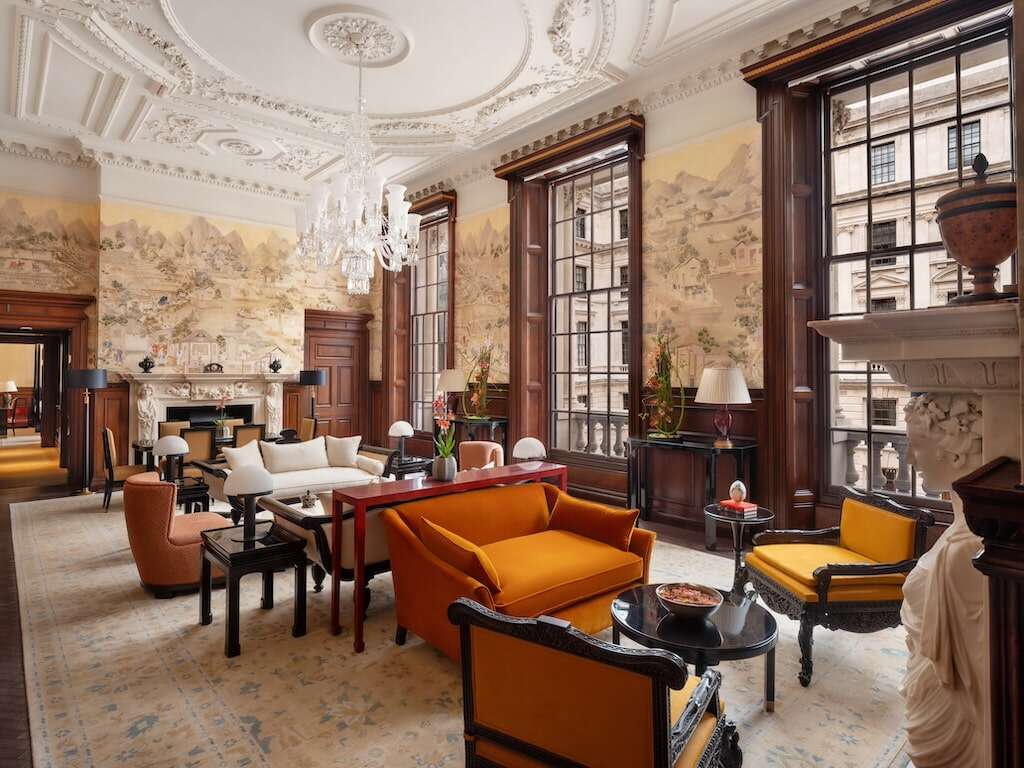
The Raffles Suite / © John Athimaritis The Churchill Suite was originally The Army Council Room — major decisions about the British army were made here, including during WWII. The 1,539-sq-ft suite has soaring arched windows with views over Horse Guards Avenue, gorgeous wooden paneling and sumptuous Damask upholstering. The Granville Suite is named for Christine Granville — Churchill’s favorite spy — and was originally military reception rooms, which have been transformed into an elegant one-bedroom suite with soaring domed ceilings and gilded chandeliers.
As this is a Raffles, there is of course a Raffles Suite. The 1,377-sq-ft abode overlooks the Edwardian inner courtyard (a rarity in London; only a few five-star hotels have one) and has magically restored stucco work and a scenic Chinois wallpaper. The bathroom is seductive with black marble and gold accents and a freestanding tub next to a towering floor-to-ceiling window. And finally, The Turret Suite is a duplex found in one of the building’s turrets. It has a ground-floor bedroom and bathroom with a magnificent lounge overlooking Whitehall on the upper floor.
Heritage Suites from $25,000 per night. Contact london@raffles.com, +44 203 907 7500, raffles.com
The Connaught
King’s Lodge
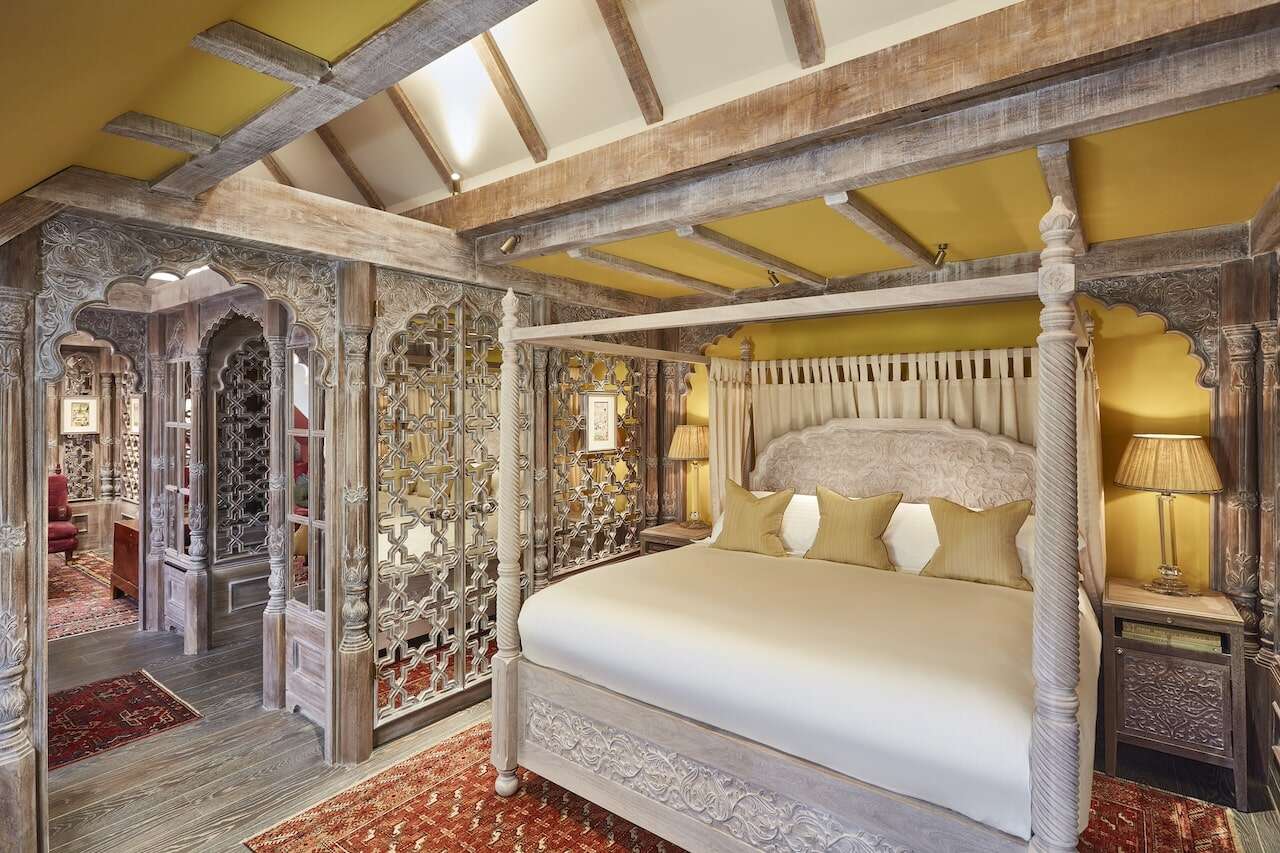
The Kings Lodge is the result of a collaboration with Turquoise Mountain / ©The Connaught As part of the Maybourne Hotel Group (which also operates Claridge’s, The Berkeley and The Emory, as well as The Maybourne Riviera in the south of France and The Maybourne Beverly Hills) The Connaught has old-school luxury, with a focus on discretion, running deep in its veins. Dating to the late 19th century, the Mayfair hotel is a mainstay in any list of London’s best.
But despite its time-honored reputation, the hotel still keeps its eyes firmly open to modern-day concerns and causes — a trait perhaps best exemplified in its ongoing partnership with Turqouise Mountain, a UK-based charity dedicated to championing, uplifting and preserving heritage crafts and craftspeople, particularly in conflict-affected regions. The relationship between hotel and charity is a long-standing one: Turquoise Mountain’s volunteer creative director Guy Oliver was appointed as the lead designer for The Connaught’s 2007 refurbishment, when he neatly united the two — a stroke of genius that birthed The Prince’s Lodge suite.
This year, The Connaught revealed the product of its second collaborative relationship with Turquoise Mountain: The King’s Lodge. Tucked away up in the eaves of the hotel’s fifth floor neighboring the existing Prince’s Lodge, the King’s Lodge is an enveloping space, rich with the singular crafts of some of the world’s most creatively abundant countries. Its one bedroom is dominated by a one-of-a-kind, four-poster bed, crafted by hand in walnut by Syrian artisans.
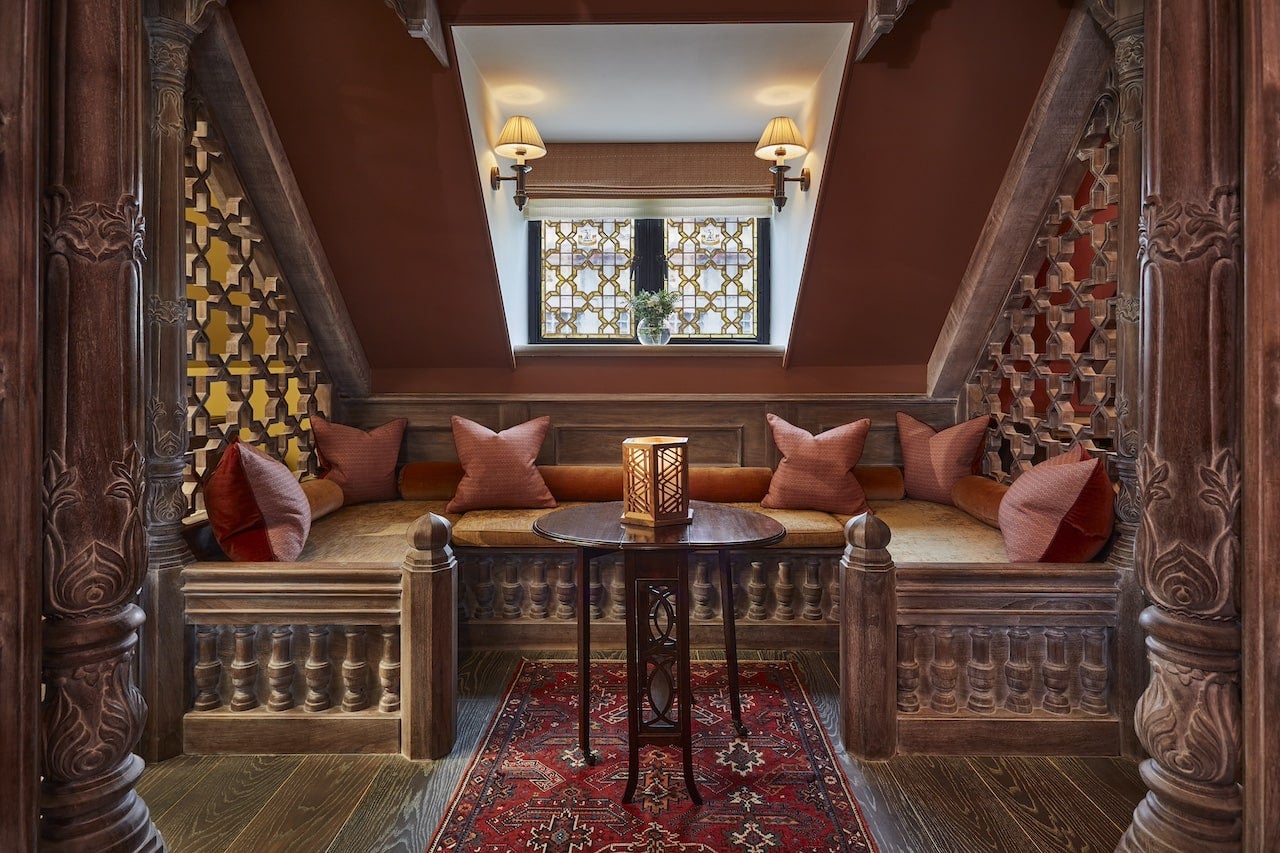
Each element of the suite has been commissioned specifically for the project / ©The Connaught Dividing the sleeping quarters from the sumptuous living area are intricate wooden screens — examples of walnut jali fretwork, an Afghan craft that delicately connects pieces of wood. On the floors, handwoven carpets from Afghanistan; in the bathroom, a showstopping marble panel — so large the hotel’s elevator barely accommodated it — was created by carvers from Makrana, India, considered some of the finest stonemasons in the world.
Each element of this singular suite has been commissioned specifically as part of this project, with the work of over 100 artisans employed to bring it together. In addition to the financial merits of the commission, a portion of proceeds from each King’s Lodge and Prince’s Lodge booking will be donated to Turquoise Mountain.
From $2,495 per night. Contact reservations@the-connaught.co.uk, +44 207 107 8843, the-connaught.co.uk
The Peninsula London
The Peninsula Suite
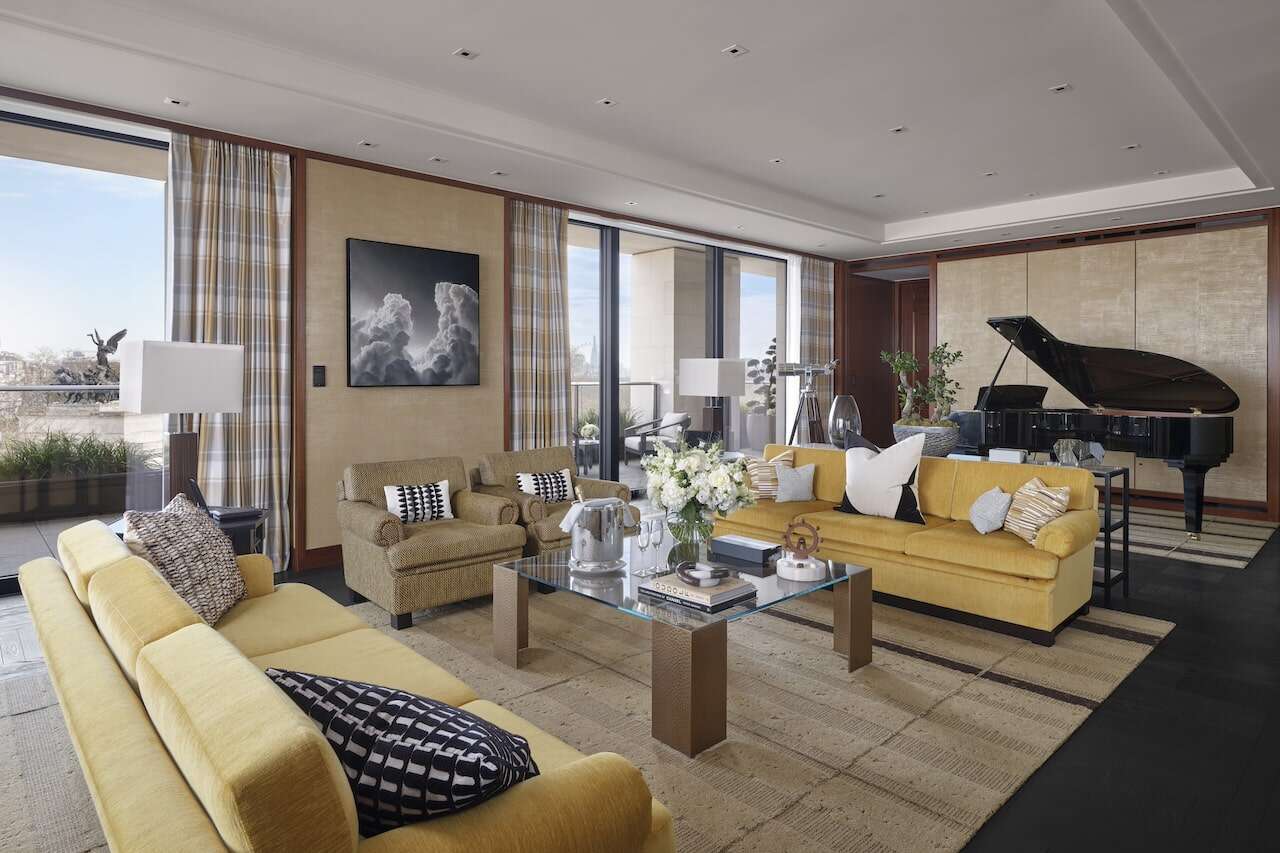
The Peninsula Suite has been designed with the brand’s signature cues / ©Will Pryce The Peninsula was one of two $1bn hotels to open in London in 2023, but this one could not be more different from its counterpart, Raffles London at The OWO. Raffles occupies a historic military site oozing grandeur and historical anecdotes; The Peninsula, on the other hand, is a built-from-the-ground-up, 21st-century hotel. What it lacks in storied walls, it makes up for in high-tech toilets, digital infotainment systems and an interior style that Peninsula loyalists will find instantly comforting.
The lobby is lifted straight out of its property in Hong Kong. There are a few local touches, such as hand-painted murals depicting nearby Hyde Park, but The Peninsula came to London not to settle into local customs, but to introduce the city to its way of doing things.
Take The Peninsula Suite, for instance. At 5,059 sq ft, it is one of the biggest in London. If you take the option to connect the six additional rooms, it becomes the biggest suite in town. It’s on a scale that the cramped legacy hotels of Mayfair cannot offer. Beyond the huge living area, you get a private gym, a dining room, an office, not one but two huge dressing rooms and a 13-seat cinema. There’s a wraparound terrace for the two weeks of summer that London usually enjoys and floor-to-ceiling windows for the other 50.
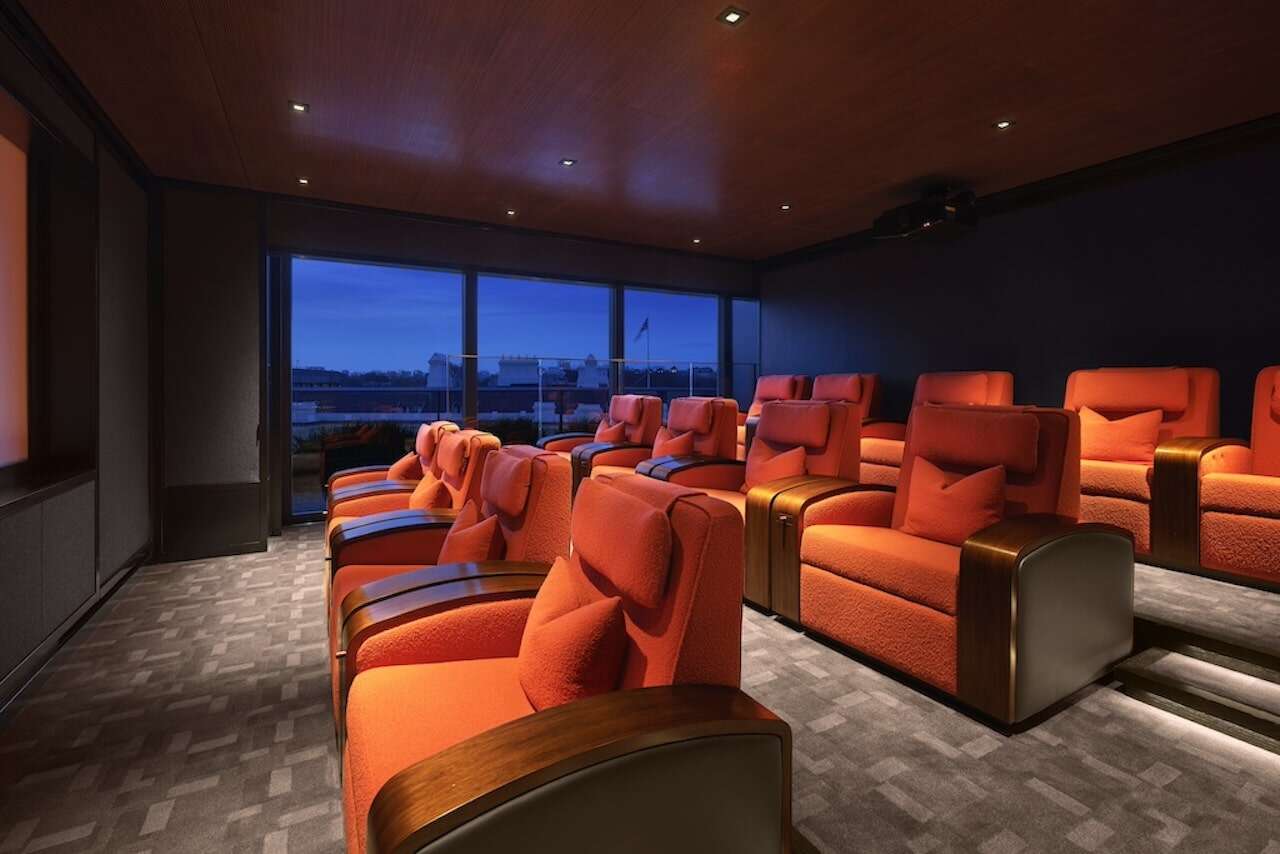
The Peninsula Suite private cinema / ©Will Pryce Interiors-wise, you’ll find everything feels very Peninsula, once again. The hotel’s top suites have been designed with a similar look and feel so that VIP guests won’t feel out of sorts should their usual suite be occupied. Expect plush carpets, heavy drapes, high-quality handmade furnishings and a reliance on dark woods.
If you do want a taste of London, you don’t have to go far. Head up to Brooklands by Claude Bosi, a two-Michelin-star restaurant inspired by Concorde. The chef has designed a menu that pays homage to some true British classics such as coronation chicken and roast lamb.
Price on request. Contact reservationpln@peninsula.com, +44 203 959 2888, peninsula.com
Mandarin Oriental Mayfair
The Mayfair Suite
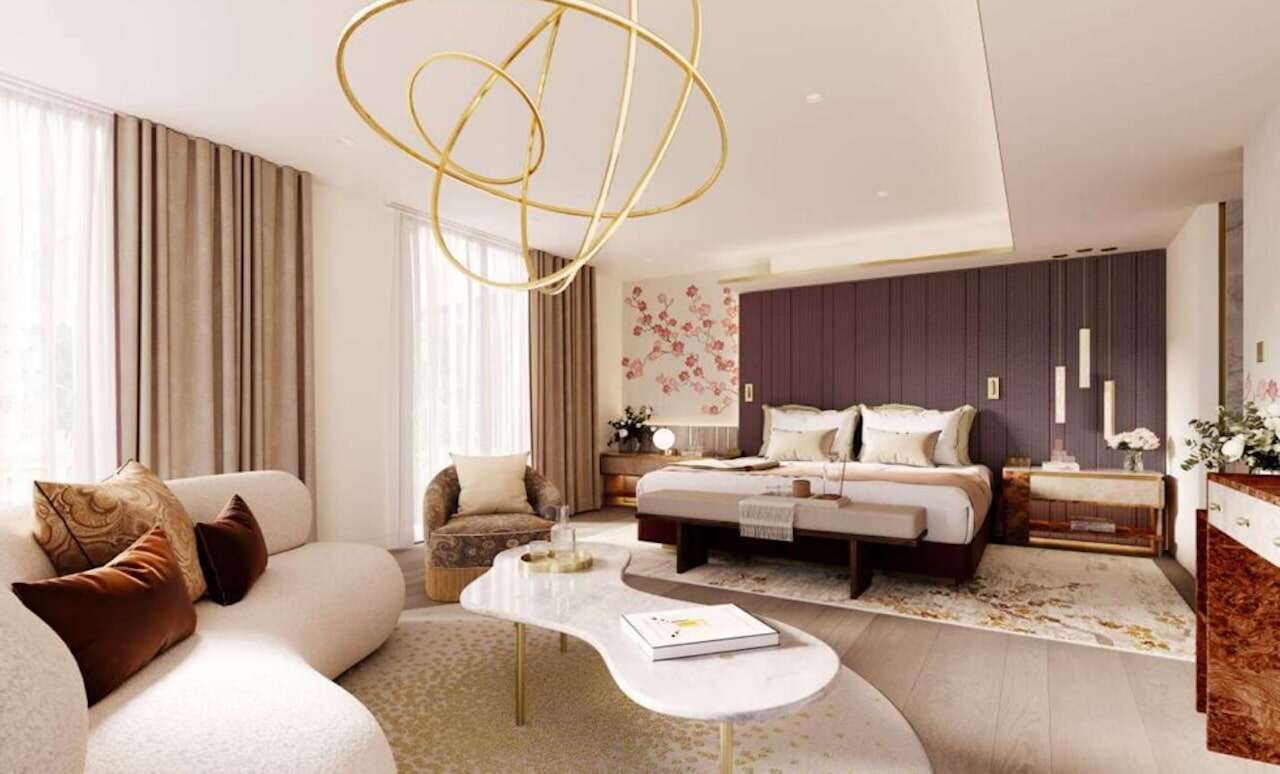
The Mayfair Suite at Mandarin Oriental Mayfair / ©Mandarin Oriental Mandarin Oriental’s hotly anticipated Mayfair outpost is more intimate than its Hyde Park sibling; the sleek boutique comprises just 50 hotel rooms and 77 exclusive private residences. Located on London’s historic Hanover Square, next door to the Jimmy Choo Fashion Academy and across the street from the gleaming new Elizabeth Line, the chestnut-hued building looks right at home among the neighboring Georgian townhouses.
From the moment you step foot inside the green Ming marble lobby, it’s clear no expense has been spared. The most extravagant abode is the Mayfair Suite, found on the fifth floor of the hotel. London-based Studio Indigo was brought in to put its stamp on the stylish interiors. A picture of refined elegance in shades of burgundy, cream and bronze, the one-bedroom suite features a lavish red marble kitchen, complete with a fully stocked bar and wine fridge (private chefs are on hand to prepare gourmet meals, too). The spacious living/dining room is ideal for entertaining; a table for six sits beneath a glittering light installation bedecked with hundreds of porcelain leaves. The apartment features beautiful hand-painted de Gournay wallpaper inspired by the magnolia trees in Hanover Square.
In a thoughtful touch, the Mayfair Suite is the only accommodation where some of the magnolia petals have been hand-embroidered with crimson-colored silk threads. Other highlights include the enormous walk-in wardrobe; striking marble bathroom complete with a soaking tub; and bespoke silk dressing gowns designed especially for the Mayfair Suite by coveted British brand New & Lingwood.
When you can bring yourself to leave the suite, you’ll find a generously sized fitness center, a subterranean spa with an 82-ft heated pool and a cozy bronze-paneled cocktail bar downstairs. Chef Akira Back, whose Seoul-based Dosa earned a Michelin star, oversees the culinary offering at Mandarin Oriental Mayfair: a laid-back Japanese/Korean fusion eponymous restaurant, Akira Back, and the ultra-exclusive 14-seat chef’s table experience, Dosa.
Price on request. Contact momay-reservations@mohg.com, +44 207 123 6200, mandarinoriental.com
The Emory

The Emory is one of London’s latest new openings / ©The Emory The Emory opened its doors in May 2024. Back in March, garbed in a hard hat and hi-vis vest, we took a sneak peek behind the closed doors to see what the new kid on the block has to offer. Situated on Old Barrack Yard and overlooking Hyde Park, The Emory is in good company — namely, its neighbor, The Berkeley, also a member of the Maybourne Hotel Group.
So, there is an elephant in the room — why create a whole new hotel, next door to the already well-established and well-loved Berkeley? Why not extend the hotel instead? I’m told it was a deliberate choice to bring a new style, a new flavor — a decidedly different property with a personality all its own from the pink staircase (a signature design by the late Sir Richard Rogers, the legendary architect) to the suites that have been designed by some of the biggest names in interiors (André Fu, Pierre Yves Rochon, Alexandra Champalimaud, Rigby & Rigby and Patricia Urquiola), each with a unique character.
[See also: Jean-Georges Vongerichten Opens New Restaurant at The Emory]
The Emory is, in fact, a suite-only hotel. It has 60 suites over eight floors and one penthouse that covers the entire ninth floor, including a huge terrace with a firepit and outdoor dining space. All the suites face either the courtyard or the park, and the entry-level suite is a huge 538 sq ft — on par with the nearby Peninsula London (549 sq ft). The hotel will also implement the ‘Emory Standard’ — meaning that there are a bunch of complimentary perks for guests, from two-way airport transfers (or, you can be collected from your home if you live within a certain radius); no charges for the in-suite minibars; breakfast included as standard; and five items of clothing pressed per guest.
Above the penthouse floor, there will be a rooftop bar and cigar area, which will be for the exclusive use of hotel guests. Head downstairs to Surrenne, the four-floor wellness space that will serve both The Emory and The Berkeley. The first level will house a 72-ft lap pool, and the other floors will have a steam room and sauna, pool cafe, gym, treatment rooms and a Tracy Anderson studio (the first in the UK; the woman herself will be doing treatments). There will also be a Longevity Suite — members of the wellness club will have access to a doctor for in-depth biological analysis and a curated treatment plan.
Contact reservations@the-emory.co.uk, +44 207 862 5383, the-emory.co.uk
-

These Elite Fitness Resorts Want You to Train Like a Pro Athlete
At these resorts, your vacation comes with a training schedule.

Some people go on vacation to switch off and unwind. Others go to train with ex-Olympians and voluntarily plunge into an ice bath afterwards. If you fall into the latter category, welcome to the world of elite active resorts. From trail running through the Swiss Alps to volleying on the same pitch as the Williams sisters, these destinations go miles beyond the standard hotel gym.
-
Macallan’s Next Big Bet: A $105K Whisky Inspired by Its Greatest Legend
Macallan 1926 set whisky auction records for decades. Now the 1986 Romantica Collection enters the spotlight – can it rival the legend?
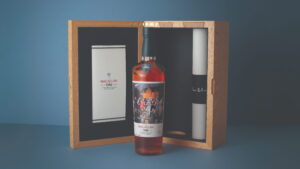
But in truth, there’s one single bottle that has done more than any of those marketing messages to elevate the brand. The Fine and Rare 1926, the first bottle of wine or spirit to exceed $2m at auction, has shaped The Macallan’s position as the world’s most collected Scotch whisky.
There were just 40 bottles of that 60-year-old vintage. They were never sold publicly and handed to private clients sporadically over several years. The first known private sale in 1987 valued the bottle at a then-record of $8,000. Since then, examples of the 1926 have surpassed that mark a further six times and traded for over $1m on eight occasions since 2018.
“It arrived into the market as the most expensive thing you could buy, and it’s never yielded that position,” says Jonny Fowle, global head of spirits at Sotheby’s and lead auctioneer the last time the bottle sold in 2023, for $2.7m. “It stands above the industry and has power over the industry. Anytime the 1926 is sold, it’s going to be front-page news.”
See also: The Best Whisky in the World Right Now, According to Bartenders
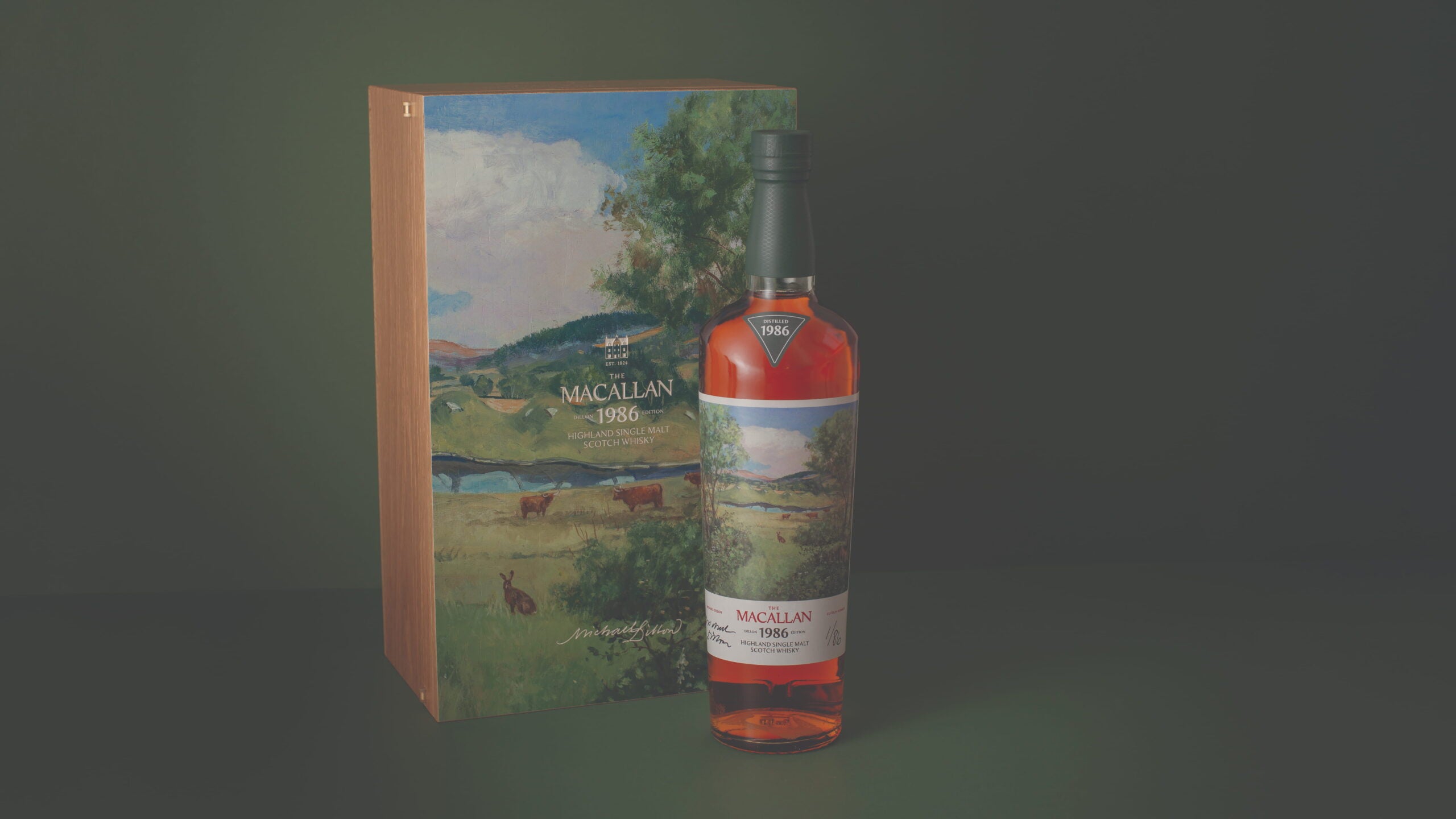
The Macallan Romantica 1986 offers the opportunity to build on the brand’s legacy ©The Macallan For The Macallan, the 1926 remains its strongest brand asset, but four decades on it’s also the benchmark for everything that follows. Which brings us to the Romantica Collection, a new 1986 vintage that is being unapologetically pitched as the natural successor to Scotch whisky’s most celebrated and valuable bottle.
Romantica is cut from the same cloth as the 1926: an exceptional Scotch whisky aged in a single first-fill sherry-seasoned oak cask. The poetic connection comes from the year 1986: this liquid started its maturation in the same year the 1926 was extracted from Cask #263.
The label design further strengthens the bond. The trio who collaborated on bottle designs for the 1926 (pop artists Sir Peter Blake and Valerio Adami, and landscape artist Michael Dillon) are back. Each has created a label in their distinct style to form a three-bottle collection, of which only 86 exist. While Dillon is a spritely 68-year-old, both Sir Peter and Adami are in their 90s. How did The Macallan coax them back into their studios?
“It was an easy conversation”, says global creative director Jaume Ferràs. “Peter and Valerio are in a moment where they are reflecting a lot about their life. They’re very conscious of legacy. I think the chance to go back 40 years after 1986 offered them a bit of nostalgia, but also the opportunity to build their legacy a little bit more.”
If recreating the magic outside the bottle was easy, repeating the feat inside was not. Some of the qualities that set 1986 apart are not only unrepeatable but unpalatable to today’s market. Fowle says: “The 1926 was a real world first. Sixty-year-old whisky in 1986 was crazy, given that The Macallan released the first 50-year-old in 1983. Only three years later, they managed to add a whole decade on.”
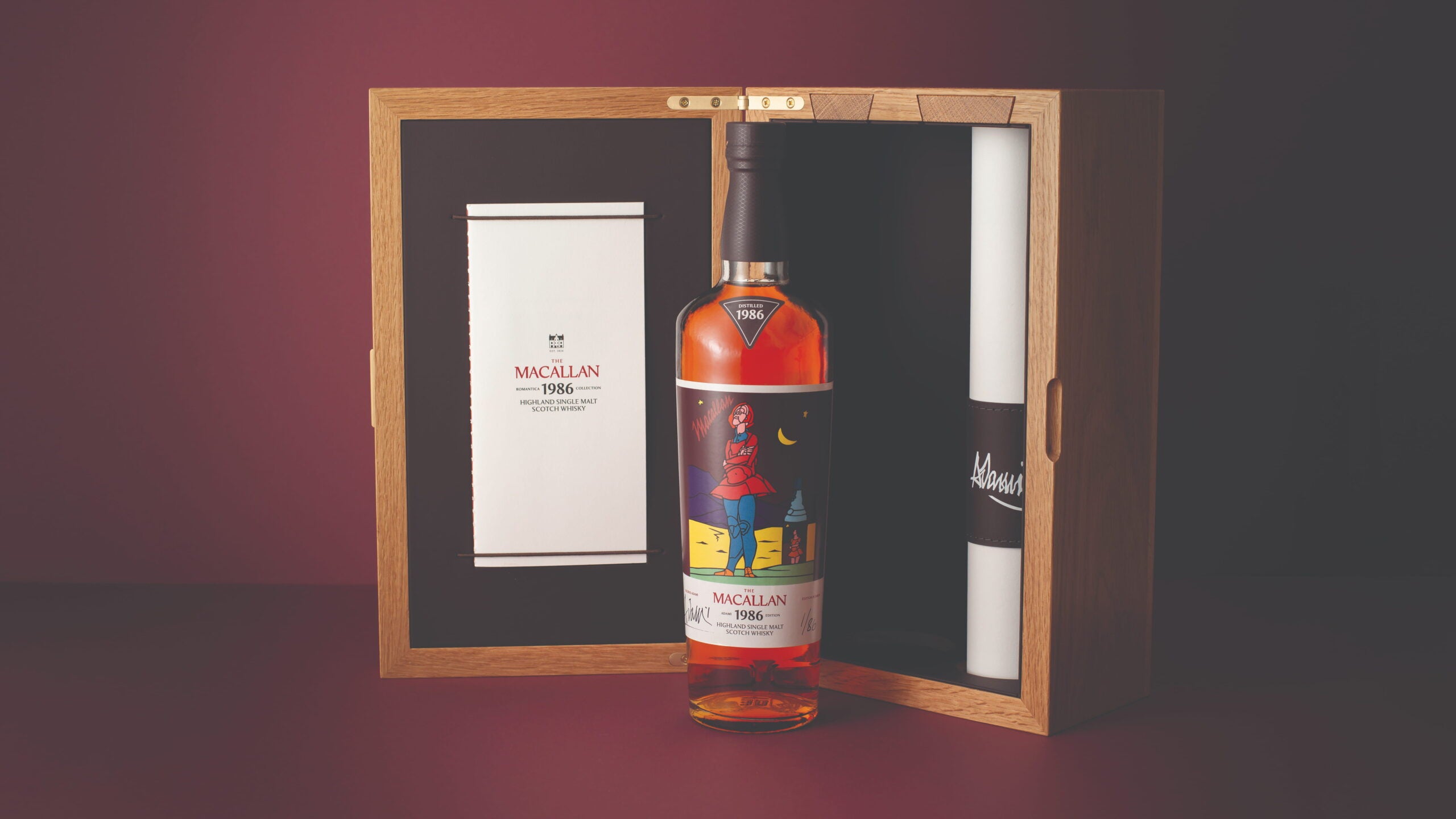
Priced at $105,000 The Macallan Romantica 1986 is expected to be a sell-out ©The Macallan The market is now used — and increasingly indifferent — to very old whisky. The record for the oldest Scotch has been broken four times since 2021, twice by The Macallan. Romantica, at 39 years old, doesn’t rely on age. You may think that gave lead whisky maker Euan Kennedy a wider selection, but you’d be wrong.
“The whisky-making team gets a handle on absolutely every single cask by the time it’s eight years old,” Kennedy says. “And it’s when we’re looking at those casks, even at that early age, that we’re earmarking them for the future. In any given year, it might just be five or six that we think could tell a specific story in the future, even though we don’t know what that story is.
“When we started work on the 1986 project, it was almost like there could only be one. When you get to that age in the inventory, there’s just a handful of casks, and we’re very close to them. When we knew what we wanted to do, the flavor that was in the glass, we felt it had to be this one.”

Fowle believes The Macallan 1986 makes a good collectible ©The Macallan See also: The Most Exciting Whisky Right Now Isn’t Scottish – It’s English
It’s easy to see why when you taste it. On the nose, it’s layered with stewed orchard fruit and ginger, alongside a faint tropical lift of lychee. The palate follows with peach, lychee, dark cherry, and aged oak. For all its character and complexity, it’s an unmistakable hint of peat smoke that defines it. The Macallan has not used peat in its production since 1988, and that subtle wisp places it firmly in another era.
Priced at $105,000, the Romantica Collection is an easy sell to The Macallan’s long list of private clients. What will be more interesting is seeing how it fares on the secondary market. “I’ve got strict guidelines around collecting,” says Fowle. “Is the brand strong? Does it have transparency of information? Is it vintage specific? How limited is it? Is it of good quality?
“Having tasted it, I would say the quality is very good. I was really impressed by it. And then only 86 sets, by Macallan standards that is extremely rare, and that’s really refreshing. It’s what people have been asking for: genuine scarcity. That makes it a good collectible.”
And what effect will this have on the 1926? “This release is more a celebration of ’86, not ’26,” says Fowle. “I don’t think that has any real effect on the 1926 itself. That remains a unique entity. If one came to auction today, I suspect it would break its own record.”
-
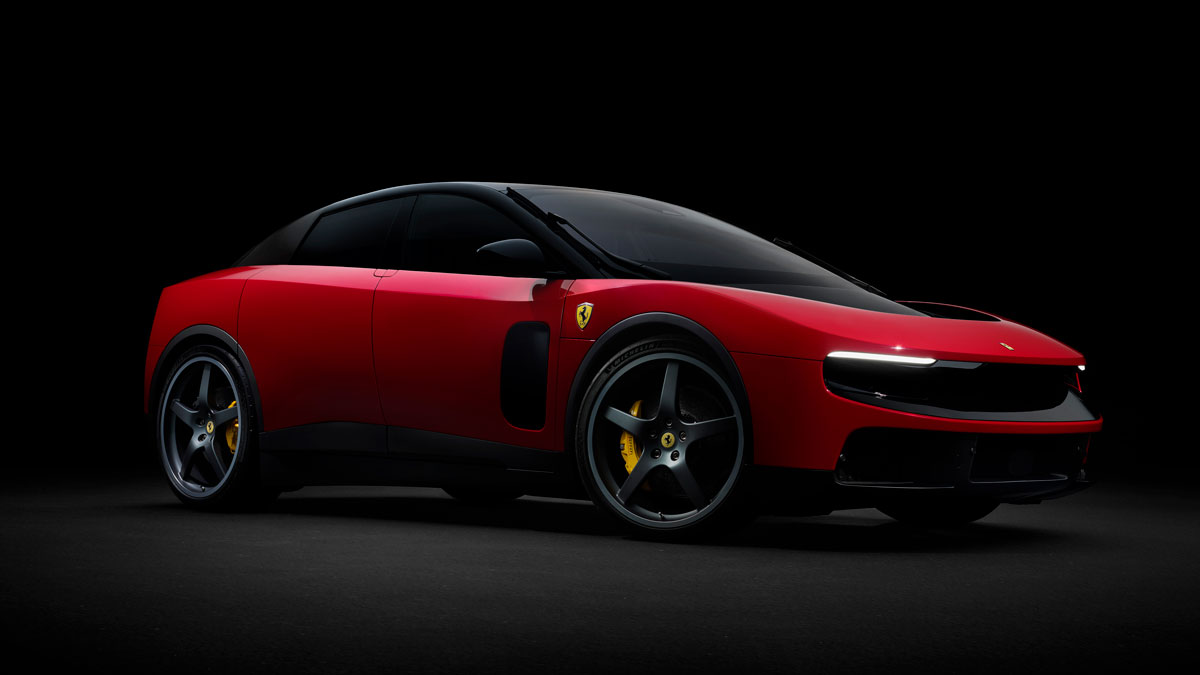
Ferrari’s First EV Is Finally Here: What to Know About the 1,035 HP 4-Door Luce
Debuted in Rome, Maranello’s highly anticipated all-electric car seats five—but don’t confuse it for an entry-level grocery getter. Debuted in Rome, Maranello’s highly anticipated all-electric car seats five—but don’t confuse it for an entry-level grocery getter.