The aptly named Bandana Royale is inspired by the designer scarves that he famously wears. The aptly named Bandana Royale is inspired by the designer scarves that he famously wears.
Автор: karymsakov_qq4zn395
-

Dubai Is the World’s Most Expensive City for Champagne
Here’s where you’ll pay the steepest price for a glass of fizz.

From hotel lounges overlooking the Dubai skyline to discreet Parisian bars and Tokyo’s design-led high-rises, the cost of champagne varies dramatically across the world.
Blacklane’s newly released Champagne Index, researched by drinks expert and author Henry Jeffreys, analyzed the price of a 125ml glass of house non-vintage brut champagne across luxury hotels and airport bars in ten international cities. The findings reveal striking disparities not only between cities, but sometimes for the same champagne label served in different global capitals – underscoring how geography, prestige, and local drinking culture shape luxury pricing.
At the upper end of the scale, champagne remains a powerful status symbol, particularly during the festive season. In other destinations, however, the report reveals surprising pockets of value and diversity, challenging assumptions about where luxury must command the highest premium.

Dubai tops the world’s most expensive glass of champagne rankings ©Shutterstock Dubai: The world’s most expensive glass of champagne
Luxury excess finds its natural home in Dubai, which tops Blacklane’s Champagne Index as the most expensive city in the world for a glass of champagne, averaging $49 per 125ml pour – 21 per cent higher than in New York.
The survey’s most extravagant single pour was recorded at the Waldorf Astoria Dubai, where a glass of Veuve Clicquot costs $64. Here, champagne is ordered as readily in hotel lounges as it is aboard superyachts and private jets.
New York: High prices, high expectations
Coming in second, New York averages $37 per glass, reflecting the city’s appetite for luxury hospitality paired with globally recognized brands. Five-star addresses such as The Langham charge around $40 per pour, reinforcing champagne’s role as a staple of Manhattan’s high-end social and business culture.
While prices are steep, menus remain rooted in familiarity, with classic prestige labels dominating hotel bars across the city.
London and Paris: A surprising price parity
Despite their reputations as luxury heavyweights, London and Paris emerged as near-identical in champagne pricing, each averaging $32 per glass.
Paris showcased the widest price range in the report, from $22 to $41, reflecting a champagne culture that spans everyday refinement. London, meanwhile, balances heritage hotel glamor with international brand recognition, with pours such as Laurent-Perrier at The Savoy and Ruinart at The Dorchester appealing to a globally attuned clientele.

Paris and London ranked similarly in terms of champagne cost ©Shutterstock Tokyo: Boutique bottles at accessible prices
One of the report’s most compelling findings came from Tokyo, which pairs relative affordability ($29.75 average) with one of the most eclectic champagne selections surveyed.
Luxury hotels in the Japanese capital combine established prestige houses with smaller grower-producers, catering to a clientele that values craftsmanship as much as label recognition. Venues such as the Conrad Tokyo feature names like Ruinart and Veuve Clicquot, alongside boutique offerings rarely found at comparable prices elsewhere.
Madrid: The world’s best-value champagne capital
At the opposite end of the spectrum, Madrid stands out as the best-value champagne destination in the world, averaging just $23 per glass.
The lowest price recorded anywhere in the index – $20 for a glass of Taittinger – was found at the five-star Hotel Urban in the city’s Centro district, reinforcing the idea that world-class champagne does not always require world-class spending.
-

The Secret to Great Finnish Whisky? It Starts in a Sauna
From a drunken sauna idea to a global brand, Kyrö has turned Finland’s national grain and pastime into one of the most distinctive distilleries on the planet.

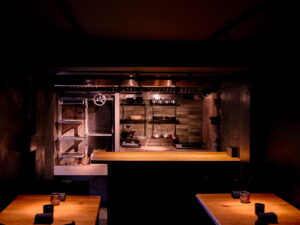
The lighting is low, the walls are dark wood, the back bar glows with premium bottles. You could be in London, New York or Tokyo. But then you notice that very few people are wearing much at all, even though there is snow on the ground outside. That’s because around the back of this bar is a fully-functioning sauna.
This is the Kyrö Sauna Bar, a pop-up in central Helsinki, now in its second year, and it is exactly what it sounds like. A bar. With a sauna. It tells you almost everything you need to know about Kyrö, the Finnish rye whisky distillery behind it. Serious about quality and completely unserious about convention.

The Kyrö Sauna Bar is a pop-up in central Helsinki ©Kyrö “If anyone was ever going to build a sauna bar, it was going to be us,” says Mikko Kiskinen, one of Kyrö’s founders. “For Finns, the sauna is where everything happens. Business deals, friendships, arguments, ideas. It’s the most democratic room in the country.”
The idea that started Kyrö also began in a sauna. In 2012, Kiskinen and a group of friends were sweating it out when one of them brought along a bottle of American rye whiskey. “Before that moment, I didn’t even know you could make rye whisky,” he says. “And we all just looked at each other and thought, why on earth are we not doing this in Finland?”
Rye is Finland’s national grain. It underpins its bread, its farming and its food culture. Yet at the time, no one was making whisky from it. “We had absolutely no idea what we were doing,” Kiskinen says, grinning, when talking about those early years. “The learning curve was brutal.”

The Kyrö distillery is situated next to the Reinilänkoski river ©Kyrö Today, that learning has been done. Kyrö is Finland’s first and most internationally successful whisky distillery, exporting around 80 percent of its whisky to 35 countries, and has become one of the most distinctive spirits brands in the world.
Getting there still feels like a pilgrimage. From London, it’s a flight via Stockholm over the Gulf of Bothnia to Vaasa, then a drive through vast, flat plains that were once seabed. Traditional red-painted wooden barns punctuate endless rye fields. The Reinilänkoski river slips quietly past the distillery when it isn’t frozen. In winter, thick snow blankets everything.
The distillery is made up of a barrel warehouse, production buildings, and a guesthouse that sleeps up to ten people, where visitors eat together, drink together and, inevitably, sauna together. There is one sauna for people. Another for whisky.
See also: Johnnie Walker Vault: Whisky’s Most Exclusive Experience

According to Kyrö, the secret behind great Finnish whisky lies in the sauna ©Chris-Tomas Konieczny Kyrö’s Sauna Stories release is aged inside a purpose-built whisky sauna, where temperatures can reach 50°C. The result is not a gimmick, Kiskinen insists, but controlled extremity. “When you heat the barrel like that, everything accelerates,” he says. “You pull more liquid out of the wood. You increase sweetness, that vanilla intensity. You also change what evaporates, so the angel’s share is different. And chemically, you’re increasing the energy in the system, which creates new compounds faster.”
The theory is backed up by extensive testing and produces a richer, rounder, deeper whisky in weeks rather than years. It is the kind of idea that could only come from a country where saunas outnumber cars.
For visitors, the sauna philosophy goes further still. One of Kyrö’s most popular experiences is a whisky tasting where you don’t drink. In a sauna, whisky is poured onto hot stones, and the alcohol vapor rises. “You get the nose, the flavor, everything you would in a [traditional] tasting,” Kiskinen says. “But you don’t get drunk. It’s a fantastic way to enjoy whisky without drinking whisky.” That urge to do things differently runs through the brand. Kyrö’s social content features a disproportionate number of tall, statuesque Finns running through fields, sweating in saunas, and sipping whisky, often completely naked.
See also: Searching for Treasure on The Hebridean Whisky Trail

Kyrö’s whisky is 100 percent rye ©Kyrö For all the playfulness, Kyrö takes its liquid seriously. It works exclusively with Finnish rye grown for human consumption rather than animal feed. The colder northern climate produces smaller grains with more concentrated flavor. The whisky is 100 percent rye, which is malted, softening the aggressive spice people often associate with American rye and creating something distinctly its own. A fact reflected in the plaudits Kyrö has won internationally, namely whisky of the year at the 2024 International Spirit Awards for its Oloroso expression.
“If you like Scotch single malt, there’s a high chance you’ll enjoy what we make,” Kiskinen says. And he’s right. Kyrö Malt Rye Whisky, the brand’s flagship dram, offers sweet apricot and dried fruit on the nose, followed by vanilla and caramel with bursts of black pepper and nutmeg on the palate. It feels closer to an aged Balvenie than a Rittenhouse Rye.
Among the current wave of Nordic whisky producers, Kyrö still stands apart. It is not trying to be Scotch, nor is it trying to be American. It is unmistakably Finnish. And like its makers, it is confident, warm-hearted and wonderfully quirky.
-

Inside the World of Wing Foiling, the Ultimate Adrenaline Activity
The burgeoning sport of wing foiling has inspired a new crop of luxury hotels dedicated to guests looking to take to the air.

My forearms are throbbing, my feet are cramping and my eyes burn from the salty sting of the Atlantic Ocean. And yet I’m oddly euphoric, high on the rush of flying above the water, propelled by the wind. Around me, wings launch 10, even 20 feet in the air, like fireworks lighting up the sky. My wing zips around beneath them, my board barely hovering two feet above the sea – nowhere near as high as I’d like to be, but there’s still time. I’m not on a surfboard, or a kiteboard – and as a longtime addict of surfing and kiteboarding, I can say this is an altogether tougher challenge to master – but I can recognize the feeling coursing through me.
Welcome to the world of wing foiling, the new obsession of the global adventurer, the high-net-worth adrenaline junkie and those who have tired of windsurfing and are looking to level up. The sport has been adopted by everyone from legendary waterman Kai Lenny and former Olympic skier Julia Mancuso to pioneering big mountain snowboarder Jeremy Jones and Michael B Schwab, the surf-obsessed son of brokerage billionaire Charles Schwab.

Wing foiling is the sport drawing billionaires, olympians and adventurers ©Beran Island Resort “It’s the closest sensation to flying you’ll ever feel,” Jérôme Schanker tells me when I email to enquire about a stay at La Tour d’Eole, his hotel in Dakhla, Morocco. Set on a 30-mile-long spit of sand nestled between the Atlantic Ocean and the Western Sahara Desert, Dakhla has Goldilocks gusts, plus sun and mild temperatures all year round, making it one of the best spots on the planet for wind sports. Schanker’s windsurfing obsession led him here in 2013. At the time, he was working as a financial broker in London and spent his holidays chasing the wind. After spending one week on the beach in Dakhla with just his windsurf board and a tent, he knew he’d found his wind-sports paradise.
See also: This Norwegian Adventure Itinerary Rewards the Fearless
Born in Paris, Schanker’s grandmother was behind the creation of Relais & Châteaux, an association of the world’s finest hotels and restaurants. He long harbored dreams of building a luxury hotel devoted to wind sports. “Back then, people thought windsurfing and kiteboarding were sports for crazy people,” he said. “The luxury market didn’t cater to this crowd. But I asked myself, ‘Why shouldn’t a watersports holiday be as luxurious as a ski holiday?’”
Ahead of his time, Schanker worked to make his dream a reality. He scouted a 25-acre plot of land that spilled down to an empty beach fronting Dakhla Bay and in 2018 quietly debuted La Tour d’Eole, a 45-room resort whose name is a nod to the Greek god of the winds. My favorite surf spots seem to be getting more crowded, so I’d recently become intent on picking up wing foiling. The recipe for learning is as simple as water, wind and good equipment. I could have tried it in Maui; Hood River, Oregon; Lake Tahoe, California; or the Outer Banks of North Carolina, but I needed something extra.

The 45-room La Tour d’Eole opens out on to Dakhla Bay ©La Tour d’Eole Dakhla’s reliable weather conditions – the wind blows at 15-25 knots for more than 300 days per year here – wouldn’t have been enough to convince me to fly halfway around the world to learn. But the buzz I’d heard around La Tour d’Eole was. The resort has a dedicated ocean academy developed in partnership with three-time world kiteboard champion, Bruna Kajiya. And its location, fronting an untouched beach, is ideal for progression. Beginners can master the basics in a flat, shallow lagoon nicknamed ‘the pool’ and then advance to the waves on the ocean side. Learning a new sport is humbling, and at the age of 45, I knew I’d need some coddling. Being able to cap a day in the ocean with a massage, a delicious meal and a comfortable bed was well worth a long-haul flight.
Dakhla is an otherworldly place. During my 45-minute transfer from Dakhla Airport, I’m mesmerized by the monotone desert landscape, the mountainous sand dunes and rogue herds of camels along the side of the road. La Tour d’Eole appears like a giant sandcastle built between the ocean and desert. Constructed mainly from Douglas fir, its villas and bungalows seamlessly blend in with the surrounding beige sandscape. The wind is a constant soundtrack. It starts like a barely-there whisper in the morning and slowly builds to an ear-tingling howl. You get used to it, and eventually it becomes like white noise. Nestled within the dunes, the resort’s main area is largely protected, while the ocean academy, located 1,300 feet down a dirt road, takes full advantage of the elements.

As well as a prime wind foiling location, La Tour d’Eole offers stylish rooms ©La Tour d’Eole The crowd range in age from early thirties to mid-sixties and hail mostly from Europe and the UK. Nearly 70 percent of guests are repeats, Schanker tells me proudly over dinner on my first evening. We feast on oysters plucked straight from the nearby lagoons, Moroccan salads made with ingredients harvested from the on-site garden and a spicy seafood tagine. His chef Ali Timouni, worked under French superstar Yannick Alléno at Marrakech’s renowned Royal Mansour and the mentorship reveals itself in his super-fresh, highly flavorful food.
Trim and tan, Schanker has also been bitten by the wingfoiling bug and admits that the sport is harder to grasp than kiteboarding. “In one week, nearly anyone can learn to kite,” he says. “I nearly gave up on winging. I was so frustrated. But when it clicks, it’s magic.” While most of his clients are still kiteboarders, he sees that situation gradually changing, and in anticipation of the switch, he has invested in top-of-the line wings, boards and foils from Duotone. Most guests rent equipment, which costs around $500 for the week. “In 2023, just 5 percent of guests were wing foiling,” he tells me. “By 2024, it was 30 percent, and we’ll exceed that by far this year.”
Surfing and kiteboarding have long attracted the Elite Traveler crowd, partly due to the cool factor, but largely for the sense of unbridled freedom these sports provide. There is a thrill in feeling as if you’ve tamed Mother Nature, whether surfing a giant wave or harnessing the power of the wind with your kite. Wing foiling is the next iteration of that feeling, and it’s also a sport that takes you to far-flung, unexplored places, away from the crowds.

Wing foiling is the next big thrill for luxury travelers ©Shutterstock Once a fringe activity, wing foiling is becoming more mainstream, for various reasons, according to Maui-based wind sport pioneer Pete Cabrinha. The gear isn’t as bulky as windsurf equipment; it’s safer than kiteboarding, because the rider isn’t attached by a harness and lines to a constant power source; you can do it in all sorts of conditions, from flat water to waves, and in winds ranging from five to 20-plus knots; and it’s easier on the joints, particularly the back and knees, as the board floats above the chop of the water. “Wing foiling has already exceeded my imagination of its potential, and that’s a hard thing to do,” says Cabrinha. The hang glider-esque inflatable wing and hydrofoil (or foil) board are not new pieces of equipment, Cabrinha notes. The first wings came on the scene in the early 1980s. “I remember thinking, ‘Wow this could drive like a windsurfing sail, but also lift like a kite,’” he says. “But back then the boards were too heavy to get airtime, and you needed a lot of wind to propel you.”
Engineers were experimenting with hydrofoils in the early 20th century, but they weren’t used for watersports until the 1990s, when sailors started to experiment with them, followed soon after by windsurfers, kiteboarders and surfers. A foil consists of a front and back airplane-like wing. The fuselage connects the wings to a mast that extends below water and is attached to a board. As the wings deflect water pressure downward, the foil lifts the board above the surface of the waves, allowing the rider to glide forward without drag, and avoid those bumps that you later feel in your joints. “The foil has taken over board sports,” says Cabrinha.
See also: These Were the Top Travel Adventures In 2025

Although once a fringe sport, wing foiling is breaking into the mainstream ©Lukas K Stiller Many credit Maui-based windsurfing legend Robby Naish with pairing the two pieces of equipment in 2019. “Suddenly you weren’t just trying to push your board through water,” Cabrinha explains. “The foil had lift, so you were soaring across the ocean. Everyone thought it was a fad, but then Covid happened, people had downtime, and it caught fire.”
Days at La Tour d’Eole revolve around the weather. Each evening the staff send guests the following day’s wind report on WhatsApp. On my first morning the wind is light – tricky conditions for a novice – so I enjoy a leisurely breakfast of figs, fresh baked khobz (Moroccan bread) and amlou, a local riff on peanut butter. At 11am I make my way down to the ocean academy, which feels like the Equinox of watersports facilities. The academy renews its equipment each year, so it always has the latest gear. Each guest receives a designated locker to store their belongings, and locker rooms feature outdoor showers and lovely toiletries.
The academy’s 30-employee team includes nine full-time instructors from around the globe – the best of the best in the industry – plus staff who helm boats to retrieve students who get blown upwind, and ‘board butlers’ who shuttle your equipment to and from the water. My instructor, Pietro Milito, is originally from Italy’s Amalfi coast. When I ask why he’d leave such a dreamy home, he replies simply: “There’s not enough wind.” Like most of the team, his first love was windsurfing and that evolved into kiteboarding. As soon as wing foiling emerged, he transitioned.

From first-timers to Olympians, the sport is reigning supreme ©Beran Island Resort We spend most of my first lesson on the beach so I can learn to manipulate the wing and execute essential movements like righting the wing when it flips. Satisfied with my skills, Pietro gets a boat to transport us 15 minutes along the shore to the calm lagoon. He hands me a headset so he can communicate with me as I try to pair the wing with a light stand-up paddleboard. “To attempt to master the foil and wing at the same time is like trying to learn to juggle and unicycle at once,” he says. Before I can graduate to a foil board, I need to show him I can control the wing and maneuver it upwind. “All good things start upwind,” he says. “If you can’t go upwind, you’re going to end up far out at sea.”
I spend the last 30 minutes of my lesson balancing on my knees on the board, only to have my front wing tip catch the water and toss me overboard. It seems I’ve been making the rookie mistake of deathgripping the handles of my wing. “You control the bar with a light touch,” Milito reminds me as we reboard the boat, “like playing piano keys made of air.” I return to the academy mentally and physically exhausted. My screaming forearms are proof that I’ve been overgripping. My core muscles ache from the effort of staying balanced on the board. But I’m determined to fly.
At the adjacent beach club, a fellow guest gives me a boost of confidence. A lifelong kiteboarder, he’s on week two of wing foiling lessons and has only just made it beyond the sheltered lagoon. After a lunch of grilled squid and braised zucchini, I return to the main complex. I pamper myself with a hammam and massage at the spa and a sunset yoga class that focuses on all the muscles I’ve just worked, like my aching forearms. And I sleep deeper than I have in months beneath my soft, Drouault duvet.

La Tour d’Eol has 45 chic guest rooms ©La Tour d’Eol Just as Schanker said, at the moment when I feel like abandoning my efforts, everything clicks. It’s day four, and the wind is strong, but I’m able to use my hips to help steer me upwind, finally gliding above the surface on my foilboard. It feels like I’m riding a magic carpet across the sea. I pick up new skills, like pumping the wing in an elliptical pattern, sheeting air to generate speed, but I don’t advance to the ocean, where far more experienced wingers launch off waves and throw tricks in the air. “Always a reason for another holiday,” says Pietro on my final day.
Luckily for me, more high-end lodges have taken note of the wing-foil craze. Namotu Island, a surf mecca in Fiji, has seen its clients shift interest. “With surfing, you spend so much time waiting for waves,” says Namotu employee Ryan Arzy. “Even good surfers who are out for two hours catch maybe five waves that deliver five- to 15-second rides. When you foil, you see a lot more action.” When Philippe Kjellgren, founder of luxury hotel curations PK’s List and Kiwi Collection, launched Voaara, his first boutique hotel on Madagascar’s Île Sainte-Marie, he hired pro wing foiler Willow-River Tonkin to head up the resort’s lessons.
Meanwhile, Schanker has given me reason to return to Dakhla. By the end of 2025, he’ll have added five more bungalows, plus an expansive spa, fitness center and padel court. And he’s acquired nearly 50 more acres to create Domaine d’Eole, a neighboring, 15-villa sister property designed by Studio KO. The acclaimed French design firm will also create his follow-up project, a 50-room La Tour d’Eole fronting a natural reserve in Boa Vista, Cape Verde. “As the sport takes off, I want to keep protecting remote places with similar DNA,” says Schanker. “It ensures people as passionate as I am always have a special place to play.”
Where to learn wing foiling
It’s possible to learn to wing foil in a variety of locales, from Hood River, Oregon, to the French Caribbean island of Guadeloupe. But these destinations have five-star stays that cater to both newbies and pros alike.

Beran Island Resort is an ideal training ground for beginners ©Beran Island Resort Beran Island Resort, Marshall Islands
Michael B Schwab invested in this island resort founded by surfing’s most iconic boat captain, Aussie Martin Daly. Part of his incentive: to learn to wing foil in uncrowded, pristine conditions.
Namotu Island, Fiji
This storied surf retreat located a stone’s throw from Fiji’s best waves, including Cloudbreak, has recently seen a boom in guests wanting to wing foil. Beginners can hone their skills just off the beach and experienced wingers can take their game to the next level with signature series trips hosted by watersports luminaries like Dave Kalama.
Voaara, Île Sainte-Marie, Madagascar
This boutique barefoot retreat on a secluded beach on Madagascar’s stunning Sainte-Marie island benefits from a dedicated wing-foil program helmed by South African pro, Willow-River Tonkin. “The wind comes straight offshore from the hotel,” he says, “and you can learn just a few hundred yards off the beach in this raw, undiscovered place.”

Salterra Resort is on a quieter part of South Caicos Island ©Salterrra Resort Salterra Resort, Turks and Caicos
This new property on less-trodden South Caicos Island is an ideal training ground for wing foilers with its steady breeze, shallow, flat lagoons and team of expert IKO wind sports instructors.
Casa Siará, Preá, Brazil
Two passionate kiteboarding buddies developed this eight-suite sanctuary on Brazil’s golden northeast coast of windblessed Preá. The dedicated wind sports school has talented instructors and the latest equipment.
-

LG’s Newest Wallpaper TV Is Thinner Than Your Rolex
The new OLED Evo W6 Wallpaper TV is astoundingly slim. The new OLED Evo W6 Wallpaper TV is astoundingly slim.
-

Irish Distillery Teeling’s Profits Plummeted by 90% Last Year
This is a stunning drop for a promising brand. This is a stunning drop for a promising brand.
-

‘E! News’ Alum Jason Kennedy’s L.A. Home Has Sold for $4 Million
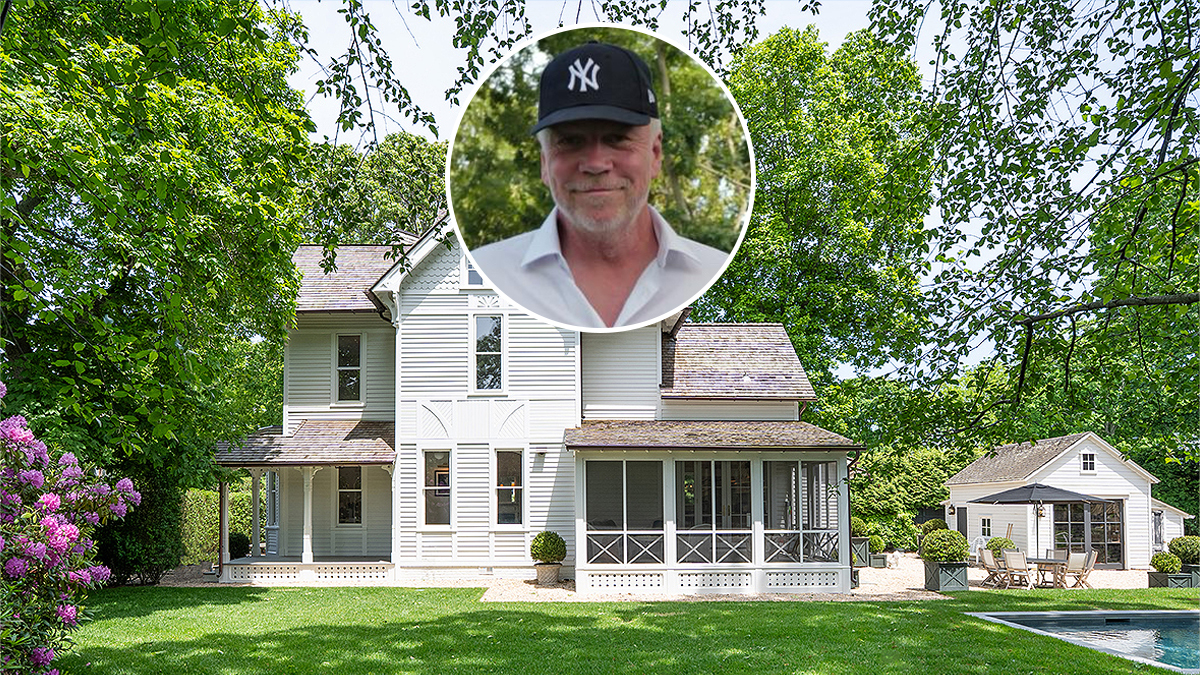
The TV host and his wife, inspirational author Lauren Scruggs Kennedy, bought the Agoura Hills residence in late 2018 for $2.4 million and then gave it a stylish makeover. The TV host and his wife, inspirational author Lauren Scruggs Kennedy, bought the Agoura Hills residence in late 2018 for $2.4 million and then gave it a stylish makeover.
-

The Biggest Wellness Travel Trends Set to Shape 2026
From biohacking cabins to family-focused retreats, meet the wellness trends shaping the way we vacation.

As modern life grows louder, faster, and more demanding, the way we travel is being rewritten, with wellness no longer a side benefit of time away, but its central purpose.
The global wellness economy continues its rapid expansion, with wellness tourism among its fastest-growing sectors. According to the International Luxury Travel Market, more than 90% of luxury travelers now actively look for wellness programs when booking a trip — a statistic that reflects a broader cultural recalibration around health, longevity, and emotional wellbeing.

Wellness is essential for navigating modern life ©Eha Wellness Retreat This evolution mirrors the way we live. Burnout, hormonal imbalance, and nervous system overload are no longer niche concerns, but part of everyday conversation, reframing wellness not as an indulgence, but as essential maintenance for contemporary life. Travel, in turn, has become more intentional and purpose-driven. Short, restorative stays in the best wellness suites are rising in tandem with immersive health retreats, reflecting a shift in luxury away from excess and towards sanctuary, where calm, connection, and genuine restoration take precedence.
Emma Ponsonby, CEO and co-founder of ultra-luxury travel company Satopia, describes this as a move from destination-led to intention-led travel. At the highest level, she explains, travelers are less interested in where they go and more focused on how a place makes them feel. “The primary driver of luxury travel is no longer polished itineraries designed to impress others,” she says. “It’s access to environments and experiences that shift perspective.”
From hormone-informed retreats and nervous system-led therapies to sound healing spa menus and Pilates-focused escapes, Elite Traveler rounds up the wellness travel trends set to define 2026.
See also: Six Must-visit Destinations Travel Experts Say You Can’t Miss in 2026
Wellness travel trends for 2026
Sound healing enters the luxury mainstream

Sound therapy is gaining popularity in spa hotels ©Shutterstock Once considered alternative, sound healing has firmly entered the five-star space. From floating sound baths and gong meditations to frequency-based spa treatments, spa hotels and retreats are embracing sound as a powerful, non-invasive tool for deep relaxation.
According to research conducted by Professional Beauty, sound therapy is increasingly popular in spa settings due to its ability to access profound states of calm and emotional release. Sound practitioner Nancy Trueman notes its growing appeal in luxury and corporate wellness alike: “Sound offers an immediate way to unwind the nervous system. People leave feeling genuinely rested, often surprised by how powerful the experience is.”
Emotional wellbeing becomes a family affair
Wellness travel in 2026 is no longer reserved for the solo, health-literate traveler. Instead, emotional wellbeing is increasingly shaping family travel, with retreats and hotels designing experiences that support adults, children and teenagers alike. Functional nutrition, mindfulness practices, and sensory experiences are now embedded into family-friendly retreats, reflecting a growing belief that wellbeing is best fostered together, not in isolation.
At Zulal Wellness Resort by Chiva-Som in Qatar, this ethos is built into the property’s DNA: Zulal Discovery, the family-focused wing of the resort, offers age-appropriate activities such as kayaking, creative expression, and mindful movement alongside adult wellness therapies, allowing parents and children to unwind, reconnect, and learn healthier habits as a unit.
Hormone health goes global
Hormone health has moved decisively into the wellness mainstream, reframed as essential to energy, mood, sleep and longevity. As conversations around menopause, fertility and hormonal imbalance gain cultural visibility, wellness travel is responding with more sophisticated, whole-body programs. According to the Global Wellness Institute, women are now one of the fastest-growing demographics within wellness tourism, driving demand for programs that prioritise hormonal balance, stress regulation, and recovery. Leading retreats are already adapting: at SHA Wellness Clinic, personalized diagnostics and nutrition plans are designed to support hormonal equilibrium, while Six Senses Ibiza integrates sleep science, stress management, and longevity protocols that reflect a more holistic understanding of women’s health across every decade.
Rather than focusing on singular outcomes, luxury wellness is now addressing hormonal balance as part of a broader ecosystem – one shaped by stress, rest, movement, and environment. The result is travel that supports women across decades, not just moments.
Nervous system care becomes essential

Ancient hammams can help to regulate the nervous system ©Shutterstock If relaxation was once the gold standard of wellness travel, resilience is now the new benchmark. In 2026, nervous system regulation sits at the heart of many wellness journeys, as travelers seek tools to cope with chronic stress and sensory overload.
Demand is rising for remote, nature-rich environments where space and solitude are integral to the experience – from Patagonia and Kenya to Nepal and Sri Lanka. For today’s luxury traveler, these landscapes offer more than escapism; they provide the conditions for perspective and nervous system reset.
“We’re seeing a new definition of luxury emerge,” says Ponsonby. “The primary driver is access to places and people that genuinely shift your worldview. Retreat-style journeys that combine cultural immersion, meaningful connection, and ‘moments of awe’ are resonating the most.”
Practices such as breathwork, gentle movement, somatic therapy, and time in nature are being woven into hotel stays and retreats, helping guests move beyond surface-level relaxation towards deeper restoration. “Regulating the nervous system is about feeling safe, present, and grounded,” says Trueman. “It’s not a quick fix, it’s about creating conditions for the body to truly reset.”
At Imaret in Kavala, Greece, ancient hammams, Watsu healing ceremonies in a converted indoor cistern and candlelit meditation in the former mosque sit alongside breathwork and sound healing sessions, in a setting that marries historical calm with bespoke wellness rituals.
Personalized wellness programs prove popular
As wellness travel becomes more inclusive, resorts that focus on personalized rituals and science-backed education are increasingly woven into luxury experiences, offering benefits that extend beyond the stay itself. As Ponsonby agrees: “wellness has become less about being treated and more about being understood.”
At BodyHoliday in St Lucia, for example, personalized wellness programs often incorporate nutritional support, mineral-rich diets, and targeted supplementation alongside movement, therapy, and rest – reframing supplements not as shortcuts, but as part of a broader, sustainable approach to wellbeing. The appeal lies in continuity: wellness that doesn’t end at check-out, but that equips you for everyday life long after the return flight lands.
Pilates-led retreats

Pilates retreats are surpassing yoga retreats in 2026 ©Shutterstock Finally, movement-led retreats are evolving, with Pilates emerging as a hero category in wellness travel. “Pilates retreats are becoming the new yoga retreat,” says Sophie Hatton, founder of Reformer Retreats. “Women want experiences that feel structured, results-driven, and transformative.” Blending classical Pilates with breathwork, sound healing and restorative therapies, these retreats reflect a broader desire not just to escape, but to return home changed.
In 2026, wellness travel is no longer about switching off. It’s about tuning in – to the body, the nervous system, and the life we want to return to.
-

Road Test: The New Hybrid Porsche 911 Turbo S May Be Polarizing, but It Packs a History-Making Punch
The 2026 model variant is the most powerful production 911 to date, yet still delivers as a standout daily driver. The 2026 model variant is the most powerful production 911 to date, yet still delivers as a standout daily driver.