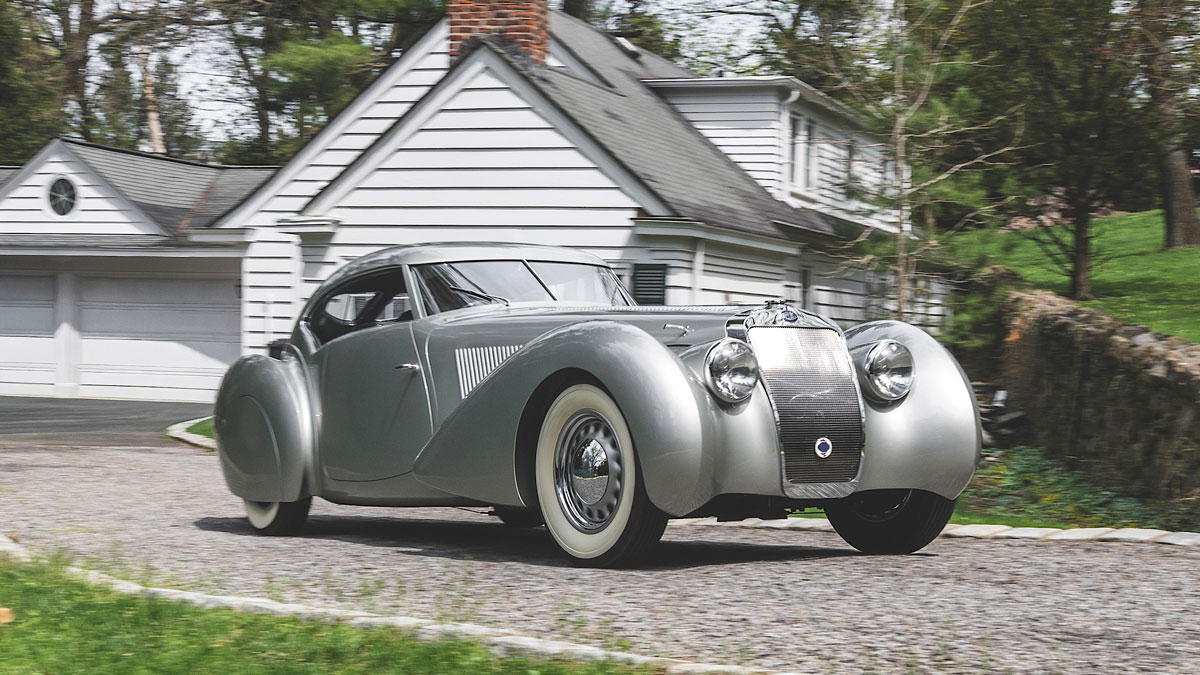
Named Best of Show at the 2005 Pebble Beach Concours d’Elegance, this 1937 Delage will be offered through RM Sotheby’s in August. Named Best of Show at the 2005 Pebble Beach Concours d’Elegance, this 1937 Delage will be offered through RM Sotheby’s in August.
Автор: karymsakov_qq4zn395
-
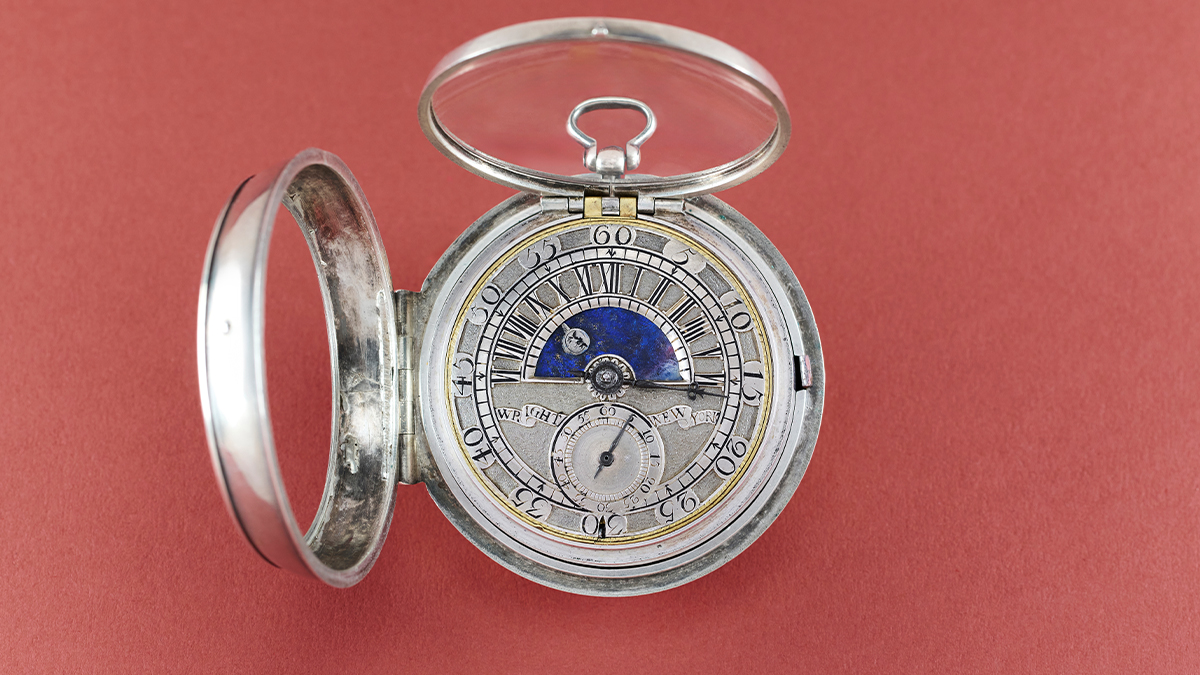
Why the Founding Fathers’ Watches Still Matter to Collectors
We talked to antiquarian horologist Richard Newman on the legacy of these timepieces. We talked to antiquarian horologist Richard Newman on the legacy of these timepieces.
-
Louis Roederer at 250: How Champagne’s Most Admired Brand Stays Ahead
As Louis Roederer celebrates its 250th anniversary, Alice Lascelles explores the history and innovation behind its enduring success.

Every year, one of the wine magazines publishes a league of ‘Most Admired Champagne Brands,’ based on a poll of several hundred buyers, merchants, masters of wine, sommeliers, and drinks writers (including me). For the last seven years, the top spot has been taken by Louis Roederer – the family-owned champagne house which also makes Cristal.
It wins praise for the “quality and consistency of its wines,” its “attention to detail,” and its “constant innovation,” says champagne writer Giles Fallowfield, who organizes the poll. There is also, he adds, simply “a certain class about everything it does.”
See also: A Drinks Expert’s Take on Match-Day Pairings for the World Cup
Roederer’s pulling power was certainly plain at its 250th anniversary last week, which took place in Reims amidst – or, rather, in spite of – record-breaking heat. The invite-only bash for 600 began with an artistic performance at the city’s Centre de Congrès, followed by an al fresco party in the cobbled courtyard of Roederer HQ. Michelin-starred canapes with names such as ‘Lobster Zephyr’ and ‘The Hour of the Cuttlefish’ were accompanied by a vertical of Cristal vintages that began with 2018, and culminated in Cristal Late Release 2008 in magnum – a dazzling wine, from a vaunted year, that had even the most jaded industry types squealing with excitement.
“A Cristal that has almost 20 years on it, like 2008, is always an extra experience, always,” says Louis Roederer’s remarkably fresh-looking CEO Frédéric Rouzaud, when we meet the next day. “When Cristal is young, it’s very nice, it has finesse, delicacy, concentration, energy, but as it gets older it opens up into a more 3D expression, it’s much more complete.”

©Louis Roederer It’s 150 years since Cristal was first created for Russian tsar Alexander II, after the champagne-loving monarch commissioned a personal cuvée from Roederer’s best plots. The original recipe was very sweet – as was the fashion at the time – and came in a bottle made of newly-fashionable lead crystal, hence the name (clear glass is not so great for wine, however, as it exposes it to light damage, or “light strike,” which is why Cristal comes wrapped in a protective layer of golden cellophane these days). The tsar was also paranoid that his enemies might conceal explosives in the punt, so Roederer obliged by designing a bottle with a flat bottom to rule this out.
Cristal may taste rather different today, but it’s still made exclusively from Roederer’s top grand cru vineyards, to a ratio of around 40 percent chardonnay to 60 percent pinot noir (in the case of the blanc) with six years on the lees. The resulting wine can be quite fine and racy, even airy, at first, but gradually develops a fabulous silkiness and patinated richness with time. Long-aged Cristals in large formats – which create a higher wine-to-oxygen ratio, thus promoting more stately maturation – are even better.
Every cuvée in the Roederer range from vintage Roederer upwards is made entirely from estate-grown grapes – which is highly unusual, unique even, in a house of this size. The preponderance of vineyards on chalky sites is also key to preserving its signature saline, mineral style, especially in hotter, drier vintages, which have been becoming increasingly common in the last 10 to 15 years as a result of climate change.
See also: England’s Best Still Wines Are Now Coming From Essex
“My father’s challenge was achieving maturity in the vineyards, which wasn’t happening every year. Whereas today my challenge is to preserve freshness,” says Rouzaud. “So a vintage like 2008 [which, unusually, boasts both generous ripeness and bright acidity] is really special.”
Also crucial to Roederer’s success is its highly-regarded cellarmaster Jean-Baptise Lécaillon. In situ since 1999, Lécaillon has made the company a standard-bearer for sustainable viticulture at scale, with a large proportion of its vineyards now certified organic and/or farmed according to biodynamic practices. He’s also extremely erudite on the art of winemaking – if you get the chance to taste with this man, don’t miss it.

©Louis Roederer
In 2021, Lécaillon replaced Roederer’s entry-level Brut Premier with the more nuanced Louis Roederer Collection, a multi-vintage blend which is re-fashioned for every edition in response to the year it’s founded on. In Reims last week I tasted both Collection 244 and the new 247. The former, based on the 2019 vintage, another heatwave, combines luscious orchard fruit and blossom honey notes with a cool, wet chalkiness; the latter, based on 2022, had more citrussy definition, and a fine, slightly bitter lift. Roederer also makes a lesser-spotted Coteaux Champenois, or still red wine, called Hommage à Camille, which is always interesting to taste.
Roederer may be the toast of the town, but there’s no denying it’s lacklustre times for champagne more generally – in 2025, shipments fell 2 percent to 266m bottles, or their lowest level for 20 years (the only exception to this being an anomalous dip caused by the first lockdown in 2020), thanks in no small part to waning consumption on Champagne’s home turf.
But the US and UK remain “big markets” for Roederer, says Rouzaud. “And Asia, with Japan first – it’s becoming our second-biggest market. Australia is also doing well. The Danish are big, big collectors. Eastern Europe is now starting. And in the end, we have only 270m bottles for the whole world.”
See also: Interesting Wines To Order At Dinner, According To Sommeliers
And he remains bullish about Champagne’s prospects. “The wine has never been as good as it is today thanks to global warming and to the evolution of the viticulture we practise. Twenty years ago, it was all bodybuilding red wines that were strong and oaky – but now people are wanting wines that are about balance and freshness. They want wines that are easy to drink. And Champagne is so versatile – it makes a beautiful aperitif, a great gift, and vintage especially pairs wonderfully with food,” he adds, recalling an “incredible” pairing of wagyu beef and Cristal rosé he recently had in Japan.

©Louis Roederer The next big project on the horizon for Roederer is the renovation of its “hotel particulier” – a 10-bedroom mansion, with a beautiful garden, in the centre of Reims. Built in the 19th century, this handsome, high-ceilinged home was the site of many Roederer family parties back in the day. In 18 months’ time, it will re-launch as a property for private hire. Given that Champagne Roederer is not generally open to the public, this is one five-star way to get behind the scenes. “Guests will be able to have a vineyard visit, a tasting, dinner, stay the night – the full 360 degree experience.”
Similar hospitality projects are a-foot at two other Roederer estates: the Bordeaux second growth Château Pichon Comtesse and Maison Delas Frères in the Rhone. In 2018, the company also acquired the historic Hotel Christiana in Val d’Isère, and will re-launch this as a luxury boutique hotel in 2027.
There’s also the Louis Roederer Foundation, which supports the arts. Works commissioned for the 250th anniversary include a piece by the artist and filmmaker Lee Shulman, best-known for his collaborations with Martin Parr; and an installation for Roederer’s hotel particulier by multi-disciplinary artist Bianca Bondi.
“I like what the artist can tell; I like their sensibility, they are predictors, and sometimes they are right. I think we need artists because they alert us sometimes to what is going on,” says Rouzaud.
“In the end, wine is all about art de vivre. It is culture.”
-

The Most Luxurious Hotels and Suites on the Tour de France Route
The cyclists can tackle the mountain passes; you’ll have a reservation waiting at the top.

-
Tequila is Joining the Collectors’ Cabinet
Collectors have long battled over Bordeaux, whisky, and Cognac. Now, a record-breaking Clase Azul sale suggests tequila could be the next spirit to argue over at the auction house.

Tequila has spent the past decade going from dorm room party staple to status symbol. As it has climbed the ranks to be the beverage of choice in bars and our own shopping carts, its sights have been set on another corner of the drinks world: the auction house.
Collectors have long chased rare Bordeaux, coveted whiskies, and vintage Cognacs, with six- or even seven-figure sales becoming almost commonplace beneath the hammer. Now, it’s a bottle of Clase Azul Día de Muertos Limited Edition, released in 2017, that has become the most expensive tequila ever sold at auction, fetching $35,000.
The sale, which was part of Sotheby’s Whisky & Whiskey Single Cask Summer online auction, eclipses the previous auction record of $24,265 for a José Cuervo Rolling Stones Edition 250th Anniversary Extra Añejo. It also marks a significant milestone for a category that, until recently, barely registered in the secondary market.

©Sotheby’s “Tequila and mezcal have seen huge growth in recent years, and anecdotally I have noticed many whiskey drinkers in America turning to agave spirits. However, tequila’s secondary market activity is very much in its infancy,” said Sotheby’s global head of spirits, Jonny Fowle, in a statement. “This is the first big result for one of the industry’s most iconic brands, Clase Azul, which could mark the dawn of a new boom for collectible tequila.”
See also: The Most Expensive Whisky Ever Sold at Auction
Luxury brands can assign almost any price tag to a limited-edition release (in some cases without it even needing to sell), but an auction reveals exactly what a collector is actually willing to pay. And while the sale still falls well short of the $3.5m price tag attached to the diamond-encrusted Tequila Ley .925 Diamante bottle, it does come out on top as the highest price asked for any Clase Azul bottle, surpassing the retail price of the 15th Anniversary Edition of $30,000.

©Unsplash Buoyed by celebrity-backed brands and an increasing appreciation for artisanal production, premium tequila has surged in popularity over the last few years. And to give credit where credit is due, Clase Azul has likely played a part in that. The Mexican house has found a fan base as much for its hand-painted, addictively collectible ceramic decanters as for the liquid inside them. The record-setting bottle, one of just 300 produced for Día de Muertos and originally only sold in the brand’s Cabo San Lucas store for around $250, is exactly the kind of scarce, beautifully made object that collectors covet.
Agave spirits still have a far way to go before they break the records set by bottles of wine (a 1945 Domaine de la Romanée-Conti sold for $812,500 in March), Scotch (The Emerald Isle sold for $2.8m in 2024) or Cognac (Gautier Cognac 1762 sold for $150,700 in 2020), so whether agave spirits can eventually rival the established auction markets remains to be seen. But given that in the US, spirits have overtaken wine by market share, with tequila proving one of the category’s fastest-growing premium segments, it may just be a matter of time before they become the next bottle worth bidding for.
-

The Chic Matchboxes To Buy If You Have Money to Burn
The once-ordinary piece has been elevated to a subtle collectors’ item.

-

Tesla’s Global Sales Jumped by 25% in Q2
The surprising figure was driven by European consumers. The surprising figure was driven by European consumers.
-

Katherine Heigl Listed Her 25-Acre Utah Mountain Estate for $10.6 Million
The «Grey’s Anatomy» alum and her musician husband Josh Kelley are downsizing after almost two decades at their sprawling home near Park City. The «Grey’s Anatomy» alum and her musician husband Josh Kelley are downsizing after almost two decades at their sprawling home near Park City.
-
Why Has Chanel Bought Historic Shirtmaker Charvel?
The purchase of the 188-year-old family atelier is more than a simple succession plan.

Fresh from a very flush year for Chanel – in which free cash flow climbed 44 percent and more than $700m was spent acquiring specialist makers and suppliers – the French maison has found another home for its increasingly deep pockets.
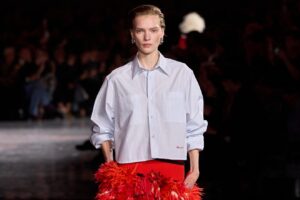
The fashion house has acquired Charvet, the Parisian shirtmaker that creative director Matthieu Blazy enlisted to produce shirts for his debut Chanel collection last October. Less than a year later, Chanel now operates the 188-year-old house outright.
The financial terms of the acquisition have not been disclosed, but in a statement upon the announcement, Chanel says the purchase is intended to «support, over the long term, the passing down of unique savoir-faire and the continued existence of an iconic French heritage house,» while preserving Charvet’s creative independence.
Tucked away on Place Vendôme, Charvet has continued to operate in a similar style since its founding in 1838. There is no E-commerce except through carefully chosen third parties (Charvet’s own website largely functions as a business card), and its clientele – ranging from Winston Churchill, Charles de Gaulle, and Coco Chanel herself – has been built through recommendation rather than marketing campaigns.
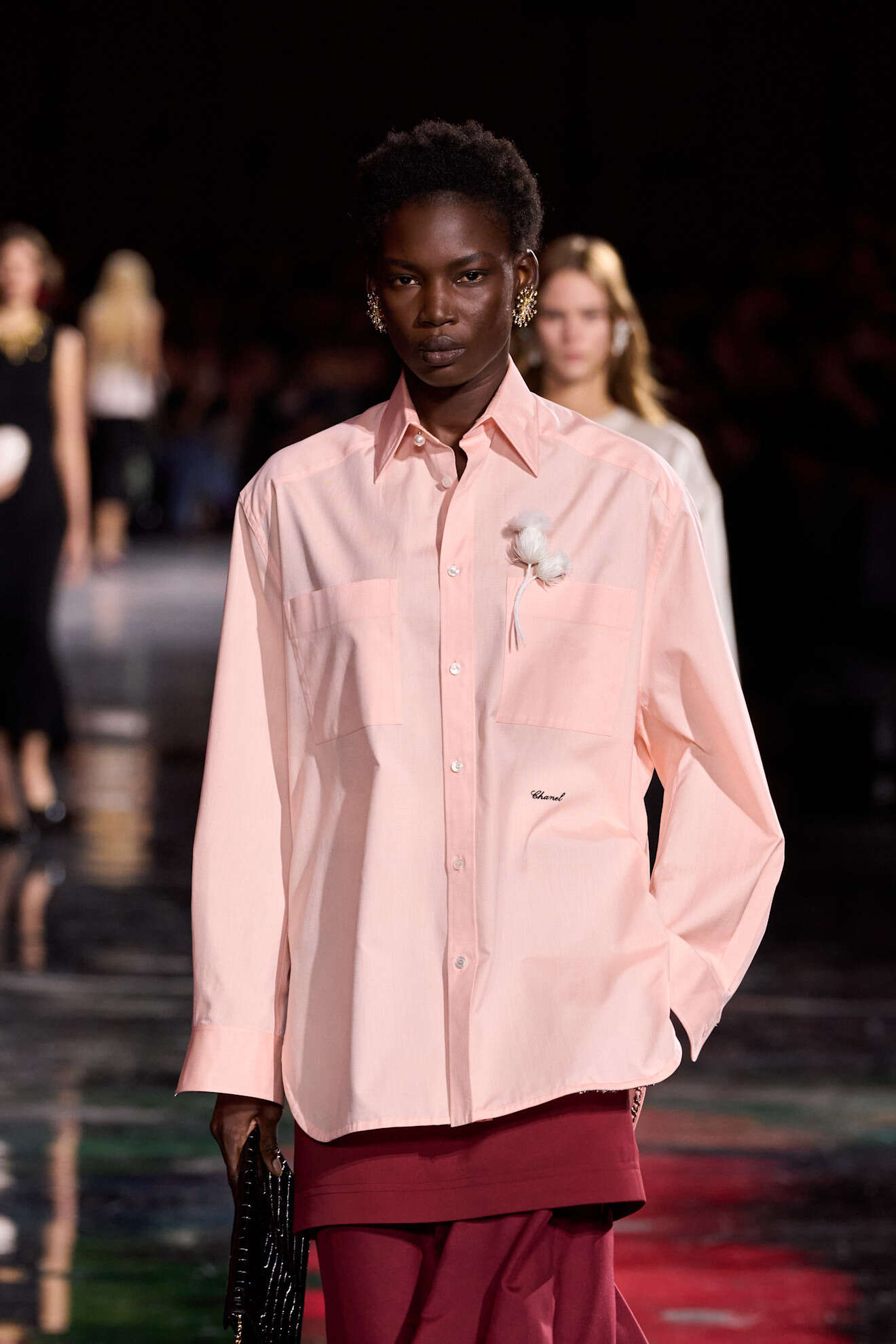
Chanel Spring/Summer 26 ©Spotlight But there is always something inevitably bittersweet about yet another family-run luxury house surrendering its independence. Yet the reality is rather more nuanced. Jean-Claude and Anne-Marie Colban, the siblings who have run Charvet since the 1980s, are now entering their 70s with no obvious family successor waiting in the wings. “What we were looking for above all was a solution to maintain our identity and preserve what we do,” Jean-Claude told Business of Fashion. “We pride ourselves on being the only ones to do things a certain way, but [for] others, it is exhausting to deal with people who do not understand.”
“Seeing Chanel’s way of doing things, in particular [its] way of approaching subjects with competence, sensitivity, and also taking the necessary time, respecting expertise – we realised we were aligned,” he said.
The acquisition also invites comparisons with LVMH’s ever-expanding stable of luxury brands. But that isn’t quite the playbook Chanel appears to be following. While Bernard Arnault’s empire has been built through acquiring maisons across every corner of luxury, Chanel’s shopping list has been considerably more restrained.
Charvet joins roughly a dozen specialty brands and suppliers that Chanel has brought into the fold, from leather goods manufacturers to specialist ateliers, alongside heritage names such as Barrie, Eres, and Orlebar Brown. Many continue operating independently while benefiting from Chanel’s financial backing, and some manufacturers even continue to supply competitors.
The acquisition has also reignited speculation around Chanel’s long-discussed ambitions in menswear. The house appointed Pedro Pascal as an ambassador earlier this year, and Blazy’s collections have been donned by the likes of Timothée Chalamet, Jacob Elordi, Pharrell Williams, and Frank Ocean, prompting ever louder calls for the brand to venture beyond its occasional men’s capsules. Chanel, even as recently as May, has repeatedly insisted a dedicated menswear line is currently “not on the agenda”, but buying arguably the world’s most revered shirtmaker will do little to quiet the conversation.
Whether this ultimately proves to be a play for menswear or simply another investment in French craftsmanship, it’s clear that Chanel is not sitting on its fortunes.
-
The Orient Express Sailing Yacht Features Handmade Savoir Beds in All 54 Suites
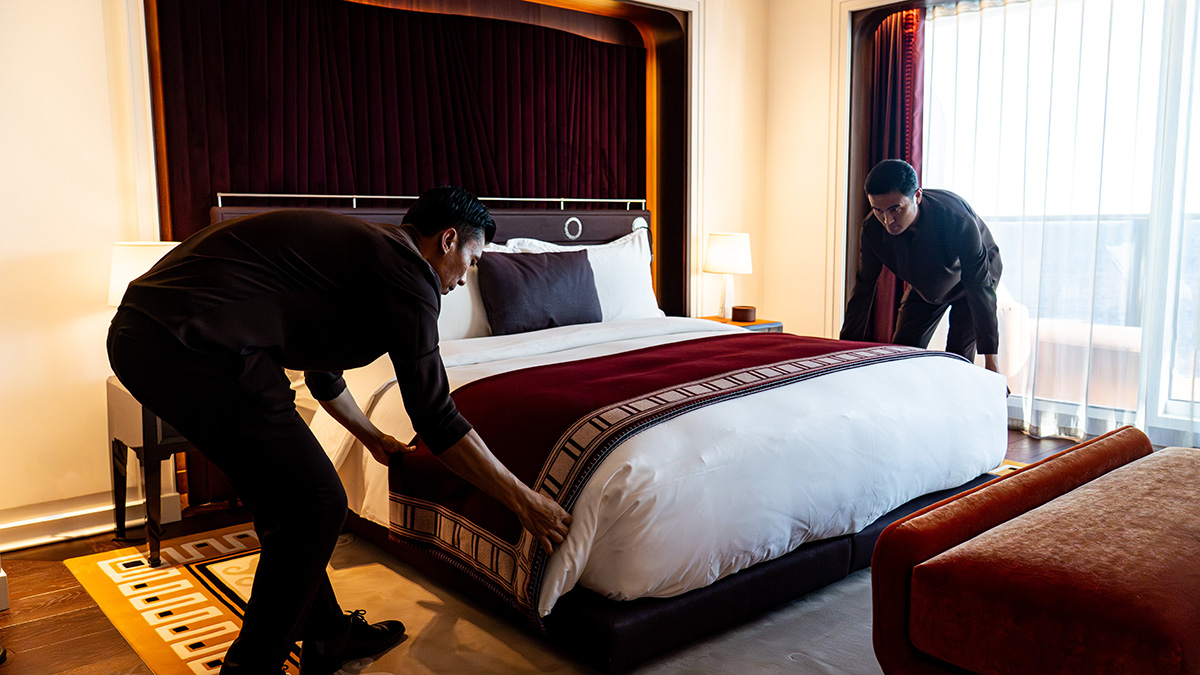
The «custom sleep systems» were developed over several years, according to Orient Express. The «custom sleep systems» were developed over several years, according to Orient Express.