Рубрика: General

  • Why Rolls-Royce Veteran Torsten Müller-Ötvös Is Betting On Yachts

    Why Rolls-Royce Veteran Torsten Müller-Ötvös Is Betting On Yachts

    The former Rolls-Royce CEO speaks on swapping the road for the open seas, evolving luxury buyers, and why ownership is now about experience, not status. 

    After more than a decade at the helm of Rolls-Royce Motor Cars, where he helped steer the marque into a new era of younger, experience-driven clients, his move to Oyster Yachts raised more than a few eyebrows across the industry.

    But for Müller-Ötvös, when he received the invitation from owner Richard Hadida to join Oyster as a strategic adviser last summer, the decision required little hesitation. “I didn’t need to think twice about it,” he tells Elite Traveler. And while the medium may have shifted from motor cars to bluewater sailing yachts, the underlying philosophy is familiar to him. “It’s a great brand, and they’re very similar in terms of values: craftsmanship, small series, dedication, excellent engineering, and that hunger for excellence.”

    Yet, as he explains to me at Oyster’s London Private View 2026, where the brand also revealed its new 50-ft yacht concept, there is one crucial distinction. “Oyster is where Rolls-Royce was maybe 12 years ago. And I don’t mean that in any way negatively – it simply means a bigger journey is starting now.”

    Much of the luxury of Oyster is its celebration of British craftsmanship ©Oyster Yachts

    Müller-Ötvös is not embarking on that journey alone. He is joined by the recently appointed CEO, Stefan Zimmermann Zschocke, along with Hadida taking up the role of chairman. And when I ask what expertise he brings from his years at Rolls-Royce, he is quick to humbly defer to the technical knowledge already in place. “Nobody knows better than Stefan how to build these masterpieces. I would not be able to tell him how to do it more efficiently. He knows exactly what to do.”

    See also: The World’s Largest Sailing Yacht Has Launched – See It in Pictures

    Instead, Müller-Ötvös sees his contribution within the client world that he knows intimately. “Where I can bring quite a lot of knowledge and input is in understanding ultra-high-net-worth individuals: what they like, what they dislike, and how we can better convince them. That’s where I step in.”

    Listening to clients, he suggests, is the principle that has shaped some of the brand’s most decisive moves. “You need to be eye-opened and see new opportunities and chances. For instance, at Rolls-Royce, we listened carefully before we brought the SUV, the Cullinan, into the market. That was quite a daring move at the time, and was even heavily criticized. But now it’s 50 percent of the entire volume. Imagine where Rolls-Royce would be without an SUV.”

    Many of Oyster’s new clients have little prior sailing experience but an appetite for adventure ©Oyster Yachts

    British heritage is another thread that runs through Oyster, one Müller-Ötvös is quick to underline, particularly given his years spent at the helm of one of Britain’s most storied marques. For him, the appeal lies not just in provenance, but in a level of craftsmanship he believes is “second to none”, and something that continued to surprise him even after more than a decade in the UK. 

    “You probably don’t cherish that enough here,” he reflects, drawing a comparison with his native Germany. “It’s a fundamental difference. To see people working meticulously on certain parts for hours, refining them and bringing them into perfection – it’s something quite special, and it’s exactly what clients respond to.”

    See also: An Expert Guide to Yacht Shows Around the World

    But as Müller-Ötvös explains it, if the product is the “canvas”, it is the experience surrounding it that increasingly defines its value. While the language of luxury may have shifted in recent years away from overt displays of wealth, the underlying motivations have not disappeared entirely. “Many people say they are no longer into opulence. I think that’s only half the truth,” he says. “Bragging is still very important for human beings – but it’s done in a far more subtle way today.”

    Ownership, in this sense, becomes less about possession and more about participation. Rather than signaling status through price alone, value is expressed through experience and capability. “You don’t own something just for the credentials of the brand,” he explains. “You own it because of what you can do with it.”

    Oyster’s clients are increasingly seeking out experiences in addition to products ©Oyster Yachts

    It is this shift from object to experience that he sees as defining not only the future of yachting, but of luxury more broadly. “It’s not about telling people how expensive it was. It’s about what it is capable of doing – circumnavigating the world, for example. That speaks a completely different language about value.”

    It’s a philosophy that Oyster has been refining for years, from the Oyster World Rally to the Explorers Club, building a client experience that extends far beyond the yacht itself. It also opens the door to a new kind of client, including those with little prior sailing experience but a clear appetite for something more meaningful.

    “It’s not about whether I own an Oyster,” he concludes. “It’s about being able to say that, on that platform, I circumnavigated the world – and had experiences others simply haven’t had.”


  • The Founder of West Hollywood’s Iconic Bar The Abbey Lists His Beverly Hills Home for $7.4 Million

    The Founder of West Hollywood’s Iconic Bar The Abbey Lists His Beverly Hills Home for $7.4 Million

    The nightlife impresario purchased the midcentury 1960 Trousdale Estates residence in 2023 and incorporated luxe entertainment-forward touches. The nightlife impresario purchased the midcentury 1960 Trousdale Estates residence in 2023 and incorporated luxe entertainment-forward touches.

  • One of Tokyo’s Best Pizza Spots Is Making Its U.S. Debut in New York City

    One of Tokyo’s Best Pizza Spots Is Making Its U.S. Debut in New York City

    Pizza Studio Tamaki will be ready for pizza lovers on May 5. Pizza Studio Tamaki will be ready for pizza lovers on May 5.

  • A St. Barts Estate With 3 Guesthouses Can Now Be Yours for $47 Million

    A St. Barts Estate With 3 Guesthouses Can Now Be Yours for $47 Million

    The hilltop property, known as Le Manoir de Lurin, stretches across nearly two acres with sweeping sea views.  The hilltop property, known as Le Manoir de Lurin, stretches across nearly two acres with sweeping sea views. 

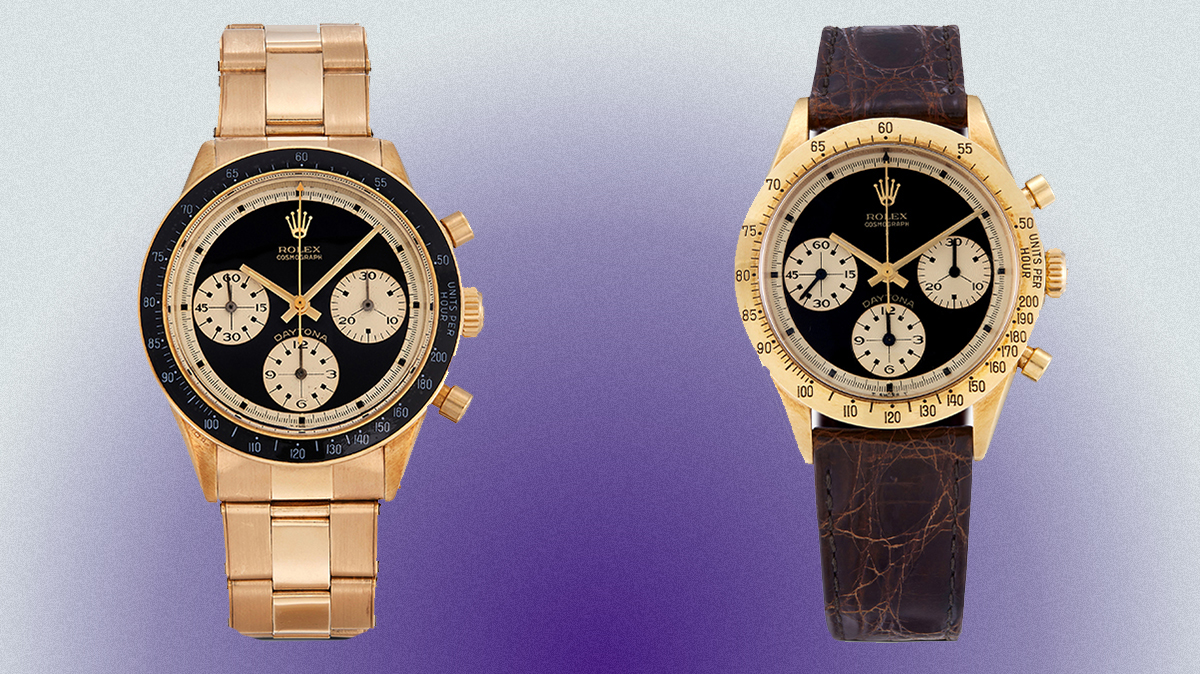
  • Two Rare Gold Rolex Daytona ‘Paul Newmans’ Are Headed to Auction

    Two Rare Gold Rolex Daytona ‘Paul Newmans’ Are Headed to Auction

    Sotheby’s upcoming Important Watches sale includes a steel Paul Newman, too. Sotheby’s upcoming Important Watches sale includes a steel Paul Newman, too.

  • The Most Beautiful Designer Wedding Shoes for the Modern Bride

    The Most Beautiful Designer Wedding Shoes for the Modern Bride

    From sculptural heels to alternative footwear, say ‘I do’ to this edit of bridal shoes. 

    designer wedding shoes
  • The Met Gala Proves Fashion Is Obsessed With ‘Museum Memory’

    The Met Gala Proves Fashion Is Obsessed With ‘Museum Memory’

    The Met Gala 2026 reveals fashion’s growing obsession with history and archives. 

    Schiaparelli Fashion Becomes Art at V&A South Kensington

    Across institutions such as the Victoria and Albert Museum and The Metropolitan Museum of Art Costume Institute, fashion has undergone a quiet but consequential reclassification over the past decade or so, now being granted the same curatorial seriousness as painting or sculpture. Once dismissed as ephemera – seasonal, disposable, beholden to commerce – it now sits beneath museum lighting, framed by curatorial argument and institutional authority.

    The Met Gala 2026 makes this shift impossible to ignore. This year’s theme, Art and Fashion, nods to the idea that fashion is no longer borrowing from art; it is staking a claim within it. But this marks a tension at the heart of the industry. Fashion thrives on acceleration: collections arrive and vanish within months, trends sometimes within weeks. Museums operate in defiance of that tempo. To enter an exhibition is to exit the churn.

    See also: What To Expect From Schiaparelli’s First UK Exhibition

    The red carpet has become the most visible site of this transformation. Vintage once implied thrift or nostalgia; now it signals taste and status. Archival dressing, previously the preserve of insiders with access to private collections, has been democratized – or at least popularized – into a form of cultural citation.

    Take Zendaya, for example. Her stylist Law Roach has built entire Met Gala narratives out of archival fashion: a nod to Joan of Arc one year, a Cinderella transformation another. Rihanna, too, has turned the Met Gala into her personal museum wing – whether it was the unforgettable Guo Pei yellow cape in 2015 or her papal-inspired Maison Margiela look in 2018.

    Even more subtle references play the same game. Tilda Swinton has long treated red carpets like conceptual installations. Jared Leto has, at various points, treated them like interactive theatre (sometimes involving his own decapitated head). And Lana Del Rey, at the 2018 ‘Heavenly Bodies’ Gala, leaned fully into sacred iconography.

    Others have tested the limits of this museological turn. Kim Kardashian’s decision to wear Marilyn Monroe’s “Happy Birthday, Mr President” dress in 2022 did more than provoke debate; it exposed the friction between preservation and performance. If an object is deemed culturally significant, should it be worn at all?

    This question sits at the heart of fashion’s institutionalization. Museums are, by definition, selective. They confer value by choosing what endures. But the Met Gala’s 2026 theme complicates that logic. It takes objects that might otherwise be stabilized behind glass and returns them, however briefly, to circulation. A garment may begin its life on a runway, pass into an archive, and then reappear on the red carpet – each iteration altering its meaning.

    So while museums confer importance, the Met Gala borrows it, remixes it, and sends it back into the world at high resolution. It decides in real time what is worth remembering – and, just as importantly, what is not.

  • Brunello Is Better Than Ever—Here’s Why

    These single-vineyard wines are changing the game in this storied Italian region. These single-vineyard wines are changing the game in this storied Italian region.

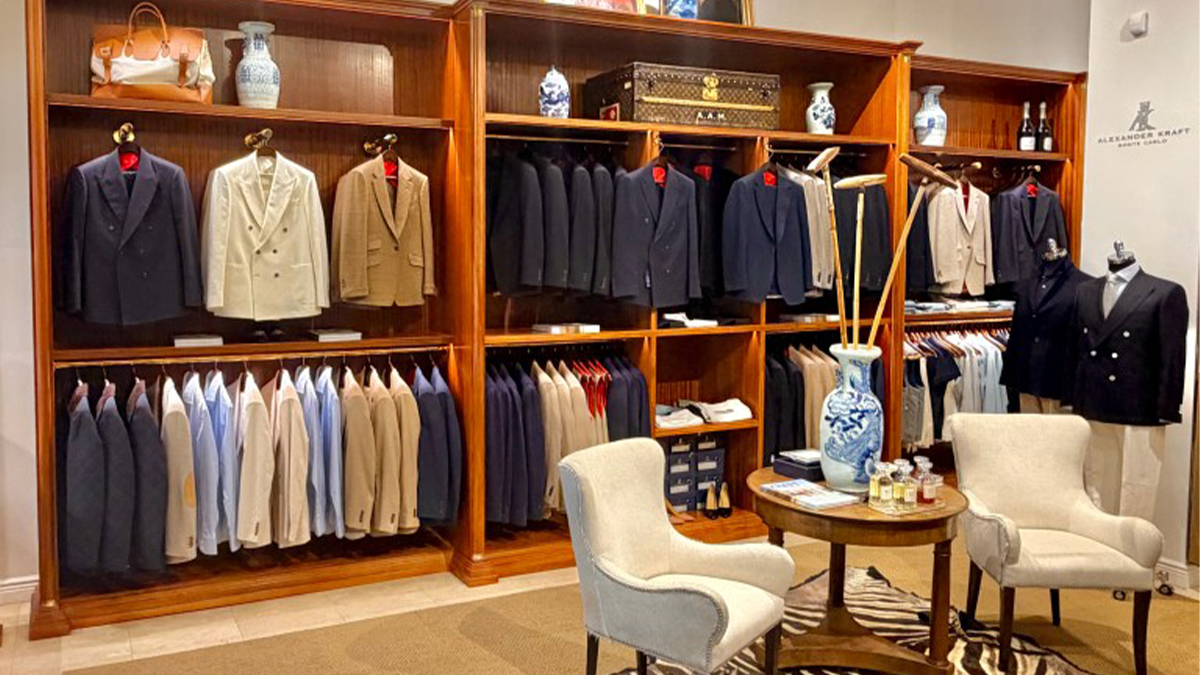
  • Menswear Influencer Alexander Kraft Brought His Monte Carlo Store to N.Y.C.

    Menswear Influencer Alexander Kraft Brought His Monte Carlo Store to N.Y.C.

    Renaissance men, step this way. Renaissance men, step this way.

  • Inside the Art of Getting ‘Snatched’

    Inside the Art of Getting ‘Snatched’

    If you’re looking to achieve a sculpted look, these are the treatments to try. 

    getting snatched

    ‘Getting snatched’ has become a beauty-world phrase that’s escaped its origins and taken on a life of its own. Born in drag culture and amplified by pop stars, TikTok routines, and red-carpet prep clips, it’s used to describe a face or body that looks lifted, sculpted, and tightly defined, as if everything has been subtly pulled into place.

    While those in pursuit of a tightened look may have previously turned to injectables, ‘getting snatched’ is less about dramatic interventions and more about a considered combination of techniques that subtly contour and sculpt, so you look like you – just better. 

    To get a closer look at the precise art behind getting ‘snatched,’ I tested London’s leading body and facial sculpting treatments, sitting down with some of the world’s leading aesthetic experts for their insider knowledge.

    Treatments to get snatched

    Celebrity facialist and skincare brand founder Keren Bartov, whose clients include Demi Moore, Gal Gadot, and Victoria Beckham, has seen this shift towards the ‘snatched’ trend firsthand. “There is a clear move away from invasive procedures toward technology-led solutions. More clients are looking for natural tightening and definition without injections,” she says. “The focus is not to change the face, but to restore a precise, naturally-defined structure.”

    See more: The New York Facialists You Need on Speed Dial

    Leyen Tran, resident facialist at Singapore-based skincare brand Allies of Skin, echoes this movement. “There’s been a move from aggressive treatments to more intelligent, integrative approaches. Clients are prioritizing techniques that combine visible sculpting with internal balance.”

    For body sculpting, some are turning to Electrical Muscle Stimulation (EMS) for an accelerated, non-invasive route to toning. In a typical session, simple movements such as squats, lunges, and core work are performed while electrical impulses stimulate multiple muscle groups at once. 

    “Many clients use it specifically for toning and sculpting, as it targets deep muscle groups that are difficult to engage with conventional training alone,” says Eladio de Leon, founder of E-Pulsive, which operates EMS studios in London and Zurich.

    I tried a session at the brand’s private studio near Mayfair, London. Despite skepticism about what a 20-minute workout could deliver, I was left sweating after a series of simple ab, glute, and arm calisthenics performed in a suit that feels like a full-body TENS device.

    The reason EMS is so tiring (and effective), is because it works by activating up to 90 percent of the body’s muscle fibres simultaneously, allowing for a highly efficient full-body workout in around 20 minutes. It recruits a far higher percentage of muscle fibers than conventional training alone, which is why it’s often used for toning and body composition rather than bulk-building.

    This turn towards fast-tracking, non-invasive technology seems to have spilled over into facial sculpting, too. At Bartov’s clinics in London and Tel Aviv, future-facing machines play a central role in her sculpting facials. “The snatched look is created through a combination of deep structural work and advanced technologies, alongside proper skin treatment,” she says.

    See more: How to Achieve Expression-Friendly Aging

    During each bespoke facial, estheticians will work with the assistance of between 3-5 machines, picked from the London clinics’ 150-strong fleet. For my facial sculpting, we opted for the NuEra Tight, a non-invasive, radiofrequency (RF) device that feels similar to a hot stone massage and is credited as delivering a ‘non-surgical facelift’. The machine uses focal radiofrequency technology to tighten facial skin, reduce wrinkles, and contour the jawline by delivering targeted heat to the dermis and stimulating collagen and elastin production. 

    “These machines allow us to reach deeper layers of the skin and tissue,” says Bartov. “We target fat cells, collagen, and elastin through controlled heating, encouraging the body to renew and strengthen itself. Improving circulation and lymphatic drainage also contributes to a more lifted appearance – it’s a biological process, not a temporary fix.”

    Lymphatic drainage is also a popular route to tightening and achieving a ‘snatched’ look. “The lymphatic system is one of the most overlooked factors in a sculpted face,” affirms Leyen Tran. “What people often read as ‘volume’ or aging can actually be stagnation, fluid retention, and inflammation.”

    When trying to achieve a sculpted look, she focuses on lymphatic work, fascia release, and nervous system regulation. “The ‘snatched’ look isn’t about tightness alone; it’s about movement, circulation, and strategic release,” she says.

    “The face and upper body store patterns of stress — what we call fight-or-flight muscle memory. This shows up as tension in the jaw, neck, chest, and shoulders, which directly impacts the face.”

    “My work blends fascia release, intraoral sculpting, and lymphatic techniques with medical-grade microcurrent and ultrasonic therapies. It’s about knowing when to soften and when to go deeper to properly release the structure.”

    “When you restore flow and work with the vagus nerve to bring the body out of a chronic stress response, those patterns begin to release. The posture shifts, the breath deepens, and the face lifts in a way that feels natural,” she adds.

    The referral-only London-based facialist Iris Maglanoc, previously lead facialist at Sunday Riley and runner-up of The World Face Matrix Competition, also takes a full-body approach to facial sculpting. Her Bespoke IM Facial combines Golki (a South Korean bone-setting massage), myofascial release, craniosacral therapy, and lymphatic drainage.

    The emphasis of her approach is on releasing tension and supporting lymphatic flow rather than chasing surface-level results. In practice, that translates to a more defined jawline, reduced puffiness, and subtle lift through the cheekbones and eyes, without injectables.

    “When it comes to lifting and sculpting the face, the most effective results come from working with the deeper structures — releasing muscular tension, improving function, and encouraging proper lymphatic flow. A tailored, hands-on approach delivers more visible, longer-lasting results than surface-level treatments alone.”

    When I tried the treatment, she began with the back and neck, using the Corefit Body Driver to release deep muscular tension and improve circulation before moving onto the face. She also worked across my scalp, stimulating it to support lift through the upper structures. Overall, Maglanoc spends around 30 minutes working solely on the neck, shoulders, and scalp, before ever touching the face, though, as if like magic, the lift was already visible through the jaw, cheeks, and eye area.

    She also puts some of the onus on the individual for maintaining this look. “For lymphatic drainage, consistency is key,” says Maglanoc. “Results come from regular treatments combined with supportive daily habits such as hydration, movement, and maintaining good circulation. It’s not just about reducing fluid retention, but about supporting the body’s natural drainage pathways over time.”

    While at-home sculpting techniques are constantly evolving, one that has seen renewed attention – despite its ancient origins – is the gua sha. A traditional Chinese medicine practice and tool, gua sha is designed to stimulate circulation, release tension, and encourage a more sculpted appearance in the skin.

    Brands have embraced the ritual, including French skincare Sisley, which created a gold Ginkgo Gua Sha. Movements typically focus on smoothing, lifting, and sculpting the face: sweeping motions across the face and neck aim to improve radiance and reduce puffiness, while more targeted strokes along the cheekbones and jawline help define facial contours. The textured edge can be used over fine lines, while lighter pressure stimulates circulation and key pressure points.

    The overall effect is a more relaxed expression, with skin that appears smoother, lifted, and more energised – though experts suggest results are cumulative rather than immediate or permanent.

    See more: Why Is Hollywood Reportedly Hooked on Peptide Injections?