From record-breaking speed to hybrid power, here’s what makes this American hypercar a knock-out.


From record-breaking speed to hybrid power, here’s what makes this American hypercar a knock-out.


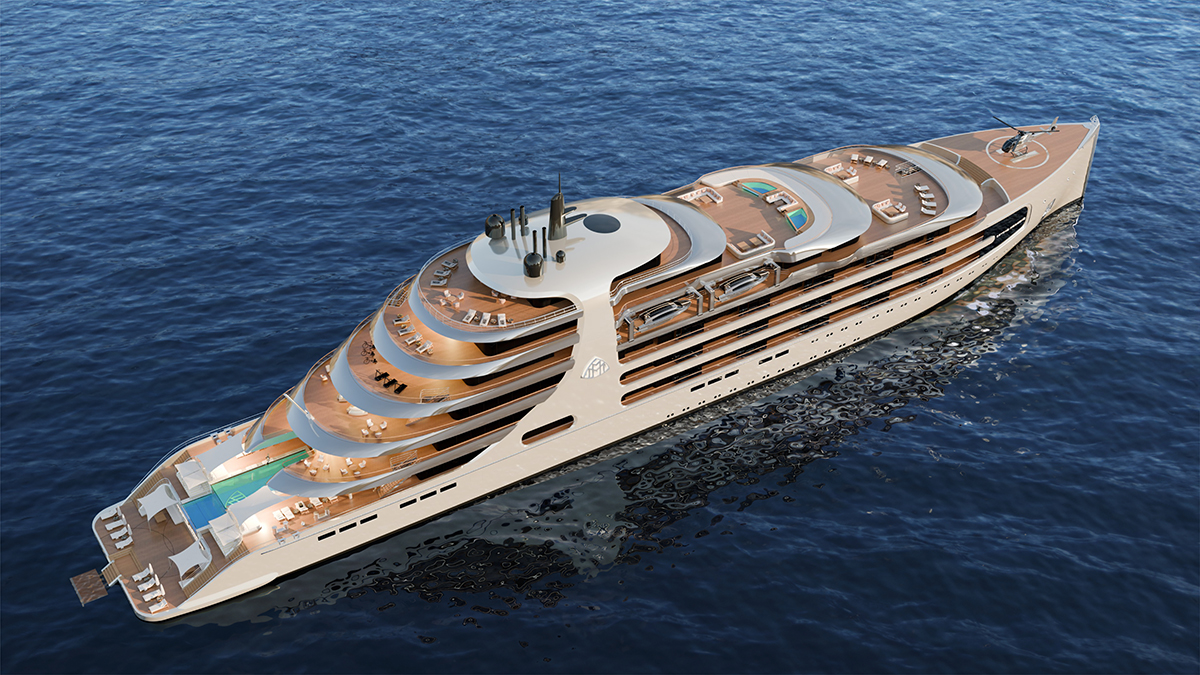
Newcomer «Shine» measures 131 feet from raked bow to sculpted stern and offers an interior volume of 370 GT. Newcomer «Shine» measures 131 feet from raked bow to sculpted stern and offers an interior volume of 370 GT.

Ready to reinvent your signature scent? Here’s how industry insiders do it.

Fast forward to 2026, and the notion of a singular signature feels almost reductive. Today, individuality is expressed not through one bottle, but through a blend. Smelling unique isn’t just about claiming a singular signature scent, but in the art of layering multiple.
“I first became aware of fragrance layering while traveling in the Middle East, where it is deeply rooted in perfume culture, and after talking with people and friends from the region who shared their knowledge with me,” says Thibauld Crivelli, founder of Maison Crivelli.
It’s a shift being driven by a younger, more experimental consumer. According to a 2,000-person Unilever survey, 29 percent of Gen Z respondents layer multiple scents, while Pinterest reports a 125 percent surge in searches for ‘perfume layering combinations.’
“After launching the brand [in 2018], many customers started to ask me how to layer Maison Crivelli perfumes altogether, and I started to look at the different combinations which could work well.”

For Aurélien Guichard, perfumer and founder of Matière Première, fragrance layering can be gratifying. “I think it’s important to keep in mind that layering is personal,” he says. “It’s always easier to enjoy layering two things that you already like on their own. You might be surprised by how well they work together.”
But where do you start? What notes are worth pairing? Is there a limit to how many you can layer? Elite Traveler asked Crivelli and Guichard to share their tips on how to master fragrance layering, whether you’re new to the trend or not.
See also: How Henry Jacques is Revitalizing the Fragrance World
Think about your favorite fragrance note and start with the perfume that really champions that scent profile. This might mean moving away from more complex fragrances and opting for a niche single-note scents that aren’t as layered.
Guichard likes to start with the base note, which can be “the part of the fragrance that lasts the longest. If that’s the case, then you should use ingredients that are long-lasting, such as woods, amber, musk, or notes that have heavier molecules. If the base scent is meant to define the main identity of the fragrance, then it has more to do with the olfactory profile and your personal taste.”
Crivelli adds that, from his experience, “deeper and warmer ingredients such as woody and amber notes are a great base for layering. They are textured and can welcome the additional facets brought by complementary ingredients.”

“Start layering by spraying a perfume extract and topping it up with a lighter eau de parfum,” says Crivelli. “It’s a rule I always follow.
“Vivid notes (e.g. spices or citrusy florals) make a perfect top up as they add a hint of freshness,” he adds.
Guichard, meanwhile, argues that “you shouldn’t combine things that are too similar or too complex, in order to maintain a modernity to your layering. I usually like to combine ingredients that are long-lasting with others that are more transparent.” Think: smoky notes under a white musk scent. He recommends layering two or three scents as a maximum. “Balance is essential,” says Crivelli. “The idea is to enhance and amplify the characteristics of each fragrance without overpowering one another.”
But if you’re worried about overcomplicating things, consider sticking to what you already like. “I also prefer to combine perfumes which have a common ingredient or facet, as I believe that it creates a thread between the two formulas,” Crivelli adds. So if your base is a floral scent, try cutting it with another floral one.
Ultimately, fragrance layering is about experimenting, and Guichard believes it shouldn’t be taken too seriously. “Layering is all about being yourself and being unique – it’s about how you feel. For me, combining ingredients is very personal.”
Fragrances react to your skin chemistry when they’re first applied, so layers will smell different on you than they will on a fragrance blotter.
“Now I follow my intuition,” Crivelli says about how he goes about layering fragrances. “This gives me a unique approach based on knowledge shared by friends in the Middle East, but also infused with a very personal perspective.”

Paris after dark? Here’s where one writer recommends going.

Bartenders approach their craft like chefs, where seasonal infusions carry the same weight as seasonal menus, and where a well-shaken cocktail feels like a small piece of theater. Spending 24 hours drinking across the city is not an exercise in excess but in discovery. Just one night here and you’ll come away from the place feeling like a thief at the Louvre.

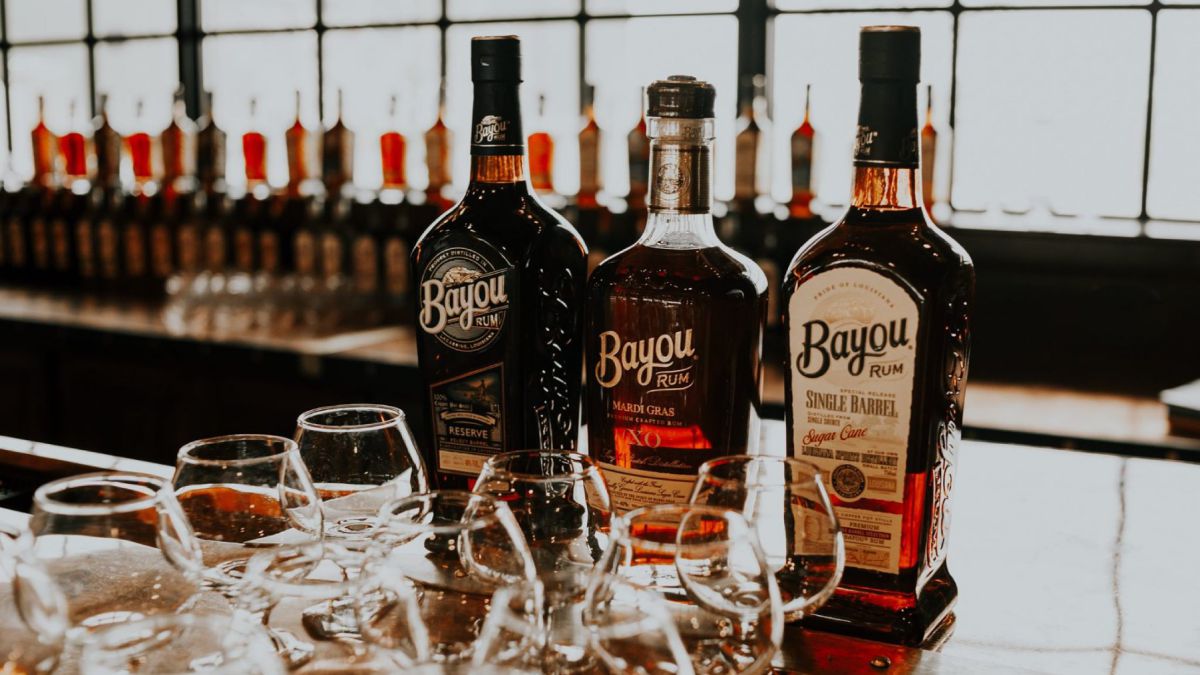
But there is a second current running through France’s drinking culture, quieter yet more profound: its devotion to their national spirits. This is the land of Cognac, Armagnac, Calvados, and Chartreuse. Not to mention the plethora of gin de France, which will give your martini such life, you’d want it to audition for the Folies Bergère.
Sign up to the World of Fine Spirits newsletter for more whisky stories.
Thankfully, there are places where one can sip mid-1900s Armagnacs or compare forgotten eau-de-vie styles with the ease of ordering a glass of wine. This dual nature, a mixological flair paired with deep spirits scholarship, makes Paris the perfect city in which to explore both modern cocktails and rare pours.

Let’s start with the neat spirits themselves. A must-visit is the legendary La Maison du Whisky. The boutique, located at 20 rue d’Anjou in Paris’s 8th arrondissement, has over 2,000 bottles, including special editions chosen for this store.
The Maison also has its own whisky bar, Golden Promise (named after a barley variety). The bar is hidden away under La Maison’s sister shop, and is arranged like a series of hidden salons, each with its own personality and purpose. Guests can pair their drams with refined small plates from the neighboring ERH kitchen and is a real journey of flavor.
For anyone who loves genuine French artisan spirits, then you must swing by Ryst-Dupeyron, a Maison with a focus on offering a wide selection of incredible Armagnac. The team is highly knowledgeable, and stocks go back as far as the mid-1800s. A lot of the bottles are open for tasting, too.

A night in Paris begins not with haste but with good planning, and The Cambridge Public House is the perfect place to start. Tucked into the Marais, the bar marries British pub warmth with Parisian precision. The room hums with an easy conviviality and drinks here lean thoughtful rather than flashy, often built around hyper-seasonal ingredients. It’s the kind of place where you start with something bright and sessionable, letting the day fall away as the bar settles into its early-evening rhythm. Pies are served, and their flagship drink, Cigarettes After Sex combines smoky mezcal, Sloe Gin, Agua de Jamaica, Verjus, and Lapsang Souchong tea.
From there, the night turns onto one of Paris’s most beloved cocktail streets and into the imaginative world of Little Red Door. LRD, as it is known, has long been a standard-bearer for concept-driven mixology, but what makes it compelling is how effortlessly those concepts translate into delicious drinks. Each menu is a miniature philosophy of locally sourced ingredients, and a tasting flight is on offer for the indecisive. The busy room glows in deep, enveloping red hues and the energy is warm, intimate and instinctively Parisian. Cocktails are made on bases of tomatoes, or even cheese. It is a fairground of flavor where the night begins to shift gears, and where you lean into creativity.

A short walk delivers you to the stylish arcades of the Grand Rex and the refined cool of Danico, hidden behind the Italian trattoria Daroco. Danico is all lines and textures: marble, velvet, and the soft shimmer of neon reflected in glassware. It is also where some of the very best cocktails in Paris are hidden (a tarte tatin sour, anyone?). The drinks are architectural yet playful, informed by travel, art, and modern technique, and there is a wonderful, cartoon menu to guide you through. Sitting at the counter, watching the bartenders work with swift, almost choreographed movement, you feel the pulse of contemporary Paris. It’s elegant but not aloof; innovative without being intimidating.
As the night deepens, you slip into the quiet, curated world of Abstract, a bar that feels like a thoughtful whisper amid Paris’s louder cocktail darlings. Abstract is the newest bar from French cocktail visionary Remy Savage (the man behind Bar With Shapes For A Name in London, and sister Parisian venue Bar Nouveau) and delivers a minimalist aesthetic which belies the complexity of its drinks. The menu offers distillates which are made in-house at a lab above the bar, and drinks such as their Old Fashioned features ‘chocolate, fig and buckwheat’ and their Bloody Mary, Marmite. The results are always clean, expressive and calm in a (small) space which invites you to slow down and pay attention to the way flavors unfold without fanfare.

The last stop is a return to Parisian grandeur: Bar Les Ambassadeurs at the Rosewood Hôtel de Crillon. Paris is awash with wonderful hotel bars, yet few capture old-world luxury with such effortless modernity. Crystal chandeliers, marble, gilded mirrors, a ceiling that it’s a room designed for ceremony, but the service keeps it grounded and welcoming. The cocktails blend classical technique with contemporary finesse, and the current menu, A Sense of Memories, is based around flavors and aromas that trigger positive ideals. Cocktails named ‘Forest’ (Scotch with mushroom and pine) and ‘Seaside’ (vodka, manzanilla sherry, seaweed, coffee bitters and miso) are not just complex on paper, but in the glass too.
Sitting beneath the soft glow of the chandeliers, drink in hand, you feel the full sweep of the Parisian night: from neighborhood charm to high-concept creativity to timeless hotel elegance. It’s a reminder that Paris, at its best, is not one style but a spectrum, and a night out can be a journey through all of them. Forget Liberty, Equality, Fraternity. Paris is all about Libations, Elevation and Celebration.

The company plans to reopen its ticket sales for its suborbital flights. The company plans to reopen its ticket sales for its suborbital flights.

The Central Park hotel is now offering in-suite performances by two Broadway stars. The Central Park hotel is now offering in-suite performances by two Broadway stars.

The designer talks bridging music, sculpture, and luxury craft.

Name an artistic medium and Ini Archibong has tried it: watch design, beverage packaging, music production, stonework, furniture design (although he is best known for his rippling sculptural glasswork).
His collaborators are numerous. Among them is Hermès, for whom he created La Galop d’Hermès watch in 2019; Snoop Dogg, who recruited Archibong as creative director for his spirits brand, Gin & Juice; and Diageo and Sotheby’s, with whom he worked on a bespoke whisky cask release. His latest creation is his largest glass work to date, a 7.5-ft cast bronze and glass sculpture that was installed at Port Ellen distillery in 2025, to commemorate the Islay whisky brand’s 200th anniversary.
Archibong was raised in Pasadena, California, but has lived in the lakeside Swiss town of Neuchâtel for the past 11 years.
What is your relationship with Port Ellen?
I’ve been a fan of Scotch whisky, particularly single malts, for quite some time, but [this project] began in around 2021. I realized that with it being a ‘ghost’ distillery [it ceased prodution four decades ago], there was a limited quantity of this coveted liquid. This made me see it in a more philosophical way — every drop that gets consumed is one less drop of Port Ellen whisky that exists. Period. From there, I stopped thinking about the collaboration from the terms of making something that was commissioned and more about making sure that everything that I create for Port Ellen recognizes its spiritual and mythological essence.
See also: The Most Exciting Whisky Right Now Isn’t Scottish – It’s English
What is your ideal work environment?
I have a studio inside my flat where I create music and design. When I’m working, I’m usually listening to records that inspire the project or I’m listening to whatever music matches the energy of what I’m trying to create. But with a project like this piece, so much of the work is internal and comes from the purity of inspiration. In that sense, my studio was outside in the green fields of Islay and on planes, flying back and forth: thinking, getting inspired, and just imagining. The next step was working with the craftsman, traveling to the Czech Republic to visit the glassmakers there, reviewing samples, drawing out my ideas, finding ways to express them clearly, and then going into the making process and praying for the best.
You mentioned music is important. What records do you have on repeat right now?
Every Friday, I see what new records were released and I give them a spin. For a period, those will be what I lean toward. Right now, I just came from the gym, so Rage Against the Machine [is playing]. Also a lot of Hit-Boy and The Alchemist — that stays on repeat. While I was working with Port Ellen, I was listening to a lot of Kendrick Lamar — he always takes me back to California. The GNX album had just come out, but I was in a more reflective space, so Mr Morale & the Big Steppers was on the most then.
You grew up in California and now you’re in Switzerland — how does each location inspire you?
Where I grew up and the way that I grew up is my foundation and it’s what gives my work the feeling that it has. I was born in LA in ’83, and I was raised by hip-hop. That culture and artistic expression is the foundation for everything I do. I’ve tried my hand at graffiti and breakdancing, and I’ve spent 20 years producing hip-hop music in a traditional way with vinyl records and a sampler. If you look at the Port Ellen piece, the colored glass inside and the way that it’s moving references the Wild Style graffiti aesthetic from LA that I used to see while driving on the freeways. And the way that my chandeliers are composed, there’s not a strict structure. It’s a musical composition that’s akin to the rupture and flow in hip-hop production. Things are placed in a rhythmic way, but off-kilter and non-traditional. All of that is inside of me, and it’s in my craft. You could say that replacing the tools that I grew up with with the tools that I found in Europe is what makes my art what it is now.
What do you collect?
I’m an obsessive collector: watches, books, glass, vinyl, records, art, furniture, socks, ties. Saint Laurent sunglasses. I probably have 100 Pez dispensers. I also collect Hermès. Even before I did the watch, I knew I wanted to design for Hermès. I started going into every store in every city I visited. After I got the contract and more money, I started buying things to investigate more about the brand. And then it just became a habit. Now it’s an obsession — there are lots of orange boxes in my daughter’s room. The weirdest Hermès thing in my house is a hobby horse. It’s absolutely beautiful.
What do you look for in your own collecting?
Something that moves me. I lean toward anthropomorphic representations and people in general, but with fantasy attached. Even with photography, one of my favorites is a Kwame Brathwaite picture of an Alvin Ailey performance, but it looks like a surreal landscape. Even though it’s on stage, it looks like something otherworldly with the rising sun behind it. What is the most out-there thing in your collection? There are a couple of things that after buying them, I thought I was crazy for spending that much money. I’ve had that with two watches — one was a FP Journe. It’s the reflection of sitting there and being like, ‘Seven years ago you were living in your car and now you just spent this much on a watch.’

Oniku Karyu holds a Michelin star in Tokyo – now, its chef is taking on Miami.

Wagyu has quietly, confidently risen through the ranks to take its status as one of the world’s most coveted foods, counting only the likes of caviar, foie gras, and truffle as its contemporaries.
So then, being able to open a restaurant on the premise that you are the only one in the US serving wagyu from one Japanese cattle ranch comes with a certain amount of gravitas. A second offshoot of Tokyo’s Michelin-starred Oniku Karyu by chef Haruka Katayanagi, Karyu opened in Miami’s Design District last month, and in doing so became the only restaurant in the country that serves wagyu from Ueda Chikusan, a family-run farm in Japan’s mountainous Hyōgo Prefecture.
See also: Michelin Star Recipes You Can Make at Home

Ueda Chikusan exclusively rears Tajimaguro cattle, known for its intense marbling, its sweet flavor, and its melt-in-the-mouth softness. With a highly restricted number of animals raised each month, Tajimaguro is considered one of the rarest, most premium wagyu around the world.
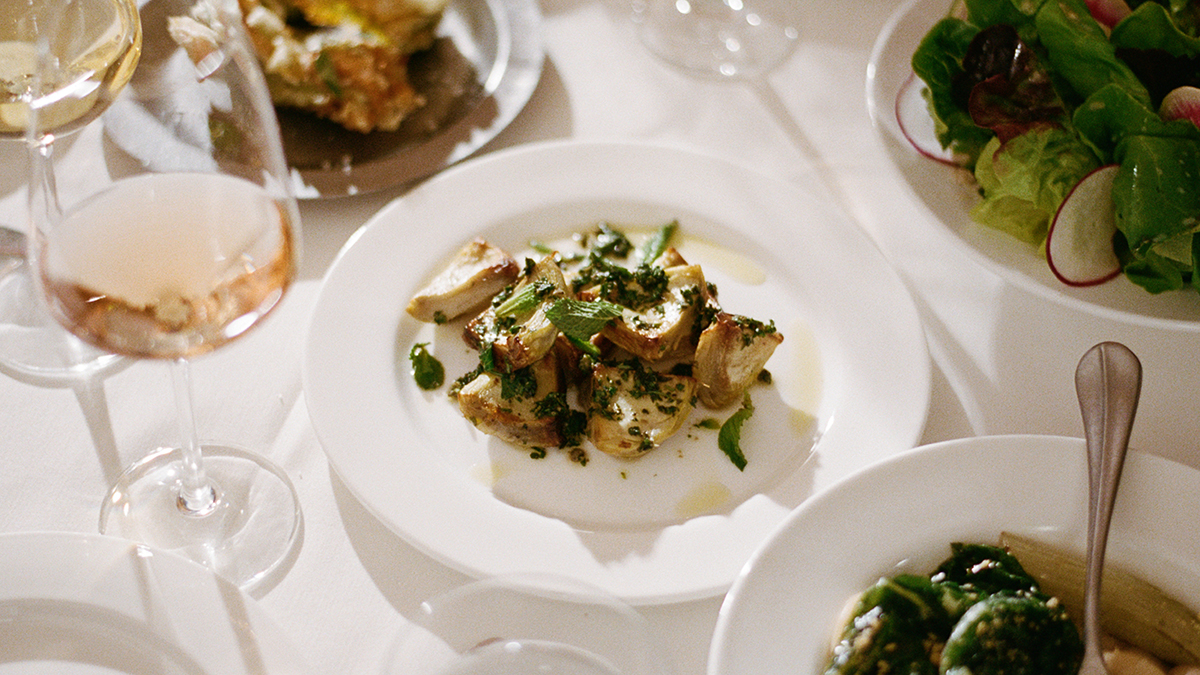
The exclusivity of the meat is honored in Karyu’s design. Just 12 spaces are available per sitting (6pm and and 9pm, Wednesday through Sunday), with each seat angled around an open kitchen, primed for views of the master chefs at work. The head chef is Haruka Katayanagi protege Hiroshi Morito, who has relocated from Tokyo to Miami to uphold his teacher’s vision. Throughout the evening, Morito and his team craft course after course, adhering to the traditional kaiseki conventions – a multi-course meal of small, artistic dishes that both celebrate ingredients and showcase skill.
See also: The Underrated Destinations Vying to Become the Next Foodie Hotspots

Beef is interspersed throughout. It’s infused into the delicate opening broth, wedged between spongy bread for the cutlet sandwich, wrapped up in a lettuce ‘taco,’ and served on top of white rice and raw egg. Vegans and vegetarians should, in no uncertain terms, consider making a reservation elsewhere.
“Every dish tells a story,” says chef Katayanagi. “Wagyu is not just about richness – it’s about spirit. It carries the patience of the farmer, the precision of the butcher, and the sensitivity of the chef. Bringing that philosophy to Miami allows us to share the true heart of Japanese cuisine.”

In an industry that is – quite responsibly – moving away from imported ingredients and favoring local availability, Karyu is seemingly laughing at such conventions with a menu that honors Japan seasonality. Menus will change regularly to reflect this, highlighting international ingredients such as Japanese rice and French gruyere cheese. The drinks list naturally leans heavily toward Japan and is sake heavy.
Designed to echo the feel of the original Oniku Karyu in Tokyo, Karyu’s look is modest and minimal. Layers of linen curtain separate the entrance and the petite dining room, creating a degree of separateness between ‘out there’ and ‘in here.’ Inside, Japanese craft is duly honored, from the noren screens that conceal the grill to the authentic raku ceramics.

The brand’s invitation-based membership platform continues to grant rare access around the world.

A new wave of invitation-only travel clubs is emerging, promising an elusive commodity: access. But one leader dominated the market well before such an idea began trending: Scott Dunn.
The company has been operating for 40 years and has built its reputation over the decades for offering once-in-a-lifetime, tailor-made holidays again and again. But as a result of numerous client requests, an invitation-based membership aimed at those seeking deeper levels of personalization – Scott Dunn Private – was introduced in 2007 and has been leading the market ever since.

“From private island takeovers to silent expeditions across desert landscapes, every custom itinerary we’ve built has informed how we push the boundaries of luxury travel today,” says Dom Atterton, Scott Dunn Private (SDP) membership manager. “Experience has been our greatest architect.”
That may be true, but SDP’s (not so) secret weapon is its vast global network of travel experts, which, when combined, provide the most important piece of the puzzle: access to the impossible. Whether it’s a private art collection in New York, the not-yet-opened chef’s table in Tokyo, or an exceptionally appointed Venetian palazzo that doesn’t appear in the guidebooks, SDP’s concierge service has a seemingly magical way of opening doors.
As a member you are paired with a dedicated private relationship manager who acts as a personal advisor and single point of contact, getting to know not just where and how you like to travel, but what it is you and your family is really looking for. Think of them as your personal Chief Experience Officers, or family travel office (or should that be family out-of-office?). So whether what inspires you is elevated levels of luxury, an introduction to like-minded people or surprising twists and unexpected delights in an itinerary only revealed on the day, your advisor is able to anticipate your desires with unnerving accuracy.
For Atterton and the SDP team, it’s about finding ways to elevate already exceptional experiences: exploring the Great pyramid with a leading archaeologist by candlelight, for example, or foraging for native plants in the Peruvian Andes with the country’s most celebrated chef. Because what you take away from your travels is what stays with you for ever, after all.

Other times, it’s about cultivating a passion. For a member with a deep appreciation for High Renaissance art, the team recently arranged for them to unlock the doors to the Sistine Chapel with the Vatican’s Clavigero before whisking them off to Milan for a private viewing of The Last Supper. “To put this into perspective,” Atteron says, “this kind of uninterrupted access away from crowds is simply unheard of.”
As well as unrivalled travel access, membership provides a host of additional lifestyle benefits, including invitations to a calendar of global events with discrete luxury brands, chauffeur-driven transfers to and from your home, and 24/7 service from the international support team.
For some years now, Scott Dunn has spoken of transforming travel into an art form. Whether clients are wanting to bring multiple generations of family together, celebrate major milestones or simply reconnect with a partner while experiencing that wish-list adventure, SDP exists to push the boundaries of what’s possible. With offices in both New York and California, as well as San Diego, London, Hong Kong and Singapore, SDP’s network spans the globe, enabling it to unlock experiences and opportunities the world over. «It’s just the right amount of everything,» as one member memorably said after a trip to Iceland in 2024, proving that what is removed from an itinerary is sometimes just as important as what is added. It’s an effortless way to move through the world, exploring unique destinations and rediscovering favourite cultures and cities. «We expect a lot, and we got a lot,» said another member. «Everything was perfect.»

Lazzara just unveiled the LMY 165 this week. Lazzara just unveiled the LMY 165 this week.