From air-cooled classics to modern marvels, Porsche 911 restomods combine iconic design, raw driving feel, and cutting-edge engineering.


From air-cooled classics to modern marvels, Porsche 911 restomods combine iconic design, raw driving feel, and cutting-edge engineering.
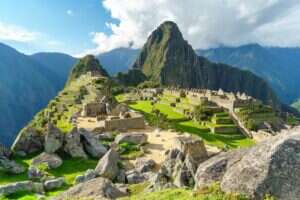
From Hawaii’s new climate tax to conservation-first access at Machu Picchu, luxury travel is being forced to change course.

Climate change, overtourism, and environmental strain are forcing destinations to redraw the boundaries of access. And as the world takes note, the ultra-luxury sector is adapting first.
In Hawaii, the shift is already happening. From 2026, the state will introduce a landmark climate levy on visitors, expanding its transient accommodation tax to fund shoreline protection, wildfire prevention, and climate resilience projects. It’s the first US destination to ring-fence tourism revenue specifically for environmental protection, and it reflects a growing global truth: paradise now comes with responsibility.
Thousands of miles away, in the Andes and the Amazon, the same recalibration is unfolding.

“Ultra-luxury travelers are no longer seeking luxury defined by opulence alone,” says Hedder Quispe Puente de la Vega, founder of Machu Travel Peru. “They want meaningful access to culture, nature, and history – delivered in ways that actively protect fragile ecosystems.”
Nowhere is that tension more visible than Machu Picchu. One of the world’s most iconic sites has long struggled with over-tourism, prompting Peru to introduce timed entry, fixed routes, and daily visitor caps. Rather than diluting the luxury experience, Quispe Puente de la Vega argues that these controls elevate it.
See also: The Biggest Wellness Travel Trends Set to Shape 2026
Private treks in Cusco and Machu Picchu, for example, operate on carefully managed schedules with certified local guides, reducing pressure on the site while offering deeper cultural context. In the Sacred Valley, experiences focus less on sightseeing and more on understanding ancestral agricultural systems in Maras and Moray, quietly shifting the emphasis from spectacle to substance.
“Responsible luxury has to work with visitor flow management, not against it,” he says. “Otherwise, these places simply won’t survive.”
The same philosophy extends deep into the Amazon. Boutique lodges in Tambopata and Manu now position themselves as conservation hubs as much as retreats, funding wildlife monitoring, reforestation initiatives, and species protection programs. Guests don’t just observe biodiversity; they help sustain it.

Across borders, Bolivia and Ecuador are adopting similar models. Low-impact expeditions in Salar de Uyuni and Laguna Colorada prioritize environmental education alongside photography and trekking. In Ecuador, Galápagos cruises – long regarded as the gold standard for conservation tourism – operate under strict visitor limits, guided by certified naturalists and governed by tightly controlled itineraries. The common thread is scale. Smaller groups. Fewer departures.
See also: Experience a Great Peruvian Odyssey
Personalization has long been a cornerstone of luxury travel. What’s changing is its purpose. “Today, personalization means designing journeys that respect sensitive ecosystems while strengthening local economies,” Quispe Puente de la Vega explains. An itinerary might be tailored around high-altitude trekking, birdwatching or cultural immersion, but always within environmental thresholds that prioritize long-term protection over short-term demand.
The data backs it up. Studies show that more than 70 percent of high-net-worth travelers in Latin America now prioritize operators that demonstrate clear social and environmental impact. Demand for certified sustainable accommodation has surged over the past three years, not despite its constraints, but because of them. Exclusivity, it turns out, is increasingly defined by what isn’t available to everyone.
Technology is enabling this transition. Advanced planning platforms now optimize trekking routes to reduce erosion, while biodiversity monitoring systems help track wildlife health in real time. In remote mountain and rainforest environments, improved logistics, and safety tools allow access without compromise. For travelers, much of this remains invisible – and that’s the point. The experience feels effortless, even as layers of impact control operate beneath the surface.
Looking ahead, the future of ultra-luxury travel in fragile destinations is unlikely to be louder or more extravagant. Instead, it will be calmer, more considered, and more collaborative. From Hawaii’s climate-funded tourism model to conservation-led access in Peru, Bolivia, and Ecuador, luxury is being redefined as a partnership, between traveler and place, experience and preservation. “We believe the future lies in balance,” says Quispe Puente de la Vega. “Exclusivity, deep personalization and environmental responsibility can and must exist together.”
In the world’s most fragile destinations, the greatest luxury may no longer be access alone, but the knowledge that being there helps ensure these places endure long after the journey ends.

Grech RV is redefining freedom, power, and craftsmanship on the open road. Grech RV is redefining freedom, power, and craftsmanship on the open road.
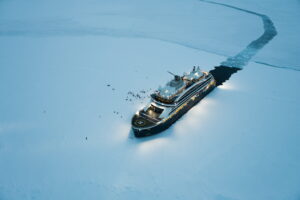
Ponant Explorations’ upcoming itinerary ventures to the North Pole in less time than ever.

For even the most well traveled, the Geographic North Pole often remains Earth’s final frontier – an extraordinarily remote location, reserved for a few. And, if you are one those able to venture this far north, a typical expedition would take upwards of a month to complete. For the time conscious traveler, Ponant Expeditions – international leader in exploration cruises – has introduced a series of 12-night explorations, designed to showcase the majesty of this secluded part of the world in a more succinct way.
Departing in summer 2027, these journeys are made possible by Ponant Explorations’ Le Commandant Charcot ship – the world’s only luxury ice breaker vessel. Launched in 2022, when it made history as the first passenger ship to reach the Geographic North Pole, it has Polar Class 2 classification, allowing it to navigate the region’s famously unpredictable ice floes with relative ease.
See also: Six Must-visit Destinations Travel Experts Say You Can’t Miss in 2026

The roundtrip commences from Longyearbyen, in Norway’s Svalbard archipelago, and will traverse through the North Sea’s packed ice on its journey toward 90-degree North. The most northerly point on Earth, 90-degree North is permanently ice covered and entirely sunlit for half of the year. Few will ever witness it for themselves. En route, guests will witness rare species, such as polar bears, seals, and seabirds; glimpse awe-inspiring Arctic landscapes; and try their hand at adrenaline pumping activities including Zodiac outings, snow shoeing, and polar plunging.
And, while many explorer vessels forego comfort in the name of adventure, Ponant Explorations ensures guests need not compromise. Closer in character to a private yacht than a cruise ship, Le Commandant Charcot is an all-suite vessel. Among its top keys are four split-level suites, each with their own private terrace and Jacuzzi, and the Owner’s Suite, which features a separate dining room, a lounge, and a 2,000-sq-ft outdoor terrace. Guests can also indulge in all-inclusive world-class dining at Nuna, the only Alain Ducasse restaurant at sea, a cocooning wellness area with indoor and outdoor pools, and a high-end shopping boutique. A staff-to-guest ratio of nearly 1:1 means service is dedicated and personalized.
See also: Where the World’s Top Travel Experts Recommend for Group Celebrations

In line with Ponant Explorations’ aims to become net zero by 2050, Le Commandant Charcot has been designed as one of the most sustainable ships to operate in the Polar regions. It features a hybrid propulsion system for reduced emissions and battery mode for silent wildlife viewing. Each voyage will also host a scientist onboard, and guests have access to a multitude of labs and lectures during their trip. While visiting polar regions will also conjure questions surrounding environmental responsibility, to visit them with Ponant Explorations is to help become a custodian of sustainable travel.
Ponant’s 12-night Le Commandant Charcot Polar expeditions will depart July 27, August 8, August 20, and September 1, 2027. Find out more here.

Four experts on mastering the art of thoughtful, memorable presents.

The latter is a skill that many think is easy to master; buy someone what they’ve explicitly said they want and, yes, you’ll likely be thanked. But that kind of giving is reactive rather than considered. True generosity lies in anticipation – in understanding someone well enough to delight them without a hint or a wishlist. That is the sign of a master at work.
To help you become a better gift giver, we’ve asked the professionals for advice. Quite literally. This group of modern tastemakers run gift concierge businesses, advising clients on everything from milestone celebrations to just-because gestures. Here, they share their tips so you can achieve expert status, too.

“A good gift-giver pays attention long before the occasion arrives. They listen for preferences, notice lifestyle cues, and choose something that feels considered rather than convenient,” says Mandi Ford, director of ES Concierge. “The best gifts make the recipient feel seen.”
She adds that “Empathy [makes a great gift giver]. Being able to step outside your own taste and imagine what would genuinely delight someone else is the foundation of thoughtful gifting.
“Taste helps, but emotional intelligence is what elevates a gift from nice to memorable. Keep a running mental or physical note of the small things — favourite brands, passing comments, milestones, or upcoming moments worth celebrating. Gifting becomes effortless when you’re collecting insights all year-round.”
Lucy Sancho, co-founder of the Luxe Bureau, believes that “A great gift giver is someone who knows the importance of timing. A gift that arrives at just the right moment and makes the receiver feel instantly special. It signals that someone is with you in a moment that matters, expected or unexpected.”
“Start with the moment, rather than the gift,” she says. “Ask yourself what is needed right now – celebration, comfort, encouragement, gratitude. Then choose a gift that suits that feeling and ensure it arrives as closely to this moment or occasion as possible. When the timing is right, the gesture lands with far more meaning.”

“Be organized. Look at your diary a month ahead and keep a stash of beautiful cards, stamps, and gift tags on hand,” says Imogen Beresford, co-founder of Colford. “A handwritten, short and sweet note is always appreciated. [As is] time spent on wrapping and presentation – it never goes unnoticed. Theme your wrapping to the recipient and what they would love.”
To make the recipient’s life easier, she also recommends attaching gift tags securely, so they can easily identify who the gift is from when it comes time to send thank-you notes.
“A good gift giver values thoughtfulness over spectacle,” says Nathan Cole, co-founder of Colford. “When in doubt, something homemade or locally sourced always carries meaning – the provenance is known, the footprint lighter, and it’s unlikely to be duplicated. And when objects fall short, offering a considered experience can be the most memorable gift of all.”
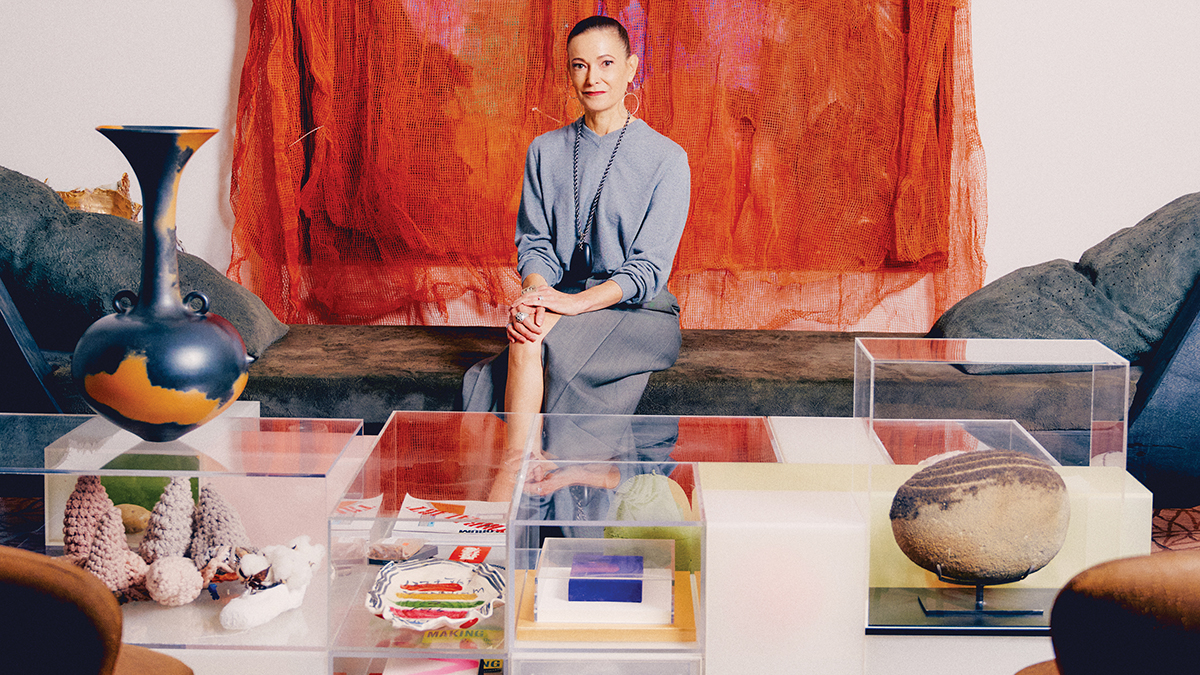
The Salon 94 owner also shares the most recent additions to her collection. The Salon 94 owner also shares the most recent additions to her collection.
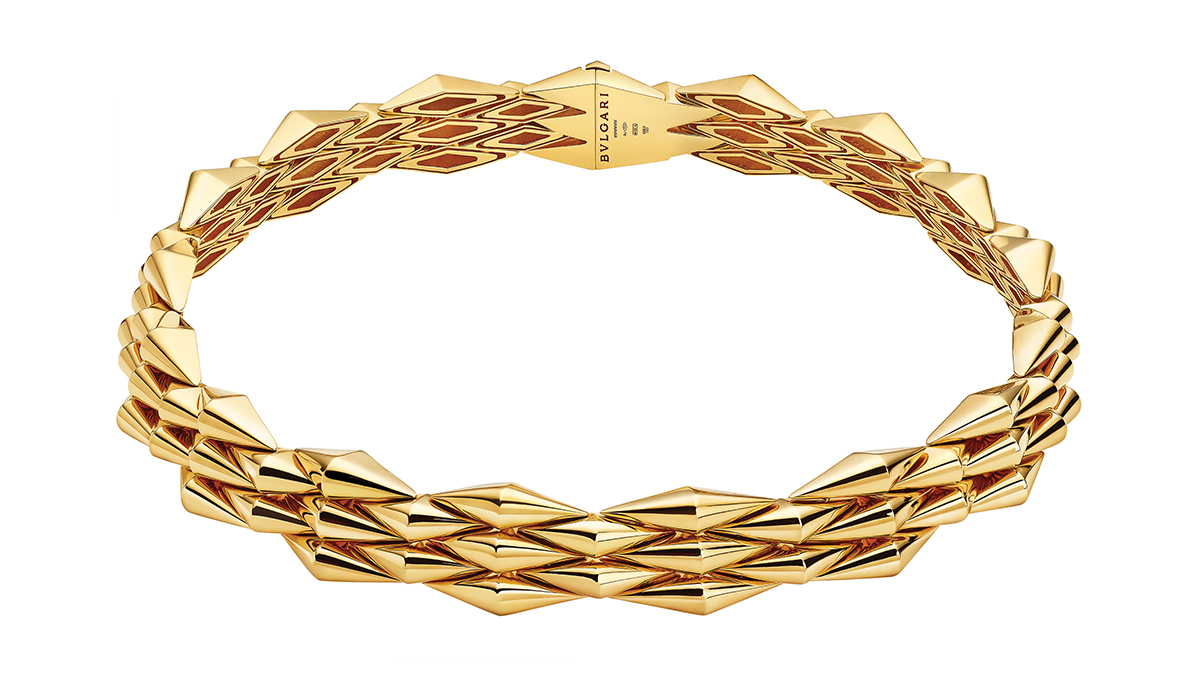
A 20th-century archival design is poised to become a modern Bulgari icon. A 20th-century archival design is poised to become a modern Bulgari icon.

GRU is planning to open the first lunar hotel in six years’ time.

You’ve been to the furthest throes of Antarctica, you’ve ventured through the Mongolian desert, and you’ve navigated the Amazon rainforest — what’s next? A trip to the Moon, of course. Leaving Earth has long been on the bucket list of the more adventurous traveler, but with the announcement of the ‘First Hotel on the Moon,’ a stay on our planet’s outer atmosphere might be closer to reality than ever.
See also: The Most Anticipated Hotel Openings of 2026
Announced by Silicon Valley start-up GRU Space, the first lunar hotel is projected to open in 2032, with initial construction processes beginning as early as 2029. While space tourism is becoming an increasingly realistic endeavour – SpaceX has run several multi-day civilian orbital missions and Virgin Galactic semi-regularly hosts paying passengers on suborbital spaceflights — GRU is the first to look at materials that already exist on the Moon to build a hospitality endeavor.
The first hotel on the Moon (dubbed ‘v1’) will accommodate four guests and will be equipped for several-night stays. Fully manufactured on Earth, the inflatable structure will be robotically deployed and inflated in situ, according to the start-up.

Details on the amenities and interior design of v1 are limited, but GRU has specified that it will be “equipped with a full Environmental Control and Life Support System (ECLSS), including carbon dioxide removal and oxygen generation, water reclamation, and thermal control.” It will also have an emergency evacuation system and a solar flare storm shelter. Plans are also being made for surface experiences including Moonwalks and golf.
V1 is being designed to last for up to 10 years on the Moon’s surface; following this, v2 will be deployed. While GRU has stated the “final size and layout” of the second iteration of its space hotel will “evolve as we get better at building on the Moon,” it will be inspired by the Palace of Fine Arts in San Francisco — a Beaux-Arts-style faux palace, with a monumental stone rotunda. Current 3D models for the project predict a central rotunda, with three smaller interconnecting pavilions.
Unlike the plans for v1 launch, GRU anticipates that its technologies will have advanced enough by v2 to transform existing lunar soil into safe and durable building blocks, dramatically reducing costs. V2 will accommodate a total of 10 guests for a currently unspecified period of time.
Ahead of its 2032 launch, GRU is proposing a series of lunar experiments, including a pressurized payload test, inflatable construction tests using small-scale replicas of the proposed v1 hotel, and sample collections missions.
See also: Ranked: The World’s Most Powerful Cities

Based on successful hospitality projects on the Moon, GRU is planning to extend its operations to a hotel on Mars and, eventually, the first human civilizations in space. Plans for Martian deployment begin in the mid to late 2030s.
Would-be Moon tourists can register their interest now, with a non-refundable $1,000 application fee due immediately. GRU has claimed that applications will be reviewed in 2027, with candidates due to be selected based on specific mission roles. Successful applicants will then be asked to pay a further deposit of either $250k or $1m, depending on role. The company has not confirmed a final cost for a stay at the first hotel on the Moon, but has noted that it will “likely exceed $10m.”
Behind GRU Space’s ambitious plans is founder and CEO is Skyler Chan – a 22-year-old Canadian native that graduated early from Berkeley’s prestigious Electrical Engineering and Computer Sciences program; became an Air Force-trained pilot aged 16; built software for Tesla; and created a NASA-funded 3D-printer that was launched into space. According to his company’s website, “Skyler has been obsessed with how to make humanity interplanetary his entire life.”
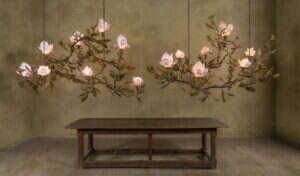
Step inside the enchanting world of custom lighting.

The right illumination can create ambience, soften harsh edges, and imbue a sense of warmth. However, not all light sources are of the same quality. A custom chandelier, for instance, will always stand head-and-shoulders above the rest.
These meticulously made creations can range from minimalist to monumental, bringing scale, ambition, and elegance into the room. There are a select few brands that have spent years honing this craft, and whose bespoke work truly stands out – their attention to detail shines in every piece of cut glass or sculpted bronze.
Cox London’s creative process is rooted in artistry. Its co-founders, Chris and Nicola Cox, first connected over their shared love of sculpture, before ultimately founding their eponymous studio in 2005. Over the years, the brand has become well-known for its grand chandeliers made of brass, iron, or bronze – and welded entirely by hand. Most designs mirror the natural world, like Magnolia Grandiflora, which is composed of iron leaves and illuminated cotton blooms.
As impressive as they are, each design has humble beginnings. “The fastest way to get an idea out in the open is from head to hand,” says Chris Cox. “If we don’t put pencil or charcoal on paper, ideas will remain ideas, unlikely to come to fruition.” This method served as a starting point for one of the brand’s recent creations: Mater Quercus, or “Mother Oak,” as it translates from Latin. For this project, Cox created full-scale charcoal drawings depicting meandering branches and clouds of foliage. It was a custom piece for interior designer Victoria Davar, who designated it for an area above a fireplace.
After the sketch is done, the artisans take over – Cox London employs over 65 in its studio. The process for Mater Quercus involved several months of intricate metalwork, and then threading the wires through to illuminate the piece. “It’s not unusual for 20 members of our team to touch a single chandelier,” he says.
The Bohemia region in the Czech Republic has a long history of glassmaking, a legacy that deeply informs artisan brands like Lasvit. Its bespoke installations are some of its most impressive and well-known works, adorning the lobby of the St. Regis Qingdao and the Langham Hotel in Jakarta.
Custom projects unfold via a carefully organized chain of communication. The brand employs 16 in-house designers – one is assigned to a project based on the brief. “When clients come to us, sometimes they have a vision for their space, sometimes they have none – it’s a range,” says Jana Růžičková, Lasvit’s head of design. For the indecisive, ready-made samples, sketches, and even mockups provide a sense of what the final piece will look like. Even after it’s all been approved, the in-house designer will work closely with the craftsmen; they may even accompany the chandelier when it’s being installed to make necessary adjustments.
What’s central to Lasvit is its continued innovation within the medium. One of the brand’s best-known creations is Herbarium: A technique that creates the imprint of a branch or herb within the glass. “We collect them from local nature, and pour the liquid hot glass over the leaf,” says Růžičková. “It burns down, leaving just the imprint.” The beauty of the process is that it’s endlessly customizable for clients – if there’s a botanical that you like, chances are Lasvit can render it in glass.
Herbarium was the product of an annual workshop in the Czech countryside, but designers are given days to freely create and think of new ways to reinvent glass as a medium. “During every bespoke process, we have to experiment,” says Růžičková. “I try to come up with new shapes, and new combinations of techniques to create something really unique.”
To say Saint Louis has a long history is a bit of an understatement. The heritage brand dates back to 1586, making it the oldest crystal manufacturer in France. Over the years, the brand has accumulated a wealth of knowledge when it comes to manipulating glass and molding it into shapes both contemporary and classical.
This know-how is carefully passed down from master to apprentice via direct, hands-on mentorship. “It usually takes about 10 years for an artisan to start mastering the core of their crafts,” says Jérôme de Lavergnolle, the brand’s president and CEO. “They’ll keep learning and refining their techniques their whole life.” Many will work 30 to 40 years at the manufacturer; it’s not uncommon to see multigenerational families in different parts of the workshop.
Saint Louis is perhaps most well-known for the different colors that it can render in crystal, including sky blue, chartreuse, and amber. Piecing them together, along with the many components that the artisans can create, allows for thousands of different iterations. For example, the brand once constructed a chandelier that was almost 30 feet tall – it consisted of 220 lights, and weighed over 5,000 lbs. Larger projects like this one can take hundreds of hours to manufacture, with a dozen different craftsmen involved over the course of several months. The end result is well worth it: “They capture the light in unique ways,” says de Lavergnolle. “They’re as stunning during the day when turned off as they are at night when the lights are on.”
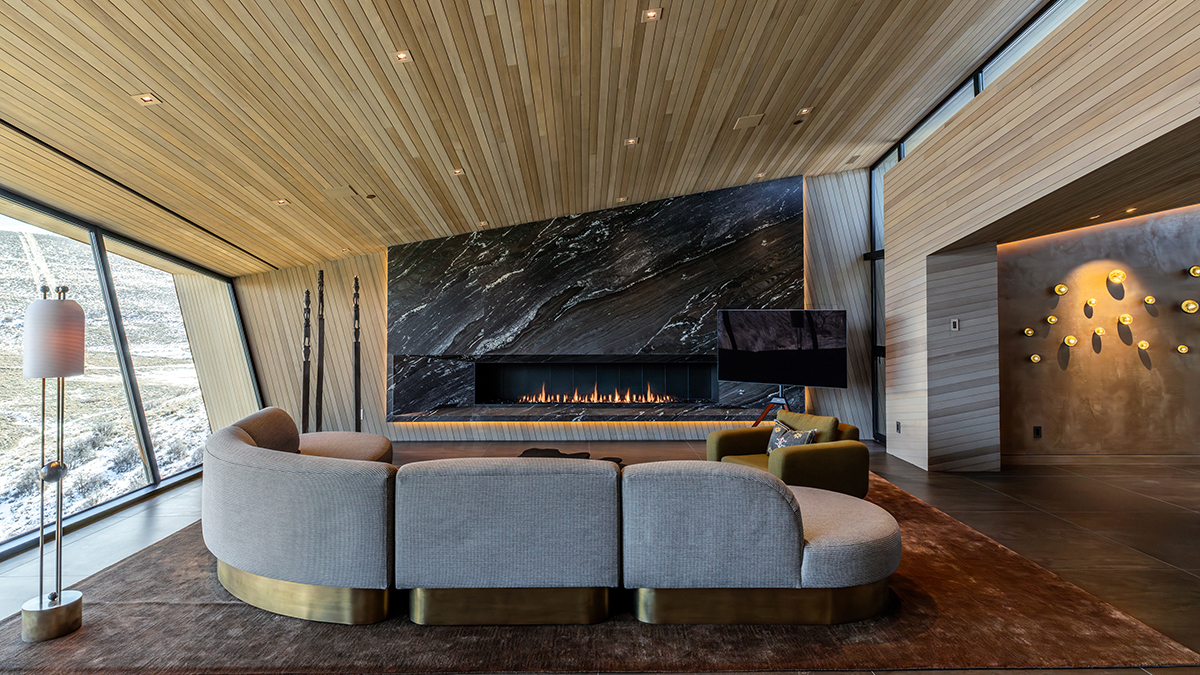
The brand-new ultramodern residence in the Aspen Camp neighborhood of the exclusive Promontory community overlooks the dramatic peaks of the Uinta Mountain range. The brand-new ultramodern residence in the Aspen Camp neighborhood of the exclusive Promontory community overlooks the dramatic peaks of the Uinta Mountain range.