From Hawaii’s new climate tax to conservation-first access at Machu Picchu, luxury travel is being forced to change course.

Climate change, overtourism, and environmental strain are forcing destinations to redraw the boundaries of access. And as the world takes note, the ultra-luxury sector is adapting first.
In Hawaii, the shift is already happening. From 2026, the state will introduce a landmark climate levy on visitors, expanding its transient accommodation tax to fund shoreline protection, wildfire prevention, and climate resilience projects. It’s the first US destination to ring-fence tourism revenue specifically for environmental protection, and it reflects a growing global truth: paradise now comes with responsibility.
Thousands of miles away, in the Andes and the Amazon, the same recalibration is unfolding.

“Ultra-luxury travelers are no longer seeking luxury defined by opulence alone,” says Hedder Quispe Puente de la Vega, founder of Machu Travel Peru. “They want meaningful access to culture, nature, and history – delivered in ways that actively protect fragile ecosystems.”
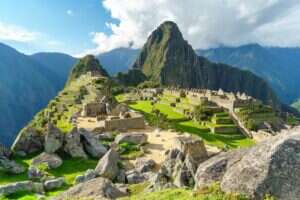
Nowhere is that tension more visible than Machu Picchu. One of the world’s most iconic sites has long struggled with over-tourism, prompting Peru to introduce timed entry, fixed routes, and daily visitor caps. Rather than diluting the luxury experience, Quispe Puente de la Vega argues that these controls elevate it.
See also: The Biggest Wellness Travel Trends Set to Shape 2026
Private treks in Cusco and Machu Picchu, for example, operate on carefully managed schedules with certified local guides, reducing pressure on the site while offering deeper cultural context. In the Sacred Valley, experiences focus less on sightseeing and more on understanding ancestral agricultural systems in Maras and Moray, quietly shifting the emphasis from spectacle to substance.
“Responsible luxury has to work with visitor flow management, not against it,” he says. “Otherwise, these places simply won’t survive.”
The same philosophy extends deep into the Amazon. Boutique lodges in Tambopata and Manu now position themselves as conservation hubs as much as retreats, funding wildlife monitoring, reforestation initiatives, and species protection programs. Guests don’t just observe biodiversity; they help sustain it.

Across borders, Bolivia and Ecuador are adopting similar models. Low-impact expeditions in Salar de Uyuni and Laguna Colorada prioritize environmental education alongside photography and trekking. In Ecuador, Galápagos cruises – long regarded as the gold standard for conservation tourism – operate under strict visitor limits, guided by certified naturalists and governed by tightly controlled itineraries. The common thread is scale. Smaller groups. Fewer departures.
See also: Experience a Great Peruvian Odyssey
Personalization has long been a cornerstone of luxury travel. What’s changing is its purpose. “Today, personalization means designing journeys that respect sensitive ecosystems while strengthening local economies,” Quispe Puente de la Vega explains. An itinerary might be tailored around high-altitude trekking, birdwatching or cultural immersion, but always within environmental thresholds that prioritize long-term protection over short-term demand.
The data backs it up. Studies show that more than 70 percent of high-net-worth travelers in Latin America now prioritize operators that demonstrate clear social and environmental impact. Demand for certified sustainable accommodation has surged over the past three years, not despite its constraints, but because of them. Exclusivity, it turns out, is increasingly defined by what isn’t available to everyone.
Technology is enabling this transition. Advanced planning platforms now optimize trekking routes to reduce erosion, while biodiversity monitoring systems help track wildlife health in real time. In remote mountain and rainforest environments, improved logistics, and safety tools allow access without compromise. For travelers, much of this remains invisible – and that’s the point. The experience feels effortless, even as layers of impact control operate beneath the surface.
Looking ahead, the future of ultra-luxury travel in fragile destinations is unlikely to be louder or more extravagant. Instead, it will be calmer, more considered, and more collaborative. From Hawaii’s climate-funded tourism model to conservation-led access in Peru, Bolivia, and Ecuador, luxury is being redefined as a partnership, between traveler and place, experience and preservation. “We believe the future lies in balance,” says Quispe Puente de la Vega. “Exclusivity, deep personalization and environmental responsibility can and must exist together.”
In the world’s most fragile destinations, the greatest luxury may no longer be access alone, but the knowledge that being there helps ensure these places endure long after the journey ends.
Добавить комментарий