The German sports car maker will continue to invest in EVs, though. The German sports car maker will continue to invest in EVs, though.
Рубрика: General
-
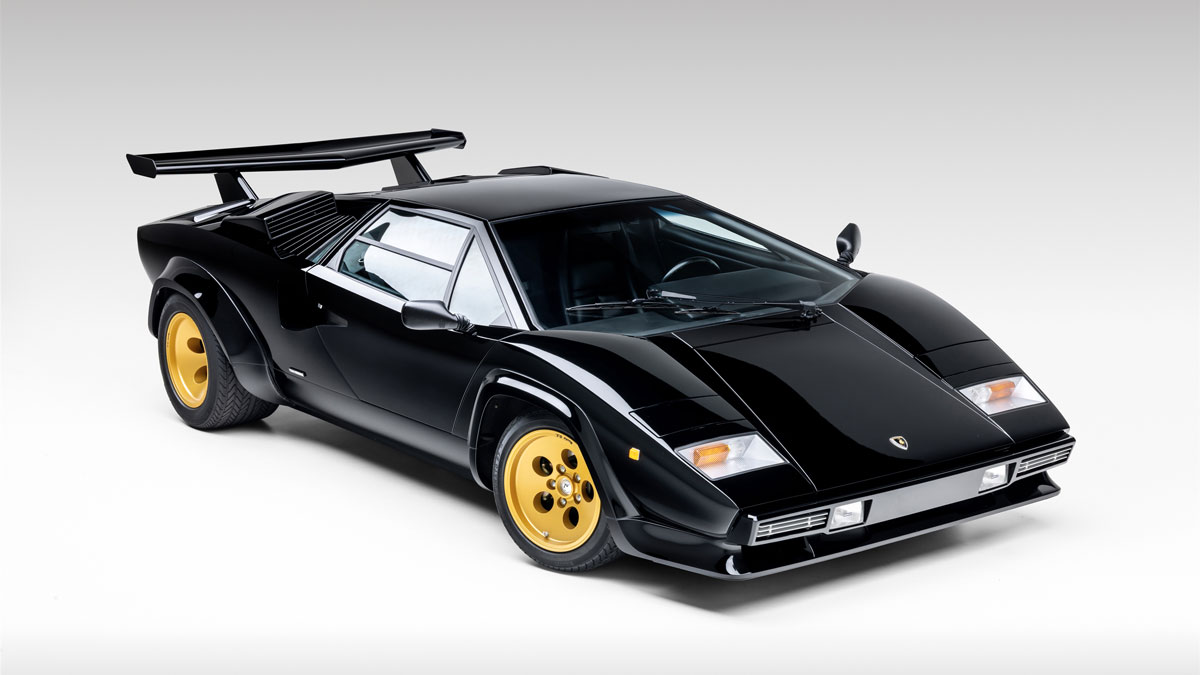
This Fully Restored 1985 Lamborghini Countach Could Fetch $1.1 Million at Auction
One of 300 examples comprising the most powerful version of the model made, it will be offered through RM Sotheby’s in August. One of 300 examples comprising the most powerful version of the model made, it will be offered through RM Sotheby’s in August.
-
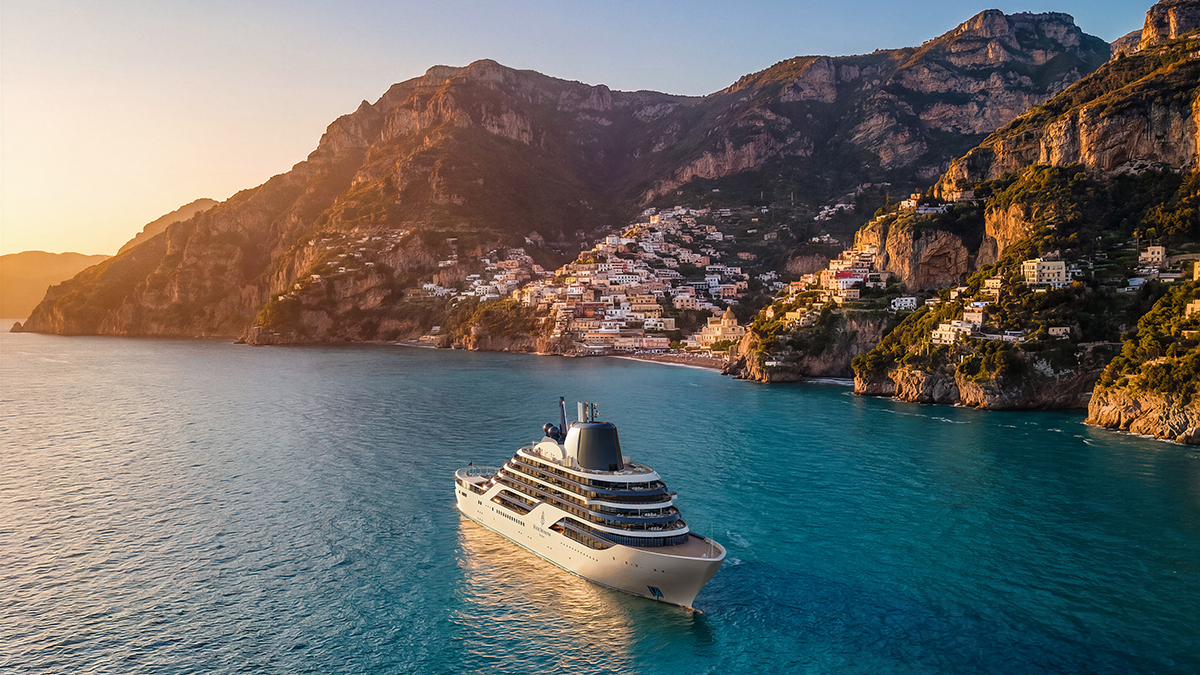
Four Seasons Just Unveiled a Second, More Exclusive 679-Foot Gigayacht
«Four Seasons II» is the same length as the newly launched «Four Seasons I,» but features 79 suites rather than 95. «Four Seasons II» is the same length as the newly launched «Four Seasons I,» but features 79 suites rather than 95.
-
The Soprano Bringing Couture Elegance to Opera’s Biggest Stages
Opera star Pretty Yende discusses her role as Dior’s first opera ambassador, performing at the world’s top houses, and blending fashion with classical music.

It’s tempting to frame Pretty Yende’s story as a modern fairy tale – the small-town girl who stumbled across opera via a television commercial and, within a few years, became an internationally acclaimed soprano on the stages of Teatro alla Scala and the Metropolitan Opera. But that version misses the point. Yende’s rise was less about luck than sheer momentum – a force that reverberates beyond her musical endeavors. She has been embraced by the world of high fashion, notably as Dior’s first opera ambassador. Yende, 51, is from South Africa, lives in Milan, and has upcoming performances in Paris, Rotterdam, and Naples.
What sparked your opera obsession?
I was 16 years old, watching TV with my family, when an ad for British Airways came on – it had a supernatural melody, [The Flower Duet from Léo Delibes’ opera Lakmé]. I couldn’t believe that humans could create such sounds. I grew up with music at home – my grandmother taught me hymns from the church – but this was something different. I thought, “If someone can teach me how to [sing like] this, I can do it.” That’s how my journey began. Every time I would fly from Johannesburg to Cape Town, I’d try to fly British Airways so that I could hear that advert again.
See also: Tamu McPherson on Dressing for Joy and Traveling With Intention
What are your favorite places you’ve performed?
I have grown up in the biggest opera houses in the world. My career started where everybody wants to arrive – I’ve sung in Milan at Teatro alla Scala, and in Paris, London, New York, Spain, Germany. Architecturally, each house has a distinct individuality, but what connects me to them most is what happens on the stage. Acoustically, I have a few favorites – the Metropolitan Opera House, where I first performed in 2013, felt like it was hugging my voice. To experience such acoustics is something that I treasure, and that [performance] gave my career direction. I love knowing that prestigious singers sang in these opera houses in the past, and that I’m following in those footsteps. Maria Callas sang in Houston and I’m going to make my Houston debut soon as Marguerite [in Gounod’s Faust].

©Pierre Mouton Who is your role model?
I try not to look up to one person because it’s dangerous – you end up being a bad copy of them. Maria Callas is someone I admire in terms of how she could tell a story. And the beauty of Montserrat Caballé’s voice – her sound was like velvet. Or Mariella Devia, who you cannot take your eyes off when she’s on stage. There’s also a humility in seeing great artists still learning and perfecting their art.
What music do you listen to?
I love gospel and jazz – Ella Fitzgerald and Nina Simone are two of my favorite artists. I’m going through a huge shift in my personal life with both of my parents passing. I’m in a moment of being present, so I’m grateful for music because it gives me healing and an escape.
See also: What Matters to Umit Benan
How does fashion play a part in your career?
I have always thought that fashion and opera should be one. But I try not to overpower my voice with the outfits I wear on stage – I like to use color to make myself feel comfortable. A career highlight was singing at the coronation of King Charles III in 2023, where I was dressed by Stéphane Rolland. I always dreamed of being dressed by Dior, so it was huge to become its first ever opera ambassador. I always want to be elegant – that’s why Dior works for me, because of the simplicity of its pieces.

©Pierre Mouton Do you collect anything?
Every time I go to a hotel, I buy a pen. I’ve been collecting them for the past 20 years – I probably have more than 300. They’re kept in a special memory box, and I use them to sign [opera] contracts. The reason I like pens is because my mom loved them – she passed that down to me.
Do you have any hidden talents?
Before I fell in love with opera, I loved cooking. If singing didn’t work out, I would have become a chef. My dishes are influenced by the places I’ve lived – South Africa, where I was born, and Italy, where I live now. [Italian cuisine] uses pure ingredients; it’s simple and healthy.
Your favorite places to travel?
I like to go to places that have the sun. South Africa is number one, because home is home. But I also love going to islands – the Maldives is one of my favorite destinations.
How do you define happiness?
There’s a difference between happiness and joy – happiness is subjective, whereas joy is not attached to something; it’s just there, like love. It’s like being rich and being wealthy – they’re two different things. I find joy when I sing and from the characters that I play on stage, whether it’s a sad story or a comedy. My songs always come from joy.
-
Canteen Just Opened a Summer Pop-Up Restaurant in The Cotswolds
The Reservation: The Italian-inspired London hotspot has re-created a magic formula.

English weather is famously unpredictable but still, top dogs at Public House Group – the hospitality trio behind the likes of The Hero, The Pelican, and The Bull in Charlbury – likely thought that the first week of June was a safe bet for its newest opening.
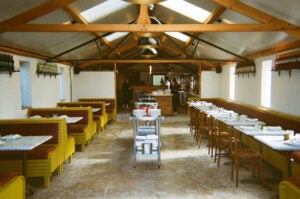
They were wrong, and England was in the midst of a week-long downpour when Canteen Cotswolds – a sister to the Italian-inspired London hotspot – opened in the Old Coal Yard, just outside of postcard-pretty Chipping Norton.
But, fortunately for Public House founders Phil Winser, James Gummer, and Olivier van Themsche, the group’s reputation precedes it. On the restaurant’s first Saturday, amid the rain, the place is packed and the buzz spills out of the doors. There are groups of friends; older couples sharing carafes of red; new parents holding baby toys in one hand and glasses of fizz in the other. The car park is nicely dotted with Range Rovers.

Like Canteen 1.0, the menu looks directly at Italy. “Everything is designed to share,” we’re told as we order. Focaccia arrives nearly as soon as you sit down – crunchy enough to cut the roof of your mouth but subdued with peppery olive oil. Then there’s hunks of sweet charentais melon, wrapped up in prosciutto; doughy white-base pizza with fennel salami; and steaming bowls of pasta, coated in a rich sausage ragu. Like at the London original, chicken cooked in sage-infused milk is a secondi star. Mop up the last of that fragrant, earthy sauce with the piping hot, crispy-edged Tuscan roast potatoes.
Keep the doctor happy with a side order of salad – go for the baby gem lettuce, swimming in a silky dressing, mustardy enough to feel it in your nostrils. Eating Italian-style – with a whole pizza and bowl of pasta polished off before you get to the entrees – means dessert can often be neglected. No such problem here – every table around us orders at least one plate of the chocolate mousse (again, already made famous at Big Sister Canteen), devilishly drizzled with olive oil and sprinkled with salt.

Like the food, the drinks list isn’t trying too hard to challenge the status quo, and does classics excellently: the martini (vodka, slice; unless requested otherwise) is crisp and ice-cold, and the negroni is fragrant and un-fussy. Bar a single Provence rosé, the wine menu sticks entirely to Italy, and covers the length and breadth of the country.
As you might surmise from the name, this new Canteen isn’t fine dining, so don’t come anticipating that: there are no pressed white tablecloths, nor designer cutlery. Some seats sit along the windows, others are picnic benches that have been carted inside; the odd dog hides under a table. Service is affable, cheery, and genuine, but without airs and graces. It’s prompt, too – mains might arrive while you’re still finishing the last of your pasta course.
I have my fingers crossed for a sunnier summer for the Canteen Cotswolds team, but even if it’s storms only from here on out, Public House seems to have another success on its roster.
-
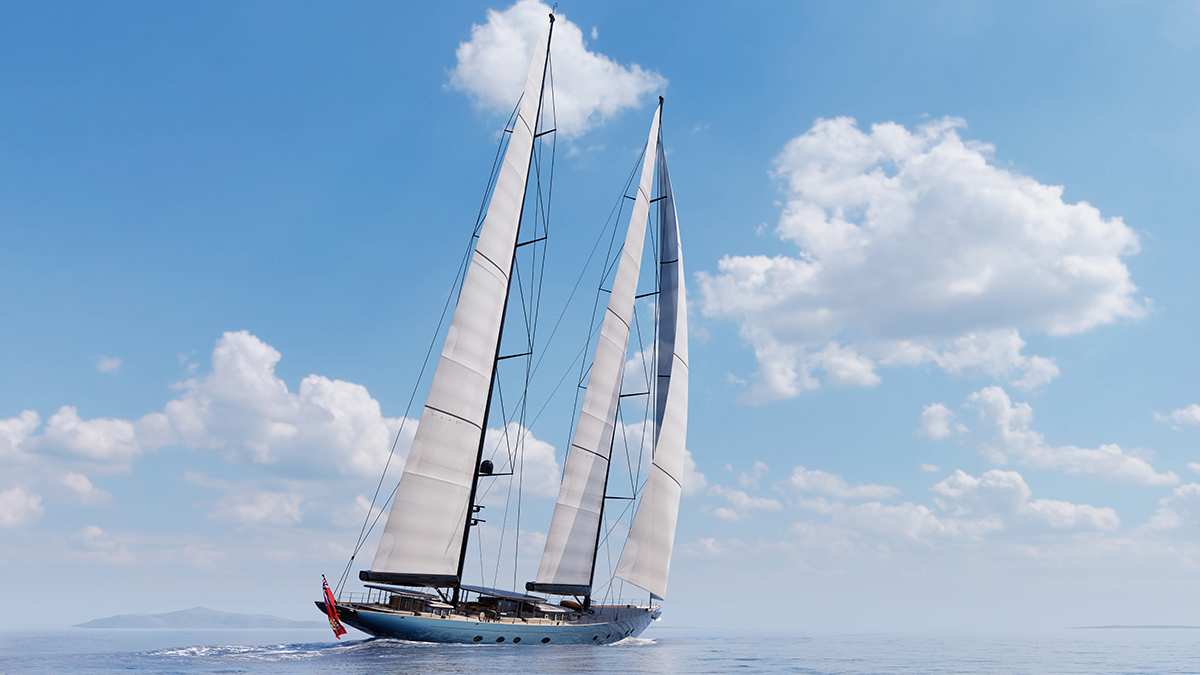
This New 230-Foot Sailing Yacht Will Be Powered Entirely by Renewable Energy
Project Zero is set to be the first all-electric superyacht to hit the seas. Project Zero is set to be the first all-electric superyacht to hit the seas.
-

The Volcanoes Worth Traveling For
These destinations offer a front-row seat to some of the planet’s most dramatic geological landscapes.

-
How Concorde Memorabilia Became a Supersonic Collector’s Market
Concorde may be retired, but demand for its memorabilia is stronger than ever.

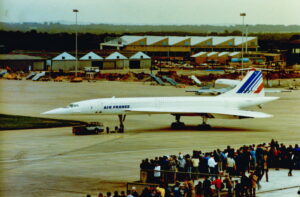
On a frightfully cold day in London, on February 7, 1996, British Airways Concorde G-BOAD touched down at Heathrow airport in light snow and haze just two hours, 52 minutes, and 59 seconds after it had taken off from New York’s JFK airport. Even today, 50 years after its first commercial flight and 22 years after it was retired, the record for a civilian plane crossing the Atlantic remains unbeaten. But traveling supersonic on Concorde meant more than pure, unbridled speed. It meant rubbing shoulders with rock stars and royalty, adding to the already extraordinary mystique of a pencil-thin plane that could fly on the edge of space at twice the speed of sound.
See also: The Psychology of Why We Collect
‘Regulars’ such as David Frost, Elton John, Mick Jagger, Sean Connery, and Elizabeth Taylor used it for many Atlantic crossings during its 27 years of service, making Concorde one of the most exclusive commuter clubs in the world. In 1985, Phil Collins used it for time travel; playing Live Aid in London, before arriving in Philadelphia to drum for Eric Clapton before the broadcast had ended. Victoria Beckham flew it to New York for dress fittings and Robbie Williams dashed back to London on it to collect two surprise Brit Awards. Even the Queen Mother is rumored to have taken the controls during a test flight, although this hasn’t ever been verified.

The supersonic passenger airplane Concorde on display in Manhattan in 2005 ©Shutterstock Of the 20 Concordes built between 1966 and 1979, only 14 welcomed passengers, with Air France and British Airways operating seven planes each. The remainder were pre-production planes used for development tests and spare parts. The cabin was small inside, cramped even by some standards, with space for just 100 passengers, all receiving a level of service that surpassed first-class. Fillet steak, salmon, lobster, and caviar canapés all frequently appeared on the menu cards, which now, alongside other items like postcards, luggage tags, brochures, and in-flight magazines, fetch anywhere between five and fifty pounds at auction and on online resale sites.
See also: You Could Own One of the Largest T. Rex Fossils Ever Discovered
Sir James Dyson recalls on April 9, 1969 happening to be on the new M4 motoway just beyond the end of the runway near Bristol, on the inaugural Concorde test flight. “I pulled over to watch it fly overhead. I gather from the skillful test pilot Brian Trubshaw that there was a failure of the altimeters on that flight,” he tells Elite Traveler.
“I went on it three times – even once being on the flight deck for landing. It was an intimate fuselage, you couldn’t stand up in the loo,» says Dyson, who has an authentic Concorde Rolls-Royce Olympus 593 turbojet engine at his Dyson campus in Malmesbury, UK. An engine similar to Dyson’s is currently on sale with Concorde Memorabilia for £450,000 (approx. $605,200).

Concorde memorabilia became a niche but most sought-after collector markets ©Shutterstock Yet for all its glamour and glory, the life of the Franco-British engineering marvel was cut short in 2003. A tragic disaster involving Air France 4590 in July 2000, soaring running costs and a post 9/11 slump in top-end business travel were enough to force the supersonic airliner into early retirement. The end of the aviation icon is perhaps the most high-profile example of a rare technological step backwards. While the aviation world continues to mourn the loss of a legend, collectors have pounced on particular pieces.
See also: How a 28-Year-Old Collector Built One of the Rarest Vintage Patek Philippe Collections
The Concorde memorabilia market is vast and varied: everything from cabin crockery and menus to seats, signage, and salvaged airframe components, some of which sell for hundreds of thousands. The benchmark came in December 2003, when Bonhams staged a Concorde charity sale, much of it salvaged from a dismantled aircraft. A captain’s seat made £30,550 (approx. $41,000) and a Jaeger machmeter (the device signaling when the plane went supersonic) sold for £32,900 (approx.. $44,200), while even a cabin trolley and a cutlery set fetched £6,462 (approx. $8,690) and £3,760 (approx. $5,000) respectively.
Concorde memorabilia
The entry point: Tableware and on-board ephemera
Concorde’s cabin service comprised of Royal Doulton and Wedgwood bone china and Arthur Price cutlery, much of it restyled by Sir Terence Conran for British Airways’ final refit in 1999. These items remain the most affordable way in, with a menu starting from £15 (approx. $20) on eBay and a complete, Conran-designed single place setting recently selling for £150 (approx. $200) with Concorde Memorabilia.

©The Peninsula London Visit the Brooklands restaurant at the top of The Peninsula London today and you’ll notice steel Concorde napkin clips with the words “honourably pinched from The Peninsula London” engraved on the bottom – a knowing nod to the many small items that were pocketed mid-flight by enthusiastic passengers, so don’t be surprised to see single items for sale. One Conran-designed teaspoon is currently listed on eBay for £21 ($28). By far the most numerous Concorde-related items, there’s a constant turnover of tableware and seemingly no shortage of stock.
The mid-market: Models and watches
For many Concorde connoisseurs, the most coveted category is the scale model, says Tim Bent, founder of Bentleys antique shop. «Living on the River Thames at Putney, I watched Concorde cruise past every day at 5pm on its final approach to Heathrow,» he recalls. «The visual reminder of what I consider the most beautiful aircraft ever designed is the reason I bought, and sold, my first model back in the mid-2000s.»

Concorde models from Bentleys ©Bentleys Today, Bent focuses almost exclusively on models when it comes to Concorde memorabilia. «The models connect customers to a story; memories of a deal struck after hopping on Concorde to complete it face-to-face the same day, or of sitting next to a rock star.» The best examples were made under contract by Space Models and Westway Models, produced for British Airways’ corporate offices and for the network of travel agents. “Size matters, here,” insists Bent. “A model in mint condition would start at about £495 (approx. $665), depending on scale and go up to over £10,000 (approx. $13,450) for a large-scale model. Provenance and history would increase their value.” A 123cm-long ex-travel agent model is currently for sale with Vinterior for £12,030 (approx. $16,180).
See also: Inside Le Mans’ New M24 Motorsport Museum With Landmark F1 Collection

Bent focuses on models when it comes to Concorde collectibles ©Bentleys For the wrist, the Breitling Aerospace Concorde is the timepiece to have. In the late 1990s, Jock Lowe, a former Concorde pilot turned commercial officer for the British Airways Concorde program, brokered a deal with Breitling to create 100 examples of the Aerospace with Concorde branding. Very few of the Breitling Aerospace Concordes make it to market but in 2023, one sold at auction for a £5,000 (approx. $6,725) hammer price. In 2018, Bremont launched its Supersonic watch, which contained metal from British Airways-owned G-BOAB Concorde. Of the 500 units issued, 300 were in steel, 100 in white gold and 100 in rose gold. One Rose Gold Bremont Supersonic, made in 2023, is currently for sale with Chrono24.co.uk for £12,536 (approx. $16,860).
The blue-chip pieces: Instruments and components
At the top of the market sit pieces of the aircraft itself. A Concorde nose cone sold at auction in 2018 for £63,000 (approx. $84,700), reportedly the same one that now hangs above the lobby of The Peninsula London. The hotel’s Concorde centerpiece, however, is a 48-ft-long and 2700-lb alloy “speedform” sculpture, created by manufacturer Discommon, which hangs from the ceiling of Brooklands by Claude Bosi.

Concorde’s captain seat ©Bonhams The public record for a Concorde collector’s item was achieved in the 2003 Bonhams auction, when Ferenc Gaspar, a Hungarian-born businessman, paid £320,000 (approx. $430,400) for a nose cone. With no whole aircraft currently on sale and all remaining 18 accounted for in museums and public collections around the world, the market for Concorde components is finite. With supplies fixed and the aircraft’s mystique only deepening with each passing anniversary, the value of Concorde collectibles can only keep climbing.
-
Inside Vacheron Constantin’s Bold Plan to “Reconnect” With Its Past
To mark its 270th anniversary, Vacheron Constantin is launching the world’s first watch concours.

How do you celebrate the very best of a watch company’s creations? Easy enough for a young brand, perhaps — but what about the oldest continuously operating watchmaker in Switzerland, which has just celebrated its 270th anniversary? Collectors place a premium on condition, rarity, complexity, and provenance, as well as historical significance for the brand, but the only chance most get to appraise any of these qualities is when watches come up for sale. A better question might simply be: how do you even go about locating the best of the best? A new concept, the world’s first-ever Concours d’Élégance Horlogère, might provide some answers.
Conceived by auctioneer and consultant Aurel Bacs, best known for his work with auction house Phillips (with whom the event is also jointly organized), and focusing exclusively on vintage Vacheron watches, the concours will take place in November 2026. Thanks to that unbroken lineage, Vacheron Constantin has a pretty good record of every watch that has left its doors, but even its leather-backed sales ledgers only tell part of the story. The hope is that through this project, the venerable brand will be able to reconnect with some of its most desirable vintage references — and perhaps discover a few long-forgotten favorites.
See also: The Tiny Watch Trend Continues – These Are The Ones to Know

Aurel Bacs and Christian Selmoni ©L Lanchou The word ‘concours’ summons images of manicured lawns strewn with supercars, and Bacs’s concept borrows some elements of the motoring format. While it’s restricted to the work of one maker, it will still involve a panel of expert judges. For its inaugural edition, the Concours d’Élégance Horlogère breaks submissions down into seven categories including ‘chiming watches,’ ‘astronomical complications,’ and one named simply ‘design.’ Entry is free, there is no prize on offer beyond a trophy and the honor of being named the best, and the winning watches will be displayed to the public at a venue in central Geneva.
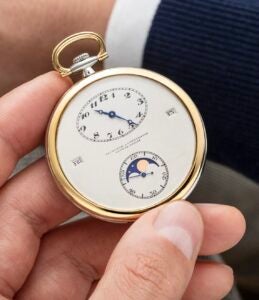
“It’s really open to anything,” says Morgan Maillard, style and heritage expert at Vacheron Constantin, and one of the members of the concours’ judging panel. “It could be a King Fuad pocket watch with 15 complications [legendary one-off pieces made for the former king of Egypt] or something you bought in a flea market somewhere and have restored with passion.”
“In our collection, we have around 600 timepieces, but in 270 years we have produced many more than this,” he continues. “Most of the Vacheron Constantin collection is in the wild; there are some we don’t know where they are now, so a nice part of this is to reconnect with them.”
See also: How a 28-Year-Old Collector Built One of the Rarest Vintage Patek Philippe Collections

A 1940s Vacheron Constantin Chronograph 4367 An open call for submissions closed at the end of April, after which the Vacheron team will sift through the hundreds — perhaps even thousands — of candidates to put together a shortlist of five per category. These will be invited to submit their watch for in-person judging, and to be part of the public exhibition.
Already, Maillard says the process has been illuminating. “I’ve seen some surprising design pieces coming in with their box and papers, all the original documents, which means you have more than just a timepiece, you have the story around it. One watch so far has really impressed me: an early-19th-century quarter-repeater pocket watch with a guilloché dial in stunning condition. The movement just looks untouched — it’s so impressive.”
Alongside Maillard, Bacs, and Vacheron style and heritage director Christian Selmoni, the judging panel comprises a mixture of prominent journalists, collectors, retailers, and of course, a watchmaker. Fans of the brand might be surprised to see the latter name on the list, however. Rather than an expert from within Vacheron’s restoration department or its most senior in-house watchmaker, the only hands-on horological talent on the panel is Felix Baumgartner, one half of the duo behind iconoclastic indie watch brand Urwerk. But his perspective, explains Maillard, is invaluable.
See also: The Pocket Watch Comeback You Didn’t See Coming

Bacs inspecting a watch/©L Lanchou “Felix was a great pick because, first of all, he’s a young and brilliant watchmaker, but into a completely different type of work to us. Also, he used to do some work on vintage watches when he was younger, and we know that included some Vacheron Constantin pieces,” says Maillard. “He has a great deal of knowledge, and we didn’t just want it to be Vacheron fans, who are going to turn up with a Vacheron on their wrist.”
The idea of judging the ‘best’ vintage watches might seem reductive to some (although one suspects that some collectors may take great pride in winning — and it will do their prized possession’s value no harm either), but for Vacheron the main emphasis is on the educational and exploratory aspects. The company, which already operates a heritage retail program, Les Collectionneurs, says there is no expectation that the submission process will have a commercial upside. The creation of the format also raises the possibility of it becoming a regular fixture in the watchmaking calendar, but no firm commitment has been made.
Emphasizing that for now, all eyes are focused on the debut edition, Maillard agrees that if successful, the idea has potential to expand and improve — maybe even incorporating other brands along the way. “If there are going to be other editions, we have some ideas,” he says.