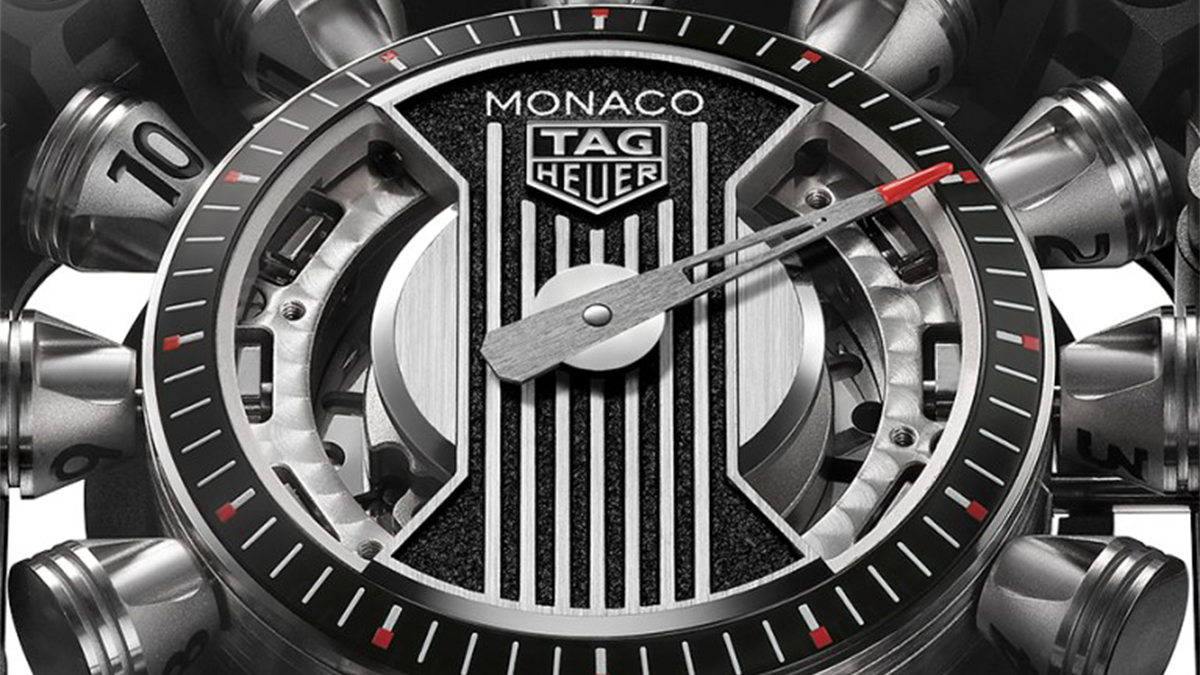
The new watch comes just ahead of the Monaco Grand Prix. The new watch comes just ahead of the Monaco Grand Prix.
Рубрика: General
-
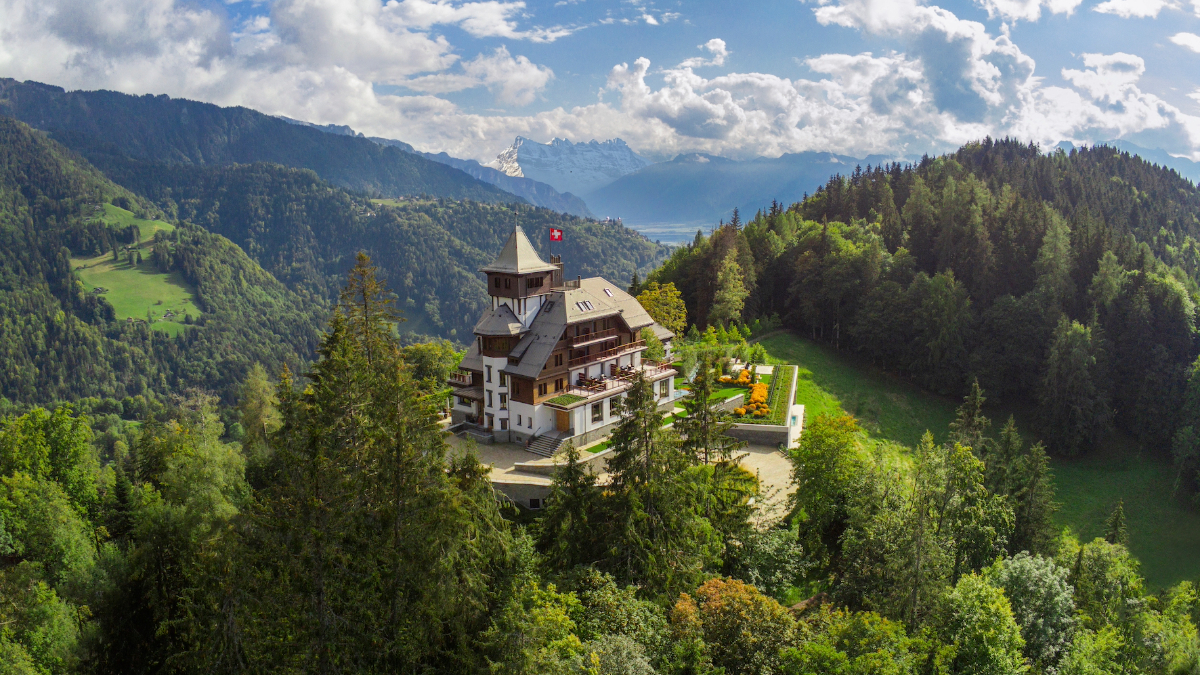
This Ultra-Exclusive Recovery Retreat for CEOs, Royalty, and Athletes Is Nestled in the Swiss Alps
Tucked away on a Swiss mountaintop, the world-leading Clinic Les Alpes is a fully licensed, in-patient medical recovery facility catering to the elite—and is a decades-long passion project of its founder. Tucked away on a Swiss mountaintop, the world-leading Clinic Les Alpes is a fully licensed, in-patient medical recovery facility catering to the elite—and is a decades-long passion project of its founder.
-
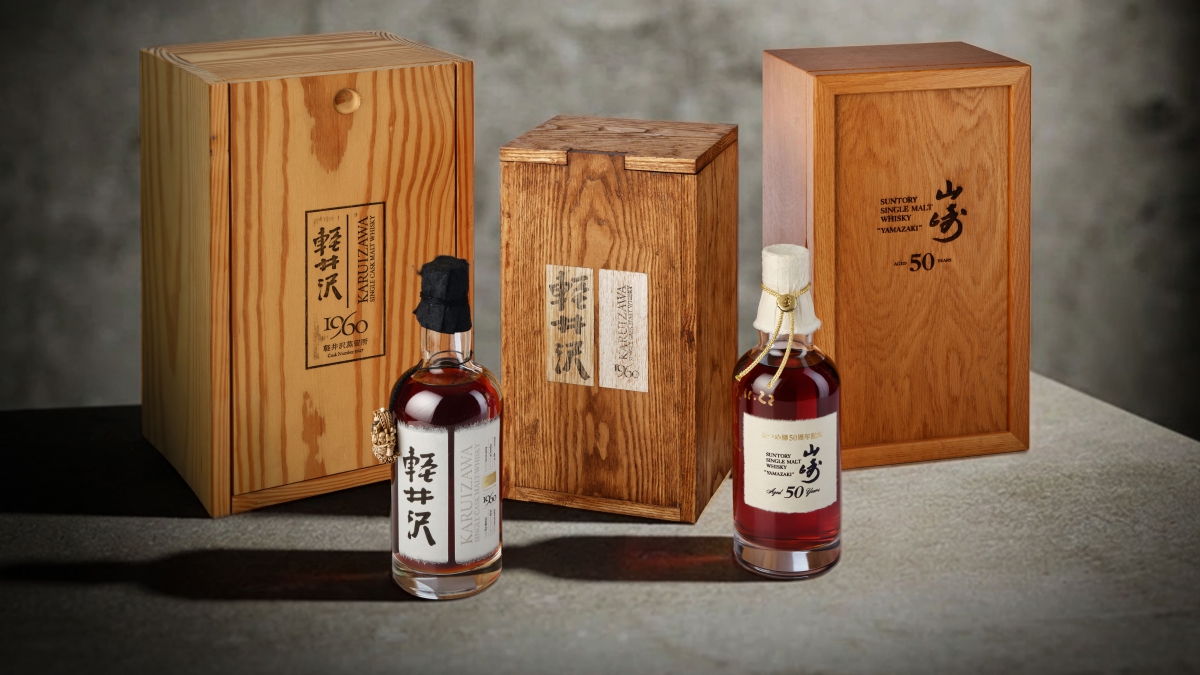
This Bottle of Yamazaki 50 Just Became the Most Expensive Japanese Whisky Sold at Auction
This rare bottle sold for more than $1 million. This rare bottle sold for more than $1 million.
-

Knicks NBA Finals Tickets Have Surged to Over $100,000
The Big Apple is seeing even bigger ticket prices ahead of Game 3. The Big Apple is seeing even bigger ticket prices ahead of Game 3.
-
Where to Shop, Dine, and Drink in Mayfair
The ultimate guide to London’s most glamorous neighborhood.
Mayfair, the final square on the London Monopoly board, has long occupied a place in the public imagination as London’s ultimate address. Bordered by Oxford Street, Regent Street, Piccadilly, and Park Lane, this pocket of the West End is home to some of the city’s most sought-after real estate, hotels, private members’ clubs, and restaurant tables.
It wasn’t always this way. Four centuries ago, Mayfair was little more than muddy fields on the edge of the city. The district takes its name from the May Fair, an annual gathering that took place in what is now Shepherd Market between 1686 and 1764. Rope-dancers, prize fighters, bookmakers, and traders flocked to the fair each spring, much to the irritation of nearby landowners, who eventually succeeded in having it shut down.
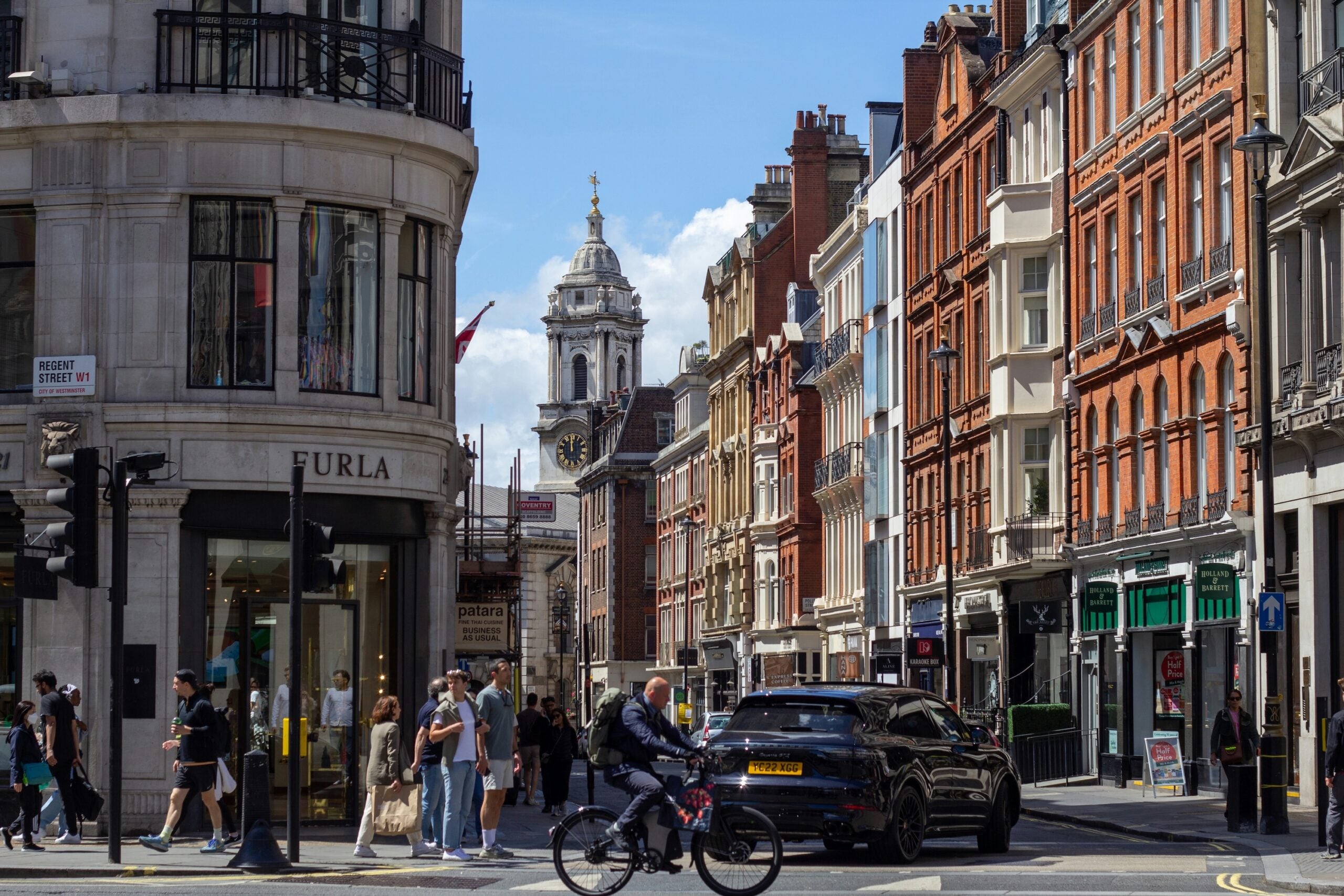
©Shutterstock The neighborhood we know today began to emerge in the early 18th century when the Grosvenor family acquired the land and developed a series of elegant squares and townhouses. Grosvenor Square, Hanover Square, and Berkeley Square soon attracted aristocrats, diplomats, and members of the royal court, establishing Mayfair as one of London’s most desirable addresses. By the 1940s, Grosvenor Square had become known as ‘Little America’ thanks to the presence of the US Embassy, and Berkeley Square’s plane trees, planted in 1789, still stand today.
In 2026, embassies occupy former mansions, luxury boutiques sit alongside centuries-old institutions, and some of the city’s most talked-about openings continue to choose Mayfair as their home. Whether you’re visiting for a weekend or simply crossing town for dinner, these are the top things to do in Mayfair.
What to do in Mayfair
Private shopping on New Bond Street
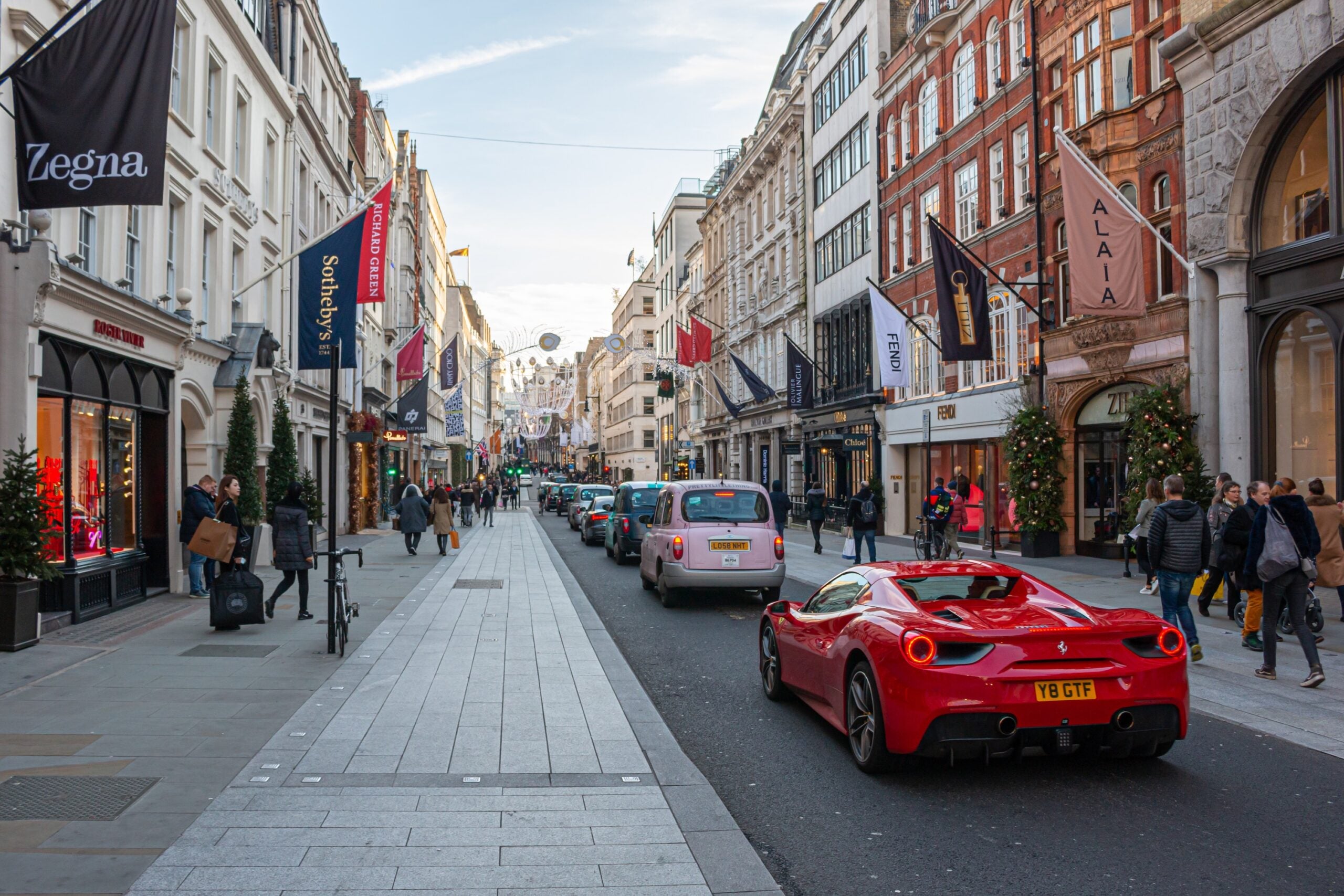
©Shutterstock Even in a neighborhood filled with luxury shopping, New Bond Street is the one most people make a beeline for. Many of the world’s biggest fashion houses, jewelers, and watchmakers have flagship stores here, alongside galleries, specialist dealers, and auction houses that have been part of Mayfair for generations.
If you’re looking for British brands, you’ll find names such as Church’s, which has been making shoes since 1873, and Boodles, the fine jeweler founded in Liverpool and long associated with Mayfair. International labels have some of their largest London stores here too, including Chanel, Alaïa, Louis Vuitton, Dior, Versace, Givenchy, and Zegna.
Watch and jewelry collectors are particularly well catered for. Within a few blocks, you’ll find boutiques from Patek Philippe, Breguet, Blancpain, Chopard, Van Cleef & Arpels, Graff, David Morris, Panerai, Breitling, and Pomellato, among many others.
If you are planning to shop, it’s worth booking ahead. Many of the stores offer private appointments, whether that’s a styling session at Alaïa, personalization services at Louis Vuitton, or a consultation with a fashion advisor at Chanel.
See also: The Luxury Guide to the Best Shopping in London
Explore Burlington Arcade
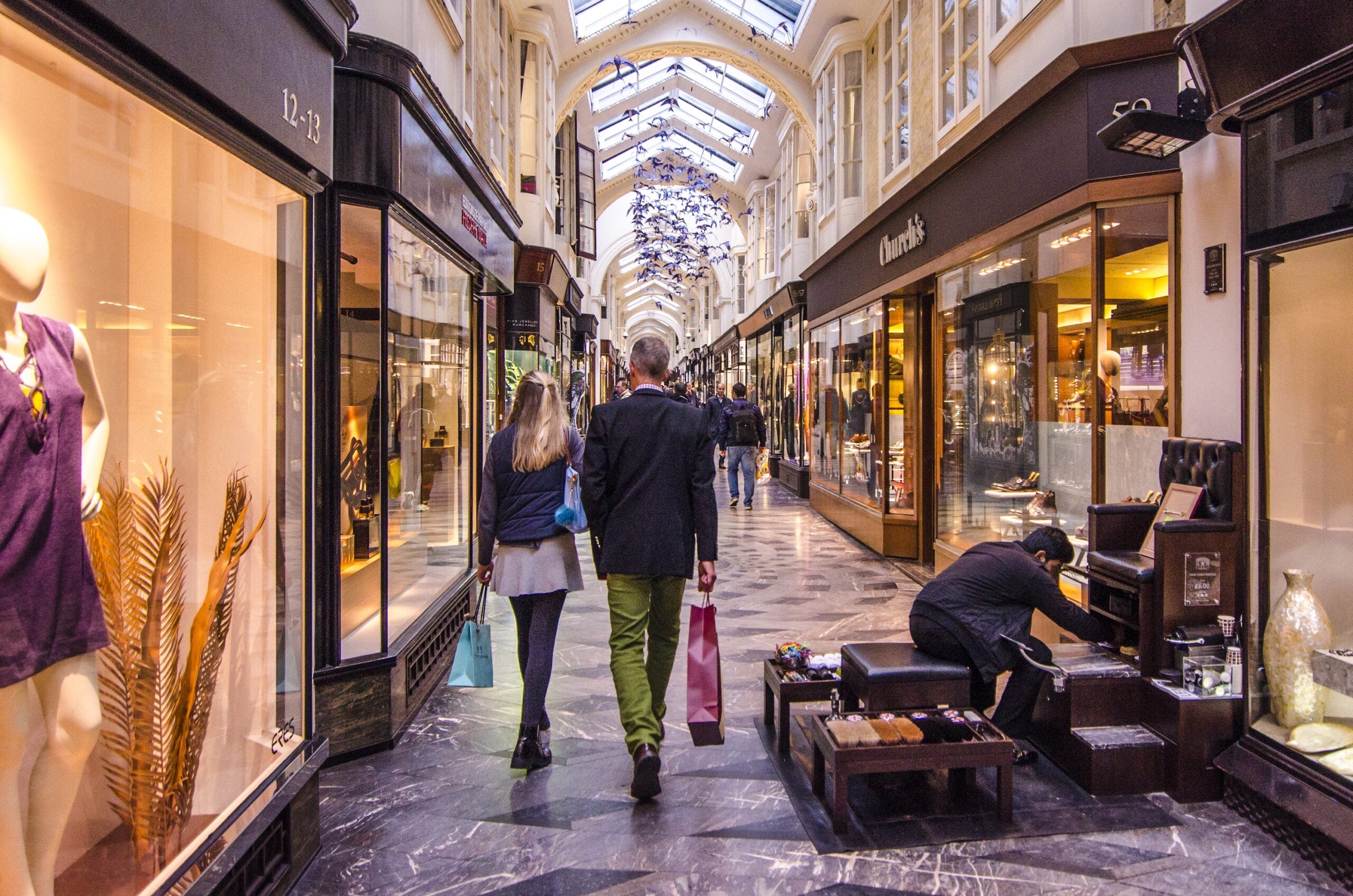
©Shutterstock Opened in 1819, Burlington Arcade remains one of Mayfair’s most unchanged spaces, still remarkably close to its original form despite the city evolving around it.
The shopping arcade was commissioned by Lord George Cavendish as a place where his wife could shop away from London’s crowded streets and was originally lined with independent merchants selling gloves, hats and jewelry. That retail spirit still carries through today – some businesses have been here for generations, including N.Peal, which has occupied its space for almost 90 years, and behind the uniform shopfronts, you’ll find watch specialists, cashmere houses, leather goods makers, and jewelers.
Collectors are drawn to the names that exist nowhere else. The Vintage Watch Company has made Burlington Arcade the sole home of its rare Rolex collection, while Somlo Omega Vintage and the men’s boutique from Manolo Blahnik are similarly exclusive.
Keep an eye out for the Beadles as you walk through. Dressed in frock coats and top hats, they have patrolled the arcade since it opened and still enforce rules set out in 1819. Running, cycling, opening umbrellas, and ‘behaving boisterously’ are all prohibited. Whistling is banned, too.
Before you leave, seek out one of Mayfair’s quieter secrets. Hidden beneath the boutique of British jeweler Stephen Webster is No Regrets, a small, no-website, no-Instagram speakeasy serving miniature iced martinis on engraved silver trays.
See also: Step Inside London’s Best Hotel Suites
Mayfair’s Art Scene
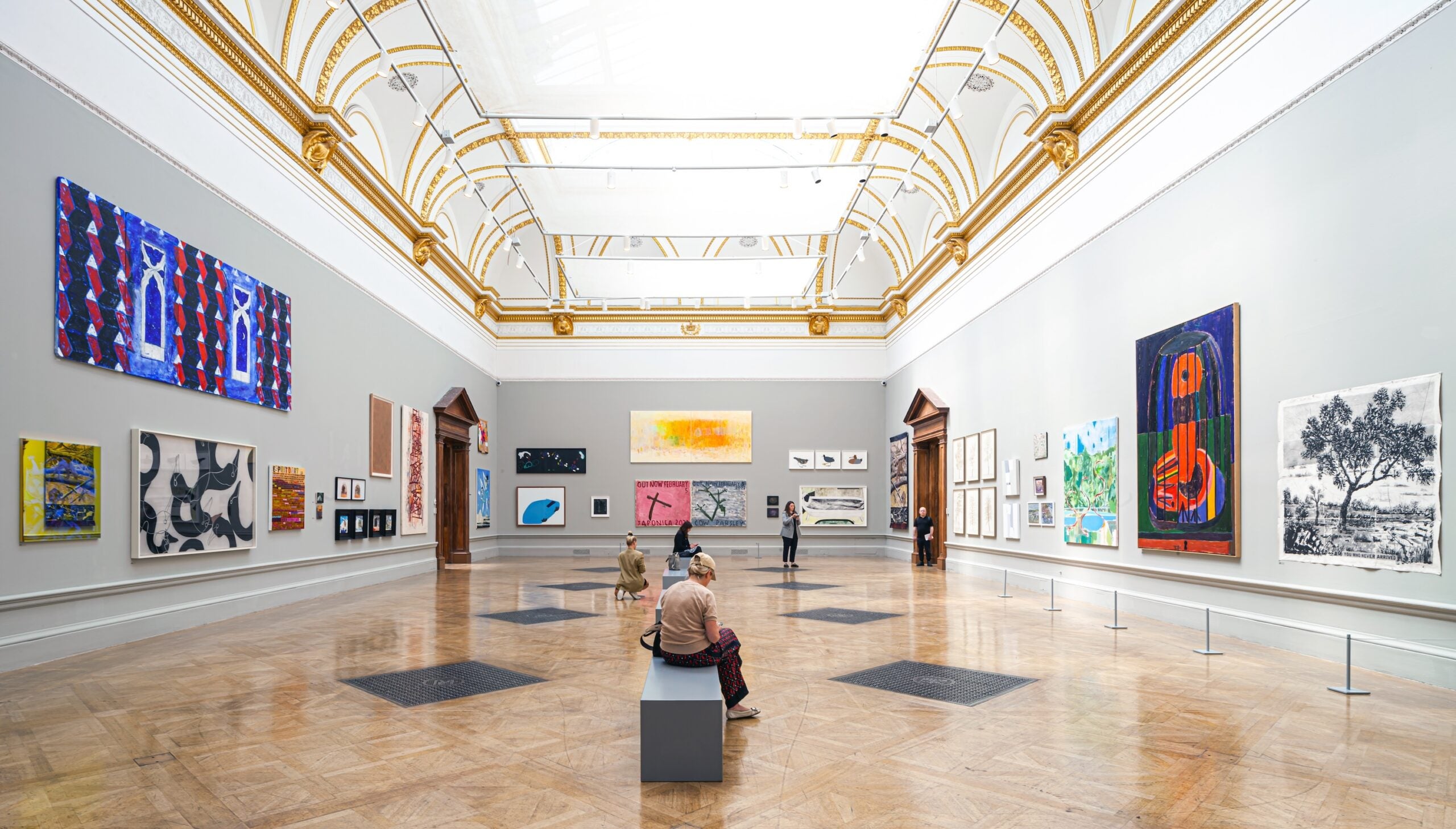
©Shutterstock Mayfair isn’t just London’s luxury shopping district. It is also the center of the city’s commercial art market, where many of the world’s leading galleries, auction houses, and private dealers operate within a few blocks of one another.
A walk through the neighborhood offers a snapshot of the global art world. Historic Cork Street remains its spiritual heart, while surrounding streets house galleries specializing in everything from post-war masters and contemporary art to photography, sculpture, and rare works on paper. During Frieze week and the major auction seasons, the area becomes one of the most active collecting hubs in Europe.
For museum-caliber exhibitions, begin at the Royal Academy of Arts before exploring the commercial galleries nearby. International powerhouses such as Gagosian, Hauser & Wirth, and David Zwirner regularly stage major exhibitions. Collectors with more specific interests are equally well served: Hamiltons Gallery is a destination for fine-art photography, while galleries such as Bowman Sculpture and Halcyon Gallery have built loyal followings among international buyers.
No art-focused visit is complete without stepping inside Sotheby’s on New Bond Street. The pre-sale exhibitions are open to the public and frequently bring together museum-quality paintings, jewelry, watches, and collectibles that would otherwise spend their lives in private collections.
Afternoon Tea in Mayfair
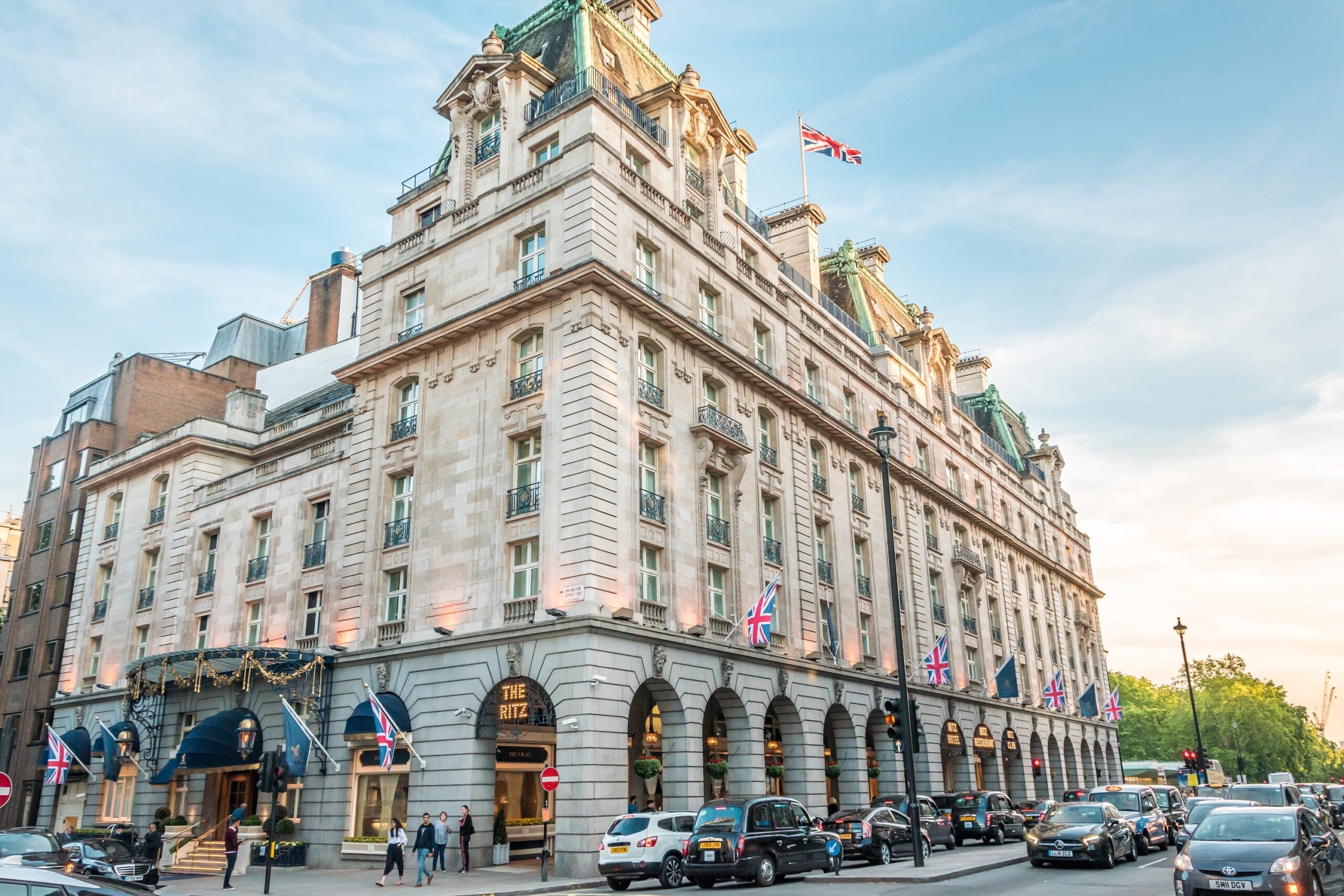
©Shutterstock After a morning spent browsing Bond Street boutiques and exploring galleries, afternoon tea is a good excuse to slow down for a couple of hours.
The tradition is most often linked to Anna, 7th Duchess of Bedford, who is said to have started requesting tea, sandwiches, and cakes to bridge the long gap between lunch and the fashionably late Victorian dinner hour. Whether she truly invented afternoon tea is still debated, but the ritual quickly caught on among London’s social set and has remained part of British tradition ever since.
Mayfair is home to nearly all of London’s best afternoon tea spots, so visitors are truly spoiled for choice. The Ritz London continues to draw visitors looking for London’s most famous afternoon tea. Served in the Palm Court, the experience comes with a choice of around 20 teas, live piano or harp music, and staff who know the finer points of tea-making inside out, having spent months in Sri Lanka sourcing and refining blends. The dress code is strictly enforced, so it’s worth dressing the part.
Another of the capital’s grand dames, Claridge’s, serves afternoon tea daily in its Art Deco foyer, beneath a striking Dale Chihuly chandelier, with live music from a pianist and cellist providing the soundtrack. Just across the neighborhood, The Dorchester offers an equally impressive spread in The Promenade.
Another great afternoon tea location is Fortnum & Mason, one of London’s heritage department stores, on nearby Piccadilly, a space that has been serving afternoon tea for roughly a century. It is served in the Diamond Jubilee Tea Salon on the fourth floor, a space reopened by Queen Elizabeth II in 2012.
Evening Drinks in Mayfair
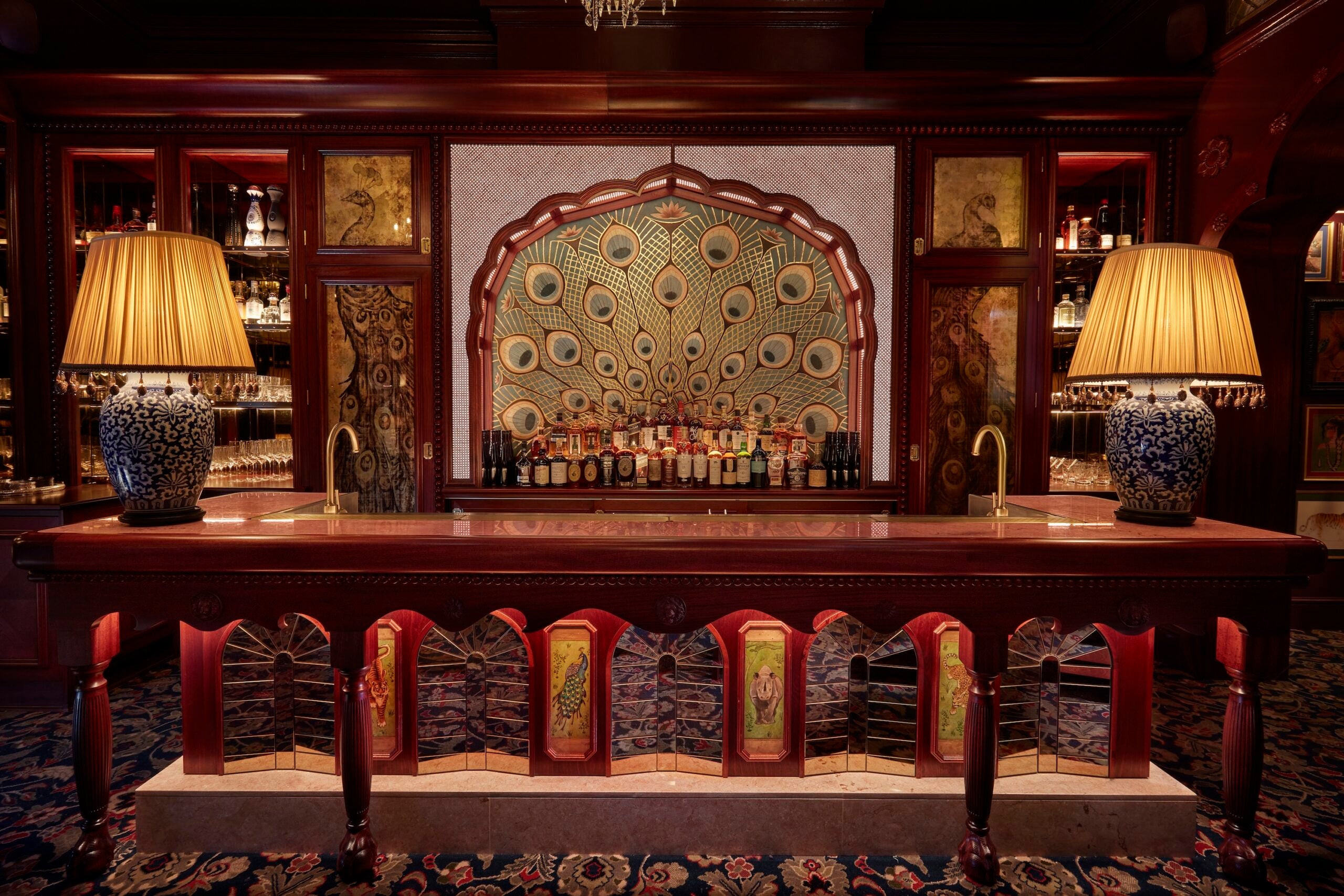
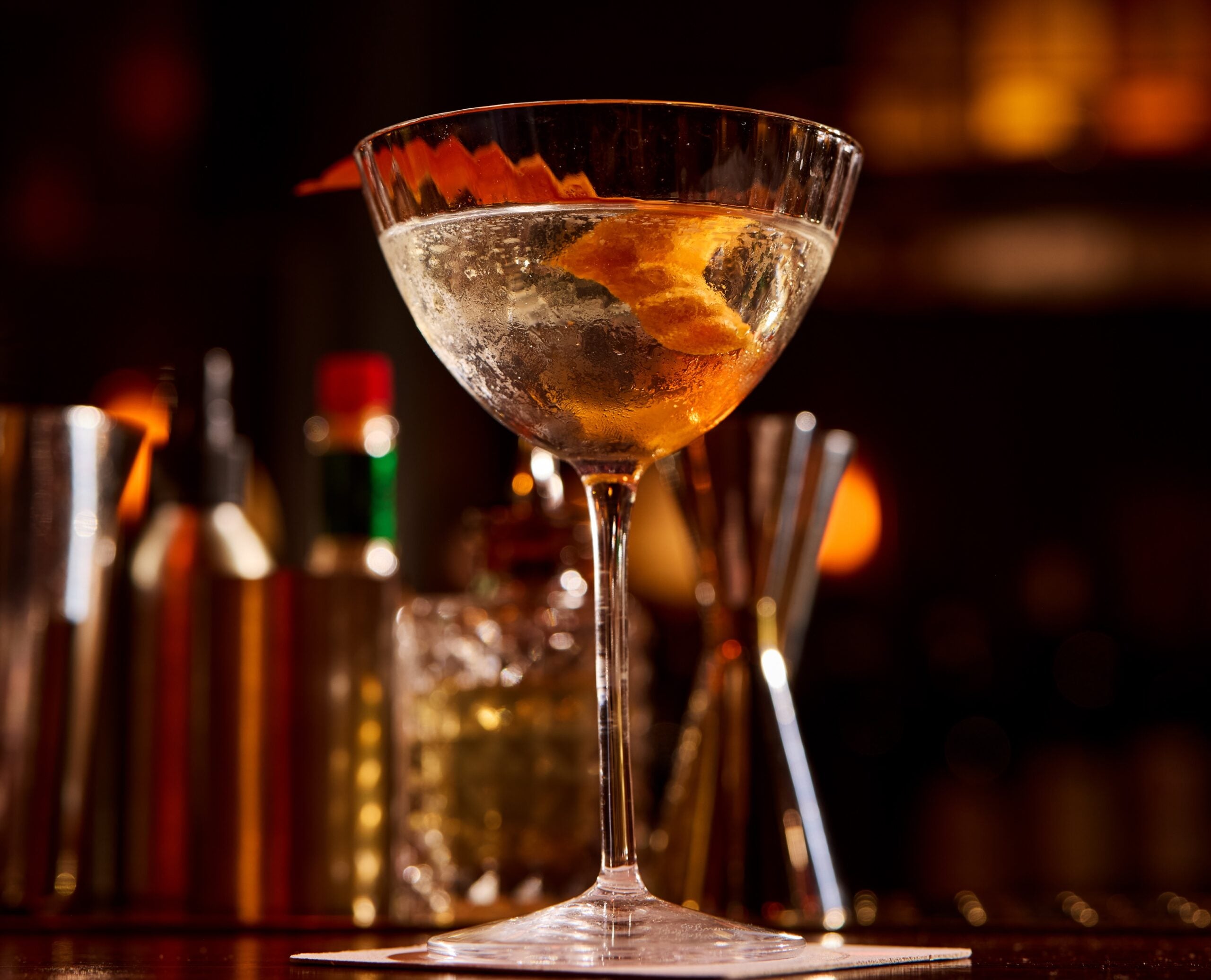
©The 42 Mayfair has long been one of London’s best places for a drink, whether that’s a perfectly made Martini, a tasting of a rare bottle, or something a little more inventive.
At The Connaught Hotel, the bar has become a destination in its own right. The famed Instagram-ready martini trolley glides between tables as expert mixologists Agostino Perrone and Giorgio Bargiani continue to refine one of London’s most copied drinks rituals. While you’re there, seek out the velvet curtain at the back of the Champagne Room. Behind it sits The Red Room, an intimate wine bar lined with marble and backed by a cellar containing around 30,000 bottles.
Another popular option is the legendary Dukes Bar. The space is often linked to Ian Fleming, who was a regular and is widely believed to have drawn inspiration here while creating James Bond. Martinis are strong enough that guests are limited to just two.
©The Dover For something more discreet, look for the unmarked entrance to 42, hidden beside Gymkhana. Inside, you’ll find low lighting, hanging oil paintings, and a lot of crushed velvet – as well as an impressive cocktail list which showcases Indian ingredients and nostalgic Indian flavours, and a selection of rare whiskies and champagnes.
On Dover Street, The Dover has quickly become one of the neighborhood’s most sought-after tables. Even if you’re not staying for dinner, it’s worth stopping by for an ice-cold Martini.
See also: The Best Cigar Lounges Hidden Inside London Hotels
Dining in Mayfair
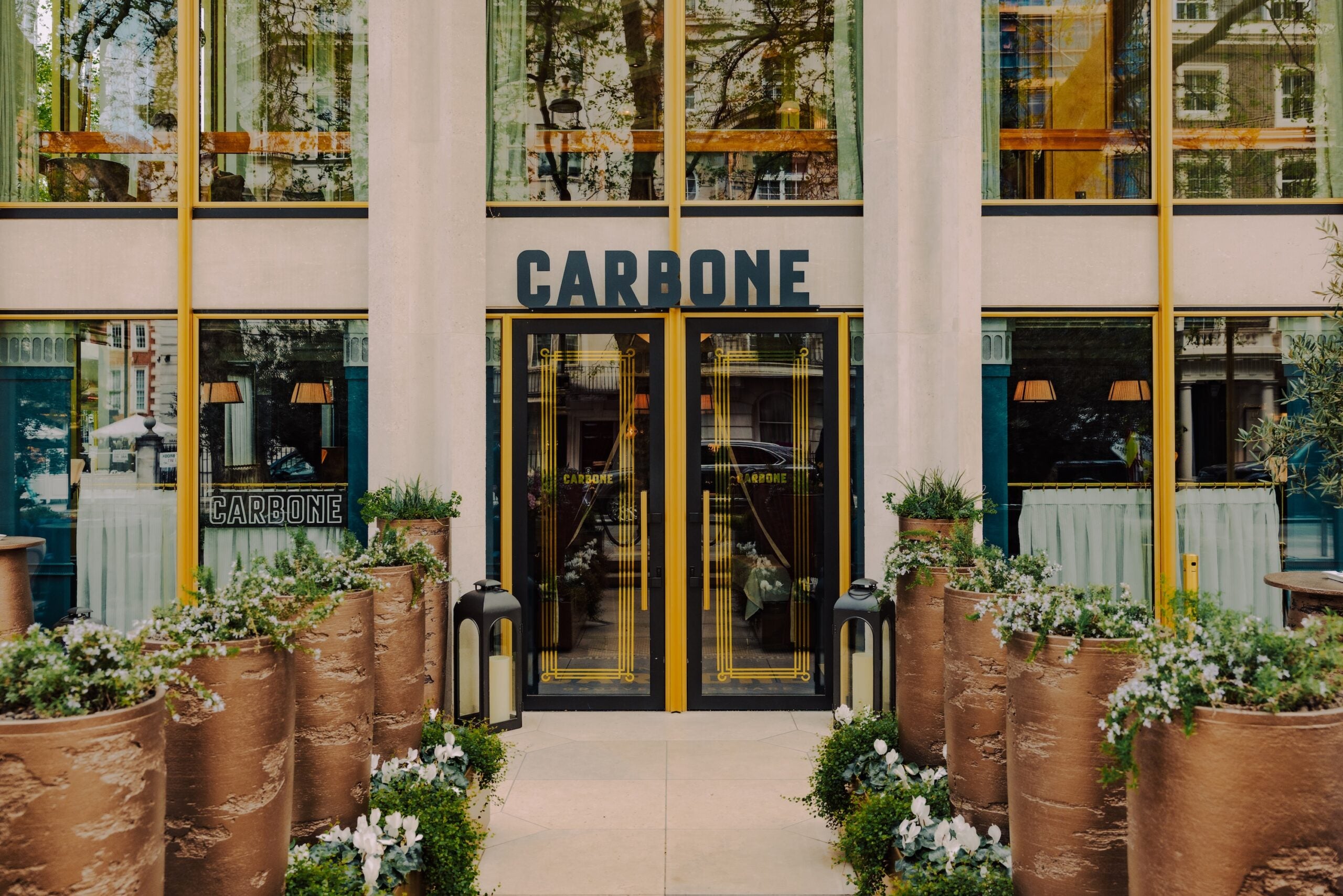
©Carbone/Joe Howard Mayfair has one of the highest concentrations of destination restaurants in London, and many of the neighborhood’s headline openings are found inside its hotels. The Chancery Rosewood is home to both Tobi Masa, the Japanese restaurant led by chef Tamas Naszai, and Carbone London, the first UK outpost of the New York institution known for its Italian-American menu and celebrity following.
At The Connaught, guests can choose between Jean-Georges at The Connaught, the first UK restaurant from chef Jean-Georges Vongerichten, and Hélène Darroze at The Connaught, which holds three Michelin stars. If fine dining is your thing, Alain Ducasse at The Dorchester is another one of the few UK restaurants with three Michelin stars.
See also: Carbone London: “There’s Nothing Else Like This Here”
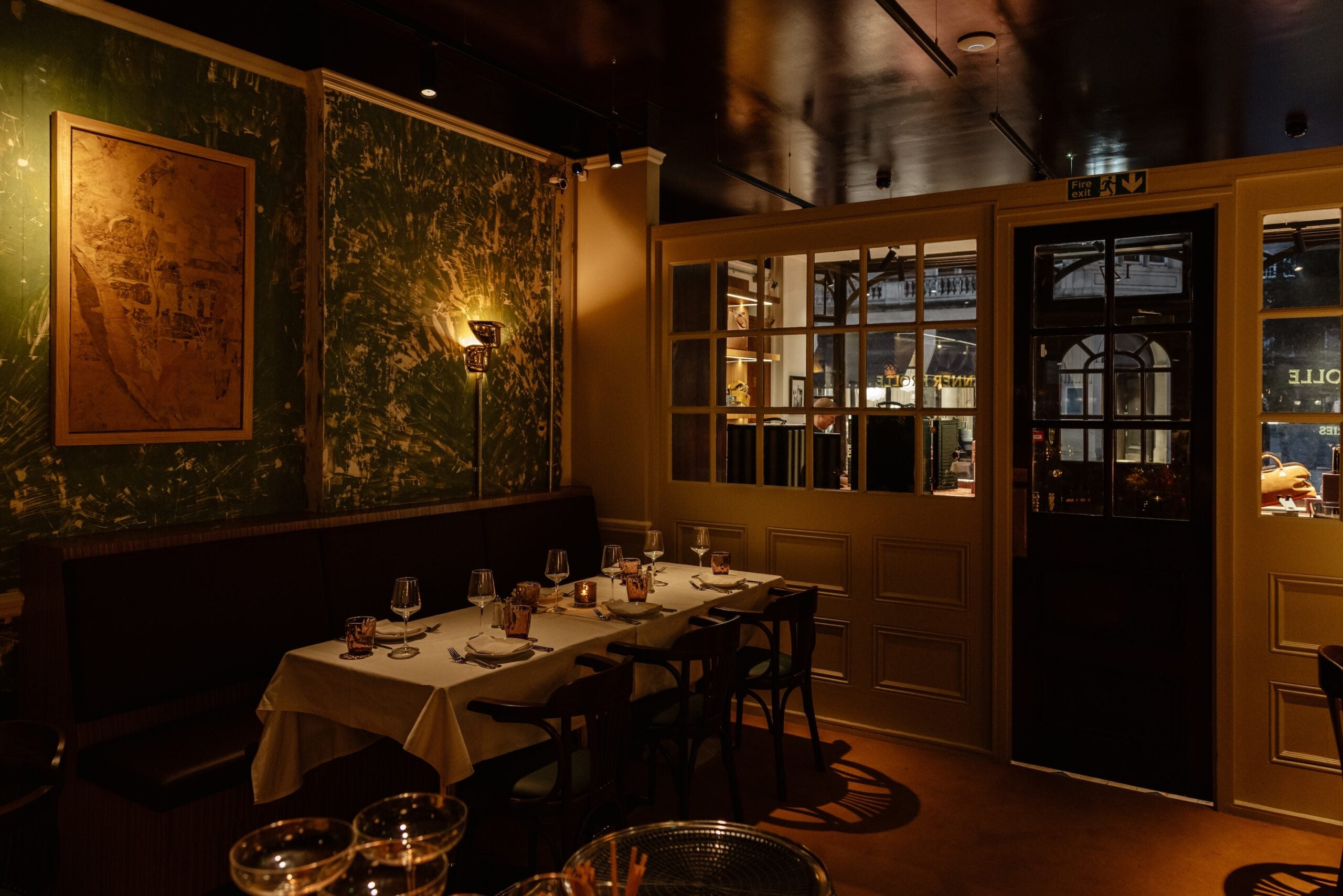
©Automat Mount Street has become a dining destination in its own right. Scott’s has occupied its current Grade II-listed home since 1967 and remains one of London’s best-known seafood restaurants, serving oysters, shellfish and British-caught fish. A few doors away, 34 Mayfair focuses on British classics, steaks and grilled meats, while Automat is one of the street’s newer arrivals, bringing an Anglo-American menu of burgers, martinis and comfort-food staples to interiors inspired by mid-century New York.
Japanese dining is particularly strong in Mayfair. At Sushi Kanesaka, inside 45 Park Lane, guests sit for an Edomae-style omakase overseen by chef Shinji Kanesaka, and Sushi Amamoto on Albemarle Street, the first international outpost of the Taipei restaurant known for its year-long waiting list, offers just a handful of seats around the counter.
-

Jason Momoa Just Turned His Classic Land Rovers and Vintage Harleys Into EVs
The painstaking conversion process is documented in the latest installment of his show «On the Roam.» The painstaking conversion process is documented in the latest installment of his show «On the Roam.»
-

A Drinks Expert’s Take on Match-Day Pairings for the World Cup
Our resident drinks expert Alice Lascelles reveals what she’ll be sipping on during the World Cup.

But on laid-back summer evenings the to-and-fro between hard liquor and ice-cold beer is often what I crave.
In Germany they call it a herrengedeck. In Scotland they call it a ‘hauf and a hauf’ (half and a half). In Korea, they drop their shot of soju actually into their lager to make a somaek, or the Korean answer to a Depth Charge.
In America, of course, it’s known as a ‘boilermaker’ – a reference to the drink’s blue-collar origins, and the fact it was a favorite fortifier of locomotive engineers, or boilermakers, after a hard day’s work.
See also: Clase Azul Captures the Spirit of the 2026 World Cup with $1,700 Release
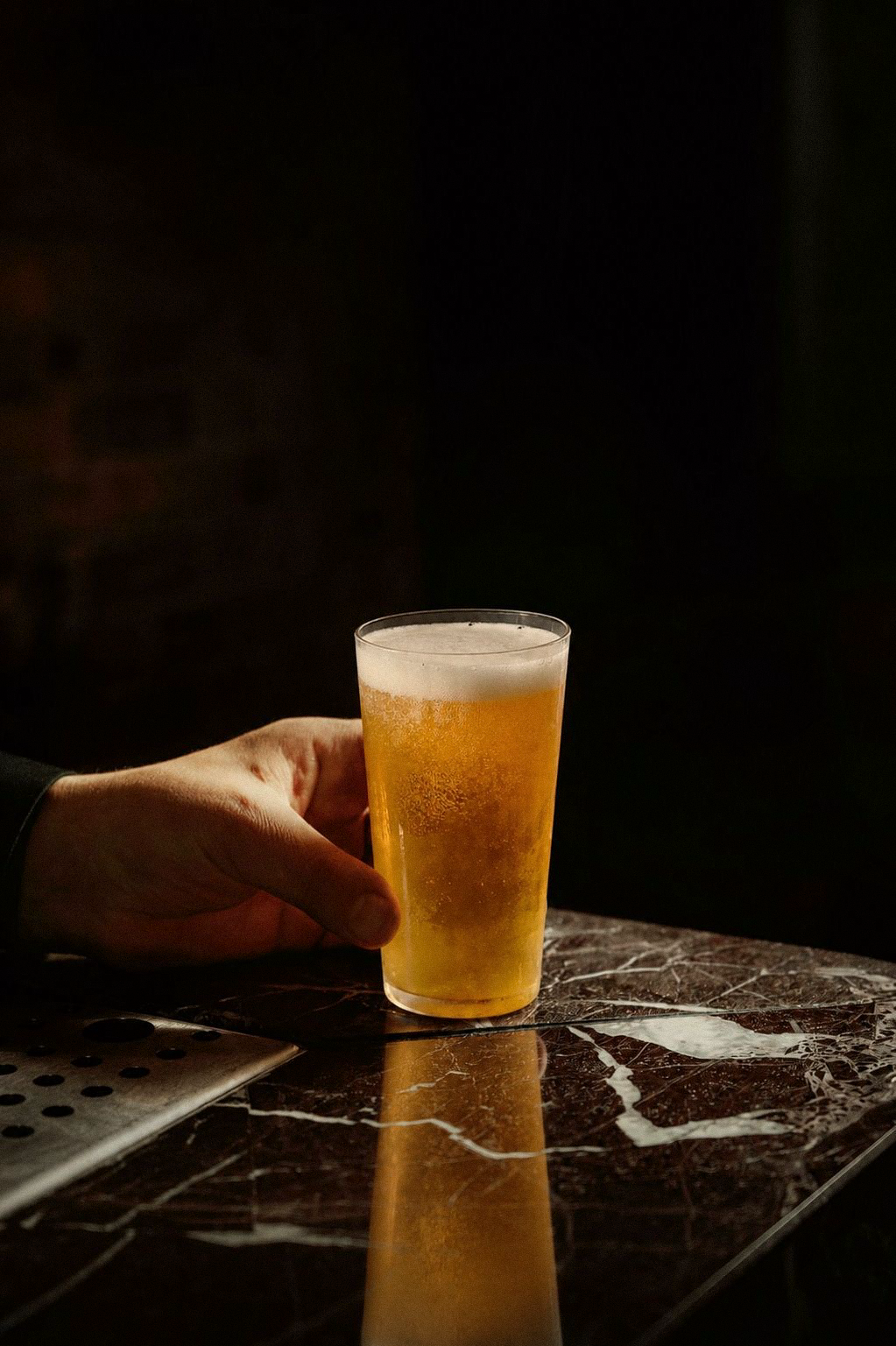
Experimental Cocktail Club’s housemade pickle beer ©Experimental Cocktail Club What makes a good pairing? If you’re doing it right each sip should leave you wanting a little bit more of the other. Drinks that compliment each other in weight and flavor often do this best: heavy/light, warming/fresh, sweet/salt.
Bourbon and lager is a classic combination for this reason – the former is sweet and spicy, the latter crisp and dry. Try a mid-weight bourbon such as Michter’s Bourbon or Woodford Reserve with a hoppy brew like Pilsner Urquell. Heaven Hill is so devoted to boilermakers it runs a competition every year, challenging bartenders to come up with evermore creative pairings. The competition’s organiser Chris Smith recommends Evan Williams or Elijah Craig as the perfect partner for a Pils.
See also: A City-by-City Guide to the Best Hotel Suites for the 2026 World Cup
In the market for something… trashier? Then pair your whiskey with a down-and-dirty pickle beer: Donna’s Pickle Beer has gained a cult following in the US. In London, meanwhile, the Experimental Cocktail Club Chinatown serves a housemade pickle beer based on the excellent Braybrooke Pilsner, alongside shots of fancy cognac.
Agave spirits and beer are also made for each other. Especially when they’re served, as they often are in Mexico, with a dish of juicy, sal de gusano-dusted orange wedges on the side. Try Quiquiriqui’s pine-y single estate Tobala with a well-chilled Cervesa Victoria (which flows like water in Mexico) or Modelo Especial as a chaser. At Side Hustle in London they pair the hard-to-find Fortaleza Reposado Winter Blend tequila with a taster of Krug Champagne. “The acidity and yeasty notes of the champagne compliment the bolder, oak flavors of the tequila — it it works the other way around,” says NoMad head of bars Maxim Schulte.

©Athletic Brewing New York’s Katana Kitten specialises in boilermakers with a Japanese accent. Suntory’s easy-drinking Toki blended whisky is paired with a lager; while a shot of yuzu sake partners up with an Other Half IPA. At the innovative Oddball bar in Alphabet City, meanwhile, you can sip an Umenoyado Green Tea Umeshu (plum sake) alongside a Farm One lager brewed with lemon basil.
NYC’s award-winning Superbueno bar has created a riff on its signature boilermaker, Dashi Papi, for every match in the soccer World Cup. For the USA vs Australia game, for example, they’ve laced a shot of Don Julio 1942 with Aussie vegemite, while the Mexico vs Czechia game sees the tequila laced with hints of cherry and caraway. But the no-frills ‘beer and a bump’ remains, in the words of head bartender Keith Moffitt, “the ultimate old-school bartender’s choice.”
See also: At The World Cup 2026, Is Soccer Finally Due Its High Fashion Moment?
The Boilerfaker – which sees a full-strength spirit paired with a non-alc beer – has lately become one of my favorite drinks. You get all the refreshment and flavour of the real thing but keep a reasonably clear head.
America’s number one non-alc brewer Athletic Brewing recently created a superb 0.5 percent abv red ale, Clock End, for Premier League champions Arsenal (who also happen to be my team). I’ll be sipping this, while I watch the World Cup games, with a sweet-and-smoky dram of Lagavulin 16.
At Trick Dog in San Francisco they do a fully non-alc pairing of Guinness 0.0 and a shot of cold brew – guaranteed to pick you up whether you’re grafting on a locomotive or simply watching the TV.
-
Bar Des Prés Just Moved to a New Mayfair Location
The Reservation: Can the slick sushi joint settle in its new home?
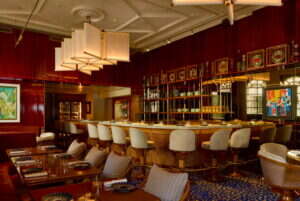
“We have moved!” announces Bar Des Pres’s restaurant. And indeed it has – it’s moved less than 15 minutes’ walk from its former Albemarle Street home to equally upmarket South Audley Street. The Connaught, The Audley Public House, and Lilibet’s are all worthy neighbors.
Since its initial London opening back in 2021, which marked the first international address for chef Cyril Lignac’s popular Parisian venture, Bar Des Prés became a mainstay on the Mayfair circuit, with diners drawn to its luxe look and Franco-Japanese menu. Need stone-cold-evidence that the restaurant has captured its target market? Dubai and Saint-Barths have become the latest Bar Des Prés locations. (The love hasn’t been universal, though, and the London iteration was met with some savage critical disdain.)
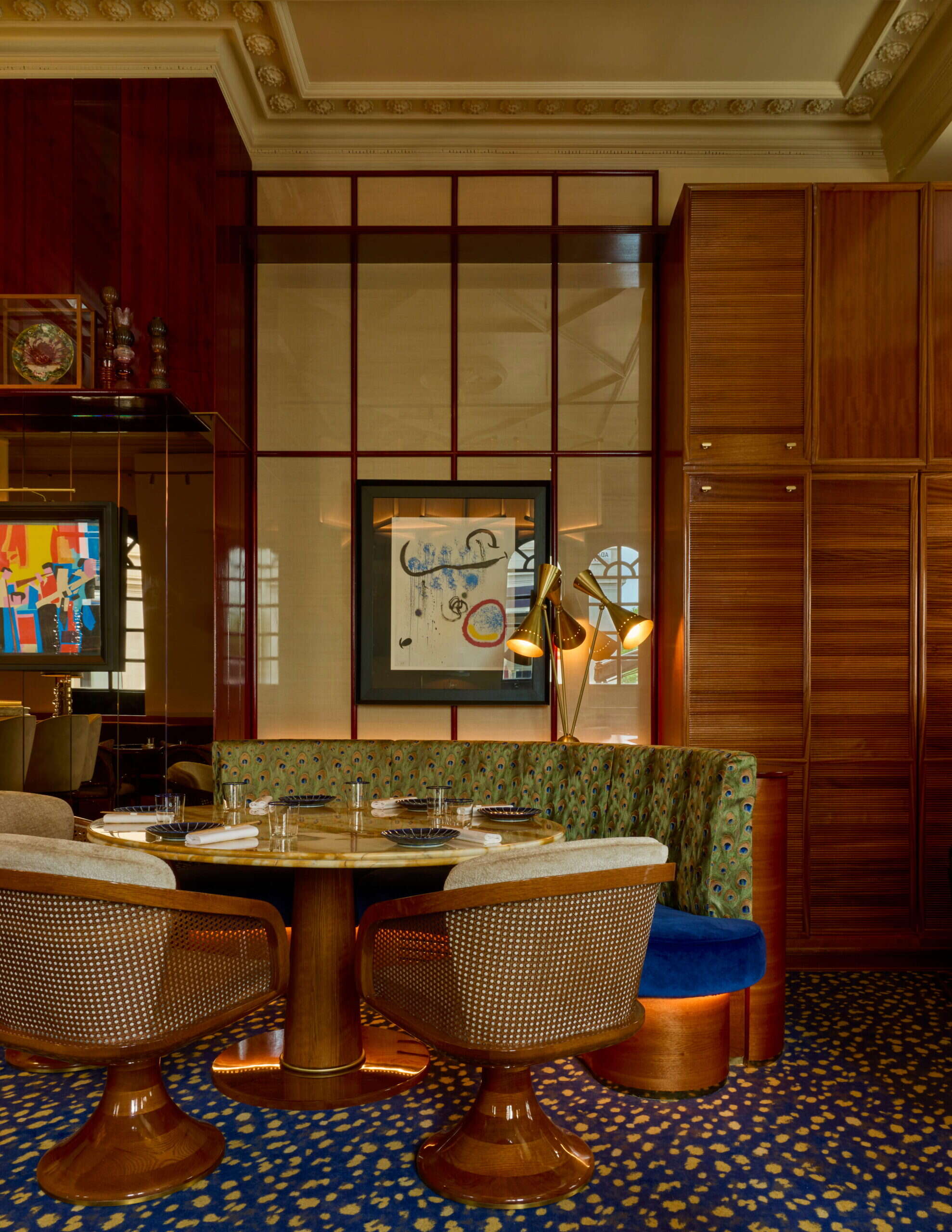
©Geraldine Martens The new location’s decor is more out-there than its predecessor. Designed by Lázaro Rosa Violán Studio – the Spanish firm responsible for The Bazaar by José Andrés in New York and The Barcelona Edition, among other international hospitality projects – maximalism runs riot: there’s a blue-and-cream spotted carpet, peacock-feather emblazoned sofas, and cherry-toned wood panel walls.
There’s bigger tables with banquette seating and a (dark) private dining room toward the back of the restaurant, but as is our advice for any restaurant with a counter: hop on one of the stools for a view of the chefs at work.
See also: Is Mayfair Ready To Be Mayfair Again?
For its London relaunch, Bar Des Prés has made a few advancements on chef Lignac’s Japan-meets-Europe menu. Sushi remains the cornerstone, with an extensive list of California rolls, maki, and sashimi (we watched one solo dinner pull up a seat on the counter, nibble four slices of salmon, sip a Diet Coke, and leave), but new additions include a robata grill for smoky skewers of chicken satay and beef fillet.
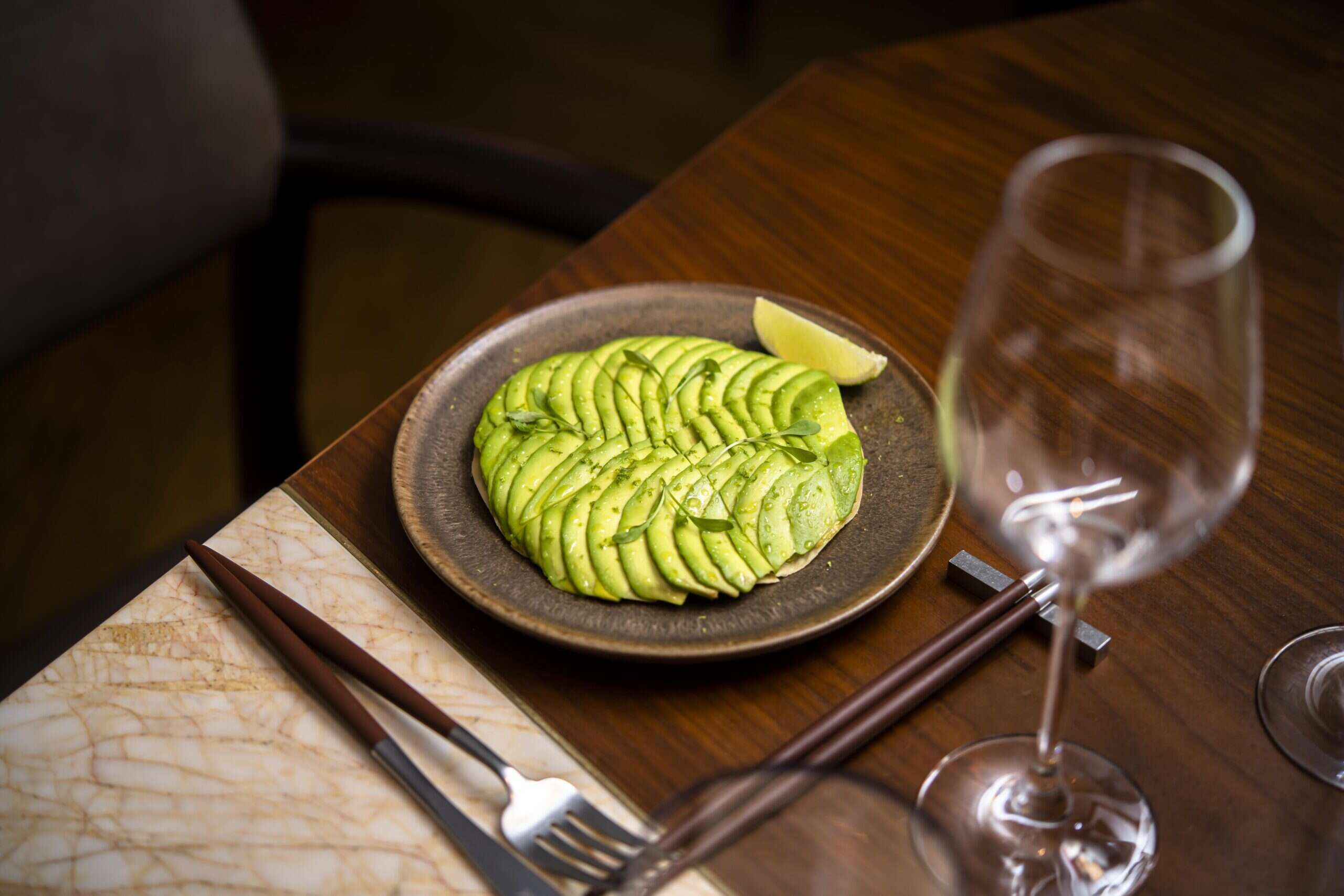
The crab and avocado galette – spiked with a whiff of curry spice – is a signature, but lesser-sung heroes are the salmon-topped crispy rice with its almost chewy center and a sweet, miso-coated grilled eggplant.
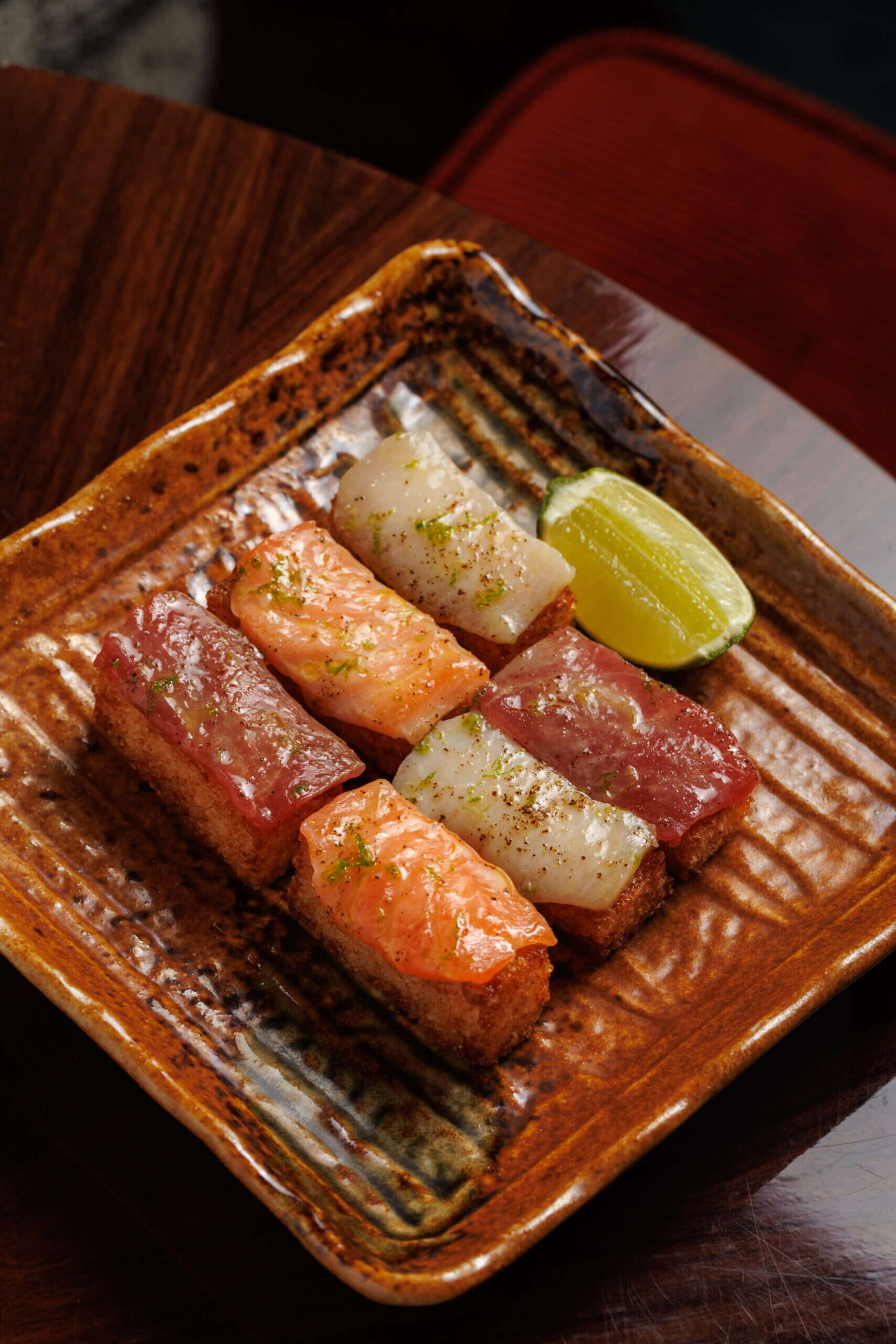
While Bar Des Prés claims a French-Japanese fusion, you’ll quickly see that Asia does much of the lifting food-wise (although each dish is helpfully listed in French, too). Where France rightfully gets its piece of pie is in the wine list, which, bar a small sake selection, doesn’t veer away from the nation’s finest export even once.
Cocktails, on the other hand, zip all over the globe: there’s mezcal palomas, yuzu and mango martinis, lemongrass margaritas, and lavender and elderflower spritzes.
While this move has captured London’s media as well as its lunching Mayfair residents, there is a sense that Bar Des Prés needs a while longer to settle into its new home. On my visit, things looked slick, but service didn’t quite match up to the lacquered walls and moody lighting. Put it down to teething issues if you will; refinement takes time.
-
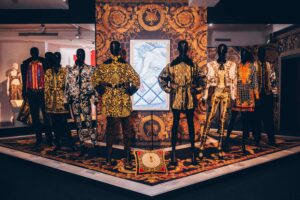
Meet the Man Behind the Medusa at Paris’ New Gianni Versace Retrospective
With 450 creations, sketches, photographs, and objects belonging to the fashion house founder on display, we speak with the lead curator on bringing the late designer’s world back to life.
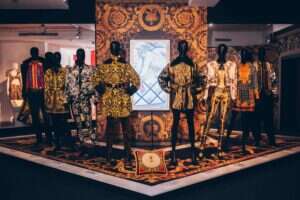
“You will find me in my work,” reads the Gianni Versace quote that greets visitors at the newly opened retrospective at the Musée Maillol in Paris. For curator Karl von der Ahé, the quote acts as both introduction and invitation, encouraging visitors to discover the man behind the Medusa through the creations he left behind.
“Our exhibitions are first and foremost emotional experiences – emotional, authentic, and very close to the individual,” he tells Elite Traveler ahead of the opening of Gianni Versace Retrospective on June 5. “This is about a man, his products, and his personality. It is not about the brand; it’s about the person.”
To tell that story, von der Ahé and fellow curator Saskia Lubnow have assembled 450 original creations, accessories, sketches, photographs, and decorative objects, creating one of the most comprehensive exhibitions dedicated to the late designer.
The retrospective has already traveled across Europe, with previous stops in the Netherlands, Poland, Germany, Sweden, Spain, and, most recently, London. But Paris is not simply a repeat performance: “That would be very boring for us.” For its latest incarnation, the exhibition has been expanded with new acquisitions, reworked scenography, and a renewed focus on Versace’s relationship with the French capital.
See also: What To Expect From Schiaparelli’s First UK Exhibition
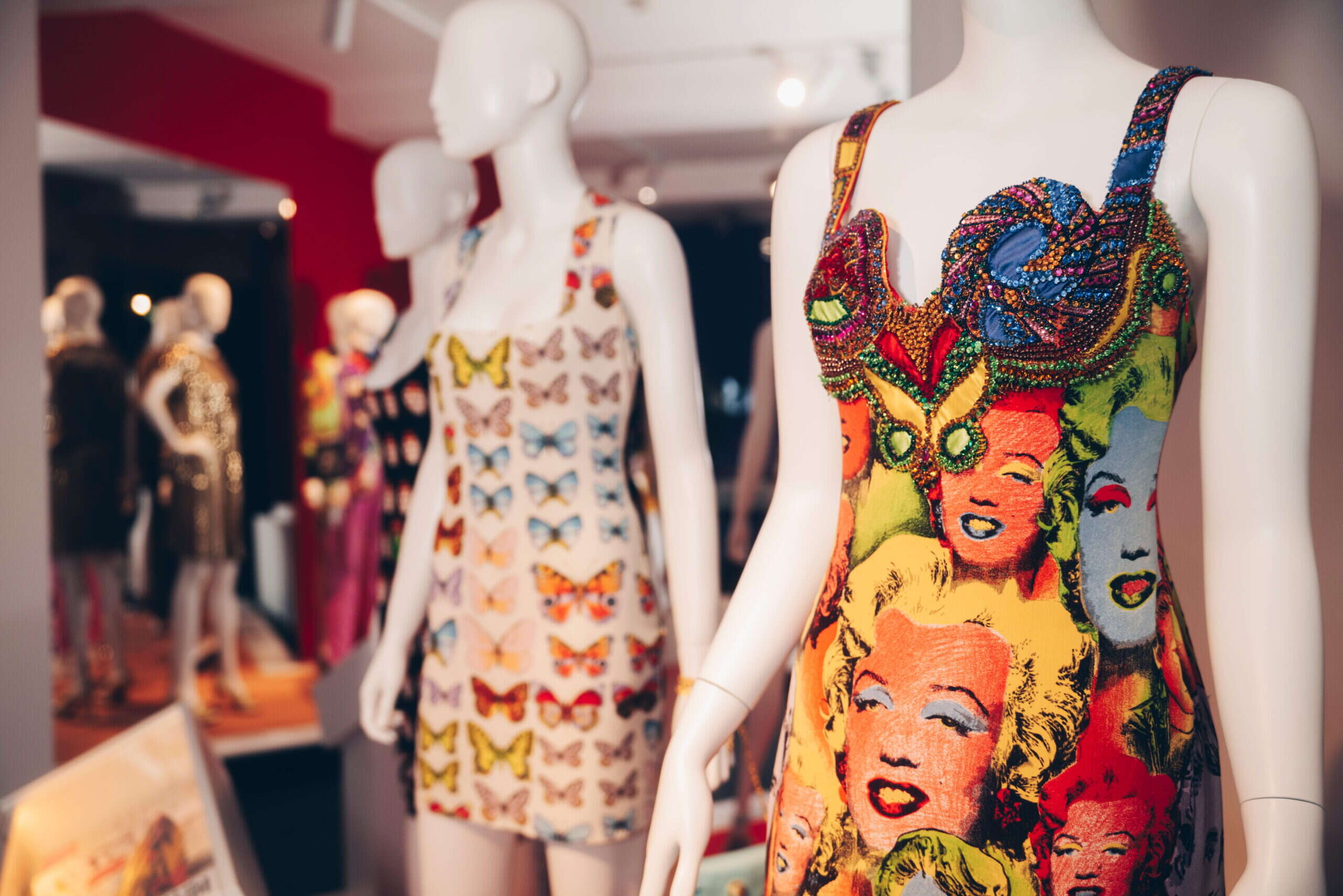
©Emma Birski Among the additions are a dress worn by Grace Jones that has not been publicly displayed since the late 1980s and the Marilyn Monroe-motif dress immortalized by Madonna in a Mario Testino photograph taken at Mar-a-Lago.
“It’s a very important piece for understanding how Gianni Versace worked with art history,” says von der Ahé of the latter. “I think it’s one of the most important pieces in the exhibition.”
The additions are particularly fitting for a city that, according to von der Ahé, sits at the heart of the designer’s story. «Paris is the city of fashion, and we talk about [Versace’s] relationship to Paris and to France,» he explains. «The whole exhibition is built around the idea of a catwalk, because, for him, Paris was the place to show.»
The Musée Maillol has been transformed accordingly. Runways cut through the galleries, guiding visitors through a dozen thematic chapters that trace the designer’s inspirations, from the bold modernism of the 1980s to the exuberant black and gold Baroque motifs that would become synonymous with the Versace name, before culminating with references to the designer’s final Paris show.
Bringing that vision to life, however, required far more than clever scenography. Many of the exhibition’s most significant pieces remain in private hands, and convincing collectors to part with them can be a delicate process.
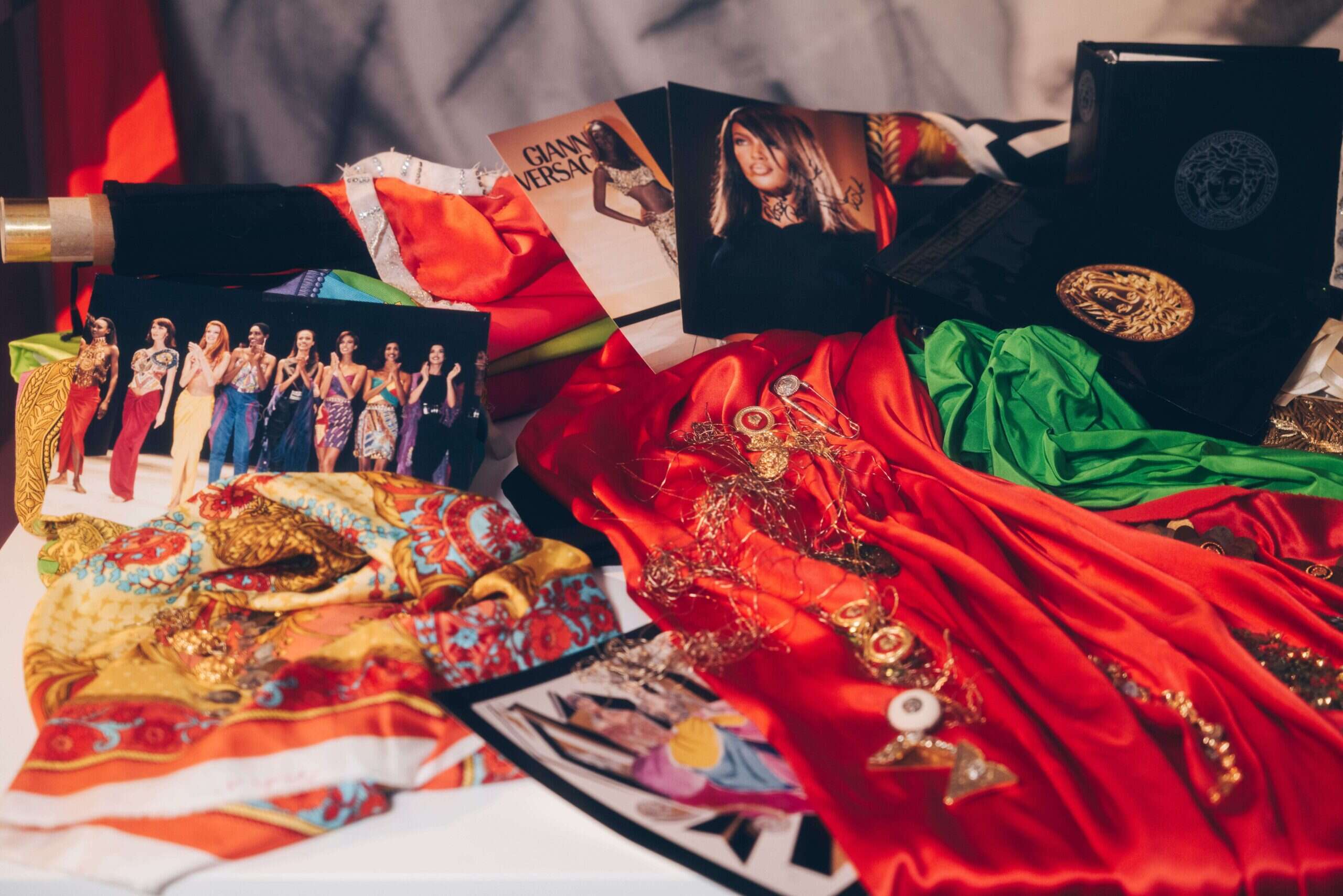
©Emma Birski «It was hard to convince the seller that we absolutely needed this Grace Jones dress,» von der Ahé admits. «People have a very emotional relationship with these pieces. It’s not about fashion or money; it’s often about emotions and memories connected to them. But when we show these pieces in an exhibition like this, we bring them back into the light,» he says. «If a piece is hanging in a wardrobe at home, it’s hidden from the public. Here it comes back into public view.»
That collaborative spirit has become one of the defining characteristics of the retrospective. Collectors are invited to openings and given the opportunity to see their pieces in a new context around preserving the designer’s legacy. «It’s a kind of very Italian la famiglia,» says von der Ahé. «Everyone connected through Gianni Versace.»
Preserving that legacy has required drawing a firm line around the period the exhibition examines. Though Donatella Versace would go on to guide the company for nearly three decades following her brother’s murder in 1997 – before standing down last year and passing the role to former Alaïa alumnus Pieter Mulier – this retrospective remains focused exclusively on her brother.
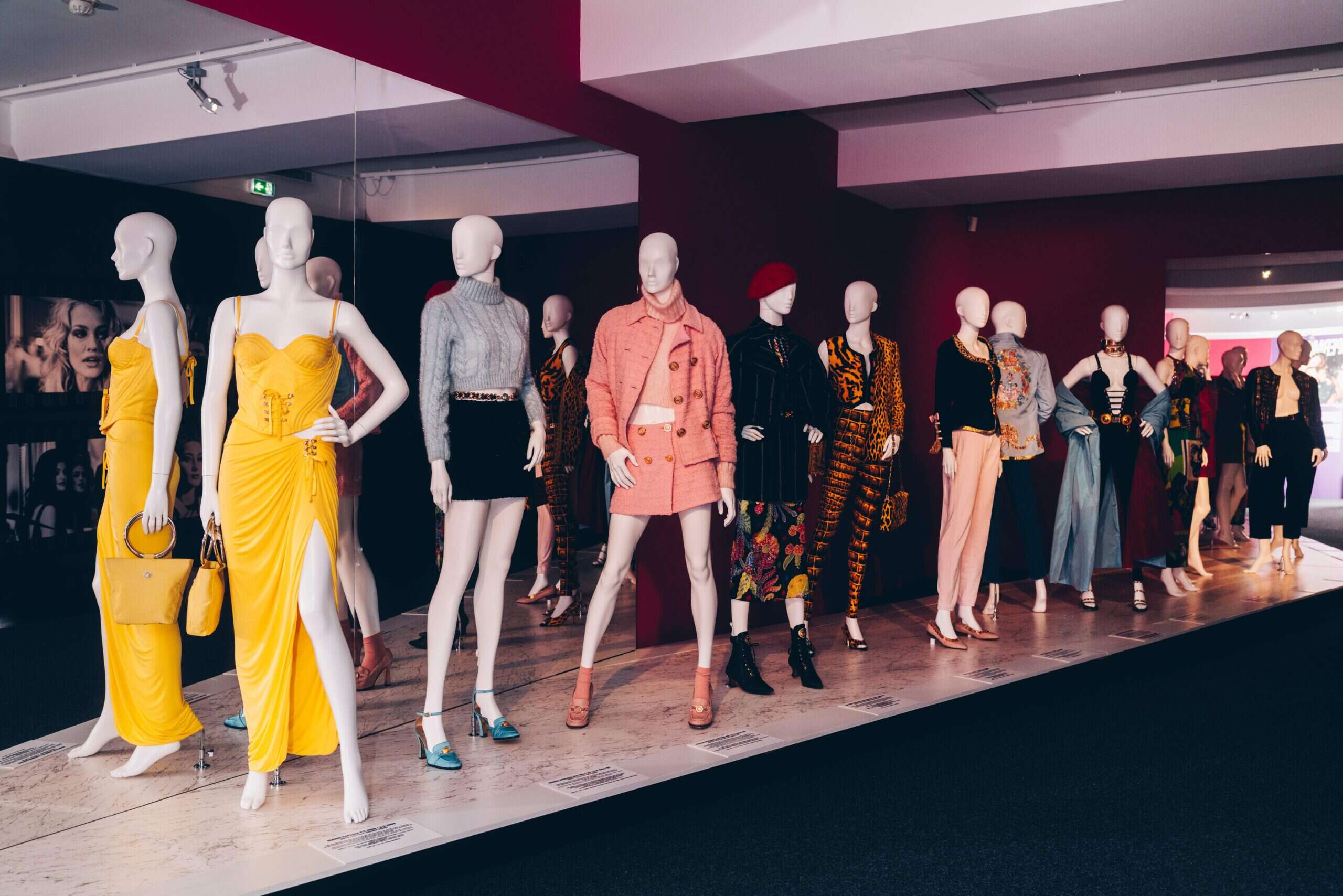
©Emma Birski «It is very sensitive,» says von der Ahé. «We are talking about the period up until July 15, 1997. What he created up until 1997 and the collections for 1997-98 are the final point of our story. We don’t work with anything after that.»
It’s for that reason, according to von der Ahé, that the Gianni Versace Retrospective is not officially affiliated with the Versace company or family – although the curator stresses that both remain aware of the project and supportive of its aims. The distinction, he says, allows the exhibition to focus on the man rather than the mythology that has accumulated around the brand in the decades since his death.
«We are showing something from a time when the brand itself was not the most important thing,» says von der Ahé. «Quality, personality, and family were more important.»
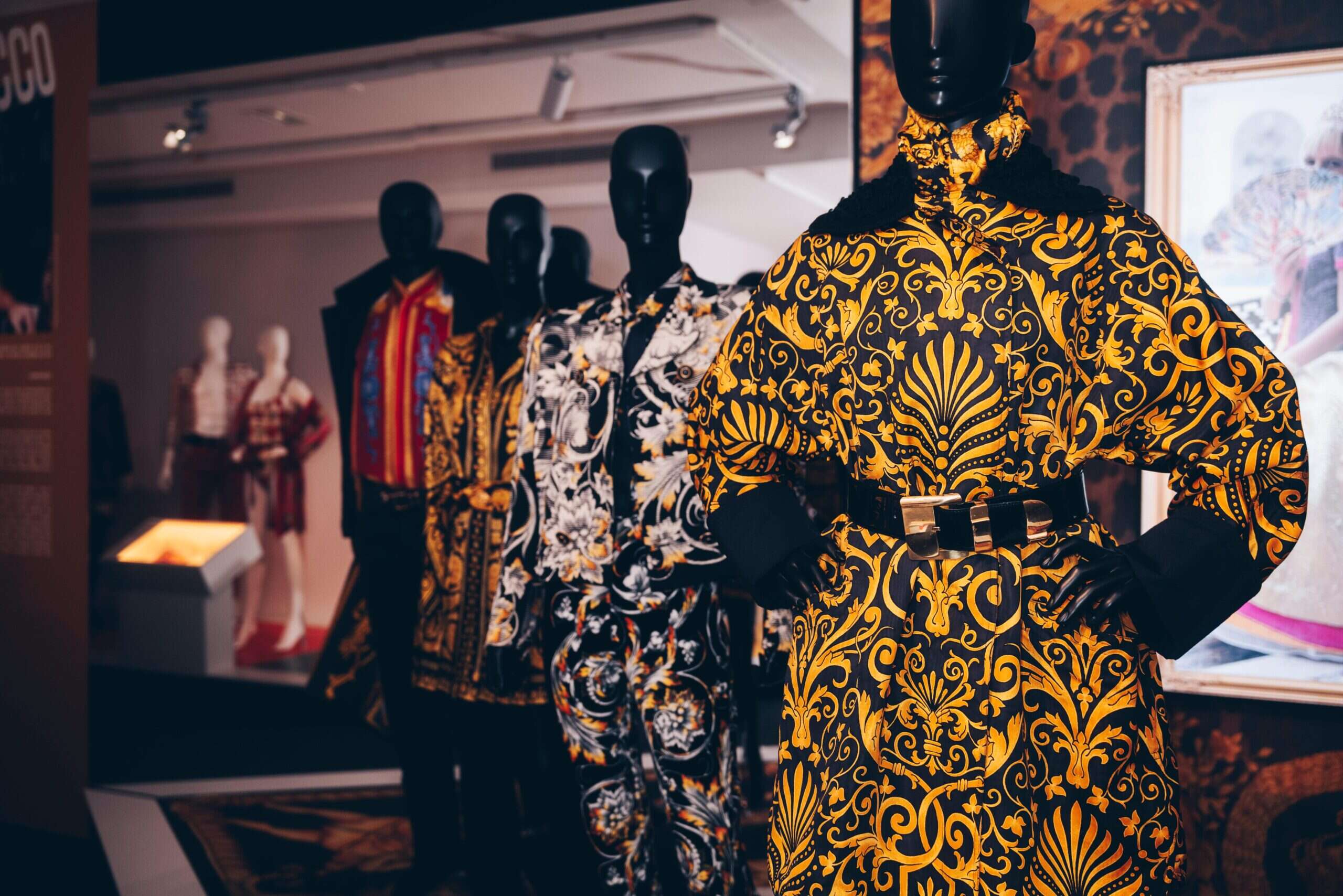
©Emma Birski In many ways, that focus feels particularly timely: at a moment when fashion houses are undergoing rapid leadership changes and the industry is increasingly questioning what luxury means in the age of algorithms, influencers, and relentless marketing cycles.
While von der Ahé stops just short of positioning the exhibition as a critique of contemporary fashion, the comparison is difficult to ignore. «The fashion industry is actively searching for a new starting point,» he says. «We hope people, even those from the fashion industry, coming to this exhibition feel [that] this is a certain substance needed to be relevant.
-

The 1960s Cadillac From Justin Bieber’s ‘Peaches’ Music Video Is up for Auction
Bids are currently sitting at a rather modest $45,000. Bids are currently sitting at a rather modest $45,000.