
We rode in the 2027 version of the automaker’s flagship as designer Maximilian Missoni shared insights on the latest iteration. We rode in the 2027 version of the automaker’s flagship as designer Maximilian Missoni shared insights on the latest iteration.
Рубрика: General
-

The Oddest Whisky Trend Right Now Is Also the Most Exciting
Distillers are turning to unusual fuels, says drinks expert Alice Lascelles.

I’ve tasted some pretty unusual whiskies in my life but none quite as unique as Floki Sheep Dung-Smoked Reserve Icelandic Single Malt, which is distilled from Icelandic barley kilned with droppings dug from the shelters where sheep spend the winter.
This dung was traditionally used as fuel for cooking and heating, so using it to make whisky wasn’t such a stretch, says Maria Sigurbjörnsdóttir, the manager of Eimverk, the family-owned distillery which produces the malt. “Our new make [unaged whisky] has a lot of earthy flavors, like hay and grass so the dung smoke kind of adds to that.” It’s also a more sustainable fuel source, she adds, than plundering slow-growing peat bogs.
I have to say I rather like Floki – it has a sweet farmyardyness and lanolin/sheeps wool warmth to it that reminds me of the grassy fells in the north of England where I like to hike. It’s a wonderful story. But, still, I thought it would be a hard sell.

©Archie Rose Seems not, as I was amazed to learn this week, from the Whisky Exchange’s buying director Dawn Davies, that it was one of the best-sellers at London’s last Whisky Show. Right up there with rare bottlings from Glenfiddich, Octomore, and Chichibu.
I shouldn’t have been surprised – smoke is a note that exerts a powerful hold over the human brain. It speaks of comfort, connection, safety, something ancient (and, of course, it sometimes spells danger). And Eimverk is just one of a growing number of distilleries that are smoking their whiskies with things other than Scottish peat; that are looking to local fuels to imbue the spirits they make with a stronger sense of place.
The Danish grain-to-glass distillery Thy (pronounced ‘Too’) uses local beechwood to smoke its single malt Thy Bøg. The result is a rich sherry-cask whisky with nutty-sweet notes of smoky bacon, autumn apples and maple syrup.

©Thy “As a Dane, beechwood smoke feels deeply familiar,” says co-owner / master distiller Jakob Stjernholm. “The moment you put your nose to a glass of our Bøg whisky, you get this warm, gentle, and comforting smokiness — like sitting in front of a fireplace, or catching the scent of a distant campfire somewhere in the woods.”
Thy grows all its own grain and is 100% organic – so sustainability is a big motive for using beechwood rather than peat. “From the very beginning of our distillery in 2010, , to make whisky that came directly from our farm, our soil, and our local turf,” says Stjernholm. “As farmers, we wanted to farm whisky. So when thinking about smoke for our malts, we wanted to explore what was truly local.”

©Thy Nordic distilleries have also produced whiskies smoked with heather (Stauning, Denmark), juniper (Mackmyra, Sweden) and nettles (Fary Lochan, Finland).
Australia’s Archie Rose distillery is perhaps the most experimental of all, using a whole host of different smokes in its malting and cask-seasoning processes.
“It always sat uneasy with me that we were dragging Scottish peated malt half way round the world,” says master distiller Dave Withers. ‘We wanted to represent what it is to be Australian – we’ve got a long and illustrious history of distilling in Oz, it was legal in Oz before it was in the UK how would they have kilned their malt in the 1800s?”

©Archie Rose Inspired by the BBQ scene, they started kilning barley with native hard woods including Red Gum, or Aussie eucalyptus, (“smoked meat/bacon, herbaceous, quite floral”), and ‘stringy bark’ aka mountain ash (“full, less floral, almost sticky”). They’ve also released a bold-tasting series of ‘Smoked Cask’ limited editions, aged in casks that have been smoked with local botanicals including cinnamon, juniper, which has a resinous, incense-y character, lavender and wattleseed (“bacon, macadamia, fudge”).
“Great whisky doesn’t start life in the distillery, it starts in the paddock and having that connection to the land is so important,” says Withers.

©Whiskey del Bac Whisky del Bac is a single malt from Arizona that’s smoked with mesquite wood from the surrounding desert. Its creator, Stephen Paul, was working as a furniture maker when the idea came to him one evening, as he was firing up a barbecue with off-cuts from his business. “Mesquite grows very twisted, but that gives you a beautiful wood, with lots of flaws and knots and cracks that you can employ to your advantage to come up with a really beautiful grain,” he says. “But its smoke is also well-known for imparting a real flavor to what you cook. On a winter’s evening in Tucson the smell of mesquite woodfires fills the air. It’s really evocative of this place.”
The resulting whisky tastes of toasted marshmallows, dry-roasted nuts and ashy, glowing embers. “It’s a whiskey,” says Paul, “that tastes of where I live.”
-

This ‘Traditional’ Ibiza Finca Is Actually a New Build – But You’ll Never Guess It
Emile and Eva Kuenen reimagine the finca as a warm, design-led family home infused with old-school Balearic charm.

-

How to Navigate a Yacht Show Like a Pro
Leading yacht brokers and advisors explain how to best plan and make the most of major yacht shows.

“Yacht shows play a central role across the entire yachting ecosystem,” says Anders Kurtén, CEO of Fraser Yachts. “They’re not just for buyers, but for everyone involved in bringing a yacht or charter vacation to life. For clients, they offer the opportunity to step on board multiple yachts, compare options, and make informed decisions with direct access to expert guidance.”
That access extends beyond the yachts themselves. In a business driven by relationships, meeting brokers and crew in person can shape decisions as much as the vessels on display. But be prepared when going in, and come armed with a plan.
“Go in with a clear objective – whether that’s brokerage, charter, new build, or networking,” says Tim Davis, chief marketing officer at Burgess. “The bigger the show, the more quickly you lose time without a plan. That matters especially at multi-site events like Fort Lauderdale International Boat Show and Miami.”
See more: Superyacht Launches to Have on Your Radar for 2026

©Monaco Yacht Show “Most yacht shows open around 10am, so that is usually when first appointments begin,” says Gayle Patterson, head of yachting at Pelorus. “We use the morning for viewings with clients, when there is time to step onboard several yachts properly, compare options, and understand how someone actually wants to travel.”
Time management on the ground is just as important. “It can take an hour to walk through a 100-ft yacht,” notes Chuck Cashman, SVP of global yacht sales at MarineMax.
Booking meetings in advance makes a noticeable difference. “The highest-value conversations at Monaco or Palm Beach are usually scheduled, not accidental,” Davis adds. Working with a broker beforehand can also streamline the experience. “A good broker will curate a shortlist, arrange viewings, and ensure smooth access throughout the show,” says Kurtén.

©Monaco Yacht Show As the day progresses, conversations tend to shift from first impressions to practicalities. “Lunch is an opportunity to talk through which yachts are receiving strong interest, where availability is low, and where we see the best fit,” says Patterson. She also encourages clients to dig deeper: “Where has the yacht chartered recently? How does it work for a family of eight? Does the crew know destinations like Costa Rica, Indonesia, or Norway? These are the details that shape the experience.”
Follow-up is vital, too. “The real value often comes from the notes and next steps sent within 24 hours,” says Davis.
By evening, attention moves from the docks to dinners, yacht club events, and experiencing the destination. Concierge services at all yacht show locations can help pre-arrange access to leading restaurants, bars, and clubs in each destination, as tables at sought-after restaurants often need booking weeks in advance.
See more: Top Yachts: The Most Adventurous Charters in the World
-
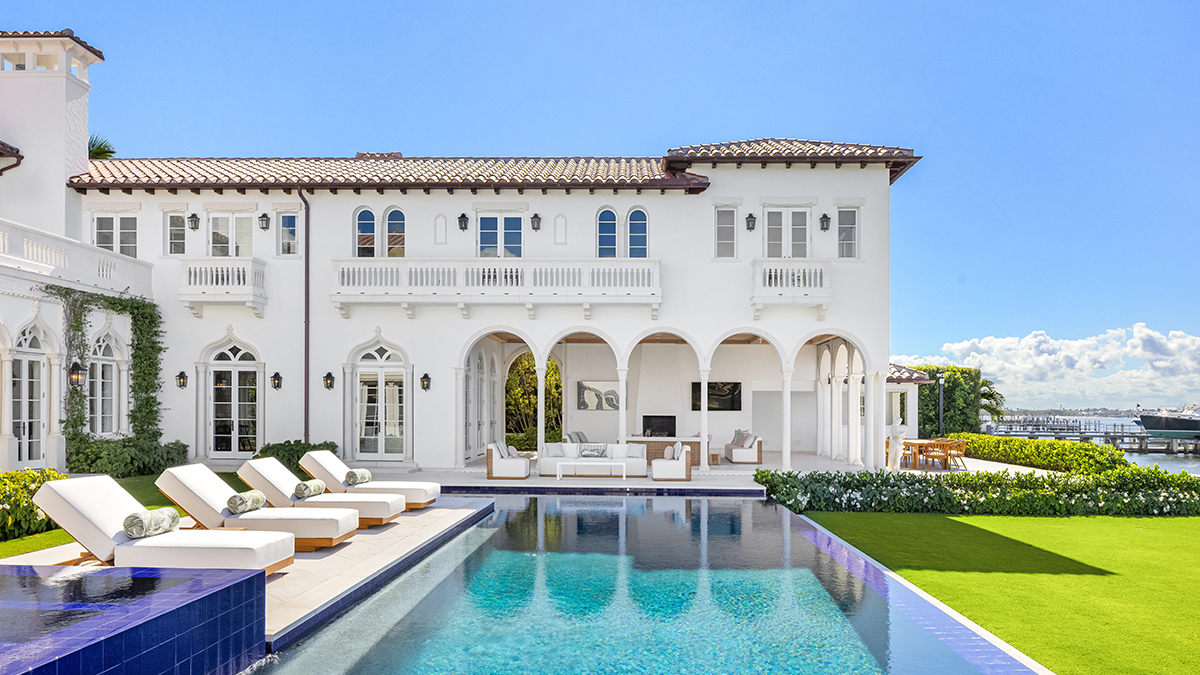
One of Palm Beach’s Most Expensive Estates Just Got an $18 Million Price Cut
Now listed at $157 million, Casa del Ensueños first came to market late last year asking $175 million. Now listed at $157 million, Casa del Ensueños first came to market late last year asking $175 million.
-
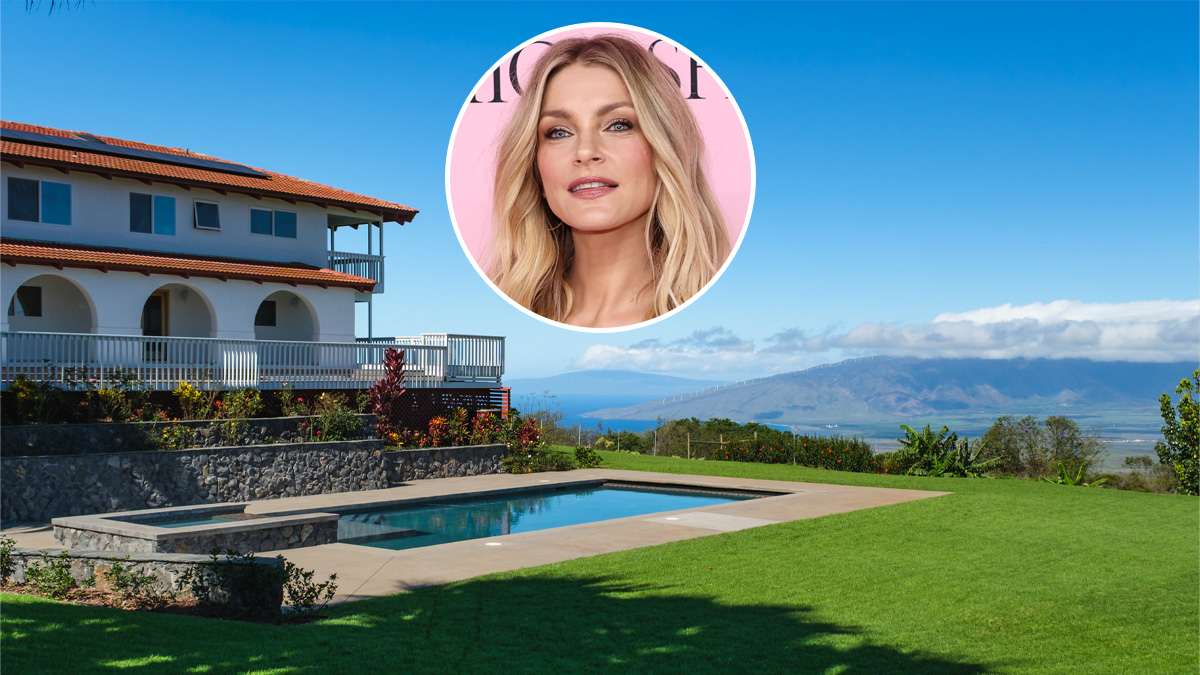
Supermodel Jessica Stam Is Selling Her Sprawling Hawaii Estate for $5 Million
Resting at 2,200 feet on Haleakalā’s western slope, the Maui property has bicoastal views stretching from Moloka’i to Lana’i. Resting at 2,200 feet on Haleakalā’s western slope, the Maui property has bicoastal views stretching from Moloka’i to Lana’i.
-

This New Ultra-Light eVTOL Aircraft Is the Same Price as a Ferrari SF90 Stradale
Volocopter’s new two-seat VoloXPro has a base price of $574,000, Volocopter’s new two-seat VoloXPro has a base price of $574,000,
-
The Tack Room Is the Most Unexpected Design Trend Right Now
Tack rooms aren’t just for storage anymore – designers and riders are turning them into considered, personal spaces.

If the answer once lay firmly in the negative – tucked away behind stable doors, dimly lit, and purely functional – today’s most compelling examples suggest a decisive pivot. Across polo estates, working ranches and European riding schools, the tack room is being given renewed attention. What was once a utilitarian space for saddles and bridles now reads closer to a private dressing room on Savile Row, or even a collector’s cabinet – deeply personal, materially rich and, increasingly, designed to be lingered in.
Leather is polished rather than hidden, brass hardware gleams under considered lighting, saddle racks are arranged with expert precision. And like any well-curated interior, these rooms tell stories – of horses, certainly, but also of their owners.
See also: Equestrian Escapes That Let You Travel With Your Four-Legged Friend

©Blackburn Architects For designer Lindsay Gerber, that sense of narrative sits at the heart of her own compact tack room in San Francisco, which moves beyond back-of-house function to become a highly considered space. “This tiny tack room design evolved in such an organic way and showcases a handful of treasures I’ve collected over the years,” she explains. A deep, mossy green plaster from the Color Atelier collection by Douglas Friedman – in a shade aptly named Oil – wraps the space, echoing the surrounding oak trees, while bridles hang beneath hand-painted BDDW cowboy tiles depicting members of Gerber’s family.
Hardware and hooks by Nickey Kehoe are illuminated by a vintage pendant sourced from Obsolete which casts a warm glow overhead. A saddle from Gerber’s junior hunter days is displayed in front of an 18th-century blanket chest sourced via 1stDibs, and even the flooring tells a story, combining François & Co limestone in a herringbone pattern with leftover timber planks. “Putting a little effort into the most unexpected places enhances the daily experience,” she says. “I feel transported and so happy every time I unlatch the door and walk in.”

©Blackburn Architects That idea – of elevating the everyday rituals of equestrian life – is echoed at a larger structural scale by Blackburn Architects, whose work charts the evolution of the tack room from practical necessity to highly personalized sanctuary. “Decades ago, barns were more utilitarian,” says Nancy Easter White. “Functionality was prioritized over fancy lighting and luxury materials.” Today, however, the brief has broadened. While the horse’s wellbeing remains paramount – with careful attention paid to airflow, ventilation and site orientation – the tack room has become a canvas for expression.
“There is no ‘perfect’ tack room,” White suggests. “These spaces are reflections of an owner’s personality.” Some read as pristine, show-ready galleries; others lean into a more nostalgic layering of well-worn halters, boots, and blankets. What unites them is a balance between aesthetic and efficiency – climate-controlled storage, bespoke joinery, even rotating tack walls and integrated lounges. Increasingly, these rooms are designed not just for storage, but for pause – places where riders might sit, regroup and, occasionally, entertain.
This intersection of heritage and hospitality is beautifully expressed in an equestrian project in California by London-born, Los Angeles-based designer, Martyn Lawrence Bullard. The working barn was transformed into a richly layered entertaining space, drawing on the tradition of English barn conversions. “The client wanted to use the front part of the barn for entertaining,” Bullard explains. “So, I created an eclectic look inspired by the barns I knew from my childhood.” Antique horse memorabilia sourced from flea markets and vintage fairs sits alongside comfortable seating, allowing the stable-adjoined room to function as both tack room and salon. “You could dine and entertain, or sit and read a book in these beautiful surroundings,” he says, “with a horse peeking in to keep you company.”

©Reschio Hotel Similarly, the emphasis on atmosphere and experience is particularly evident at Reschio Hotel in Umbria, where Count Benedikt Bolza – a trained architect who leads the estate’s design work from the on-site B.B. for Reschio studio – has shaped the spectacular tack room as a social heart, connected to the Teatro Equestre where weekly dressage performances unfold. Here, beneath salvaged wood paneling and shafts of natural light, riders and guests gather around an enormous table – once a kitchen workhorse – for everything from post-ride conversation to calligraphy classes. An ancient stone sink anchors the indoor-outdoor room, while a fireplace draws guests in during winter months. Every detail – from the reused materials to the horse-named pegs – reinforces a philosophy of stewardship and respect, not just for the horses but for the building itself.

©St Giles House In some cases, this shift extends beyond the tack room altogether. At St Giles House in Dorset, the restored 17th-century Riding House reframes the stable as a place to gather, celebrate, and stay the night. On the estate of the 12th Earl of Shaftesbury, the building has been reimagined into a series of eight bedrooms, each retaining elements of its heritage structure – stalls intact, timber worn smooth with time – while introducing layers of contemporary comfort. Original stable gates now divide sleeping and bathing spaces, with exposed brick floors, freestanding copper tubs, and four-poster beds set within the former stalls.
The tack room is no longer simply where the ride begins and ends, it has become a defining expression of equestrian living. Even for those without horses, the design lessons are clear: invest in materials that age gracefully, appreciate the beauty of utility, and allow personal history to guide the aesthetic.
-

How Tequila Took Over the UK Bar Cart
Spicy margaritas, Palomas, celebrity-backed bottles and premium pours – tequila has overtaken gin to emerge as this summer’s defining spirit.

Every year, the second the mercury rises, the race to crown the drink of the summer begins. Last year belonged to the natural wine craze; the year before, the Hugo Spritz; and before that, the meme-fueled Negroni Sbagliato (that is, according to the Elite Traveler team). This summer, however, the UK appears to have made up its mind before any of us could even start pouring.
Paloma, picante or a simple tequila-lime soda: however you take it, the UK has declared agave the spirit of the season. According to consumer data reported in The Guardian, tequila has eclipsed gin as the UK’s bestselling spirit.
And it’s not just Brits developing a taste for tequila. Across North America, tequila and mezcal overtook whiskey as the second spirit of choice in 2023, trailing behind vodka, while also ranking among the year’s fastest-growing categories, according to IWSR Drinks Market Analysis obtained by The Spirits Business.
So what, exactly, has pushed tequila to top billing on the bar shelf? “Cocktails, simply,” says Alex Martin, editor-in-chief of The World of Fine Spirits. “That’s all down to the margarita.” A drink once relegated to sticky happy hours and sore heads has had an indisputable reputation overhaul.
Martin tells me this has been aided by bartenders who appreciate its simplicity and drinkers who understand exactly what they’re ordering. “And we shouldn’t forget the Paloma,” Martin adds, “which was nowhere to be seen a few years ago, but is now widely recognized and available.”

From the Paloma to picante or served straight on the rocks, the versatlity is one of the key drivers in tequila’s popularity Giannis Apostolopoulos, head of bars at Amazonico London, proves his point. “While the rise of the margarita, particularly the spicy margarita, has helped reintroduce the spirit to a new audience, the more telling shift is towards simplicity,” he says. That’s reflected on menus too, and not just at Amazonico but across London, where tequila lengthened with soda has quietly edged out the once-untouchable gin and tonic.
Martin argues gin may have overcomplicated itself. “The beauty of the G&T was its simplicity – two ingredients and delicious,” he says. “Now the consumer has to decide which gin and which tonic they want before they can get a drink.” When pushing through a crowded bar, that can make ordering a drink feel like conducting a research project. By contrast, everyone understands a margarita. No tasting notes required.
Then there is the celebrity factor, impossible to ignore and, frankly, difficult to sneer at when it works this well. “It’s easy to turn your nose up at celebrity brands,” Martin says, “but they are hugely influential.” 818 Tequila, backed by Kendall Jenner, and Casamigos, founded by George Clooney, have helped entice curious drinkers to try the spirit. “They draw new people into the category, and a good portion of them stick around and start exploring.”
Once associated with ill-advised shots, salt packets, and lime wedges (not forgetting the subsequent blurry evenings that follow), tequila has been recast as something to sip, savor, and discuss. Premium expressions, additive-free producers, and heritage distilleries have all helped move the conversation, but, of course, every boom invites the inevitable question: can it last?
Martin thinks it can, but only if brands resist getting carried away. “If tequila brands try to take advantage of their popularity through premiumization and aggressive expansion, consumers will switch off,” he warns. Quality and value, not hype, will determine whether agave keeps its crown.
-

In Koh Samui, This Oceanfront Residence is Designed to Make You Leave Your Schedule Behind
The private residence at Anantara Lawana Koh Samui Resort rethinks the resort stay as something more personal, and far less prescriptive.

Touch down on Koh Samui and, within minutes the noise of the journey starts to fall away. The drive from the airport to the northern curve of Chaweng Beach is short (seven minutes if we’re being precise), but on arrival at Anantara Lawana Koh Samui Resort, the island begins to feel surprisingly easy to slip into.
The Two-Bedroom Oceanfront Residence sits slightly apart from that arrival rhythm. Not hidden, exactly, just quieter, and a little more self-contained.

The Two-Bedroom Oceanfront Residence is centred around the private terrace and pool Inside, that sense of ease continues. The design follows the resort’s Sino-Thai influence, but in a way that feels toned down and more liveable, with earth-toned interiors, soft textures, and the occasional tortoise motif woven in.
It’s here that the idea of flexibility starts to make sense. There’s no fixed programme to follow and no pressure to ‘do’ your vacation in a particular way. Instead, the residence takes its cue from whoever’s staying in it, shaped in part by the dedicated villa host who quietly adapts things in the background.
The role of the villa host isn’t about scheduling so much as reading the stay as it unfolds, adjusting to a guest’s preferences without making a show of it. Plans shift, or disappear altogether, and that’s the point.

The interior design similarly follows the resort’s Sino-Thai influences A guest might arrive with every intention of structuring their days and abandon it within 24 hours. A yoga session can happen on the terrace at sunrise. Muay Thai or personal training might come up casually over breakfast and be arranged that same afternoon. Or the day is left completely open, save for meals and the vague idea of leaving the villa, which may or may not happen.
The layout of the villa supports that kind of looseness. Two en-suite bedrooms are set apart enough to give everyone their own space, while the central living area opens out onto an oceanfront terrace and its private infinity pool.

Expect earth-toned interiors, soft textures, and the occasional tortoise motif woven in throughout the residence Dining follows a similar rhythm. While the wider resort offers plenty in the form of nine dining venues – from the beach-front Mediterranean restaurant Sandal to fine dining above the jungle canopy at Tree Tops – it’s often the in-residence meals that stick. Not because they’re elaborate, but because they don’t need to be: a private BBQ one night, something simple the next. There’s no real sense of occasion unless you decide there is one.
Adaptability is the whole point. Not a curated schedule, but the freedom to change one – or ignore it entirely. At Anantara Lawana Koh Samui Resort, where service is already instinctive, the residence just pushes that idea a little further, into something that feels more personal, without making a big thing of it.
anantara.com/lawana-koh-samui/two-bedroom-oceanfront-residence