From electric hypercars to next-generation SUVs and autonomous concepts, these are the future cars set to shape the road ahead in 2026 and beyond.

As we look toward 2026 and beyond, manufacturers are reinventing everything from compact city EVs and high-performance electric sports cars to luxury SUVs with advanced driver interfaces and even autonomous vehicles that blur the line between car and tech device.
Just as we keep a watchful eye on the most anticipated hotel openings each year, discerning drivers and enthusiasts now watch the calendar for the next wave of future cars – vehicles that promise to redefine performance, design, and how we think about personal mobility. Some will be radical; some evolutionary. All aim to address the industry’s most pressing challenges: cleaner energy, smarter connectivity, and a more intuitive driving experience.
See also: Behind the Wheel of 007: Chris Corbould on James Bond’s Auto Legacy
Future cars to watch
As the year progresses, we’ll be watching closely for the most compelling future car launches on the horizon – from bold electric debuts and hybrid flagships to next-generation autonomous concepts.
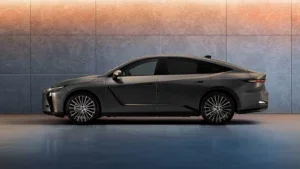
Lexus ES EV (expected spring 2026)

Following its European premiere in May 2025, sales for Lexus’ electric version of its long‑running ES sedan as part of its wider electrification strategy will start this spring. Expected to sit alongside hybrid variants, the ES EV will focus on comfort, refinement, and reliability – key pillars of the Lexus brand – while delivering competitive electric range.
The model underscores how future cars will increasingly cater to drivers seeking understated luxury rather than overt performance.
Ferrari Elettrica (expected early 2026)
Ferrari’s first fully electric production car represents one of the most closely watched launches of the decade. Built on a bespoke EV platform and produced at the marque’s new e‑building facility in Maranello, the Ferrari Elettrica is expected to deliver performance figures that rival – and potentially surpass – its combustion-engine predecessors, while introducing an entirely new driving character for the brand.
The model signals Ferrari’s long-term commitment to electrification without abandoning its focus on performance, craftsmanship, and exclusivity, a defining moment in the evolution of high-performance future cars.
Mercedes‑Benz GLC EV and C‑Class EV (expected mid 2026)

Mercedes‑Benz is rethinking its electric strategy by integrating EVs directly into its core model lines. The electric GLC and C‑Class are expected to arrive in 2026, combining familiar luxury design cues with next-generation battery technology, fast charging, and advanced driver assistance systems.
Rather than positioning these vehicles as alternatives, Mercedes is embedding electrification into its most recognizable nameplates, a move that reflects how future cars will increasingly blur the line between electric and traditional models.
Hyundai Ioniq 3 (expected mid 2026)
Positioned as a compact, urban-focused EV, the Hyundai Ioniq 3 is expected to expand the brand’s electric portfolio with a smaller, more accessible model. Built on Hyundai’s E‑GMP platform, it is likely to offer competitive range, rapid charging, and a design tailored to city driving.
As manufacturers push to democratise electrification, models like the Ioniq 3 highlight how future cars will need to balance affordability, technology, and everyday usability.
Alpine A390 (expected mid 2026)

The Alpine A390 marks the French marque’s transition into electric performance beyond its lightweight sports car roots. Designed as a compact electric crossover with performance credentials, the A390 is expected to blend dynamic handling with practicality, offering an alternative to larger performance EVs.
It reflects a broader shift in how performance brands are interpreting electrification — prioritising agility and driver engagement alongside zero‑emissions power.
Aston Martin Electric SUV
Aston Martin is developing its first dedicated electric vehicle, expected to take the form of a large, DBX-sized SUV. While details remain closely guarded, the model is currently slated to arrive in 2026 or later and will draw on high-performance battery and motor technology from American EV specialist Lucid.
CEO Adrian Hallmark has suggested the brand will lean heavily on advanced tech to set its electric models apart, including the possibility of systems that allow the car to physically resonate with the driver, recreating some of the sensory feedback associated with a traditional combustion engine.
Ferrari 849 Testarossa (expected spring 2026)

The Testarossa name returns as Ferrari’s new flagship supercar. Unveiled in Milan in September 2025 as the successor to the SF90, the 849 Testarossa is a plug-in hybrid berlinetta pairing a mid-rear twin-turbo V8 with three electric motors.
Total output stands at 1,035bhp – 49bhp more than its predecessor – allowing the car to accelerate from 0–62 mph in just 2.35 seconds. First customer deliveries are expected in spring 2026, with US deliveries following in the summer.
See more: In the Driving Seat of Ferrari’s 296 Speciale
Bentley Electric SUV (expected 2027)
Bentley’s first fully electric SUV will mark a significant milestone for the British luxury marque. Expected to retain Bentley’s hallmark craftsmanship while incorporating cutting-edge EV technology, the model will sit at the intersection of sustainability and ultra‑luxury.
As high-end brands adapt to a zero‑emissions future, this launch demonstrates how future cars can preserve heritage while embracing technological change.
Porsche Mission X (expected 2027)

The Porsche Mission X is a hypercar concept previewing a potential electric successor to the Carrera GT and 918 Spyder, with a projected output of around 1,500bhp.
Designed to resemble an aircraft cockpit, it features a lightweight glass dome with a carbon-fiber exoskeleton and a Daytona-style windscreen.
Described by Porsche CEO Oliver Blume as a “technology beacon,” the Mission X is intended to target the Nürburgring lap record for a road-legal car, with a 1:1 power-to-weight ratio, a high-performance electric drivetrain, and extreme downforce figures. First revealed in June 2023, a production version is not expected until 2027.
Autonomous EV Robotaxis
Flying cars might still be the stuff of science fiction, but cars without drivers are already pulling up to the curb. Hyundai-backed Motional plans to deploy fully driverless EV robotaxis in Las Vegas by 2026, giving passengers a glimpse of a future where mobility is a service rather than a possession.
Waymo, a pioneer in autonomous ride-hailing, continues to expand in select U.S. cities, showing that the self-driving revolution is accelerating faster than most car enthusiasts expected. While still limited in scope, these projects hint at how future cars may increasingly operate without a human behind the wheel, reshaping both city streets and the way we think about owning a car.
Добавить комментарий