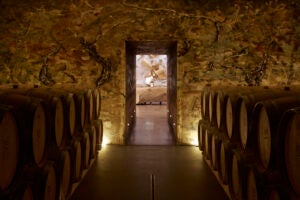
Elite Traveler breaks down what makes it so special.

It’s probably best to describe Chile’s Vik winery and hotel by numbers: 11,000 acres of vineyards; 360-degree views across those vines and the Andes mountain range beyond; 22 themed rooms; seven private glass-walled bungalows; roughly 13,000 barriques of wine. And it has the title of number one vineyard, according to World’s 50 Best Vineyards who gave it the top spot in 2025 after steadily climbing the ranks in previous years.
In Chile’s Millahue Valley — or Lugar de Oro, meaning Golden Place, as the Mapuche people call it — Vik stretches across 12 distinct valleys, each with its own microclimate and sun exposure. Pacific breezes meet winds from the Andes here, creating a natural wind tunnel that gives the grapes remarkable complexity. Everything is hand-harvested, fermented with native yeasts, and aged in a mix of new and seasoned French oak.
See also: Interesting Wines To Order At Dinner, According To Sommeliers

Unusual methods
The flagship wine, simply named Vik 2021, is the estate’s prized red blend that features Cabernet Sauvignon, Carmenere, Syrah, Merlot, and Cabernet. It was awarded 100 points by James Suckling (he described it as ‘perfect’) and 99 points by the influential Descorchados guide.
Stonevik is one of the newer wines in the Vik portfolio and is defined by its unconventional production. It is described as a “natural wine created in nature by nature.” The grapes are fermented in oak barrels made from fallen trees found on the estate. After fermentation, the wine is transferred to handmade clay amphorae produced from the estate’s own soil rather than being aged in a traditional cellar. These amphorae are buried in a forested area on the property, where the wine matures underground under naturally stable conditions and seasonal temperature changes. It remains buried until bottling, which typically takes place around the summer solstice. The objective of this process is to reduce technological intervention and emphasize terroir expression.
See also: Europe’s Most Famous Wine Dynasties Just Released an Ultra-Limited Case

Form and function
Beyond the wines, the winery’s architecture is a case study in form and function. In 2007, the estate’s Norwegian husband-and-wife owners held an international competition for architects around the world to submit design ideas for the winery. The brief was to create a structure that fit the landscape, used sustainable design, and supported viticulture.

Chilean architect Smiljan Radic won the competition, and spent the next several years developing and refining the concept that would ultimately become the completed winery. It opened in 2014, and the result is quietly arresting: a seemingly ‘floating’ roof of reflective bronzed titanium hovers above walls of glass, and the building sits mostly underground to reduce impact on the land.
The entry, pictured above, is a criss-cross walkway with a gentle slope of shallow running water designed to act as a mirror, poetically interrupted by some 90 granite boulders. Created in collaboration with Chilean artist Marcela Correa, the installation serves a practical purpose as well as an aesthetic one: it doubles as a natural cooling system for the fermentation room housed below.
An upcoming expansion, set to debut later this year, will introduce Puro Vik Wellness, two new glass wine-tasting rooms, five new suites, and eight additional bungalows.
Добавить комментарий