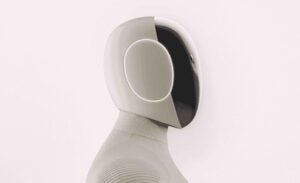
After successful initial launches, 2026 could be the year domestic bots become a mainstay in our homes.

We summon cars with a swipe, outsource our memories to the cloud and converse casually with devices that talk back. Now, for those with both the means and the curiosity, the next frontier is domestic: a robot in the home that claims to clean, organize, and assist with daily life.
A domestic bot is, at its core, a humanoid robot designed to operate inside private homes. Unlike robotic vacuum cleaners or smart appliances, these machines are built to move through spaces like people do – walking upright, using arms and hands, and interacting with everyday objects.

The most high-profile example currently on the market comes from 1X Technologies, an AI and robotics company based in California whose robot, known as NEO, stands at roughly human height and is equipped with cameras, microphones, sensors, and artificial intelligence systems. In theory, it can perform basic household tasks: carrying groceries, loading dishwashers, tidying rooms, retrieving items, and responding to spoken commands.
See also: Do You Need an AI Wine Cellar?
Positioned as round-the-clock domestic aides, these bots gesture toward a future in which certain household roles – from cleaners to live-in housekeepers – could be supplemented, or in some cases partially replaced, by automation. Whether that prospect feels efficient or unsettling may depend on how comfortable you are with delegating tasks to a machine.
Crucially, these robots are designed to learn over time. They map your home, adapt to your routines and improve through repeated use. Owners aren’t just purchasing a machine, but participating in a training process, helping refine how domestic AI behaves in real-world environments. It’s less like buying a finished appliance, and more like enrolling in a live beta test for the future of home life.

At present, buying a domestic robot is not instantaneous. Units are sold in limited numbers, primarily in the United States, with prices hovering around $20,000 to $35,000. Interested buyers typically register interest, undergo screening, and agree to extensive terms around data use, monitoring, and feedback. This is not a plug-and-play product.
See also: Looking to Upgrade your Home Cinema Sound? These Two Brands are Setting the Bar
Buyers must also accept that their robot will collect large amounts of visual and spatial data inside their home. Cameras and sensors are essential for navigation and learning, which means granting continuous access to intimate domestic spaces. While companies promise strict privacy protections, ownership still requires a high degree of trust.
Despite polished marketing, it’s not clear to know how well domestic robots will fare in real life situations. If initial reviews are anything to go by, today’s domestic robots still remain imperfect.

Many tasks showcased in promotional videos still require human supervision or remote assistance. In some cases, functions are partially operated by technicians guiding the robot from afar, especially in complex or unfamiliar environments. True independence – where a robot can reliably manage an entire household without intervention – remains a work in progress.
They also move slowly, and deliberately so. Safety is prioritized over speed, which means tasks like folding laundry, stacking dishes or carrying objects often take far longer than a human would need. But over the next decade, it can be assumed that autonomy will improve. Future models are likely to be quieter, faster, smaller, and far more intuitive. Eventually, they may even become as unremarkable as a dishwasher or security system.
Добавить комментарий