Heritage meets modernity on The Dalmore’s new private tours.

Standing proud on the shores of the Cromarty Firth – where it isn’t uncommon to spot seals or dolphins – The Dalmore comes with 200 years of rich, storied history. Overlooking the Black Isle Peninsula – where The Dalmore sources most of its barley – and in the shadow of Ben Wyvis, the distillery has been anointed with a royal emblem (a stag’s head with a 12-point antler); been used as a naval base during the First World War; and survived explosions, fires, and the changing of the guard numerous times.
The last time the distillery had an upgrade was as long ago as 1966. Now, exactly 60 years later, and thanks to Threesixty Architecture and a host of other artistic contributors, it has undergone one of the most significant overhauls in its lifetime.
Reimagining such a revered whisky distillery in a way that respects its past, but acknowledges the present – and looks to the future – is no mean feat. Making sure the spirit it produces remains recognizably The Dalmore too? The tallest of orders. And yet the team has done just that – and now whisky fans, or newcomers alike, can visit for themselves on the newly available private tours.
I saw first-hand what this highly personalized access could look like. Groups of two to eight can take over the entire distillery for an exclusive and intimate experience that gives them access to the inner workings of how The Dalmore makes its single malt whisky. A quick phone call with the team ahead of time will ascertain how the day can be tailored to special occasions (birthdays, anniversaries, and more are already booked in till the end of the year).
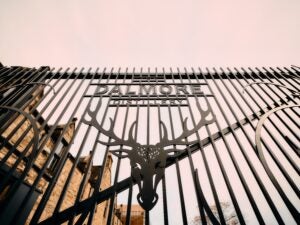
Arriving through the distillery’s black gates, guests will be ushered into the welcome room before being handed a cocktail created by one of the many respected bars around the world that the brand works with (ours was courtesy of Dean and Nancy in Sydney and is one of, if not the, best whisky cocktail I’ve had at a distillery). A short walk over to the main event itself showcases how the architects have balanced the old with the new – using reclaimed stone and some of the original Victorian buildings to juxtapose the dramatic contemporary new stillhouse – drama plays a role throughout the experience.
Guests begin their whisky journey in the former distillery kiln where, looking up on their ascent of the staircase, they will see that its original pagoda roof has been beautifully preserved. Into the wash house and the role of the mash tun and the Canadian pine washbacks is explained before moving into a darker space where the impact of copper on the spirit is described in audio form.
And then to the stillhouse. This is the crowning glory of the experience where not only are those all-important stills put on towering display but are complemented by an original glass window by Scottish artist John Kenneth Clark. Charting the whisky journey from barley through to the angel’s share, he has used color and texture to create something awe-inspiring, almost living in its ever-changingness depending on the light outside. Once you’ve managed to tear your eyes away, a chance to try the two different new make spirits offers a glimpse into the character of The Dalmore spirit (orange zest, chocolate, malted biscuits), as well as the outdoor horizontal condensers.
Ageing comes next and the three different barrels – sherry, port and wine – have been dismantled and displayed almost dinosaur skeleton-style to explain how the whisky interacts differently with each one, before moving into the warehouse where some of the king casks from the new production cycle will be laid in three-high dunnage-style layers. Last but not least, the tasting room reveals itself for guests to sit down and try three drams (it’s the only place in the world where all of The Dalmore’s expressions are available).
The attention to detail is, for want of a better word, staggering. The copper stills which make The Dalmore’s two spirits have been exactly replicated, down to every dent, to ensure that their DNA is preserved; a lily pad-like viewing platform exposes the full length of one of the washbacks for visitors to truly appreciate their sheer size and scale; while the light installation in the entrance reveals itself to be the brand’s iconic 12-pointed-antler stag emblem as visitors leave the tasting room.
My real lasting impression, though, is that the team has created a version of Scottish hospitality that feels achingly fresh and overdue. Eschewing the tropes that often keep Scotch whisky in the past, it instead catapults the category firmly into the here and now. From the angular glasses used for guests to try the water used to make The Dalmore at the very beginning of the experience, to the transformation of the same space for cocktails and canapes on mid-century-style furnishings at the end (and everything in between), this brand seems set on challenging the shortbread tin mentality that it could have been easy to rest its laurels on.
From the get-go, the new distillery has been designed with visitors in mind. The guest journey has been meticulously balanced with the fact that this is still very much, a working, living distillery. What’s most exciting, though, will be guests’ chance to make this experience their own: the possibilities in terms of what the team can do to make days tailored to each and every group are extensive. And having waited five years to get this project to where it is now, they’re ready to start making new stories at The Dalmore.
Добавить комментарий