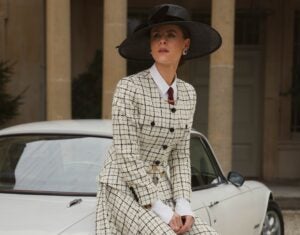
We tapped those in-the-know for their tips on trends, etiquette, and how to dress for the unpredictable British weather.

Few fashion moments have been as enduring in the world of cinema as Eliza Doolittle’s appearance at Ascot in My Fair Lady. Dressed to perfection yet anxious about putting a foot wrong, that feeling may be all too familiar for many racegoers similarly making their debut at the racetrack this season.
The excitement of the occasion paired with the pressure of getting the dress code right are to be expected if it’s your first (or even second) time attending. To help ease the tension, we’ve asked the experts for their advice. From how dress code varies between racetracks, to the trends you can expect to see in 2026 and beyond, and whether you need to wear a hat after all.
The experts’ guide to dressing for the races
What should I wear to the races?
The first thing to consider when dressing for the races is the venue itself. Every race meeting has its own requirements, whether that’s a strict formal dress code or a more relaxed approach, so it’s worth checking the guidelines before planning your outfit (if you’re using a stylist, they should be clued up on this already). Rather than viewing the dress codes as a list of restrictions, use them as a starting point.
«Read the dress code carefully and view it as a framework rather than a restriction,» says George Glasgow, co-owner and CEO of George Cleverly. «Start with classic, well-fitting pieces and avoid leaving decisions until the last minute. If you’re unsure, it’s always better to be slightly overdressed than underdressed. Most importantly, choose something that feels authentic to your personal style.»
As for what racegoers are actually wearing in 2026, the consensus among experts is a move away from overtly attention-grabbing dressing and towards a more refined sense of elegance.
“I’m really enjoying seeing racegoers move away from the idea that race day dressing has to be purely occasionwear,” says Jade Holland Cooper, fashion designer at her eponymous brand Holland Cooper. “There’s a renewed appreciation for timeless, versatile pieces that can be styled for the races but also worn long after the event itself.”
For men, Glasgow points to seeing this play out in softer tailoring, lighter-weight fabrics, and a broader color palette beyond traditional navy and grey. «Think sage, tobacco, cream, and muted pastels,» he says.
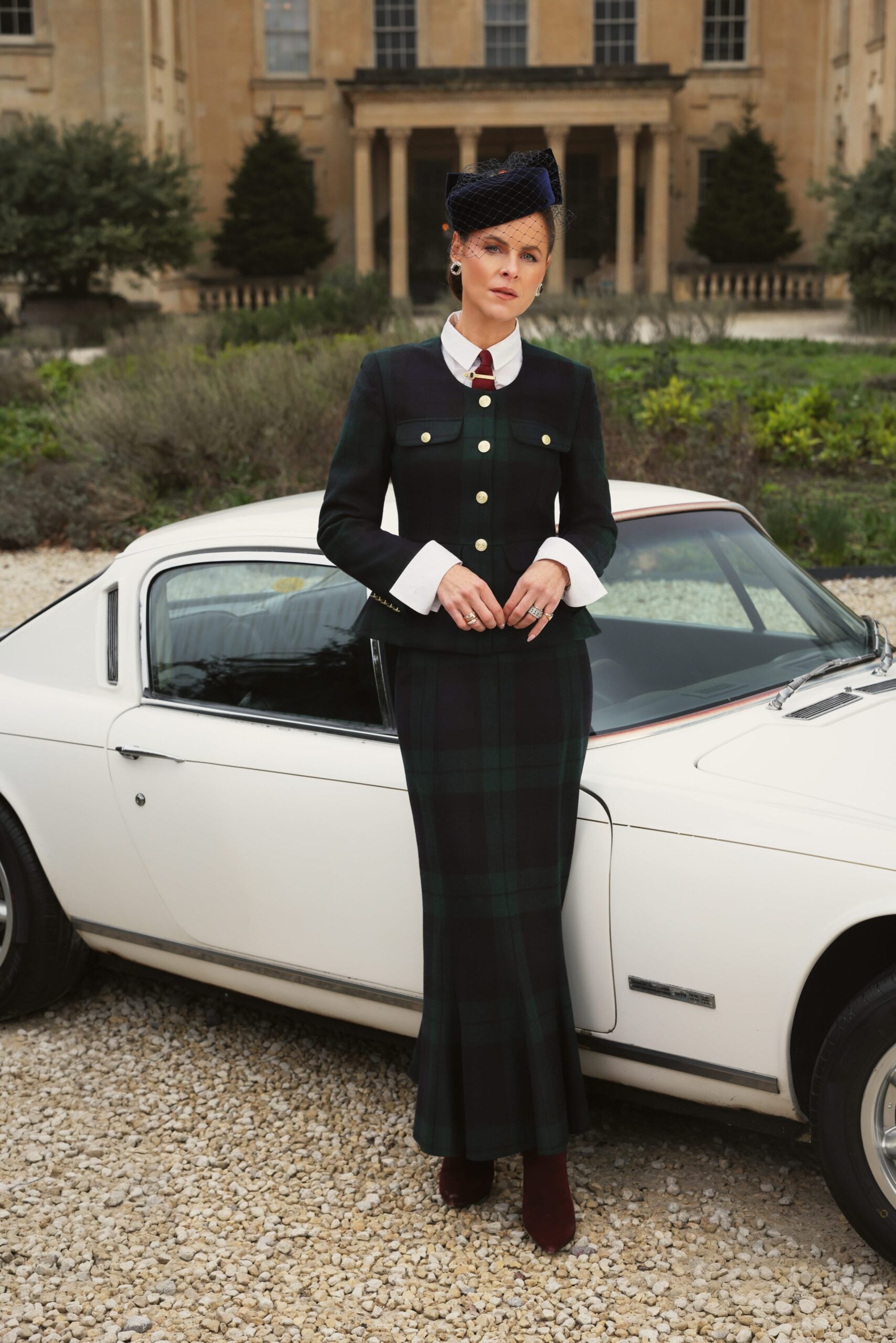
Women’s fashion, meanwhile, is embracing a more modern femininity, with «sculptural silhouettes, monochromatic dressing, and beautifully crafted headwear that feels contemporary rather than costume-like.»
That’s echoed by Holland Cooper: “We’re seeing many women embrace the classics again. Tailoring in particular has become increasingly popular across the racing calendar, from Aintree through to Ascot, and that’s because it offers the perfect balance of sophistication and practicality.”
See also: The Equestrian Expert’s Guide to Dressing for a Horse-Riding Trip
Do different racecourses have different dress codes?
Absolutely. While race-day style is often associated with polished tailoring, elegant dresses, and statement headpieces, the level of formality can vary significantly depending on the racecourse, enclosure, and event.
«The setting and heritage of each racecourse inevitably shape how people dress,» explains Glasgow. «Royal Ascot remains the pinnacle. It combines heritage, craftsmanship, and some of the most rigorously observed dress codes in the world, creating an atmosphere where people genuinely make an effort.»
Elsewhere, racecourses often adopt a more relaxed approach, with smart summer dresses, tailoring separates, and occasionwear proving perfectly acceptable. That doesn’t mean standards disappear entirely. Even at race meetings with fewer rules, racegoers tend to embrace the sense of occasion. The key is understanding the character of the event you’re attending.
What should I wear to Royal Ascot?
No race meeting takes its dress code more seriously than Royal Ascot. «What makes Ascot special is that elegance takes precedence over fashion for fashion’s sake,» says Glasgow. «The result is a level of polish that few events can rival.»
But that said, as Holland Cooper reiterates, that level of formality shouldn’t encourage intimidation, rather creativity: “The dress code encourages people to embrace dressing up in its truest sense, and it’s one of the rare moments where fashion sits so prominently alongside the sport.”
For guests attending the Royal Enclosure, the most formal area of the racecourse, traditional morning dress is required for men. This typically consists of a black, grey, or navy morning coat worn with matching trousers, a waistcoat, tie, and black dress shoes, with a top hat completing the look. «Expect elegant millinery and luxurious fabrics such as silk, linen, and lightweight wool,» Glasgow adds.
Women are expected to wear dresses or skirts of modest length with straps of at least one inch, while hats or substantial headpieces remain mandatory.
Elsewhere, including the Queen Anne and Village Enclosures, the rules are slightly more relaxed, but the expectation remains smart and sophisticated. Tailoring, occasion dresses, and refined accessories are all popular choices, while sportswear, denim, and overly casual clothing are not permitted in any enclosure.
See also: How To Channel Cowboy Chic in Contemporary Interiors
What should I wear to Glorious Goodwood?
«Events such as Glorious Goodwood tend to feel slightly more relaxed and romantic, with softer silhouettes, floaty fabrics, and a touch of vintage influence,» says Glasgow.
The most formal area of the racecourse is the Richmond Enclosure, where men aged 16 and over are required to wear a suit jacket, tie, long-sleeved collared shirt, and full-length trousers. Sportswear and fancy dress are not permitted.
Unlike Royal Ascot, however, Goodwood’s dress code places greater emphasis on style rather than strict rules. The racecourse itself describes its aesthetic as one of «easy elegance», with linen suits, softly structured dresses, smart separates, and relaxed tailoring all encouraged.
For women, this means to expect flowy midi dresses, floral prints, lightweight fabrics, and refined co-ords that feel at home against the Sussex countryside. Hats and fascinators are welcome but far from obligatory.
What should I wear to Cheltenham?
«The Cheltenham Festival has always been a personal favorite. It truly is the pinnacle of the racing calendar for me,» says Holland Cooper. “The atmosphere is incredibly special, and there’s a wonderful sense of occasion – it really does feel like the catwalk of the countryside.»
Unlike other race meetings, Cheltenham does not impose a strict formal dress code, but smart attire is strongly encouraged. As the festival takes place in March in the Cotswolds, dressing for the weather is often just as important as dressing for the occasion. Tailored coats, wool blazers, cashmere knits, and elegant outerwear are all popular choices, while sturdy footwear is a sensible consideration for a day spent outdoors.
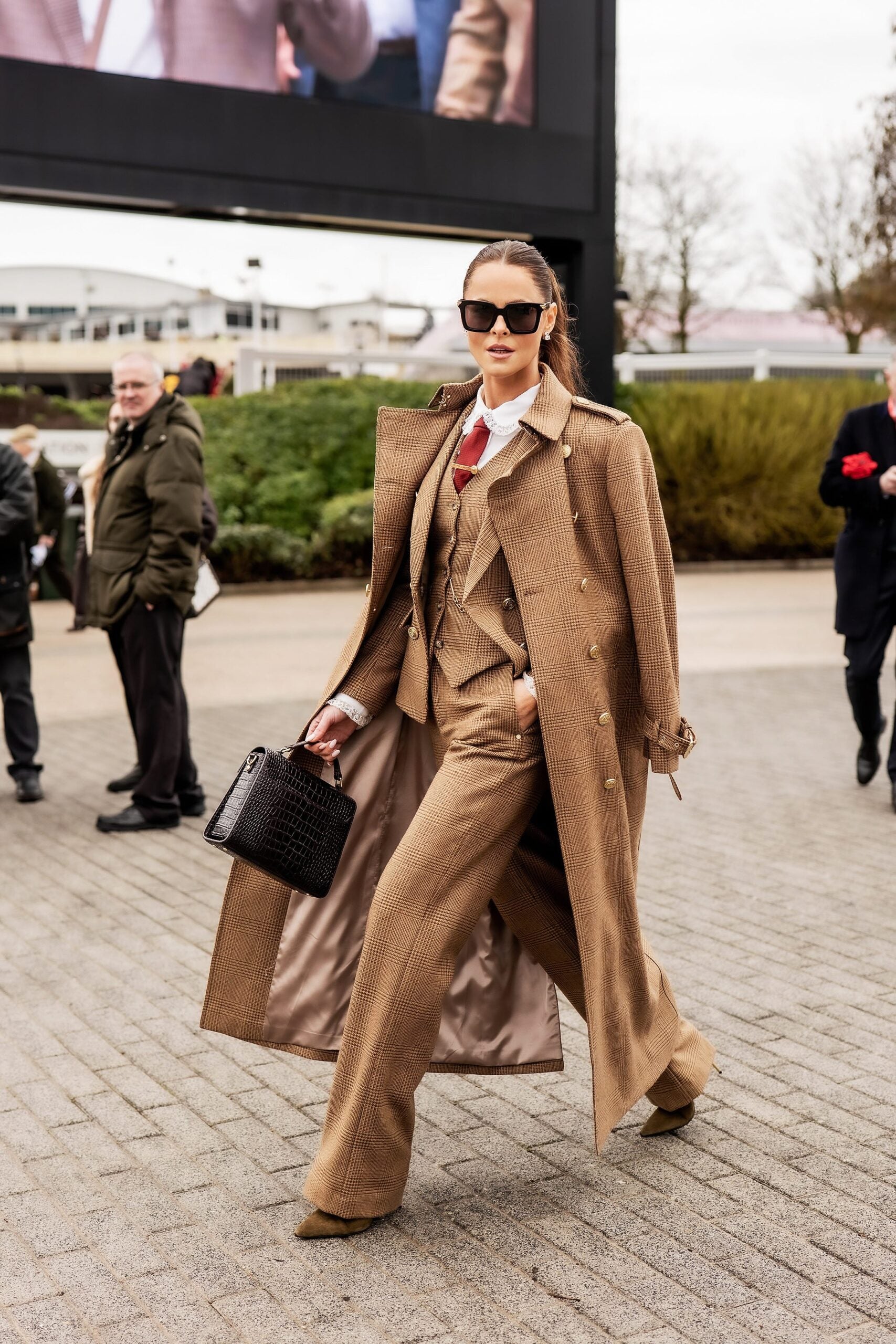
Tweed remains a Cheltenham staple, whether worn as a full suit, a tailored blazer, or incorporated through accessories. For women, midi skirts, structured dresses, tailored separates, and knee-high boots are favorites, often styled with statement hats or headpieces for key days such as Style Wednesday.
Take, for example, Holland Cooper’s personal Cheltenham looks: «One of my favorites was a perfectly tailored 360 Maxi Skirt and Tailored Peplum Jacket paired with a statement hat. I wore this on Ladies’ Day at The Cheltenham Festival; it felt timeless, confident, and true to my personal style.»
What shoes should I wear to the races?
Between walking across grass, standing for long periods, and navigating everything from grandstands to hospitality areas, comfort is essential when it comes to raceday footwear.
«Race days are long, so now I always make sure whatever I wear can take me from the first race to the last without compromise,» says Holland Cooper. «For summer racing events such as Ascot, I will always reach for our Regency Court Shoes. The block heel will serve you well and means it’s easy to navigate around the racecourse, and they are super comfortable.»
What if the weather turns?
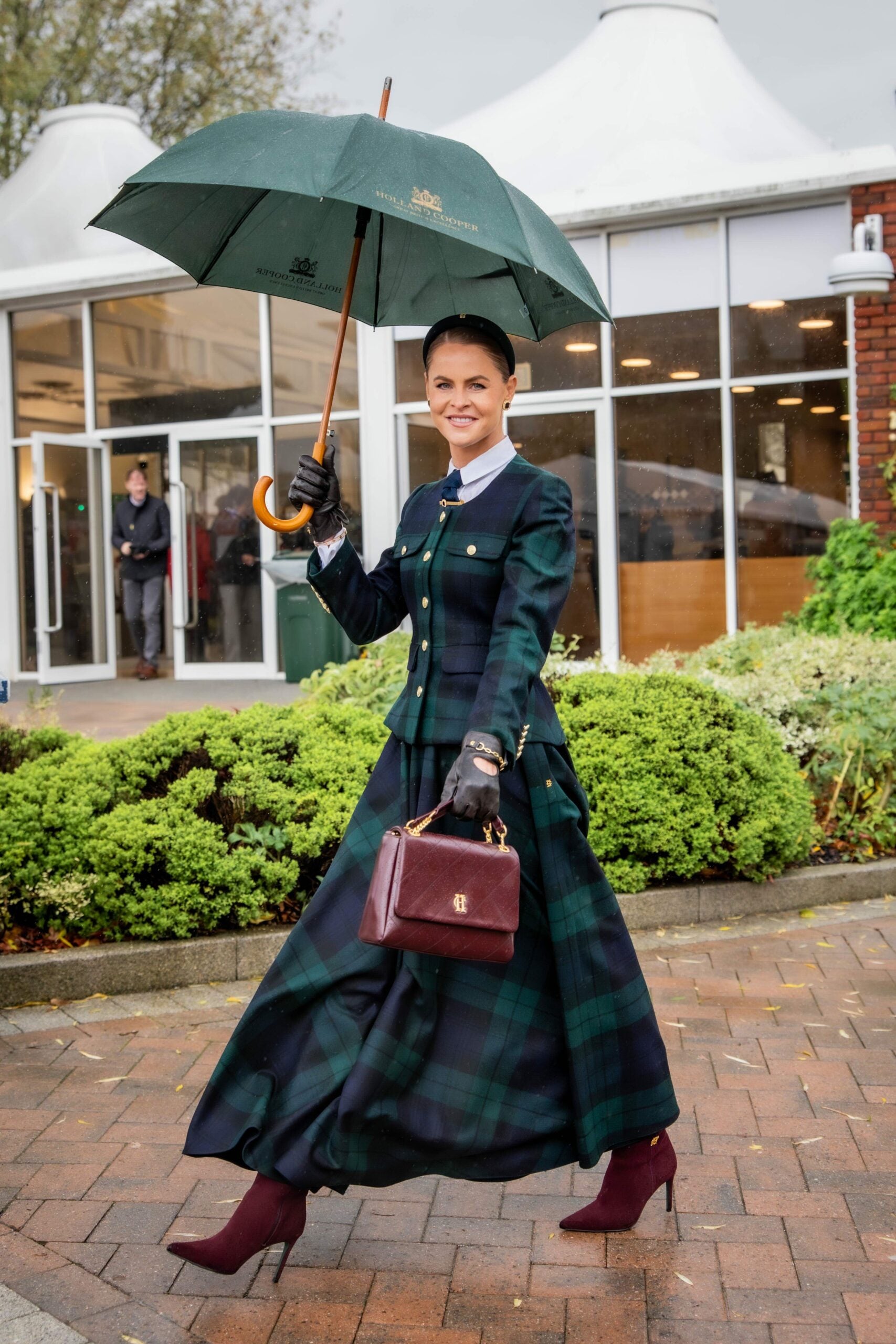
“British weather always demands preparation,” warns Glasgow. “The secret is planning for the forecast without allowing practicality to overshadow elegance.
“For warmer days, I recommend breathable natural fabrics such as linen blends, lightweight wool, and cotton, which help maintain structure while keeping you comfortable,” he adds. Meanwhile, in wet conditions, “a tailored trench coat, elegant umbrella, and weather-appropriate footwear can preserve the integrity of an outfit without compromising style.”
See also: Equestrian Escapes That Let You Travel With Your Four-Legged Friend
What should I avoid wearing to the races?
“The biggest mistake is treating race day like a themed event rather than a sophisticated social occasion. People often focus on being noticed rather than being well-dressed,” concludes Glasgow. “The most successful race-day looks feel effortless, appropriate to the setting, and respectful of the dress code. Fit, quality, and confidence will always have more impact than chasing trends.”
Добавить комментарий