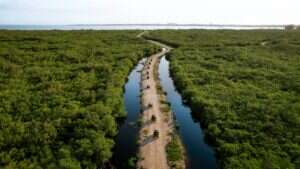
Home to hundreds of diving and snorkeling sites, world-renowned white-sand beaches, and cuisine, the Cayman Islands is Caribbean living at its finest.

The descent into Grand Cayman comes in low over water so clear that you can see the reefs from the air. Turquoise water calmly laps along the sugar-like sandy beaches. It’s a stretch of the Caribbean, just a few hours south of the US, where time stretches, and the tempo slows. The three-island archipelago of the Cayman Islands is known for its 365 diving sites, the world’s top-rated and diverse beaches, a culinary scene unlike anything else in the Caribbean, luxury accommodations, and activities from golf to watersports, primed for honeymooners and families alike.
The Cayman Islands have long been a secluded enclave for a variety of travelers, drawn by luxury resort accommodations and five-star dining on Grand Cayman, nature and adventure on Cayman Brac, and secluded coves on Little Cayman. The three islands within the 102-sq-mile territory in the western Caribbean Sea are a short flight from one another, each surrounded by impossibly blue waters, swimmable white-sand beaches, nature reserves with rare wildlife, and coves brimming with marine life and tropical fauna. The Cayman Islands are just as much about discovery as they are about relaxation.

Travelers often choose the destination for its powdery beaches and calm waters spread across the three. On Grand Cayman, Seven Mile Beach unfurls along the western coast near the capital, George Town, lined with fine-dining restaurants, toes-in-the-sand bars, and luxury hotels, including the Ritz-Carlton, Grand Cayman and Palm Heights. Consistently named one of the best beaches in the Caribbean, Seven Mile Beach is also a reliable spot to encounter tropical fish in the shallows. More wildlife is found at Stingray City, the sandbar in the North Sound, which has become almost a rite of passage for visitors, where southern stingrays glide past your feet in clear, waist-deep water. Starfish Point has earned its reputation for the many orange starfish just past the powdery shoreline.
Don’t forget to head to Spotts Beach on the south coast, a place where you’re almost guaranteed to see wild green and hawksbill turtles while snorkeling. The archipelago uniquely has 365 diving sites, one for each day of the year, including Bloody Bay Wall off Little Cayman and the U.S.S. Kittiwake wreck. Inland on Grand Cayman’s north side, Cayman Crystal Caves takes visitors through a series of limestone chambers strung with stalactites and stalagmites and set within a tropical forest.

Seclusion and nature are further found on Cayman Brac, perfect for climbers and birdwatchers, with a limestone bluff and the 180-acre Brac Parrot Reserve, which is home to the endemic Cayman Brac Parrot. Little Cayman, meanwhile, moves at the pace of the Rock iguanas that inhabit the rustic island. Languid days on the water are only part of the draw. Grand Cayman has two golf courses, the 18-hole North Sound Golf Club, designed by Roy Case, and the nine-hole Blue Tip Golf Course at the Ritz-Carlton, Grand Cayman. Golfing sits alongside paddleboarding, kitesurfing, sport fishing, and sailing charters that pair reef stops with sunset returns. Adventure and wellness are also on offer, like horseback riding, caving, ATVing, hiking, and wellness-focused activities, such as yoga.

The food scene is its own reason to come, with a variety of options to dine at, from Grand Cayman’s fine-dining restaurant, Blue by Eric Ripert at the Ritz-Carlton, Grand Cayman, to local restaurants serving the island’s most well-known dishes of conch stew, coconut ceviche, jerk chicken, and Cayman-style lobster. Local rum finds its way into nearly every glass by sunset, and a punch on the beach is a fitting close to a Caymanian day.
Добавить комментарий