These hardcore endurance challenges are as beautiful as they are brutal . Good luck – and send us a postcard.
If all your friends have ticked the marathon box, and you’ve got an Ironman or two under your belt, what’s next? An ultramarathon – typically defined as anything over the 26.2-mile marathon distance – is impressive enough, but for real bragging rights, chase something bigger: races set in the wildest of landscapes. Think: splashing through Botswana’s Okavango Delta (mind the crocs), running through a primordial jungle in Malaysia, or pacing across Antarctica’s endless white plains.
Okavango to Tsodilo Ulta-trail, Botswana
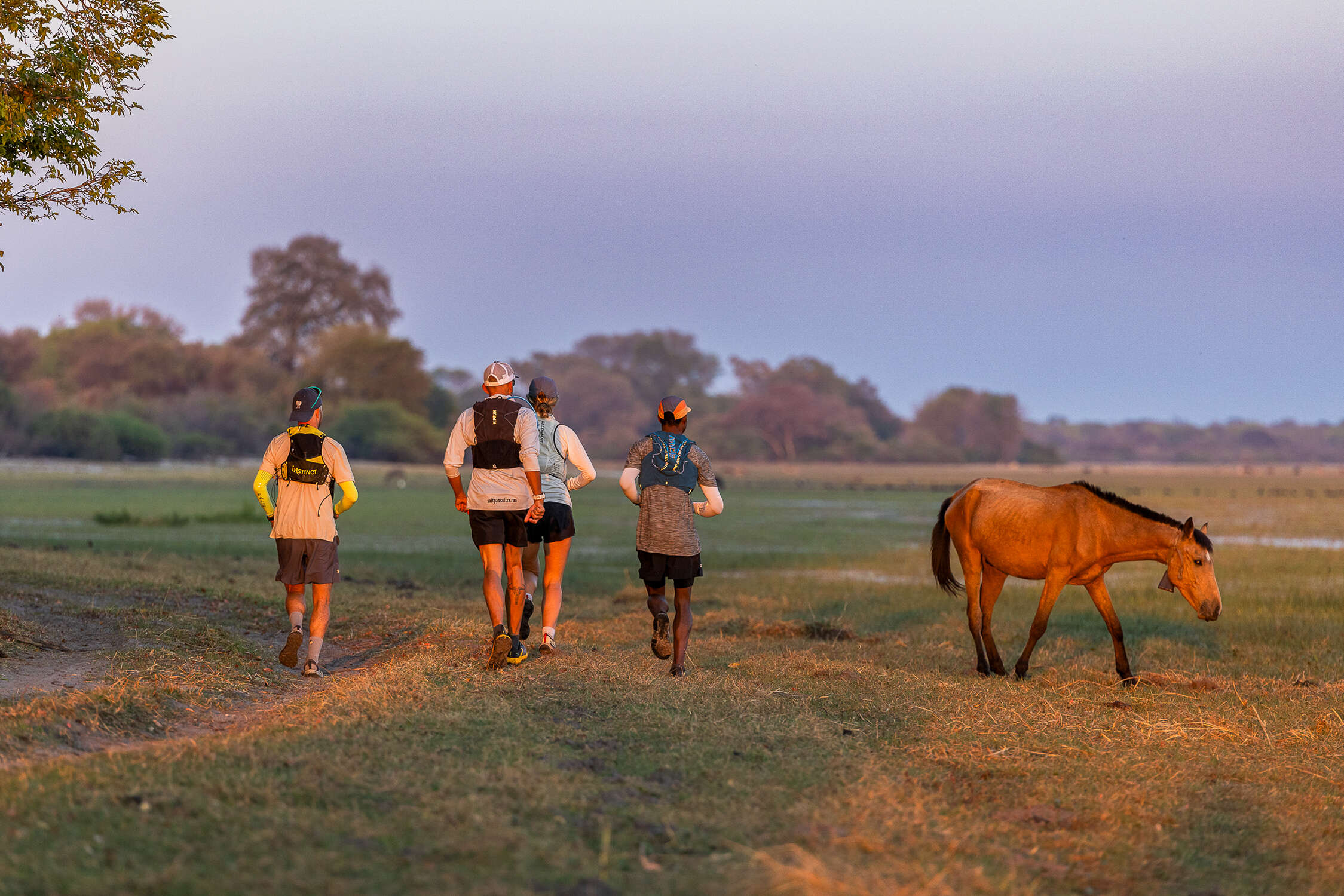
A 62.1-mile, four-day ultra-trail from Desert & Delta Safaris links two Unesco World Heritage Sites – the lush waterways of the Okavango Delta and the ancient Tsodilo Hills. The route, which took more than a year to map and test out, is designed to be more of a guided expedition than a traditional race (but, ahem, someone’s still got to come first, right?). It begins in the Okavango Panhandle, where runners follow trails along the Nxamaseri Channel, passing through island forests, fishing villages, and seasonal floodplains. Depending on water levels, the route may include a mokoro (traditional canoe) crossing. The first night is spent at Nxamaseri Island Lodge, which is set on a private island surrounded by the panhandle’s waterways.
Day two brings a change of landscape – wetlands are left behind as you’re onto the Kalahari’s vast sandy savanna, where you’ll cover the longest distance of the trip before reaching the Tsodilo Hills. This site, sacred to the San people, contains one of the largest concentrations of ancient rock art in southern Africa. That night is spent at a simple sleep-out expedition camp beneath the hills. Day three is shorter and focuses on exploring the Tsodilo area itself, with the option to summit Male Hill, one of the highest points in Botswana, before returning to Nxamaseri Island Lodge. The final day is set aside for recovery: yoga, mokoro excursions, and a celebratory dinner before departure. Safety precautions have been considered to avoid areas with high predator activity, but some of the wildlife can still be encountered – hippos, crocodiles, and elephants, to name a few. Each group travels with professional guides, a medic, and support staff. The next dates are April 1–5, 2027, but private small groups can be arranged anytime.
See also: The World’s Most Scenic Marathons – From London’s Landmarks to the Gold Coast
Chapman’s Challenge, Malaysia
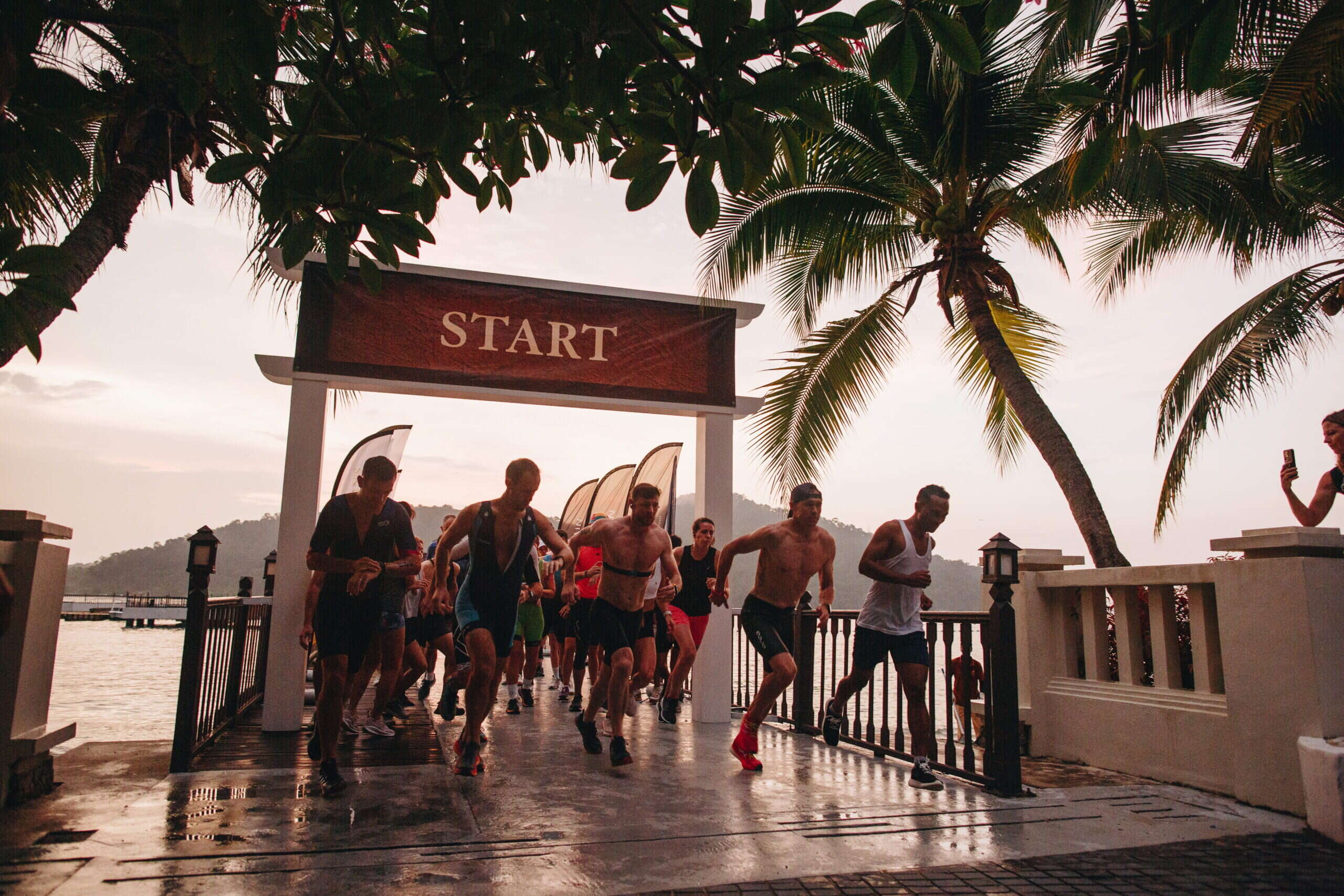
An endurance test with a remarkable backstory, Chapman’s Challenge is named for British World War II commando Freddie Spencer Chapman. In 1942, Chapman found himself stranded behind enemy lines in Japanese-occupied Malaysia. Completely cut off from supplies and presumed dead, he was faced with an impossible decision: surrender and become a prisoner of war, or disappear into the dense jungle. He chose the latter. For more than three years he evaded enemy forces and survived in incredibly difficult conditions before his eventual rescue.
Chapman’s legacy is honored by this race (his grandson, Stephen Chapman, is a regular participant and a previous winner) and, while this is not an ultra by distance, it is no less challenging. Short and brutal, the route begins with a very hilly four-mile run around the island, followed by a 1.5-mile trek through a thick, two-million-year-old jungle, and concludes with a tough, 0.62-mile, open-water swim in Emerald Bay — leading racers into the same waters where Chapman was eventually extracted by submarine.
As Alex Martin, Elite Traveler alumnus who ran the course in 2019, summarizes: “It took me one hour and one second to finish it. I was utterly exhausted – and that’s just a sliver of what Chapman endured.”
The current fastest time is held by Australian Matt Pole, who completed the race in 45 minutes and four seconds in 2019 – he’s yet to be pipped. This May, Chapman’s Challenge added a relay option alongside the traditional race, where one runner handles the land, the other the swim, as well as a junior edition for ages 11 to 17. Dates for 2027 are yet to be released.
Antarctica Ice Ultra
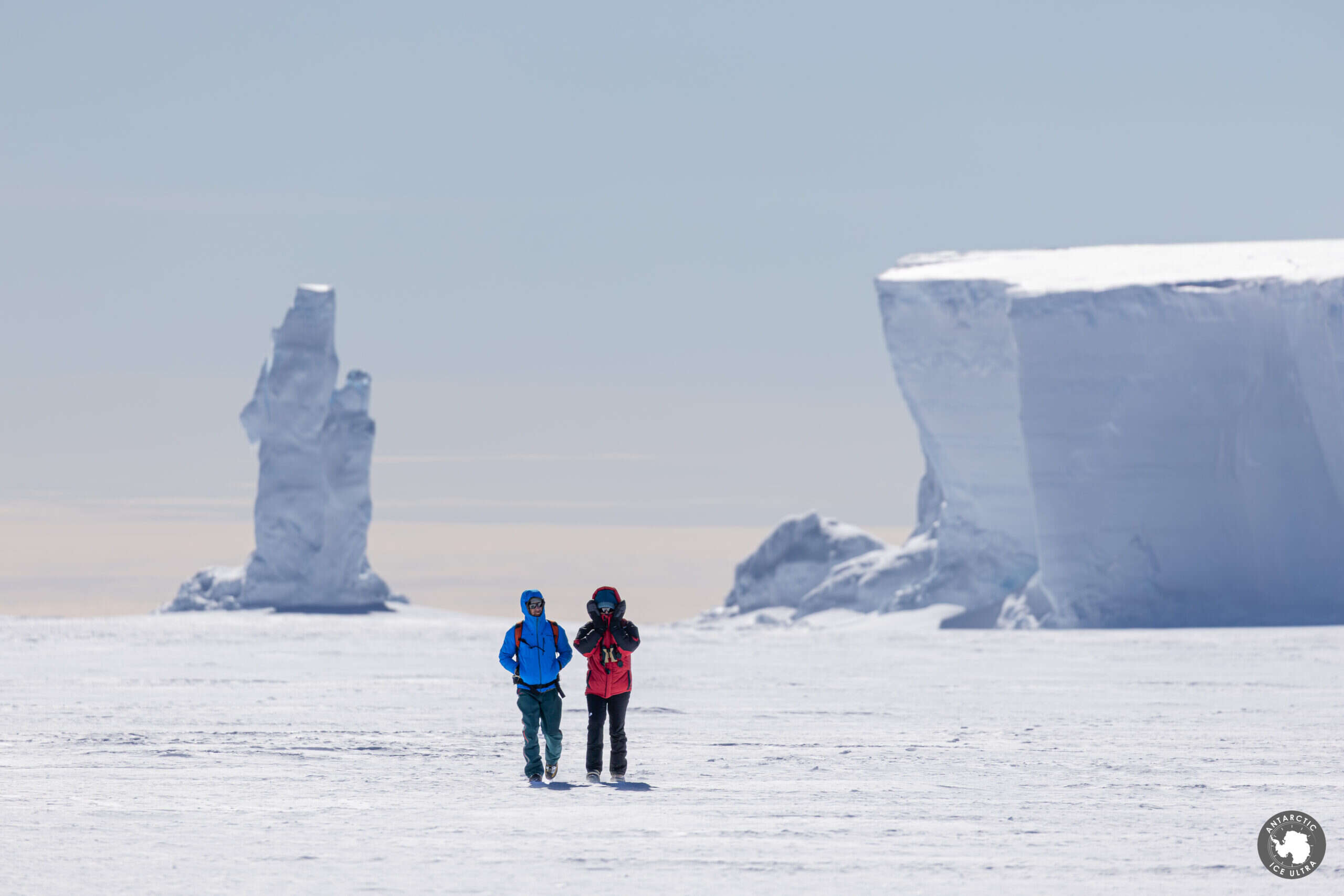
Quite possibly the coolest race in the world (in every way), the Antarctic Ice Ultra takes place on November 9, deep within the frozen ice sheet of Queen Maud Land in East Antarctica. It’s one of the most remote endurance races – very few have set foot here, and even fewer have dared to do it quickly.
You’ll fly in from Cape Town, landing on the blue-ice runway at Ultima Base Camp, well within the continent’s interior – only a small fraction of visitors to the continent venture this far inland. The event has a number of distances: a half marathon, full marathon, 50km, 50 miles, 100km, and a 24- hour team relay. The course unfolds across the ice sheet and racers undertake extremely challenging conditions – freezing temperatures, biting wind exposure, and a constantly shifting, unstable surface. A test of endurance and then some, it’s not for the faint of heart.
Despite that (or maybe because of it), a few records have been set: The women’s 100-km record is held by Australian Julianne Young, at 15 hours, 31 minutes, and 10 seconds in 2012. The men’s prize for the same distance is held by Yusheng Ni from China who ran it in nine hours, 20 minutes, and 28 seconds (Ni also has the best men’s 100-mile time, at 22 hours, 40 minutes, and 47 seconds). Currently, there’s no record for the women’s 100 mile, the 24- hour solo race, or the 24-hour relay.
Most participants spend around five days, based near the Schirmacher Oasis. Experiences beyond the race include guided hikes, exploring towering ice walls and cobalt-blue ice caves, and visiting newly discovered emperor-penguin colonies. Postrace recovery is naturally polar-style, too – saunas followed by a bracing ice plunge.
See also: Why Runners Are Falling in Love with Wine, Beer, and Whisky Regions
Beachcomber Trail, Mauritius
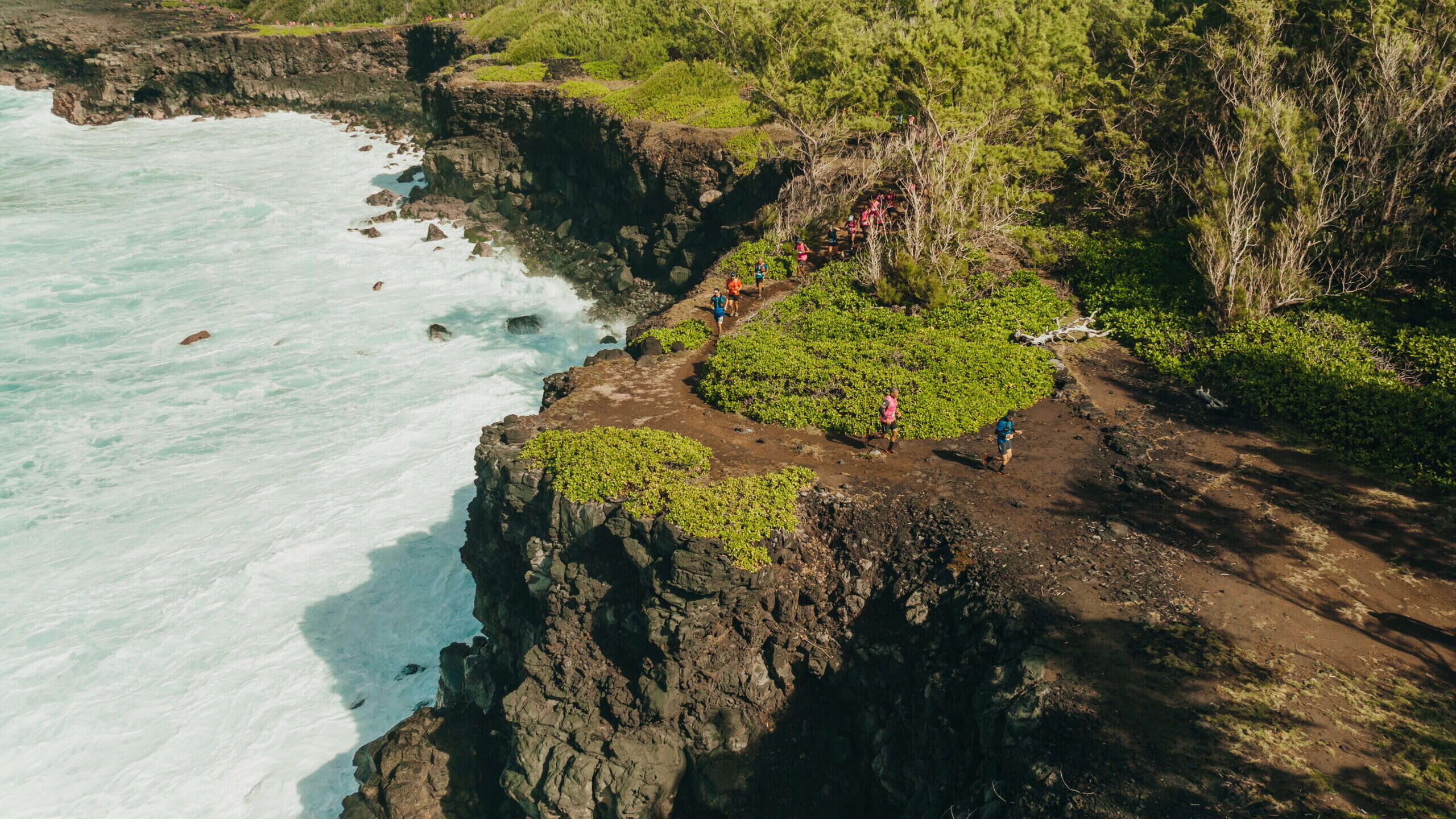
In a place more often associated with sunbathing honeymooners, Mauritius’s Beachcomber Trail draws a different crowd – more than 1,000 participants come to the island each year to take part in this challenge. After a brief hiatus last year, the event returns in 2026 on Saturday July 25, with a few new additions.
The route leads you along the island’s rugged southern coast and ranges across technical forest trails, sandy beach stretches, and panoramic vantage points. The course has been mapped out by guides to encompass paths your average visitor won’t ever see. There are three distances: The 10-km Trail du Souffleur follows rolling terrain leading to the cliffs through filaos groves. The 25- km Trail du Nautile (which is International Trail Running Association-registered), has a cumulative elevation gain of around 908 ft and weaves through sugarcane fields. The big one, the 65-km course, starts at the coastal village of Case Noyale and has an elevation gain of about 7,200 ft. It begins with an ascent to the summit of Piton de la Petite Rivière Noire, the highest mountain in Mauritius, followed by a descent into the Black River Gorges National Park. Then, a demanding climb up the Parakeet and Paille-en-Queue trails leading to Alexandra Falls, before a final push to the summit of Piton Savanne. The home stretch is through the village of Souillac, along the southern cliffs. All races cross the finish line at Shandrani Beachcomber Resort’s shoreline.
New for this year, the 40-mile course can also be undertaken as a relay. Teams of three can split the distance across three legs: 17 km from Case Noyale to Alexandra Falls, 15 km to Rochester Falls, and the final 33 km to Shandrani’s shoreline.
Добавить комментарий