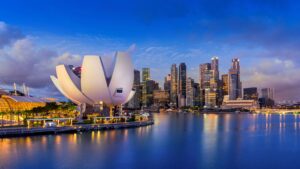
Singapore’s continued dominance in Julius Baer’s Global Wealth and Lifestyle Report is less surprising than the disappearance of the United States from the top rankings.

For a long time, the luxury industry has followed a predictable map. Paris supplied the heritage, craftsmanship, and romance; New York the appetite and spending power; and China the promise of the next great wave of growth. The world’s wealthy knew where they wanted to shop, and luxury houses followed suit with where they opened their doors.
According to the Julius Baer Global Wealth and Lifestyle Report 2026, Singapore has retained its position at the top of the ranking for the fourth year running, remaining the world’s most expensive city for HNWIs for the fourth consecutive year. The report notes that Singapore’s position reflects “the high cost of residential property and cars, as well as the strength of the Singapore dollar,” while its “political stability, resilient economy, and global connectivity continue to support its appeal in an uncertain world.”

For the first time, no city in the Americas, one of the industry’s most dependable engines, appears in the global top ten. Now, that doesn’t mean Americans have suddenly lost their taste for the finer things in life. The US remains one of the largest and most influential luxury markets in the world: Fifth Avenue continues to be one of the industry’s great shopping stages, and American consumers remain major buyers of fashion, watches, jewelry, and beauty products. But the way they spend their money is changing. After several years of post-pandemic enthusiasm, American luxury consumers have grown to become more selective. The rush for hard-to-find handbags, collectible watches, and once-in-a-lifetime experiences has begun to cool, while questions around value and longevity have become more important – even among HNWIs.
“The US remains one of the most important luxury markets globally, but economic pressures, changing spending habits and a greater focus on long-term value are influencing purchasing decisions,” says Kylie James, CEO of luxury auction platform LAX.BID. “Increasingly, wealthy consumers are looking beyond traditional luxury purchases and putting their money into experiences, art, collectibles, and assets that offer both enjoyment and potential appreciation.” Dr Matthias Fuchs, assistant professor of marketing at EHL Hospitality Business School argues that «large parts of why the US fell off (i.e., became more affordable relative to other places) is probably due to the current weakness of the US dollar […] and could say more about the lags of price increases relative to currency exchange rate fluctuations.»

At first glance, Singapore’s city-state seems an unlikely rival to the US. With fewer than six million residents, it lacks the vast consumer base of America. But it has succeeded by creating “an environment where wealth can be preserved, grown, and enjoyed, making it an increasingly attractive destination for high-net-worth individuals from around the world,” James notes. The person walking into a luxury boutique on Orchard Road may be Singaporean, but they could just as easily be visiting from Indonesia, India, Malaysia, or elsewhere in Southeast Asia. Its luxury appeal also extends beyond shopping. International events, high-end hospitality, fine dining, and its role as a global financial center have helped transform Singapore into a destination for wealthy individuals and investors.
Its rise, she adds, reflects a broader understanding of what today’s wealthy consumers value. “It offers political stability, a strong economy, excellent infrastructure, and a business-friendly environment, all of which create confidence for those looking to live, work and invest there. The city has also established itself as a key destination for art, collectibles, and luxury assets.”
Julius Baer’s report points to this wider shift in behavior, noting that HNWIs are adapting their consumption habits in response to tariffs, currency movements, and global uncertainty. At least one in three respondents have already changed the geographic origin of some of their luxury purchases. In other words, luxury is becoming more mobile.
As such, it’s safe to say that America’s place in luxury is far from over, but, as James puts it, “the landscape is certainly changing.” Its fall from the ranking suggests that the next generation of luxury capitals may not be the largest countries or the oldest fashion cities. They may be the places that can attract global wealth, even if they fit within a much smaller footprint.
Добавить комментарий