Автор: karymsakov_qq4zn395

  • Everything You Want to Know About Padel but Are Too Afraid to Ask

    Everything You Want to Know About Padel but Are Too Afraid to Ask

    This is your one-stop guide to the exploding sport. 

    It would be difficult not to notice the rise of padel. What was once a relatively niche sport, played mainly in Spain and Latin America, now seems to be everywhere: luxury hotels are building permanent courts, fashion brands are hosting padel pop-ups, and private members’ clubs are making space for matches. 

    It’s estimated there are now more than 30 million recreational padel players worldwide. According to the LTA, in Britain alone, participation has surged from just 15,000 players in 2019 to more than 860,000 in 2025, making it one of the country’s fastest-growing sports.

    “Thirty-one million people in the UK are now aware of padel – that’s 50 percent of the population,” says Charlie Grave, who, with TBB-Sport, founded the Hurlingham Club’s star-studded Alfred Dunhill Padel Classic, adding that there is talk of padel becoming an Olympic sport come 2032. 

    Grave has noticed the shift firsthand. Now in its third year, at the first padel classic, he speaks of a limited knowledge of the sport. “I was walking to people, and they were going, ‘I’ve heard of padel, isn’t that on water?” I was having to explain it to everyone.” 

    All teams were amateurs, and we managed to pull together 15 celebrities, mostly cricketers,” he recounted. “This year, we had 16 teams instead of 12, and everybody’s playing at a high standard. It’s gone ballistic.”

    Celebrities and athletes have definitely helped fuel the boom and raise the profile of the sport. “It’s every ex-athlete’s favourite sport, every actor, every millionaire. It’s for everybody. Grandma, grandson, mom, and dad,” says Peter Worton, founder of Padel Up, an independent padel club in LA. Prince William and Catherine, Princess of Wales, have both been spotted playing. David Beckham and Eva Longoria are also fans, alongside grand-slam champion Andy Murray, who has reportedly invested in UK padel operator Game4Padel. “That’s why padel is the fastest growing sport in the world,” adds Worton.

    And while social padel is on the rise, 2026 also marks a major milestone for professional padel in the UK, with the arrival of Premier Padel P1, a professional tournament which will bring some of the sport’s biggest names to the capital. “This is a huge opportunity to showcase the sport at the highest level, inspire new audiences, and give fans the chance to experience world-class professional padel in Britain,” says Tom Murray, LTA head of padel. 

    For those keen to pick up a racket and give it a go, courts around the world are being built at remarkable speed. “There’s a padel court being built every 60 minutes,” says Grave. “People play it once and immediately want to go back.”

    So, if you’re eager to try, but are concerned you may be late to the trend, fear not – we’ve spoken to the world’s top padel entrepreneurs to find out everything you need to know about padel, the racket sport everyone suddenly seems to be playing.

    See more: The Best Padel, Tennis, and Pickleball Accessories to Buy This Summer

    Padel is played in doubles with a solid, stringless racket and a low-compression ball ©Unsplash

    How do you pronounce ‘padel’?

    The most divisive topic when it comes to padel is not how it’s played, but how the sport is communicated, due to two different pronunciations floating around, depending on who you speak to. James Turner, CEO of luxury travel agency 360 Private Travel, advocates for ‘pah-DEL,’ with emphasis on the second syllable, while Chris Moore, founder and president of Privé Padel, a global travel membership for padel players, and Pablo Carro, COO and co-founder of Playtomic, an app for racket sports players and clubs, suggest the sport is pronounced with an emphasis on the first. 

    Worton is a little more flexible, “Tomato, tomato. It has Mexican origins, and as such, it is to be pronounced ‘pah-del.’ Granted, though, most of us don’t have a Spanish accent.” 

    The consensus seems to be that an ‘it’s up to you’ approach will do. 

    What is padel?

    “Padel is a racket sport that blends elements of tennis and squash,” says Moore. The sport is played in doubles with a solid, stringless racket and a low-compression ball on an enclosed glass-and-mesh court, measuring roughly a third of the size of a tennis court. 

    “Padel is just like mini doubles tennis,” says Worton, “until the ball hits the wall,” he adds. “You get one bounce on the ground, and then the ball can bounce off the walls. Your job is to return the ball over the net.” 

    Carro adds, “The serve is underarm, the scoring follows tennis, but the learning curve is much gentler. Most people can have a genuine, enjoyable game within their very first session.”

    Playing in an enclosed court is the main difference between padel and other racket sports ©Hurlingham Club Alfred Dunhill Padel Classic

    How is padel different from other racket sports? 

    The walls, for a start. While for those that haven’t played, this may not seem like a major shift away from other racket sports, experts credit them with the sport’s exponential rise. 

    “They completely change the dynamic of the game and are what make it so fun and addictive,” says Moore. “The ball stays alive off the glass, which creates longer rallies, more creativity, and points that feel incredibly fast-paced and unpredictable.” 

    Turner credits the walls with the sudden popularity over other racket sports: “In tennis, a ball that hits the back fence is out. In padel, it’s an opportunity. That changes the entire pace and strategy of the game.”

    It’s this fast pace that is building excitement among new players and spectators alike. “There’s constant movement, recovery shots, and exciting exchanges happening. It gives the game an energy and rhythm that feels very different from tennis or pickleball,” says Moore. And just in terms of practicality, the enclosed court means you’re not chasing balls constantly. 

    There is also the ease of the game: “It’s much more engaging, much more inclusive, which really siphons down to the fact that it’s a lot easier to play,” says Grave. 

    “You’re able to sustain rallies quickly, the court is smaller, and physical strength matters less than timing and positioning,” says Moore. “It removes a lot of the frustration that beginners often feel in other sports.”

    Grave affirms this. “Tennis is very technical. Golf is very male and very daunting. You can turn up to a paddle court, and you’ve never played before, and within half an hour you’re having rallies.”

    The current image has no alternative text. The file name is: padel-explainer-playing-scaled.jpg
    Padel is always played in doubles, allowing for a mix of abilities on a team ©Hurlingham Club Alfred Dunhill Padel Classic

    Another small difference, the serving technique, also changes the game. “The underarm serve removes one of the biggest barriers in tennis, where serving alone can take months to feel comfortable,” adds Turner. “People who’ve never picked up a racket in their life usually have fun within a single session.”

    This is, perhaps, what has made it such a popular social sport, and we recommend newcomers come into their first game with a relaxed attitude, ready for a little fun. “The atmosphere around padel is usually very relaxed and community-oriented. It’s one of the few sports where people are genuinely talking, laughing, and connecting throughout the experience,” says Moore.

    «It’s always four people, always doubles, always on a compact court where you can hear each other and actually talk between points. There’s a natural camaraderie built into the format,” says Turner. 

    “It’s also easy to mix abilities, which means families and groups of friends who aren’t all at the same level can still have a genuinely good game,” he adds. 

    See also: Game, Set, Paradise: The World’s Most Breathtaking Tennis Courts

    Where did padel come from?

    The game has been traced back to the 1960s in Mexico, where the sport was seemingly born from one man’s practical needs. Enrique Corcuera allegedly built the first-ever padel court at his home in Acapulco, building a small court due to the simple fact “he couldn’t quite fit a tennis court in his garden,” says Grave. “Then he realised he didn’t want to keep going and fetching the ball, so he built walls around it. And there was born padel,” he says. 

    From there, padel spread to Spain and Argentina, becoming popular over the last 40 years, and has since “exploded globally”, says Moore, “especially across Europe, the Middle East, and now the United States.” Grave credits Italy, France, and Sweden as some of the most recent European hot spots, adding “The UK and Germany are probably the last two big cabs on the rank.”

    Looking to the future, Carro suggests it will be no time before the sport is commonplace in the US, although acknowledging that it is already popular in areas like Miami. “It has all the ingredients – a strong sports culture, millions of tennis and pickleball players, and an appetite for new social experiences,” but also notes, “We’re still at the very beginning of that journey here.” Watch this space. 

  • The Nutritionists to Follow on Social Media Right Now

    The Nutritionists to Follow on Social Media Right Now

    These are the nutritionists cutting through misinformation with evidence-based advice, practical recipes, and realistic wellness guidance. 

    best nutritionist to follow

    Between shifting trends, fear-based messaging, and the latest superfood, it’s easy to lose clarity. Cut through the noise and focus on evidence-based guidance from qualified professionals. Here’s who Elite Traveler recommends following.

    Best nutritionists to follow

    Dr Emily Prpa 

    Dr Emily Prpa is an award-winning nutrition scientist and microbiome researcher with a PhD from King’s College London. Her research career began by investigating the effects of fruit-derived compounds on type 2 diabetes prevention. She is now a visiting lecturer at King’s College London, and is a fellow at the Parliamentary Office of Science and Technology.

    Through her Substack, Science and The City, she shares weekly commentary on women’s health, translating complex research into easy-to-grasp insights. On Instagram, she focuses primarily on women’s health and takes a critical approach to popular wellness trends, including intermittent fasting and its potential effects on hormonal health (‘no bro science, no biohacking at 5am.’) She urges users to take her posts with a pinch of salt and expresses that she is ‘not here to influence, but to inform.’

    Reasons to follow: Science mixed with nutrition and a no bullshit approach to the latest fads. 

    Emily English 


    View this post on Instagram


    A post shared by Emily English (@emthenutritionist)

    Emily English’s path to becoming a nutritionist began with her teenage modelling career. At age 17, a derogatory comment on her body triggered an eating disorder and subsequent therapy. She quit the industry and went on to study nutrition at King’s College London. During the Covid lockdown, English posted a video showing what she eats in a day. It went viral, gaining millions of views. In the years that have followed, she’s written three Sunday Times best-selling books (So Good, Live to Eat, So Good Express); founded epetome, a supplement for gut health; and worked with Harvey Nichols and Le Creuset. 

    Reasons to follow: English focuses on nutrient-dense food, emphasising the impact on skin health. Her recipes are vibrant and nourishing. 

    Dr Layne Norton


    View this post on Instagram


    A post shared by Casey Adams (@casey)

    A two-time World Champion powerlifter and natural bodybuilder, Florida-based Layne Norton holds a PhD in Nutritional Sciences and works at the crossroads of academic research and applied fitness. He specializes in protein metabolism, muscle hypertrophy, and fat loss. He delivers direct, evidence-based advice and engages critically with popular fitness and nutrition claims, including debates around ultra-processed foods, cortisol, and their respective roles in health.

    Norton’s approach is grounded in data, and he is open about updating his views in response to new research. Some find his stance abrasive, but he’s not one to shy away from hot topics. On his podcast, The Dr Layne Norton Podcast, he dissects health and wellness claims from mainstream media through a scientific lens. 

    Reasons to follow: A credible voice grounded in science and first-hand experience. 

    Dr Hazel Wallace


    View this post on Instagram


    A post shared by The Food Medic (@thefoodmedic)

    Doctor, nutritionist, best-selling author, personal trainer, and women’s health specialist, Dr Hazel Wallace’s credentials are solid. She is the founder of The Food Medic, a platform for health, wellness, and nutrition that has over 200 recipes, 200 articles, and two-hour masterclasses which she hosts alongside guest experts. She’s also on the medical advisory board for WHOOP, is a consultant role at Runna, and has previously worked with Apple, Adidas, and Garmin. One of her best-known books, Not Just A Period, is pioneering — it looks at not only how menstrual health affects every facet of a woman’s life from libidio to hair health, but how to ‘have better periods.’ 

    Reasons to follow: Beyond the recipes — a lot of which focus on efficient nutrition — Wallace trains hard. She’s just completed her fourth marathon and documented her training in the lead-up. 

    See also: The Personal Trainers Trusted by Olympians and A-list Stars

    Dr Rupy Aujla 


    View this post on Instagram


    A post shared by Dr Rupy Aujla (@doctors_kitchen)

    Dr Rupy Aujla is a London-based medical doctor trained in general practice and emergency medicine, and a leading advocate for the role of nutrition in preventive and supportive healthcare. He is best known for bringing evidence-based nutrition into clinical practice to help support both the management and prevention of chronic disease. He is the founder of The Doctor’s Kitchen, a platform focused on improving health through food, featuring recipes and educational content centered on ingredient quality and nutritional balance. He has founded a non-profit initiative aimed at teaching medical students the principles of culinary medicine, bridging the gap between nutrition and clinical training.

    Reasons to follow: Grounded, evidence-based advice and no restrictive ‘all or nothing’ thinking. 

    Dr Megan Rossi 


    View this post on Instagram


    A post shared by Dr Alex George (@dralexgeorge)

    There is strong scientific evidence behind the role of the gut microbiome in health, but the topic of gut health has become a commercialized area of wellness. Dr Megan Rossi is a leading gut health scientist with a PhD from the University of Queensland, where her research received a Dean’s Award for Outstanding Research (top 5 percent).

    She is widely recognized for translating microbiome science into practical, evidence-based advice for the public. Her approach focuses on achievable, realistic dietary habits rather than the pursuit of ‘perfect gut health,’ and she is known for challenging fear-based messaging in the wellness space. She credits her upbringing on a farm in Cairns, Australia, where eating off the land was a ‘masterclass in shaping [my] gut microbiome.’

    Reasons to follow: Scientific gut health advice and intelligent viewpoints. 

  • Red Burgundy Giving You Sticker Shock? Head to This Italian Region Instead.

    Red Burgundy Giving You Sticker Shock? Head to This Italian Region Instead.

    Alto Adige is quietly making some outstanding Pinot Noir right now. Alto Adige is quietly making some outstanding Pinot Noir right now.

  • Taste Test: This New Cult Bourbon Actually Lives up to the Hype 

    Taste Test: This New Cult Bourbon Actually Lives up to the Hype 

    This is the second release of Very Olde St. Nick, and it’s a banger of a bourbon. This is the second release of Very Olde St. Nick, and it’s a banger of a bourbon.

  • Inside Robb Report’s 2026 Sports Issue

    Inside Robb Report’s 2026 Sports Issue

    The rise of padel, a Reebok Pump–inspired timepiece, and time spent with Michael B. Schwab all star in the issue. The rise of padel, a Reebok Pump–inspired timepiece, and time spent with Michael B. Schwab all star in the issue.

  • How Your Sleep Position Actually Affects Your Health 

    How Your Sleep Position Actually Affects Your Health 

    From your skin to your spine, experts explore the visible – and invisible – effects of sleeping on your back, front or side. 

    According to viral claims, your sleep position matters more than you might think. They swing between alarmist (‘back sleeping causes sleep apnea’) and fearmongering (‘side sleeping leads to facial drooping and asymmetry’). While the majority veers into hyperbole, there is a more nuanced conversation worth having. 

    For many, the healthiest position is the one that allows the body to relax and supports uninterrupted sleep. But while comfort is crucial, physiology still matters, says Dr Chad Eldridge, sleep and wellbeing advisor for Hästens. “Certain positions may aggravate snoring, reflux, pressure points or existing musculoskeletal concerns,” he explains. Therefore, it pays to think personally. For those snoring-prone, for example, side sleeping may be preferable. 

    The relationship between sleep position and snoring – particularly in those with obstructive breathing issues or symptoms of sleep apnoea – is well-established. “Sleeping flat on the back can allow the tongue and soft tissues of the airway to relax backwards, which may narrow the airway and increase snoring or breathing disruptions,” Dr Eldridge says. Side sleeping, by contrast, “can help keep the airway more open”. Nicole Moyen, director of science and clinical research at Eight Sleep, adds that this can also reduce jaw clenching compared to back sleeping, “decreasing nighttime teeth grinding”.

    See also: The Biggest Wellness Travel Trends Set to Shape 2026

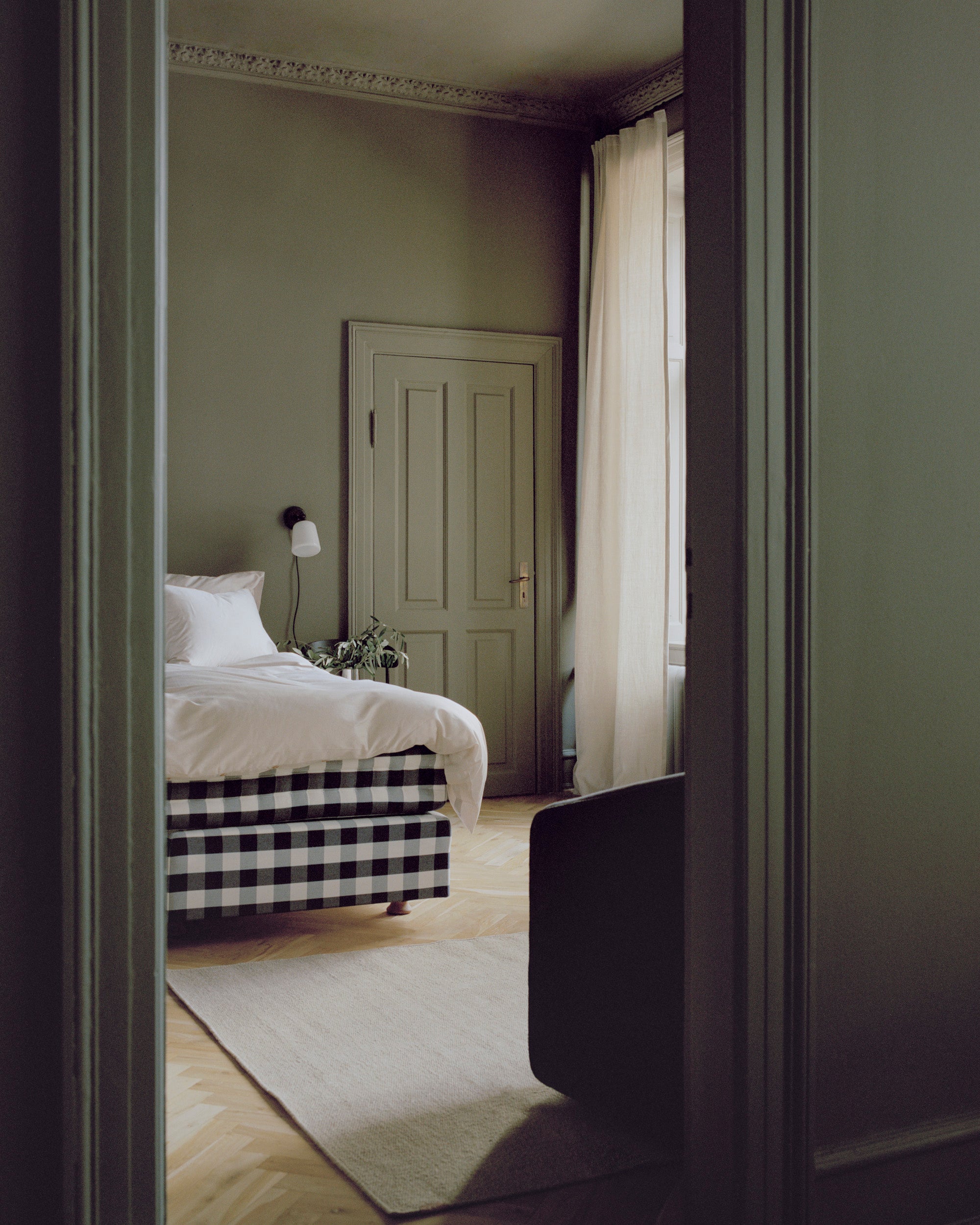
    Hästens bedding sleep health
    ©Hästens

    There are also digestive benefits to sleeping on your side. “Gravity helps move stomach contents through more efficiently, accelerating gastric emptying and reducing bloating,” Moyen explains. And for those who are pregnant, sleeping on the left is recommended as it optimizes blood flow to the placenta, she says.

    Then there’s the emerging – though yet unproven in humans – idea that side-lying may support better brain waste clearance during sleep. A 2015 rodent study found that the position enabled more efficient glymphatic clearance than sleeping on the back or stomach, including that of amyloid-beta, a protein associated with Alzheimer’s disease.

    Of course, side sleeping is not a ‘perfect’ option. “It concentrates body weight on the lateral shoulder and hip, potentially causing pain or numbness if your mattress lacks adequate pressure relief,” Moyen says. “Sleeping on the same side can also create postural imbalances over time.” For this reason, back sleeping is often considered the most spine-friendly position. Here, “weight is distributed evenly across your entire spine, which reduces pressure on any single point and allows your intervertebral discs to decompress overnight,” she goes on to explain. “For acid reflux, sleeping on your back with your head slightly elevated is particularly effective.”

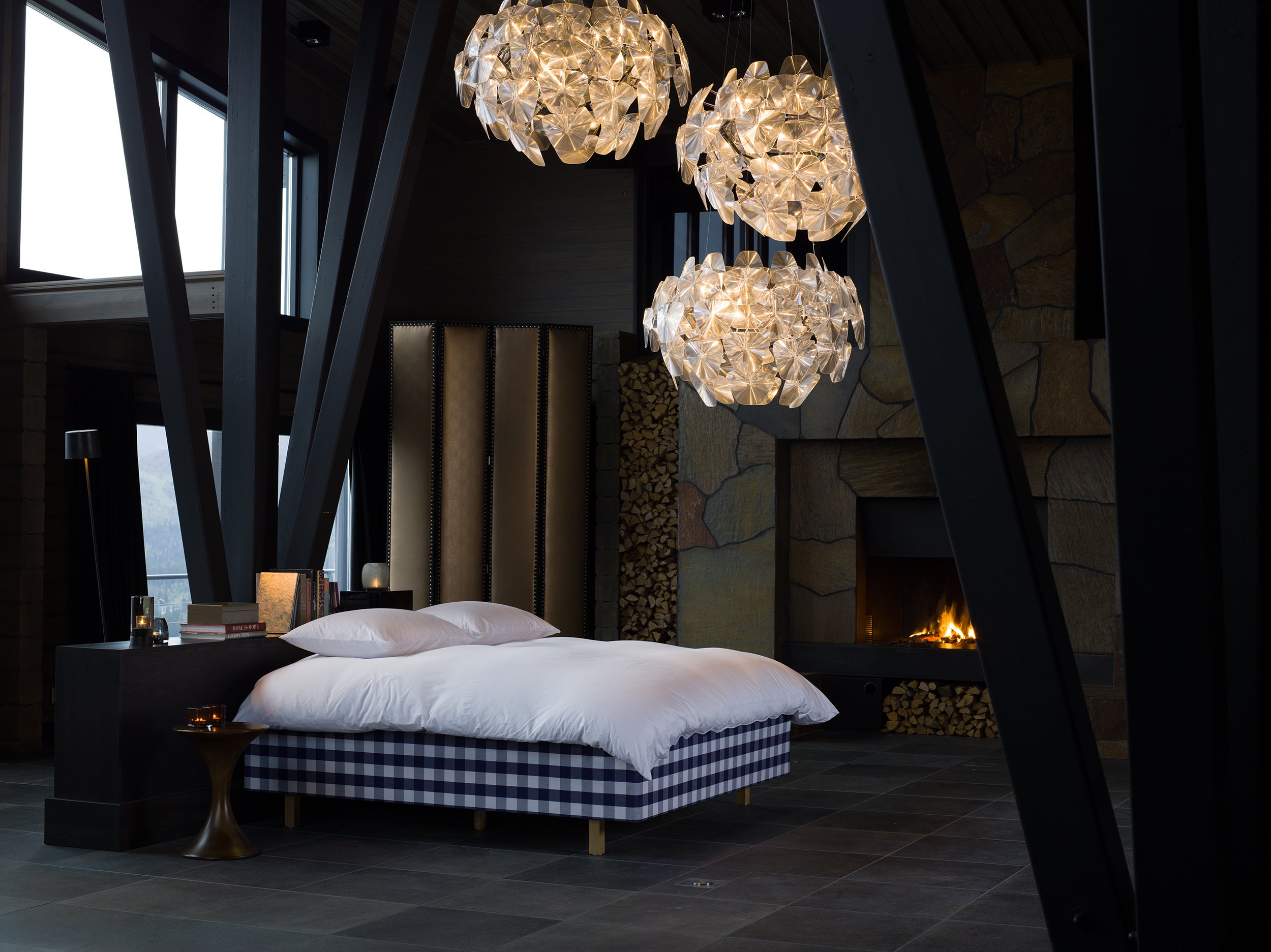
    Hästens bedding sleep health
    ©Hästens

    See also: The 10-Hour ‘Non-Diet’ That Improves Sleep, Energy, and Metabolism

    And yes, pillow wrinkles are a real thing – and one which back sleeping can help avoid. “Sleeping in a repeated position, due to the frictional forces, can lead to changes on that particular side, including an increase in the number or wrinkles on the face, neck, and décolletage,” explains founder of The Soni Clinic, Dr Ash Soni, who can normally tell at the time of a consultation which side a patient sleeps on. Still, the plastic surgeon and aesthetic injector cautions that genetics and baseline facial asymmetry also play a major role, while Moyen adds that sleep quality likely matters more than sleep position when it comes to visible signs of aging: “Poor sleep elevates cortisol, which breaks down collagen, and reduces the release of growth hormones during deep sleep, which is critical for tissue repair and skin regeneration.” In other words, when it comes to skin, great sleep on your side is better than poor sleep on your back.

    Hästens bedding sleep health
    ©Hästens

    If you want to change a long-standing habit, stomach sleeping is the position often flagged by sleep clinicians as the one worth addressing. As “the most mechanically demanding position for the body”, Moyen says, it places strain on the neck and lower back and can make breathing harder because the chest and diaphragm are compressed. Altering sleep patterns takes time, though, and the nervous system needs to relearn what feels comfortable and safe. To help nudge the body into a new position overnight, Dr Eldridge suggests trying physical barriers like specialist pillows and wedges, or even vibration alarms and wearable position trainers. “Expect the process to take a few weeks and try not to switch back and forth during that period, since consistency allows your body to fully adapt,” Moyen adds.

    Beyond position, sleep hygiene strongly affects sleep quality. Regularity, a cool, dark and quiet environment, and reduced screen use before bed all matter. As do your mattress and pillow, adds Moyen: “sustained pressure points from a poor mattress can cause micro-awakenings you won’t consciously register, but which fragment your sleep and reduce the time spent in deep and REM stages.” Ultimately, it’s about finding the best set-up for your needs, concludes Dr Eldridge. “Better sleep posture is less about one universal product, and more about creating an environment that allows the body to remain comfortable, supported, and undisturbed throughout the night.”

  • Famed Restauranteur Jeremy King on the Perfect Table and What He Always Keeps in His Fridge 

    Famed Restauranteur Jeremy King on the Perfect Table and What He Always Keeps in His Fridge 

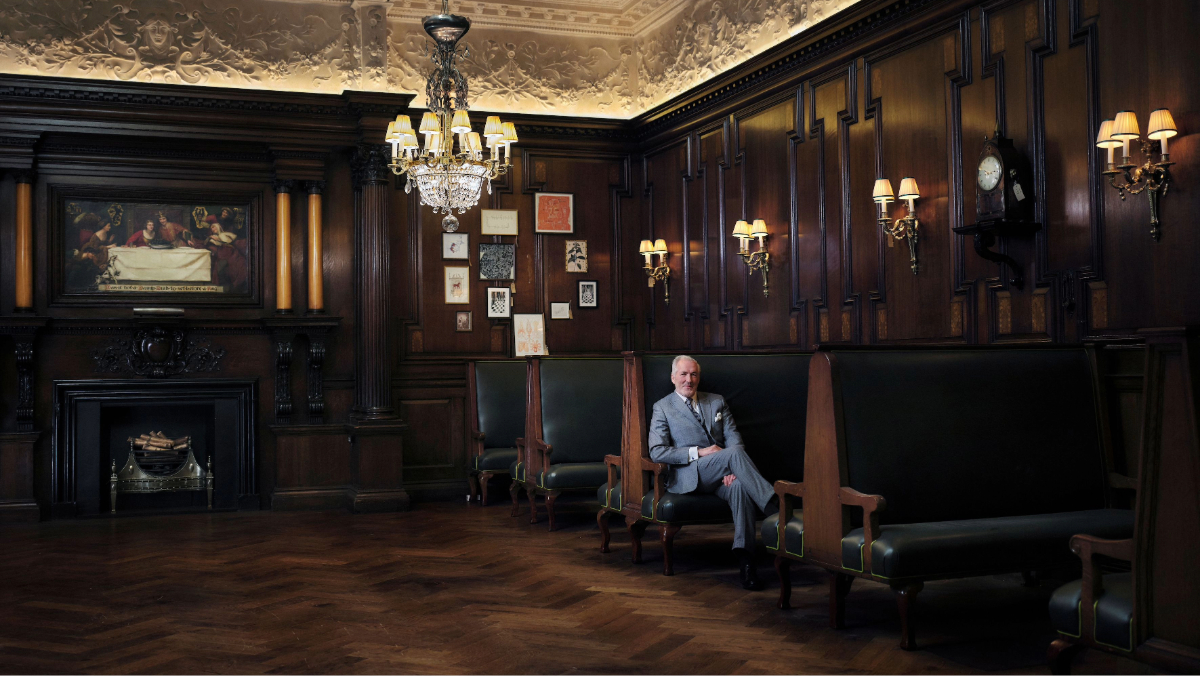
    The man behind many a era-defining establishment in London talked to us as he opens his latest venture, Simpson’s in the Strand. The man behind many a era-defining establishment in London talked to us as he opens his latest venture, Simpson’s in the Strand.

  • Inside a Manhattan Home Built on Mid-Century Furniture Icons

    Inside a Manhattan Home Built on Mid-Century Furniture Icons

    For Chris Mitchell, discovering Scandinavian design was a life-changing moment. Since then, the former magazine executive has set out to surround himself with exquisite mid-century pieces. 

    Kjaerholm daybed

    The magazine executive-turned-design guru has just given me a tour of his newly renovated Upper East Side apartment in Manhattan, the rooms of which are laden with museum-quality furniture and objects, running the gamut from iconic to obscure, that certainly attest to his passion. But, as interiors aficionados might expect, the apartment that Mitchell shares with his wife, the editor Pilar Guzman, is nothing like a chilly museum (not even the grand Metropolitan around the corner) – not overly fussy, not chock-a-block.

    chris wallace collecting
    Mitchell’s interiors are ‘Patina Modern’ in practice ©Chris Wallace

    The blonde wood floors and walls, the vintage pieces in sumptuous leathers, the thoughtfully illuminated cases are instead vivid, real-world expressions of ‘Patina Modern,’ the couple’s blueprint for design (and perhaps life) articulated in their 2022 book of the same name. A vision full of warmth and purpose, put together with the finest ingredients (the very best of Scandinavian modernism, for example), which are then properly used as intended and so allowed to develop the perfect patina of time. “Mid-century furniture,” as Mitchell described it in the book, “rendered in a limited palette of materials like white oak, aged brass, and bridle leather,” which, as they age, “become richer, mellower, burnished.”

    See also: How to Make Collectible Furniture Work In Your Home

    Mitchell, 56, who grew up outside of Chicago, says he gained an interest in design early in life – “probably inspired,” he says, “by the worlds Ralph Lauren created.” Mitchell’s father worked in advertising, so there were always magazines lying around the house, and it was an interiors column in Esquire that sparked his interest in New York apartments. “My idea of a sophisticated adult home was a loft or a modern high rise in New York,” he says, “filled with leather and chrome modernist furniture. I’m not even sure I knew who Le Corbusier or Mies van der Rohe were then, but that was the vibe I wanted.”

    mid century furniture collector
    Mitchell’s newly renovated apartment is a treasure trove of Scandinavian design classics ©Chris Wallace

    After studying literature at Berkeley, Mitchell came east, got a masters in publishing at NYU, and worked with Condé Nast for a generation, rising to become the chief business officer for Vanity Fair, The New Yorker and GQ. He describes meeting and moving in with Guzman when they were in their late twenties, along with discovering Scandinavian design at the time, as Damascene moments in his life, lighting his future path forward.

    See also: This Designer Left Jaguar – and Now Makes Ultra-Luxury Chairs

    In collecting terms, instead of following trends, Mitchell has allowed his curiosity to lead him further into his passion. “Seeing a Finn Juhl 45 chair for the first time blew my mind,” he says. “The craftsmanship, the warm-yet- modern combination – it was simply the most beautiful thing I’d seen. I didn’t know furniture could be that sculptural and chic, yet minimal.” This revelation, in about 1998, led Mitchell into a process of self-education, he says, assisted by some great dealers he met along the way.

    mid century furniture new york
    ©Chris Wallace

    “I fell for Hans Wegner Wishbone chairs before they became ubiquitous,” he says, “and Arne Jacobsen Egg chairs with that amazing patina of caramel leather, as well as Kaare Klint’s upholstered sofas, Poul Kjaerholm’s daybeds, and, my all-time favorite, the Borge Mogensen Spanish chair, with its saddle leather sling seat and wide oak armrests. I’ve bought more than 30 of these over the years but lost a lot of them when we sold our houses furnished.”

    Mitchell, Guzman, and their family only recently relocated to the Upper East Side, after a full-scale renovation of the apartment and the sale of the beloved Brooklyn brownstone where their children were raised. But it’s already very much a home, furnished with Mitchell’s favorite pieces, and beginning to mushroom with his latest interests. “We’ve done a lot of house projects for ourselves in the past 8-10 years,” he says, “so I’ve had occasion to bring in a lot of new pieces. But I’ve also turned to smaller objects that are easier to find space for,” he says, showing me marvels by the Austrian designer Carl Auböck, and spectacular Dansk tableware. “My favorites,” he says, “are the brass vases and decanters by Pierre Forssell for the Swedish company Skultuna. His pieces are all 1970s designs; they have a swingy vibe but are also so well made, which makes them feel permanent and classic.”

  • This New 10-Year-Old Rittenhouse Rye Is a Whiskey Collectors Are Sure to Chase

    This New 10-Year-Old Rittenhouse Rye Is a Whiskey Collectors Are Sure to Chase

    Heaven Hill is dropping an older version of its fan favorite to celebrate America’s semiquincentennial. Heaven Hill is dropping an older version of its fan favorite to celebrate America’s semiquincentennial.

  • Dodge’s Newest Halo Fits Muscle-Car Grunt Into a Two-Door Coupe

    Dodge’s Newest Halo Fits Muscle-Car Grunt Into a Two-Door Coupe

    The Copperhead is one of 110 new vehicles Stellantis plans to launch by 2030. The Copperhead is one of 110 new vehicles Stellantis plans to launch by 2030.