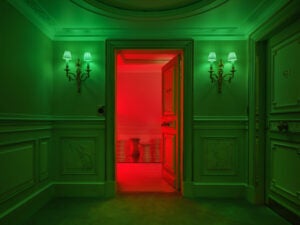
Hospitality’s biggest ticket item, the signature suite, is in danger of feeling dated. Enough with the marble, bring on the fun.

Such was the power of ‘the suite’ that that assumption of glamour and grandeur soaked into popular culture; witness Julia Roberts’s bubble bath scene in Pretty Woman or Macaulay Culkin’s shenanigans at The Plaza in Home Alone.
But as levels of wealth have exploded in the intervening decades since those 1990s blockbusters, fewer and fewer signature suites have kept pace with that elevated standard of living. Jaclyn India Sienna, founder of the members-only travel agency Sienna Charles, puts it bluntly: “Our billionaire clients might have five-plus $30m residences, and they know [when they travel] they can’t have anything close to the universe they’ve created at home. So, they don’t see the value in spending a ton of money on suites; they just view these spaces as rooms.”

For them, even ‘the world’s best hotel suite’ is a downgrade. For hospitality groups bent on continual growth (or at least wary of declining profitability), it’s an issue that needs addressing. While signature suites will likely always find receptive audiences who want to splurge on a one-night wedding-anniversary stay or milestone birthday celebrations, speak to hoteliers in London, New York and Paris and they’ll tell you the real revenue comes from the UHNW clients who have traditionally been happy to drop $30,000 a night on weeks- or months-long bookings. General managers will tell you they’re worried these customers are becoming increasingly elusive.
One potential stumbling block is the predictable approach taken to those premium offerings. Instead of creating a residence that serves as the ultimate expression of their brand identity, too many hotels are playing it safe with the same tired playbook of Carrara marble and chandeliers. Fancy, yes, but ultimately forgettable. Having designed signature suites for the likes of The Upper House and The Berkeley, André Fu feels it’s clear clients’ expectations have “evolved hugely in the past decade. [It’s no longer enough to] furnish decadent empty boxes with a grand piano.” Exacerbating the problem: Those same listless spaces are now facing increased competition – and not just from new hotels in their home city.
See also: The Top Wellness Suites in the World

Among a slew of exclusive-use properties that are enticing the likes of Sienna Charles’s clients with the promise of a more consistent home-from home experience, Ibiza’s exclusive-use retreat Isla Sa Ferradura sits on a private promontory and provides a staff of 24, two pools, two bars, a rooftop DJ deck, spa, exceptional catering – more or less a full private-resort experience from €250,000 (approx. $290,000) a week. During the pandemic, Mandarin Oriental launched its self-explanatory Exclusive Homes collection, a growing portfolio that includes Cotswolds manors and Los Angeles mansions. Accor has acquired onefinestay, a tightly curated, resolutely upmarket alternative to the likes of AirBnB and, tellingly, Rosewood Hotels now refers to its best suites as ‘Houses.’ At its new London hotel The Chancery, itself an all-suite property, Elizabeth House comes with an office, terrace and fully equipped kitchen – ideal for longer stays.
But still, for hotel designer Bill Bensley it’s a sense of fun and playfulness that is often the missing ingredient. Responsible for flagship properties for the likes of Capella Hotels and Four Seasons, his priority is to create surprising suites that deliver a narrative and sense of place, ones that “delight, not just accommodate.” Though his clients bring constraints – “developers love the idea of ‘wow’, but when it comes to reality, budgets and risk loom large” – his own dream suites of the future would serve as “little sanctuaries of surprise that break rules and surprise the senses, where maybe the shower sits in the middle of a tropical garden, or a hidden passage leads to a sketching nook.”
See also: The Top Family Suites in the World

It’s an ideal perhaps best expressed in his Heritage Railcar Two-bedroom Pool Villa at Thailand’s InterContinental Khao Yai. At 197-ft long and 8.2-ft wide, it comprises two upcycled, conjoined vintage train carriages, harking back to the romanticized era of cross-continental rail journeys with its polished brass and leather seating. (More broadly, the hotel’s design was inspired by the story of a fictional, historic train conductor; trinkets and heirlooms detailing his imagined life are laid out like Easter eggs to be discovered across the property.)
Some hotel groups seem to be following Bensley’s lead – embracing a greater sense of creativity to deliver suites explicitly conceived as settings for socializing and fun rather than chicbut-somber showpieces. Rocco Forte Hotels’ new Suites & Beyond program is reinterpreting its best rooms as adaptable stages, meaning terraces at Hotel de la Ville suites in Rome can now accommodate stargazing beds or host ‘sky tours’ led by astronomers, while local performers (such as pipers in Edinburgh or a jazz trio in Brussels) can be booked to deliver private shows through the brand’s Musical Room Service. Shangri-la Hotels is upping its game, too. At Shangri-la Paris, guests in the L’Appartement Prince Bonaparte, a protected residence with Versailles-style flooring and acres of gilt, can book the Bonaparte Dinner to feast on the same historic dishes once enjoyed by the 19th-century building’s eponymous original owner, a scion of the Napoleon family. Served by staff in period costume to parties of eight, it boasts a menu of crayfish bisque à la riche and Argenteuil white asparagus with maltaise sauce and adds €5,000 (approx. $5,800) to the suite’s €15,000 (approx. $17,400) lead-in rate.
Though Raffles Hotels is traditionally a little reserved, perhaps, its new The Butler Did It campaign depicts that hallowed Raffles representative helping suite guests kick up their heels. In London, Crazy Rich Asians star Henry Golding is shown enjoying a dip in a signature suite’s golden bathtub as a butler tops the water up with a golden kettle. Future guests may not follow Golding’s apparent predilection for taking dips fully clothed, but it does provide a reminder of the adage oft trumpeted to every VIP booking: You’re free to do with the space as you please without judgment, as long as it’s legal.

On a personal level I was impressed by two residences lately. At Taj Lake Palace Udaipur’s Grand Royal Suite, I sat in a nook, awash in gold and peppermint, and rested at eye level with the boats that chugged past. At Hôtel de Paris Monte-Carlo’s 10,581-sq-ft Princess Grace Suite, it wasn’t the granite Jacuzzi or Port Hercules views for me. Instead, I lingered over the humble, decades-old collages of pressed flowers. They were made by Princess Grace, an intimate, unexpected encounter with a pastime the royal clearly loved.
We all know how successful the wellness industry has been in becoming part of the tapestry of luxury lifestyle offerings, both at home and when we travel. President of luxury at Marriott International, Tina Edmundson, tells Elite Traveler that new Mindful Suites at JW Marriott will respond to travelers’ growing interest in that direction with dedicated meditation spaces, circadian lighting and biophilic design elements. Meanwhile, founder of travel-trend forecasting agency Globetrender, Jenny Southan, sees the pop-up Suite 1835 at Le Meurice in Paris, where bespoke furniture is automatically illuminated as guests thread through the place, and AI-generated art is created in situ in response to “their energy” (Le Meurice’s words, not Southan’s) as a precursor to the in-room opportunities promised by new technologies. Look out, she predicts, for suites that will serve as “sentient sanctuaries, sculpted to choreograph your emotional and mental state,” where nights in front of the TV will be replaced by virtual-reality, transcendental travel experiences.
That might sound fanciful for now, but future suite stays could be significantly more fun and engaging if designers like Bensley are given more leeway. As he says: “The best suites are a playground of delight, a place that teases the senses, sparks curiosity, breaks the rules and makes you think, ‘I’ve never seen anything quite like this.’ Play it safe, and it’s just another room with a bigger price tag.”
Добавить комментарий