The country will be one of the best places in the world to experience the 2026 eclipse’s concluding moments.
Spain is preparing for a rare celestial spectacle: a sequence of three solar eclipses over the next few years that astronomers have dubbed the ‘Iberian Trio.’ The country will be one of the few in the world where two total eclipses and an annular eclipse are all visible within such a short period, offering keen astrology travelers a once-in-a-lifetime opportunity.
Total solar eclipses are exceptionally rare at any single location, and Spain will hold the unique distinction of being the only country worldwide where the final phase of a total eclipse can be observed. Occurring in the summer months, these eclipses also benefit from a higher likelihood of clear skies, ensuring optimal viewing conditions.
A solar eclipse occurs when the Moon passes directly between the Earth and the Sun, temporarily blocking some or all of the Sun’s light. During a total solar eclipse, the Moon completely covers the Sun, briefly turning day into night and revealing the Sun’s faint outer atmosphere, known as the corona. Observers see a progressive sequence as the Moon gradually obscures the solar disk, and, after the dark ‘moment of totality’, the Sun reappears as the Moon moves away.
A partial solar eclipse occurs when only part of the Sun is covered, while an annular eclipse, sometimes called a ‘ring of fire,’ happens when the Moon is slightly farther from Earth and appears smaller, leaving a bright ring of sunlight around its silhouette.
Experts stress the importance of safety: never look directly at the Sun during any eclipse without certified filters or eclipse glasses, as ordinary sunglasses do not provide adequate protection.
When will Spain’s solar eclipses be visible?
The Iberian Trio will unfold during the summers of 2026, 2027, and 2028. The first, on August 12, 2026, is a total solar eclipse – the first visible from the Iberian Peninsula in more than a century.
Occurring at sunset, the path of totality will sweep from northwest Spain eastward, starting in Galicia, where A Coruña will witness the eclipse at 7:31 pm, and continuing across northern Spain to the Balearic Islands at 7:38 pm. Thirteen autonomous communities lie along the path, including Oviedo, Santander, León, Bilbao, Zaragoza, Valencia, and Palma.
In these regions, the sky will briefly darken to twilight, and the Sun’s corona will become visible, while observers outside the path of totality will see a deep partial eclipse. For the clearest view, it is best to choose a location with an unobstructed horizon, free from buildings, trees, or mountains.
The second eclipse will take place on August 2, 2027, this time visible across southern Spain, including Cádiz, Málaga, and the southernmost regions such as Ceuta and Melilla.
The series concludes with an annular eclipse on January 26, 2028, when the Moon will appear slightly smaller than the Sun, creating a dramatic ‘ring of fire’ effect visible across much of Spain.
What’s cooler than a Dior Saddle bag? A Loewe Tomato candle.
A Rolex, Patek Philippe, or Audemars Piguet peeking from beneath a cuff revealed that you’ve worked hard and played hard, too. Likewise, a Chanel 2.55 Flap, Dior Saddle, or Fendi Baguette suggested a cultivated elegance. Either way, these objects signified more than wealth, but something that’s much less attainable: taste.
Lately, however, it seems like those signifiers have shifted – dare I say slipped – within the hierarchy of what is considered refined. The language of taste has slowly been migrating inward, no longer just worn but displayed in our homes.
It began, curiously enough, with a hand wash – I suspect you already know which one I’m referencing before I state it – Aesop’s Resurrection Aromatique Hand Wash. Introduced in 2006 by the Australian brand, it formed part of the wider Resurrection Aromatique line, carrying its signature citrus and herbaceous profile through a blend of orange, lavender, and rosemary oils. By its own description, it has since become “the most coveted hand soap in the world.”
The evidence is difficult to refute. Step into any design-conscious restaurant or impeccably curated hotel, and you are likely to encounter it in the bathroom. Its presence has become so culturally coded that it no longer signals cleanliness or quality, but a certain aesthetic literacy – one that, increasingly, extends even to the selling of homes.
“We started noticing in Melbourne that if someone has their home on the market, they’ll put some Aesop hand wash in there before showing prospective buyers,» Kate Forbes, Aesop’s general manager of products, research and development, told Esquire in 2019.
At the height of the “shelfie” era – an Instagram-born phenomenon of the 2010s in which bathroom cabinets were meticulously staged and photographed for social media – any image of consequence invariably featured the same hand wash. That spurred a wave of luxury lifestyle brands to launch their own, in a bid to fill the demand Aesop had created. Malin + Goetz leaned into its cult-favourite Rum hand wash; Le Labo championed Basil; Grown Alchemist found a bestseller in its Invigorate formula – a fitting successor for hands already, ostensibly, “resurrected.”
The appetite for $50-and-up handwash only grew with the onset of the first lockdown, when expendable income that would usually be spent outside the home was used for everything in it, contributing to the rise of luxury bodycare sales.
With that came the desire to further accessorize, and therefore these same brands, alongside a growing cohort of competitors, started pushing candles. According to the research group Kantar, sales of scented candles and essential oils for diffusers jumped 29 percent in October 2020.
Loewe, for instance, has become nearly as synonymous with its candles as with its ready-to-wear; the September launch of its tomato iteration briefly captivated the zeitgeist, elevating the tart nightshade into an unlikely object of olfactory desire. Meanwhile, Cent.Ldn – launched in 2020 while founder Hayley Mack was furloughed from her brand strategy job in London – quickly secured retail partnerships with Selfridges and KITH for its boombox and gin bottle-shaped candles. The brand made £100,000 (approx. $134,000) in revenue in the business’ first year. That spring, fragrance brand Boys Smells had a 1,200 percent increase in wholesale order volume.
As well as being deemed a home luxury, these beautifully-designed candles offered ready-made Instagram content at a time when daily life afforded little else worth documenting. (That was also the case for perfumes, too, which also saw sales spike in the latter half of 2020.) And, of course, the rise in luxury hand wash was inextricably tied to a moment when the act of washing one’s hands took on near-ritualistic importance.
There is, of course, the matter of accessibility. Traditional signifiers of taste have, over time, become more attainable – aspirational consumers are increasingly willing to save for sartorial purchases, inevitably diluting their once-exclusive aura (recent price escalations from the major houses may yet recalibrate that balance). But the psychology differs when it comes to the repeatedly consumed. Would the same buyer indulge, again and again, in something inherently transient? Unlikely. Those with the means, however, can absorb that cadence of spending with ease – and in doing so, reinforce a marker of distinction.
Marketing, too, plays a decisive role in conferring this sense of taste. Aesop and Loewe carefully position themselves at the intersection of art, literature, and design, imbuing otherwise mundane rituals – washing one’s hands, scenting a room – with cultural weight. To add to that, ingredient provenance is of the highest quality and often touted so.
Perhaps it’s that these products can only exist in the home that adds to it. Wearing designer clothing out and about forces people to notice, and that could be perceived as flashy or gaudy. Having signifiers in your home that only those you’re close enough with will see has a subtlety to it, in the same vein as the ‘quiet luxury’ trend in fashion. As the adage goes: money talks, but wealth whispers.
Offered with all its furnishings, the downtown aerie is expected to bring starting bids between $3.5 million and $4.5 million. Offered with all its furnishings, the downtown aerie is expected to bring starting bids between $3.5 million and $4.5 million.
The most recent version of the car, the R35, went out of production last year. The most recent version of the car, the R35, went out of production last year.
Although cancelled last year, the Anantara Concorso Roma will now debut this month featuring Italian cars only. Although cancelled last year, the Anantara Concorso Roma will now debut this month featuring Italian cars only.
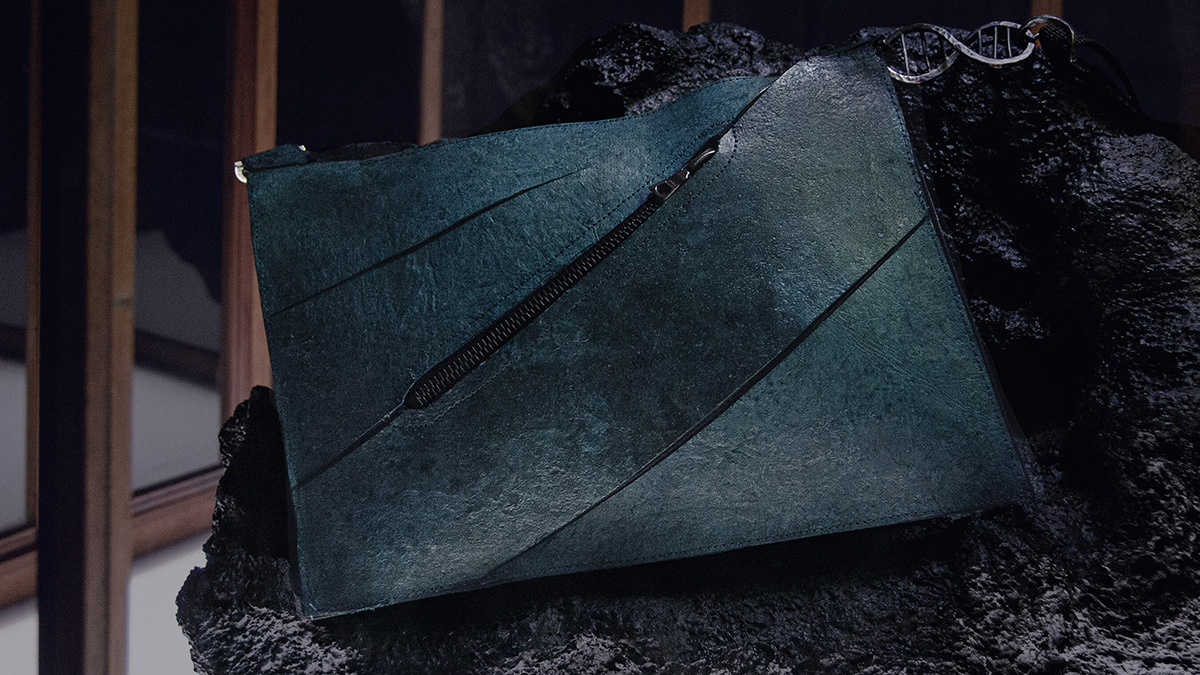
The one-of-a-kind clutch will be auctioned off in May with a reported starting price of more than half a million dollars. The one-of-a-kind clutch will be auctioned off in May with a reported starting price of more than half a million dollars.
With new whisky releases stretching into the decades (which distillery will be the first to release a 100 year old?) and an onslaught of marketing material to boot, separating the delicious from the overpriced can be tricky. To help you guide your next purchase, we’ve tapped into the minds of those who pour, mix, and crucially taste whisky for work, for their top whisky recommendations right now.
Bartenders’ choices of whisky to buy
Mortlach 15 Year Old — Mehdi Ichedadene, Coburg Bar at The Connaught
The Red Room at The Connaught might be the hotel’s Instagram darling, and The Connaught Bar is where committed martini aficionados head, but for whisky nuts, the lesser-known Coburg Bar calls. Offering over 200 varieties by the glass, the team showcases the ever-changing character of whisky (in particular Scotch, which makes up over 80 percent of the list).
Novices and connoisseurs alike are encouraged to try the Dram Journey experience, which presents three varieties on a bespoke tableside trolley. Among bar manager Mehdi Ichedadene’s current top serves is the Mortlach 15 Year Old, which is “a combination of first-fill and refill Sherry casks and bottled by Gordon & MacPhail as a testament to the long standing and unique relationship with Scotland Distillery owners, built up over generations.”
House of Hazelwood — Tom Addy, Bertie’s at the Fife Arms
Secreted away in a far corner of the weird, wacky, and wonderful Fife Arms, Bertie’s Bar has become something of a pilgrimage for whisky lovers (one guest reportedly flew into Scotland for a matter of hours to taste one rare dram).
Amid such a varied selection, naming a favorite proves tricky for bar manager Tom Addy. «It’s very hard to pin down a single dram but we are proud to hold one of the largest collections of House of Hazelwood bottles anywhere in the world,” he says. “They represent a single family’s dedication to Scotch whisky over multiple generations, drawing on casks laid down, bartered with, and collected by Charles Gordon and his descendants.”
“[They] are phenomenal to drink but like so many bottles of aged Scotch the real treasure is in the stories they hold – stories of craft, heritage, and styles of whisky no longer possible with modern production methods,” he adds.
Glenturret 15 Year Old — Andrea Gardiner, The American Bar at Gleneagles
A step back in time to the roar of 1920s New York, in the middle of remote Perthshire, The American Bar at Gleneagles is something of an institution. Cocktails are a mainstay on the menu but, being in Scotland, a dram or two is encouraged. Unlike many bars that list whiskies via location, here they are separated by flavor profile, be it chocolatey and spicy or peaty and mineral.
Amid its extensive collection, bar manager Andrea Gardiner sings the praises of the 2025 Glenturret 15 Year Old. Matured in European and American oak, the whisky is rich with honey, vanilla, cinnamon, and ripe fruits. “I love this decadent and velvety dram from Scotland’s oldest working distillery,” says Gardiner. “It really showcases Glenturret distillery’s traditional hands-on production, shown by the slowly refined texture of the whisky. A perfect way to finish your evening.”
Teeling Blackpitts — Oisin Kelly, The Sidecar
Sultry and nostalgic, 1930s-inspired The Sidecar is The Westbury hotel’s retro drinking den. Its cocktail list is a celebration of Dubliners – not just the one that made the history books, but the everyday folk too – and each drink is listed scrapbook-style alongside archive photography.
When it comes to stiffer drinks, as you’d expect, Irish whiskey takes precedent over Scotch here. «One whiskey we are enjoying pouring right now is Teeling Blackpitts, a peated Irish single malt,” says bar manager Oisin Kelly. “Although Irish whiskey is generally smoother and sweeter, this particular one is also smokey. We are pouring it neat and our guests are enjoying discovering an Irish whiskey that has smoke but maintains its smooth, classically Irish finish.”
Tomatin 36 Year Old Batch 11 — Dario Orsili, 100 Princes Street
An Edinburgh outpost for the family-run Red Carnation hotel group, 100 Princes Street pulls on Scotland’s rich history: tartan covers the walls, tattie scones are the star of the breakfast plate, and, of course, whisky lines the bar shelves.
“One whisky that really stands out right now is the Tomatin 36,” says the hotel’s whisky ambassador and head bartender Dario Orsili. “It is one of the most distinctive and flavorful whiskies I have tasted, with vibrant tropical fruit notes followed by a gentle touch of spice on the finish, which is not what you would typically expect from a whisky of this age.
“That sense of surprise is exactly what makes it so compelling. It challenges preconceptions, and with […] just 1,200 bottles of Batch 11 released worldwide, it is a rare example of confident, thoughtful maturation done exceptionally well.”
Michter’s 10 Year Straight Rye — Jay Reingold, Clemente Bar
Sat above the Eleven Madison Park dining room, Clemente Bar puts a refined, sophisticated spin on drinking culture. The venue is a partnership between chef Daniel Humm and artist Francesco Clemente and the duo’s artistic vision shines through a warm color palette, dotted with vintage furnishings and original works. The drinks program is playful but prioritizes unusual flavor combinations – be it carrot with rum or pickled plum ice cream with coconut.
For his whisky recommendation, bar manager Jay Reingold stays on US shores. “American whiskey is something I’ve loved since I started bartending, both in cocktails and neat,” he says. “Michter’s has been making incredible benchmarks of the category for hundreds of years. Whenever I’m lucky enough to find some, I’m drinking Michter’s 10 Year Straight Rye.
“It’s a single-barrel bottling, so each run is a one-of-one experience, which is a great study into how different whiskey can get. But for an overproof whiskey, it is both approachable and incredibly complex. There’s a good hit of vanilla, coconut, and baking spice on the nose, and the palate starts richer, almost like butterscotch, but finishes quite dryly, with a hint of citrus zest.”
Nikka Coffey Grain Whisky — Steve Schneider, Sip & Guzzle
Aiming to deliver a slice of Tokyo in Greenwich Village, Sip & Guzzle pays homage to the 77 samurai that visited the US in 1860 (and reportedly frequented bartender Jerry Thomas’ infamous tavern.
In a similar vein to this fusion style, bartender Steve Schneider recommends a Japanese single grain whisky, with a profile similar to bourbon. “Its high corn mash bill is akin to American Bourbon,” he says. “It’s very refined and delightful to sip on.”
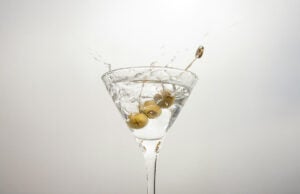
Alice Lascelles shares why most Dirty Martinis taste terrible (and how to fix yours).
Not because it’s a terrible drink, necessarily, but because it’s so often done very badly. I don’t know how many times I’ve watched well-meaning mixologists muddle gin and olives into a murky soup that’s both horrible to look at and unpleasant to consume. And there seems to be an arms race on right now to make the drink dirtier still, with the addition of abominations like blue cheese, onion soup, chicken broth, and MSG. It’s filthy; and not in a good way.
My theory is that people like the idea of a Dirty Martini more than the actual taste. Ordering one feels a bit racy; and finishing it feels like something of an achievement.
But it is possible to mix a good Dirty which plays by Martini rules; one that delivers that satisfying, savory olive hit without compromising on polish.
The first rule of a good Dirty Martini is: it should always be crystal-clear. Regardless of how dirty you like it, it shouldn’t contain sediment. So, stop crushing olives into your vodka and gin immediately – you’re not making a drink, not a tapenade. There are other, much better, ways to introduce olive to your cocktail.
One is with a splash of Oli-still Distilled Olive eau-de-vie, a fantastic olive distillate from the family-owned Distillerie Manguin in Provence. I was introduced to this stuff by Colin Field, the celebrated former head bartender of the Paris Ritz’s Hemingway Bar, who uses it in his signature Clean Dirty Martini. Distilled from French wheat and Provençale olives, it marries a rounder green olive/apple fruitiness with vivid, slightly peppery notes of vine leaves and herbs. You don’t need much in a Martini (I’ve detailed my preferred recipe below.)
The Manguin distillery also makes excellent olive gin and vodka, which combines complex olive characters with a sumptuous, buttery texture. But I like the precision of the eau-de-vie for a Martini; it makes the recipe easier to fine-tune.
Olive is already quite an intense flavor, so for the main body of the drink, plain vodka is best – the grain-based Konik’s Tail, or the creamier Chopin potato vodka, both from Poland, would be my preference. If I was going gin, I’d stick with a London Dry like the more citrus-led Beefeater or drier Tanqueray. But Four Pillars Olive Leaf Gin from Australia – which is flavored with Aussie olive oil, olive leaves, macadamia nuts, and lemon myrtle – is also fun for a play.
That’s the olive component covered – then we also need an appetizing hint of salt. The simplest way to introduce this, of course, is via a little brine from the olive jar.
But stop right there! How long has that jar been open? Has it been lingering at the back of the fridge for weeks? Or, worse, had fingers rooting around inside? In that case, forget it.
If your brine is in good nick – or better still, freshly opened – then you may proceed. But before you do that, it’s also important to think about quantities. Because a brine-heavy drink won’t just be more saline, it will also be more dilute. If you’re heavy-handed with the brine, you risk detracting from that silky concentration that makes a Martini so luxurious. So go easy. I find 5-10ml (or 1-2tsp) is about right.
A final spritz of olive brine from an atomizer, over the drink, can also be nice – think of it in the same way as that pinch of salt you use to finish a dish.
The garnish, of course, must be olives. I am a Nocellara die-hard. But a trio of pitted olives on a cocktail pick is also a classic look. Either way, the olives should be in brine, not oil, unless you want your drink with an unattractive slick on the top. Olives containing any kind of stuffing – peppers, cheese, or god forbid, anchovies – should be kept firmly on the side.
I also like my Dirty Martini brightened up with a lemon twist – but for some, I realize, even that may be a bit too squeaky clean.
The classic New England Colonial, dating back to 1835, has been carefully updated in recent years, blending historic charm with modern comforts. The classic New England Colonial, dating back to 1835, has been carefully updated in recent years, blending historic charm with modern comforts.