
The entrepreneur’s net worth soared after his company SpaceX began trading on the stock market. The entrepreneur’s net worth soared after his company SpaceX began trading on the stock market.
Рубрика: General
-

Road Test: Bentley’s Continental GT S Hits the Sweet Spot in Plug-In-Hybrid Performance and Presentation
The 671 hp coupe and GTC S convertible feature what the British marque claims is its most advanced chassis design to date. The 671 hp coupe and GTC S convertible feature what the British marque claims is its most advanced chassis design to date.
-

The Art of the Euro Summer: Where to Visit, Dine, and Explore in 2026
These are the destinations to have on your radar for summer 2026.

The European summer is a phenomenon in its own right: a months-long circuit of beach clubs, yachting, and glitzy restaurant tables that sees the Mediterranean’s most famous destinations fill with visitors each year. And while Ibiza, Mykonos, and St Tropez remain as popular as ever, luxury travel insiders are increasingly looking beyond the usual suspects.
So, where is everyone actually going this summer? We asked the people making the reservations. From the restaurants with the longest waiting lists to the islands seeing a surge in demand, these are the destinations defining Europe’s 2026 social calendar.
See more: St Tropez’s Most Exclusive Hotel Just Opened For Summer
Top Euro summer tips from luxury travel advisors

Private yacht charters in the Adriatic and Greek islands see strong demand every summer ©Shutterstock When it comes to planning the perfect Euro summer, Tom Marchant, co-founder of luxury travel company Black Tomato’s advice is surprisingly simple: don’t try to do too much. «The smartest thing anyone can do is resist the urge to treat it as a content exercise,» he says. «The people I see having the best experiences this summer are the ones who’ve chosen one or two places they want to immerse themselves in more deeply.» Rather than attempting to squeeze Ibiza, Mykonos, and the French Riviera into a single trip, he suggests focusing on one region.
Marc Lotenberg, founder of reservation platform Dorsia, expands on this – while these marquee destinations remain popular, he recommends balancing them with places that offer a stronger sense of local culture. «Some of the most memorable experiences often come from venturing just beyond the obvious,» he says. «The best European summers are built around access to experiences that feel genuinely difficult to find – whether that’s a coveted lunch reservation, a private cultural event, or a dinner that turns into an unforgettable night.»
Marchant also cautions clients planning their trip against underestimating logistics during peak season. “A transfer that takes 25 minutes in October might take two hours in August,” he warns. “Ferry connections between islands get missed. Tables fall through. Part of what we do is engineer around that before it becomes an issue.” For clients travelling between Greek islands, he recommends helicopter transfers, which are becoming increasingly popular choices in the summer months.

Helicopters can be much more efficient, and exciting, modes of transport for hopping between Greek islands ©Hoper Another common mistake? Booking accommodation before deciding what kind of trip you actually want. «Someone secures a suite at a beautiful property in Mykonos, then builds everything around it,» says Marchant. «The accommodation should come out of the experience you want, not the other way around.»
Also, clearly, having the right concierge on speed dial helps. According to Marchant, securing sought-after experiences is often less about luck and more about timing. «Very little is out of reach if you move with the right lead time and know who to call,» he says. «A big part of what our team does is work those relationships year-round so that when a client comes to us in May wanting a peak-August charter or a table at somewhere serious, we have a real chance of making it happen.»
That said, some bookings require more planning than others. Private yacht charters in the Adriatic and Greek islands continue to see strong demand, particularly from families and groups looking to island-hop without a fixed schedule. While last-minute bookings remain possible, Marchant recommends securing larger vessels well in advance for July and August travel: “We can still pull things together closer to the date through our network, but anything above 30 meters (98 feet) in peak July or August ideally wants to be locked in well ahead.”
Above all, Marchant advises leaving room for spontaneity. «We always recommend building in a day that has nothing planned, too,» he says.
The European destinations to have on your radar this summer

The Salento region in Puglia offers visitors the beauty of historic towns, with excellent food and wine, and a great social scene ©Shutterstock For Marchant, few destinations are attracting more attention this summer than Sardinia’s Costa Smeralda. «There’s always a level of spectacle there, but it somehow retains glamour without descending into chaos,» he says.
The region has welcomed a number of high-profile arrivals in recent months. Among the most talked-about is Cheval Blanc’s takeover of Hotel Pitrizza in Porto Cervo, a property Marchant says is generating significant interest thanks to both the beautiful setting and its boat-access-only beach. Rocco Forte has also opened on Costa Smeralda, with interiors by Patricia Urquiola helping to draw design-forward travellers.
Sardinia’s beach club scene also remains as strong as ever. Zuma opened its Porto Cervo outpost in late May, which Marchant expects to be one of the summer’s toughest reservations. “Phi Beach and Nammos are both back for the season too, and between them they cover most of what people are looking for on a big Sardinian night out,” Marchant adds.
And for those extending their travels into September, the Maxi Yacht Rolex Cup remains one of the Mediterranean’s standout events. “The atmosphere in Porto Cervo during race week is unlike the standard summer circuit,” says Marchant. Held annually in Porto Cervo, it draws an impressive fleet of sailing yachts and a social scene to match.

Milos’ summer popularity is skyrocketing ©Shutterstock For travelers looking to venture beyond the traditional Euro-summer circuit, several destinations are gaining momentum. Milos remains one of Marchant’s top recommendations, citing it as “one to watch,” thanks to its dramatic volcanic landscapes and laid-back atmosphere. “The beaches at Sarakiniko look like the surface of the moon; the water is extraordinary,” he says. “And while it’s no longer a ‘secret,’ it still functions on its own terms,” he adds.
Neighboring Sifnos offers a different appeal. Known for its gastronomy and strong local identity – “the food culture there is disproportionately good for the island’s size,” emphasizes Marchant. It continues to attract travelers looking for a slower pace than many of the Cyclades’ better-known islands.
Puglia, meanwhile, shows no signs of losing momentum – the region’s most sought-after masserie are already seeing strong demand for the peak summer months, particularly among larger groups. «It has this rare quality of feeling effortlessly cool without trying,» says Marchant. The Salento region, particularly around Otranto, Gallipoli, and Lecce, draws visitors with its combination of historic towns, excellent food and wine, and a social scene centered around long dinners and aperitivo rather than all-night clubs, which “suits the way our clients actually want to spend their evenings,” adds Marchant.
And further west, for a slightly different take on a Euro summer trip, the Basque coast is continuing to attract a big crowd. «The food, the local bar-crawl culture, and the combination of surf and city give it a pull that some of the more stage-managed spots on the Mediterranean circuit can’t quite replicate,» says Marchant.

San Sebastiàn is home to some of the best restaurants in Europe ©Shutterstock Combining a few days in Biarritz with time in San Sebastián offers a very different version of the European summer – centered around beaches, pintxos bars, and some of Spain’s most celebrated restaurants. Reservations at Mugaritz, Arzak, and Akelarre remain highly competitive, particularly during peak season.
For those looking to build an itinerary around a specific event, Marchant recommends San Sebastián’s Jazzaldia festival, which returns in July. «It’s unlike most things in Europe at that time of year,» he says. «You end up moving between pintxos bars and late sets in a way that feels genuinely unplanned.»
With all that being said, Lotenberg assures that the traditional Eurosummer favurites aren’t going anywhere. According to Lotenberg, Ibiza and the South of France remain among Dorsia’s most requested summer destinations each summer, and 2026 is no exception.
Among the bookings seeing the highest demand are Jondal in Ibiza, Loulou Ramatuelle, Cipriani Monte Carlo, and La Môme Cannes. Beach clubs continue to drive demand, with particular interest in Jondal and reservations aboard the Loulou yacht. Newcomer Jais Ibiza is also proving one of the season’s hottest openings – “we’re already seeing strong booking activity on the app,” Lotenberg adds.
-

Why Nobody Talks About Sex After a Mastectomy
I was prepared for the surgery, the recovery, even the scars. What I wasn’t warned about was the impact on intimacy long after healing.

-

This New 113-Foot Superyacht Is Topped by a Panoramic Jacuzzi
The first Navetta 35 to hit the seas is a beauty. The first Navetta 35 to hit the seas is a beauty.
-
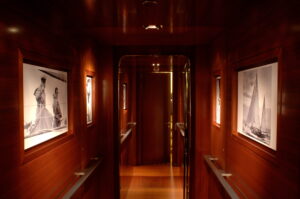
How to Curate, Transport, and Install Art on Your Yacht
Experts reveal how to transform your ship into a floating museum.

Countless hours are spent poring over the cabling, what kind of wood will be used for the floors, and where to install a pool or add a movie theater. Once all that’s over and done, selecting art and décor can feel a touch superfluous. “It’s years of work, and the questions feel endless, so by the time it’s down to what’s going on the table, you’re exhausted,” says art dealer and collector Adrian Sassoon. “I often find people give more attention to the boat itself, and the objects tend to be a bit off the shelf.”
However, a beautifully designed yacht should feel like a mansion on the water, and that means every last detail must be carefully considered, down to the artwork you hang on the walls. It can feel like a daunting prospect, however, to bring priceless artwork onboard a moving residence that’s surrounded by the sea on all sides. That’s where an expert comes in.
See also: An Expert Guide to Yacht Shows Around the World

©Liaigre / Mark Seelen Eugene Layton, head of operations at Gander & White, has installed art on countless yachts during his 20-year run at the logistics company. Yet, no matter how much experience he possesses, each project proves to be a unique experience. “No two have been the same in terms of logistics, or even how to load onto the actual vessel,” he says. “We’ve had complications on access, on insurance, and the marina.”
The logistics company’s approach is a meticulous one, and begins with a site visit, where they’ll take measurements of every single aspect of the yacht – the team will spend more than a day there if necessary. Afterward, Layton and his team will devise a plan to load the artwork onto the ship, which varies based on the yacht itself, as well as where it’s located. One possible scenario is craning the artwork from Gander & White’s truck to a barge, where it’s then craned from the barge to a bridge deck. The art will be uncrated, installed, and then the crate will be moved back from the barge to the truck.
See also: What It’s Like On Board the Orient Express Corinthian, The ‘World’s Largest Sailing Yacht’
Great care will be taken to leave no trace. “Yachts are extremely high-end, and extremely fragile,” he says. “A lot of our process is about protecting the floors and making sure we have a staging area.” Everything the company uses for an install must be brand new, down to the drill bits used to hang a painting – older tools might cause splintering or leave debris behind. It’s an important consideration for projects both big and small. Layton recalls working on a second yacht for a client in Marseilles that was so large, his team had to use walkie talkies to properly communicate between floors and rooms.

©Liaigre Having a logistics expert to install the pieces is important, but bringing an art consultant on board early can help immensely in curating a beautiful collection. “It’s a big part of the original layout,” says Guillaume Rolland, principal of design firm Liaigre. “When we approach a space, it feels a bit like movie making.” In fact, aside from the technical considerations, he thinks of designing and curating art for a yacht as no different from working on a hotel, private residence, or a restaurant. “We’re architects,” he says. “We deeply believe everything is ruled by architecture.”
Much of the firm’s work complements the yacht’s surroundings, evoking a sense of adventure, but not distracting from the beautiful views that often surround. For example, a recent project had a long wall with a blue mirror stretching across it that almost resembled a window. Liaigre added five seascape photographs by Hiroshi Sugimoto to the wall as well. The mirrors would reflect the horizon, and the artwork would echo this vista, albeit in a different format: “It’s playing with the magic and the poetry of things,” he says.
There are, of course, a few natural concerns that may arise regarding certain art pieces in a space that’s so close to the natural elements. For Sassoon, however, there’s a simple solution. “If you as a human being are sitting in a room and you’re not too cold or too hot, and you’re comfortable, then most works of art will be comfortable too,” he says. “You don’t put a drawing on paper in bright sunlight, but you yourself don’t sit in bright sunlight either.”
See also: Why Rolls-Royce Veteran Torsten Müller-Ötvös Is Betting On Yachts

©Liaigre / Mark Seelen Movement can be accommodated for as well. Stabilizer systems ensure that most ships won’t jostle too much, but just in case, Gander & White use a special lock system when affixing art to a wall. It will keep paintings and photography secure and can only be undone via a wrench that’s given to the captain in case of emergencies. There is one major limitation when it comes to art on the wall, however: Most yachts don’t have particularly tall ceilings, so large-scale murals and drawings simply won’t fit.
It’s also an opportunity to pull some beautiful pieces from your personal collection and place them in an entirely new setting. “If somebody has something sitting in storage and they’re building a yacht, I’ll see what we can use,” says Sassoon. “They like them, they own them, they just haven’t got a space for them.” Pieces can cycle between your different properties as well. You might keep high-profile artworks in a city apartment and charming, sentimental ones in a country residence; a yacht might be a great home for paintings of coastal vistas, or sculptures made with natural materials that echo the surroundings.
So, while artwork might seem like a small detail at the end of a very long yacht construction process, investing in a good curator can help you give pieces in your collection a new home – or provide an opportunity to discover a new sculptor or painter whose work pairs well with the space. “They’re like a mobile home,” says Sassoon. “So why should a yacht be furnished in a totally different way than a home?”
-

From Dashboards to Drawing Rooms: Interior Designers on Finding Inspiration Behind the Wheel
Three experts reveal why the principles behind a Bentley can be just as relevant to a beautifully designed home.

Luxury car brands have long since expanded beyond the garage and into the home. Bentley furnishes living rooms, Aston Martin has designed skyscrapers, Porsche hangs its name above branded residences, and you might browse Rolls-Royce for objects and home collections as often as you peruse its vehicles.
But while automotive manufacturers have borrowed from the world of interiors, the dialogue rarely flows the other way. When asked about which brands inspire her work, however, architect Stephanie Fillbrandt doesn’t reference another architect or designer. She talks about Alfa Romeo.
«It’s beautiful; all curved lines, so simple. The bending of metal into a really beautiful shape. I want to run my hand over it. I want to touch it. I want to feel it», says the principal at Marsh & Clark Design.
Fillbrandt is inspired less by performance statistics or horsepower, of course, than by materiality, proportion, and the emotional response that a well-designed object can evoke – the same qualities she creates in her interiors.
And it’s tactile experiences that are the theme that ran through an event hosted by Elite Traveler x Patrimony Wines, titled An Evening of Elevated Design: Craft, Material, and Modern Luxury, in San Francisco, recently. From dashboards and timber veneers to metalworker Valentine Stachowski‘s appreciation for the satisfying thunk of a G-Wagon door closing – «it sounds like a bank vault» – the discussion focused on details that are felt as much as they are seen.

That emotional connection is something Martin Lauber knows well. As founder of San Francisco’s Club Wheelhouse, the members’ club and luxury car storage facility where the discussion took place, he has built a community around the visceral appeal of cars. «Everything kind of slides away when you’re on the right road with the right car,» he says. «The same is true about design, furniture, and spaces. They can literally change your posture and your emotion.»
For Robert Ross, Elite Traveler’s man on the ground moderating the conversation – and an esteemed automotive and design writer in his own right – those overlaps are hardly surprising. «When you take a bird’s-eye view of what modern luxury is, it’s the details of someone’s life,» he says. «The buildings we live in, the cars we drive, the clothes we wear, the wine we drink. They’re all luxury experiences created by passionate artisans and executed by great designers.»
One area where the automotive and interiors worlds have complete synchronicity is longevity. Both industries are tasked with creating objects people want to live with and, perhaps most importantly, use for decades.

Asked what excites her most in design today, Fillbrandt points not to a new aesthetic movement but to a growing appreciation for permanence and craftsmanship. Younger generations, she argues, seem increasingly interested in objects with history rather than disposability. Rather than stripping period homes back to blank canvases, she prefers to restore architectural details and create spaces that feel as though they belong to the building. «I try to reimagine how it can last another 100 years,» she says.
The same could be said for much of the work taking place inside a home. Alan Ramm of Bakehouse Kitchens speaks enthusiastically about mortise-and-tenon and dovetail joints – terms unlikely to excite anyone outside the cabinetry world, yet fundamental to how a piece performs decades later. Most homeowners will never see them, but that’s precisely the point. «You need to make sure that you’re leaving an heirloom,» he says.
Much of Ramm’s and Fillbrandt’s work is completed under non-disclosure agreements, such is the nature of their collective clientele, meaning some of their most technically complex and carefully considered projects can never be publicly shared. Instead, their success is measured by how the work functions and endures (and the word-of-mouth buzz that creates within select circles) rather than how often it appears on social. It’s not so different from the engineering hidden beneath the bonnet of a car, where the most important work is often the least visible.
See also: Interior Designer Shalini Misra’s Take on Private Jets

The connection isn’t purely philosophical, either. Ramm describes using automotive bonding adhesives on a recent project involving stainless steel-clad aluminium doors, borrowing technologies originally developed to cope with the stresses and temperature changes experienced by vehicles. «There’s a significant amount of technical data that’s been developed by the automotive industry that we use every day in the shop,» he says.
For Fillbrandt, the lesson extends beyond materials and manufacturing. Good design requires patience. «I think materiality [is paramount] – if something is going to endure it has to be made well,» she says. «Give yourself the gift, the grace, the luxury of time to develop it.»
Perhaps that’s why the relationship between automotive and interior design feels less like a trend and more like a conversation. As Ross puts it, luxury is a continuous fabric where every detail connects to the next. And while the car in the driveway and the room beyond the front door may serve different purposes, they’re increasingly asking the same question: what makes something worth keeping?
-

What Are Stem Cell Beauty Treatments – and Do They Actually Work?
We speak to the experts to separate fact from fiction on stem cell beauty treatments, exosomes, and regenerative aesthetics.

For years, aesthetic treatments have been largely concerned with correction. Fill the wrinkle, soften the line, restore the volume. The goal was visible change, delivered quickly and with increasingly dramatic results.
But the beauty standard has since shifted, and rather than asking how to look younger, many patients are asking how to age better. Skin quality, longevity, and regeneration have become some of the industry’s biggest buzzwords, giving rise to a new category of treatments marketed under the banner of regenerative aesthetics.
See also: Regenerative Skin Boosters That Top Aesthetic Doctors Actually Rate
Alongside terms such as exosomes, growth factors, and cellular rejuvenation, one phrase appears again and again: stem cell therapy. But as interest grows, so too does confusion. What exactly are stem cell beauty treatments, and how much of what is being advertised is grounded in science?
What are stem cell beauty treatments?
At their simplest, stem cell restorative treatments are designed to encourage the skin to repair and rejuvenate itself rather than simply altering its appearance.
«The term ‘stem cell restorative’ generally refers to therapies that aim to stimulate the body’s natural healing and regeneration pathways, encouraging collagen production, tissue repair, and improved skin quality over time,» explains aesthetic doctor and surgeon Dr Jonquille Chantrey.
Stem cell-based treatments can take several forms depending on the clinic and technology being used. In aesthetics, they are most commonly delivered through injections, microneedling, or topical applications designed to introduce growth factors, exosomes, or other regenerative compounds into the skin to improve its texture, elasticity, and collagen production over time.
Regenerative therapies are also increasingly being used to support hair restoration, with some treatments designed to stimulate the scalp and encourage healthier hair growth.

Stem cell treatments are increasingly being used to treat hair loss ©Unsplash The important caveat is that most aesthetic treatments marketed as stem cell therapies do not actually involve stem cells themselves. «Patients are not actually receiving living stem cells,» says Chantrey. «Instead, they’re usually receiving ingredients, growth factors, signalling molecules, or laboratory-derived products that are intended to mimic some of the regenerative effects associated with stem cells.»
This distinction is often lost in beauty marketing, where the term has become something of a catch-all phrase for a wide range of regenerative treatments.
Stem cells, exosomes, and growth factors: what’s the difference?
Much of the confusion surrounding stem cell treatments stems from the terminology itself. Exosomes, growth factors, and stem cells are often discussed together, despite referring to very different things.
«Exosomes are not stem cells,» says plastic surgeon Professor Tunc Tiryaki. «This is one of the biggest misconceptions in regenerative aesthetics.» As the plastic surgeon explains, stem cells are living cells capable of self-renewal and developing into other cell types. Exosomes, by contrast, are tiny extracellular vesicles released by cells that act as biological messengers, carrying proteins, growth factors, and other signals between cells.
«A useful analogy is that stem cells are the factories, while exosomes are the messages sent out by those factories,» says Tiryaki.
See also: Why Is Hollywood Reportedly Hooked on Peptide Injections?
Why are they becoming so popular?
Part of the appeal lies in what regenerative treatments promise: healthier-looking skin rather than a dramatically altered appearance.
«Many patients now want healthier, fresher-looking skin rather than obvious aesthetic intervention,» says Nina Prisk, founder of Update Aesthetics Clinics. «There is much more interest in treatments that improve skin texture, elasticity, and overall tissue quality over time.»

In aesthetics, stem cell treatments are most commonly delivered through microneedling ©Unsplash Social media has undoubtedly played a significant role in accelerating awareness. Treatments once confined to specialist clinics are now widely discussed online, often promoted alongside concepts such as longevity, biohacking, and preventative aging.
The downside, experts warn, is that social media can sometimes outpace the science. «Celebrity endorsements and social media have played a major role in popularising regenerative aesthetics,» says Chantrey. «The challenge is that social media tends to highlight dramatic before-and-after results while rarely discussing limitations, evidence quality, or appropriate patient selection.»
Do stem cell treatments actually work?
For all the excitement surrounding regenerative aesthetics, the science remains a work in progress. «The honest answer is: genuinely promising, but it’s still developing,» says aesthetics specialist Dr Liesel Holler. She notes that some of the strongest evidence currently exists for exosome-based treatments combined with microneedling, where studies have demonstrated improvements in skin texture, hydration, tone, and collagen production.
However, many of the studies remain relatively small, use different treatment protocols, and lack long-term follow-up. «We do not yet have the large, long-term, rigorously controlled trials that we would want before making definitive claims,» she cautions.
How much do stem cell treatments cost?

Social media has undoubtedly played a part in increasing the popularity of stem cell beauty treaments ©Unsplash As with most aesthetic procedures, pricing varies significantly depending on the treatment itself, the clinic, and the number of sessions required. One reason regenerative aesthetics has attracted attention is the wide range of options now available. For example, according to Prisk, microneedling typically costs between £150 and £350 ($150 to $467) per session, while PRP generally ranges from around £300 to £700 ($400 to $935). Regenerative treatments sit at the higher end of the spectrum, with prices usually starting at around £300 ($400) and reaching £2,000 ($2,668) or more per session.
Treatments marketed as «stem cell-influenced» therapies tend to fall within a similar price bracket, typically costing between £500 ($667) and £2,000 ($2,668) or more per session, depending on the technology being used and the treatment area. For comparison, dermal fillers generally cost between £250 ($335) and £600 ($800) per syringe.
See also: Inside the Art of Getting ‘Snatched’
What are the risks?
As regenerative treatments move from science papers to specialist clinics and into the mainstream, experts say patients should pay as much attention to the provider and the product as they do the promised results. «As with any aesthetic treatment, there are risks that patients need to be aware of,» says Prisk. Depending on the treatment, these may include inflammation, swelling, irritation, and infection.
But the greatest risk that the experts caution against lies not necessarily in the treatments themselves, but in the marketing that surrounds them. Many products and procedures are promoted using the language of stem cells despite having limited clinical evidence or little transparency about what they actually contain.
Regenerative aesthetics may well represent the future of cosmetic medicine, but for now, experts say patients should focus less on the marketing language and more on the evidence behind a treatment. As Chantrey puts it, «‘stem cell-derived technology’ is often a far more accurate description than simply saying ‘stem cell treatment’.»
-

Are Communal Tables The Future For Fine Dining?
Would you dare to share?

“When food is passed around a table, something softens, and insecurity is removed,” says Ruth Kramer, director of hospitality, concept, and design at WildLand, a collection of boutique homes and hotels on rewilded estates in northern Scotland. “In a world that can sometimes feel lonely, these evenings rank among the most memorable parts of many guests’ stays.”
At two of WildLand’s existing properties, as well as the upcoming Hope (a hunting lodge turned hotel, launching this summer), guests are encouraged to dine en masse at shared tables. “Historically in the Highlands people gathered around one table — neighbors, travelers, and those working the land — sharing food and stories at the end of the day,” says Kramer. “In many ways we are simply continuing that tradition.”
See also: Is Dessert Back on the Menu? These Chefs Say So

At Gordon Ramsay High, ten guests sit around one table, overlooking the London skyline While communal dining might come with valid concerns around privacy, security, or just being stuck next to a bore trying to befriend you — or worse, selling you something — the trend is nevertheless growing. WildLand is just one high-end venture leaning toward shared tables. In Italy, Puglia’s art-filled Palazzo Daniele emerged last summer from a careful restoration with an airy new common area where residents can meet over dinner. At boutique hotel Off Grid Girona, launched last September in a 17th-century farmhouse in Spain’s Pyrenean foothills, guests dine together at a poolside table. As at WildLand’s bases, they can opt out, yet few do.
“We’ve had brilliant feedback,” says Off Grid’s founder, the travel entrepreneur Gerard Greene. “My vision was for more of a home than a hotel; in replicating a family dinner, this experience allows guests to connect and share local food in an authentic, sincere way.” Other hotels arrange communal dining as part of pop-ups involving guest chefs or immersive gastronomic experiences alongside traditional restaurants. At Thailand’s forthcoming KAIA Koh Phangan, for instance, groups might sign up for open-fire beachside cooking experiences.

Dinner at WildLand’s Lundies House The offering is visible, too, at new restaurants such as Corridor 109 in Los Angeles, where Brian Baik lays on his seafood-centric creations at a 10-seat counter, or Restaurant Gordon Ramsay High, which sees just a dozen diners occupy one table on the 60th floor of a London skyscraper. Back in the supper-club world, upper-echelon chefs have begun providing haute cuisine in their homes. Examples include Otaku by North London-based Max Posener, previously of Michelin-starred establishments; Haawm in Bangkok, whose daring menus by Dylan Eitharong have enticed popstar Dua Lipa; Robz’ Chef’s Table, where hotly tipped German maestro Robin Höfer serves 13 courses in his Dubai apartment; and California’s Between the Vines initiative.
Launched last summer and set to continue this fall, the latter’s ticketed events see the renowned Napa Valley restaurant Press host long-table dinners amid the vines of prestigious wineries. “By gathering everyone around one table,” says Justin Williams, Press’s managing partner, “we can connect diners with the farmers, vintners, and chefs behind each course — creating a more story-driven experience.” Philip Tessier, the restaurant’s chef partner, adds: “Communal dining brings the opportunity to meet new people. The energy naturally builds, evolving from a more reserved start into something celebratory rarely seen in a traditional dining room. Time and again, our guests arrive as strangers and leave as friends.”
-

Texas Craft Distillery Garrison Brothers Is Dropping a Pair of Sherry Cask-Finished Bourbons
The distillery also reported sales numbers that are outperforming a few similar brands. The distillery also reported sales numbers that are outperforming a few similar brands.