Elite Traveler got a first look – here’s what you need to know.
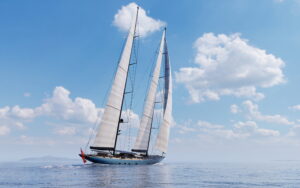
It might sound ridiculous to declare sailing yacht Zero as the first vessel to run entirely on renewable energy, for what was Christopher Columbus’ 1492 flagship, Nao Santa Maria, if not a four-masted sailing yacht powered by the wind? And yet, the 226-ft ketch, built by Vitters and due to splash in late May, brings something wholly new to the table; a world-first hydrogeneration system that both propels the yacht and generates electricity.
Hydrogeneration isn’t new to yachting. Baltic’s Canova, delivered in 2019, adopted hybrid diesel-electric systems with built-in hydrogeneration. What is new is that Zero eliminates diesel engines entirely, replacing them with an all-electric power and propulsion system with a DC grid at its core, and photovoltaic-thermal panels that capture the light and heat of solar energy.
See also: What Yacht Brokers Told Us About Crafting the Perfect Charter
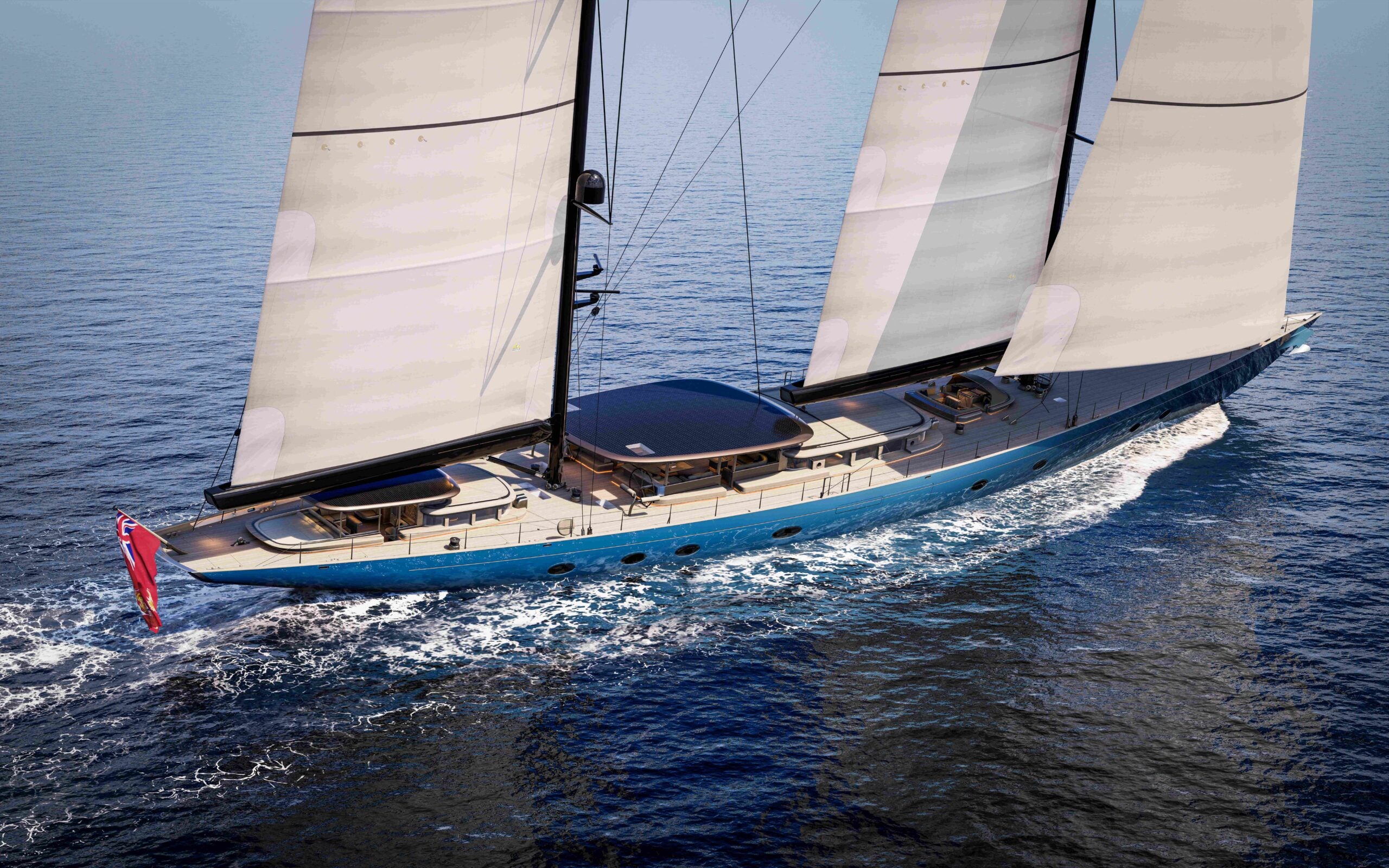
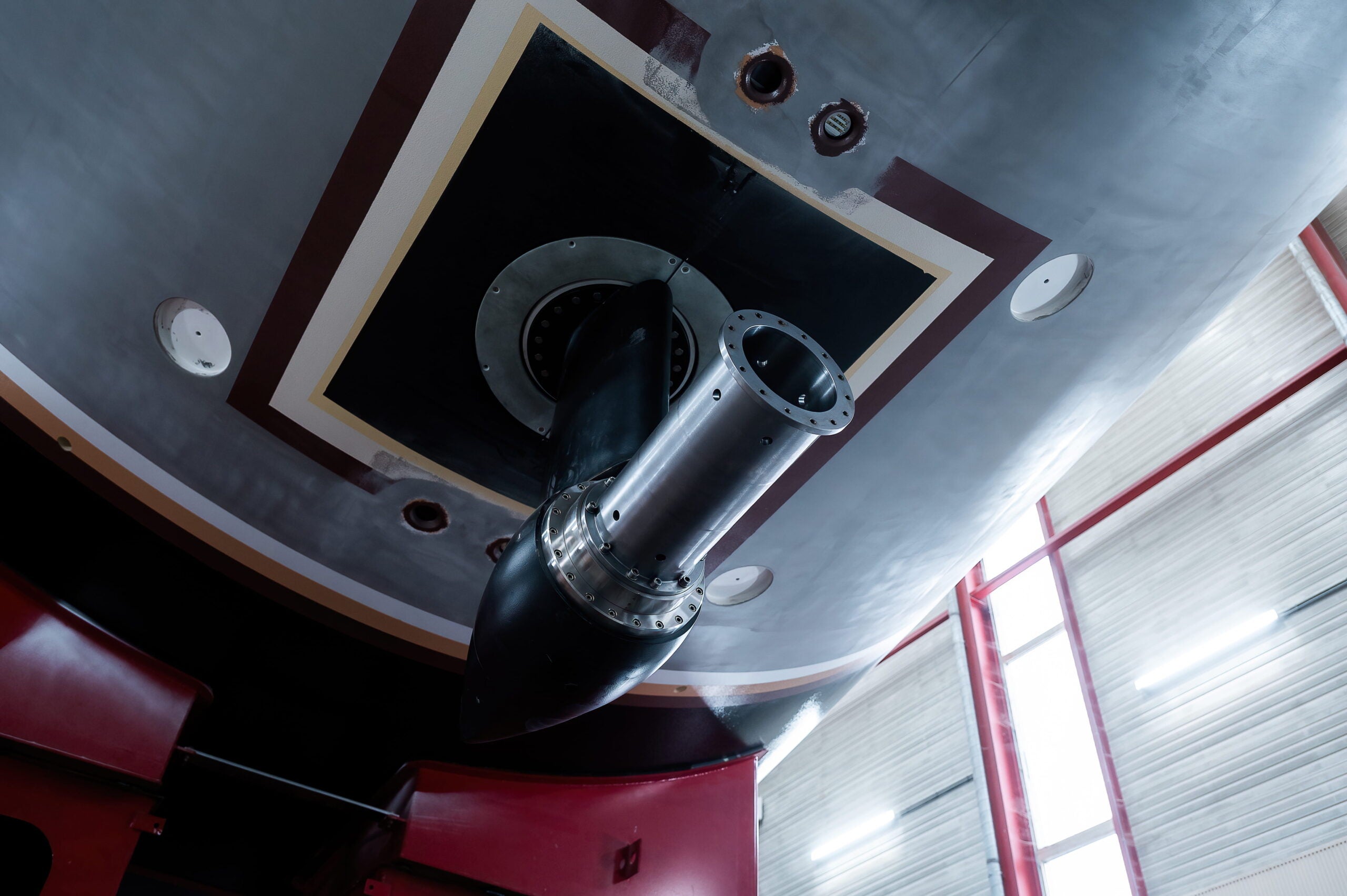
While Zero’s sails are her primary form of propulsion (she’s the first sailing yacht to have her rig certified as such by classification society Lloyd’s), when the wind drops, she can cover 400 nautical miles on electric propulsion alone – the equivalent of cruising non-stop from Monaco to Mallorca. It’s largely thanks to her two thruster propellers, placed forward and aft, developed by Danish manufacturer Hundested to maximize power generation when sailing (regenerating up to 250 kilowatts to feed a massive 5.2 MWh battery), and minimize power required to cruise on electric.
That energy-saving mentality also fueled efforts to reduce the hotel load (lighting, cooling, heating) from the typical 90 kilowatts to less than 30 kilowatts. The advanced heat recovery system converts thermal loss into usable energy, such as hot water, while insulated aluminium cooling panels built into the ceilings and walls across the cabins and living spaces replace a traditional HVAC unit. Then there’s the “breathing” main mast that doubles as a chimney.
Innovations like these sit at the heart of the project, and explain why it’s a mission control room, rather than the wheelhouse, that serves as the brains of the operation. It allows the captain and crew to receive real-time information about, for example, the specific stresses and loads the spars endure while sailing. While the data will enhance Zero’s sailing efficiency, it will also help to fulfil the owners’ intention “to encourage mindset and behavioural changes” across the marine industry by promoting open-source data and design sharing via the registered NGO and media platform, Foundation Zero.
See also: Inside the Secret World of Off-Market Superyacht Charters
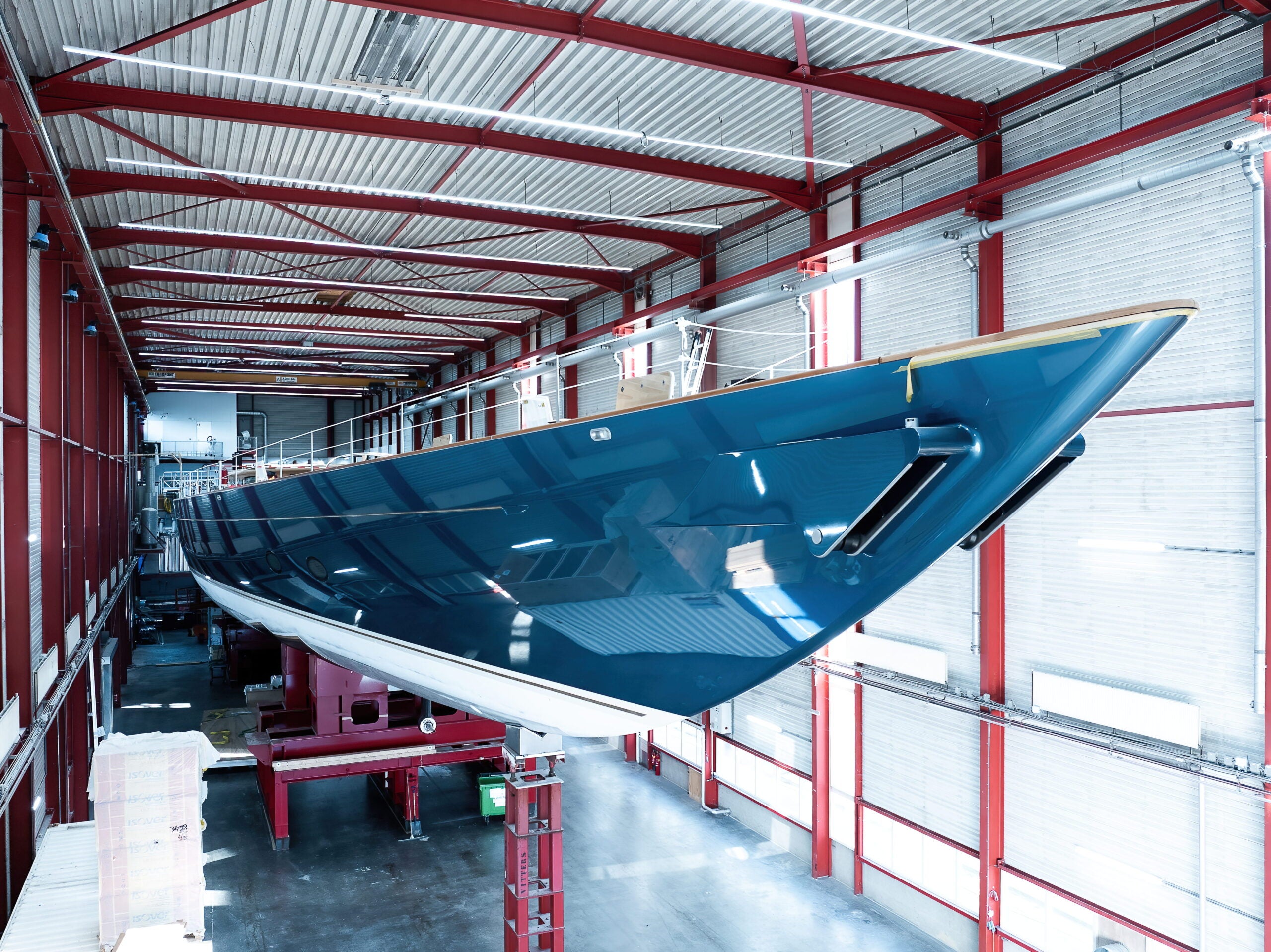
The fundamental design challenge for Vripack Yacht Design, which penned the exterior and interior design, was how to make a yacht shaped by physics and data feel classic and elegant, as per the owners’ brief. According to Marnix Hoekstra, Vripack’s co-creative director, the answer lay in “a deliberate rejection of repetition and off-the-shelf detailing seen in traditional sailing yacht design.”
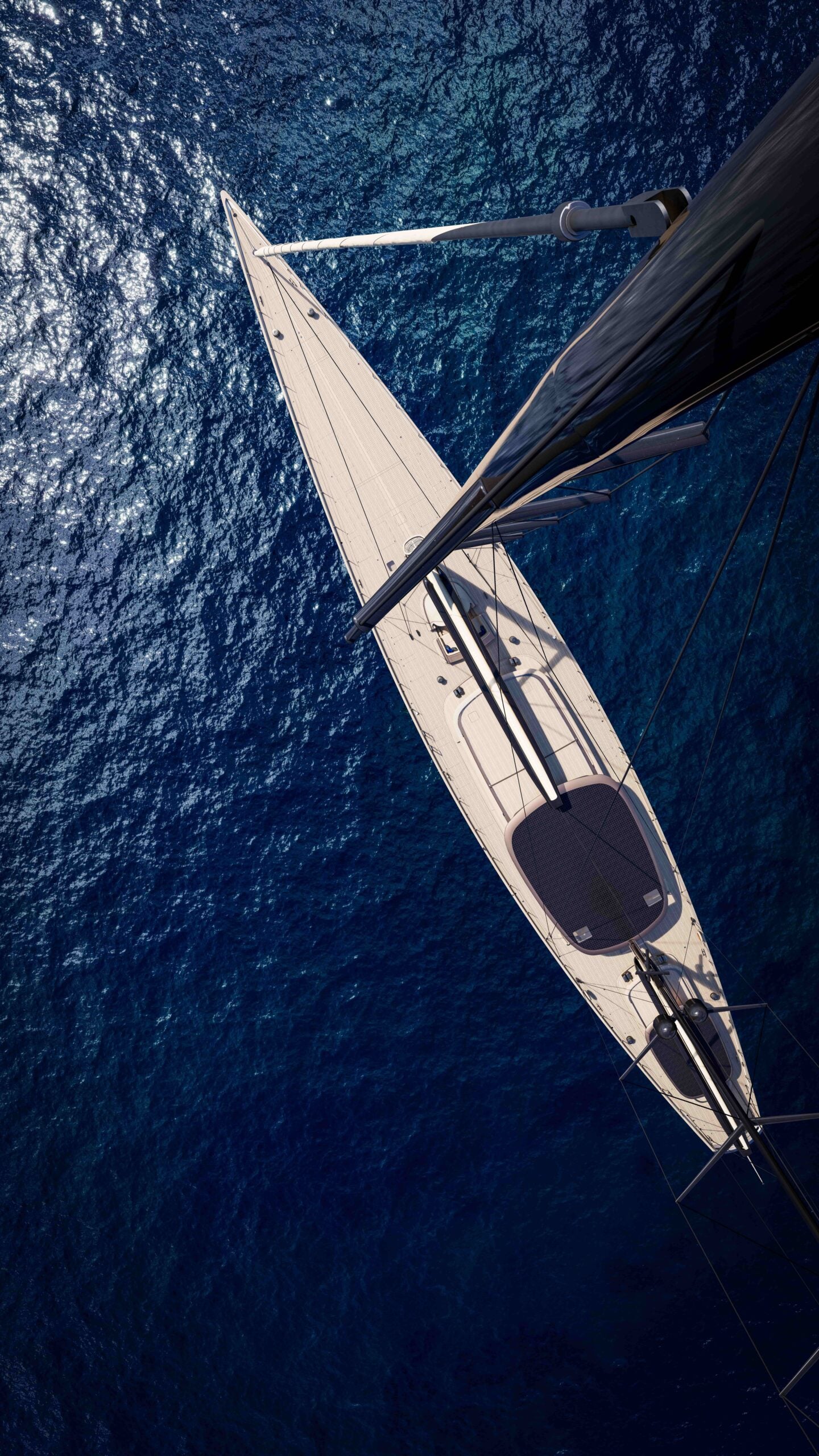
The Brazilian FSC-certified teak superstructure – waxed rather than varnished to enhance the natural aesthetic – is a case in point, as is the bespoke matte-finished hardware positioned in meticulous alignment across the wooden Tesumo decking. Even the passarelle doubles as the owner’s private transom ladder for morning swims, engineered to swivel, rotate flat, and remain slip-proof once wet.
Inside, arresting design details, such as fluted doors and miles of curved European oak, wrap around a narrative personalized to the owners. All four guest cabins are inspired by places of significance, from Italy to French Polynesia, while the owners’ suite, which pivots around the mizzen mast, leads to a private study that can be used for work purposes.
Material waste has been avoided by embracing blemishes and faults; slabs of “leathered” marble with visible cut lines, and repurposed bark on pine skin-fronted side tables. “It’s the deliberate knots, cracks, and grain variations that inject life into the project,” notes Hoekstra, whose strict requirement for every design element to begin or end in a full radius is fully realized in 17 achingly beautiful oval portholes.
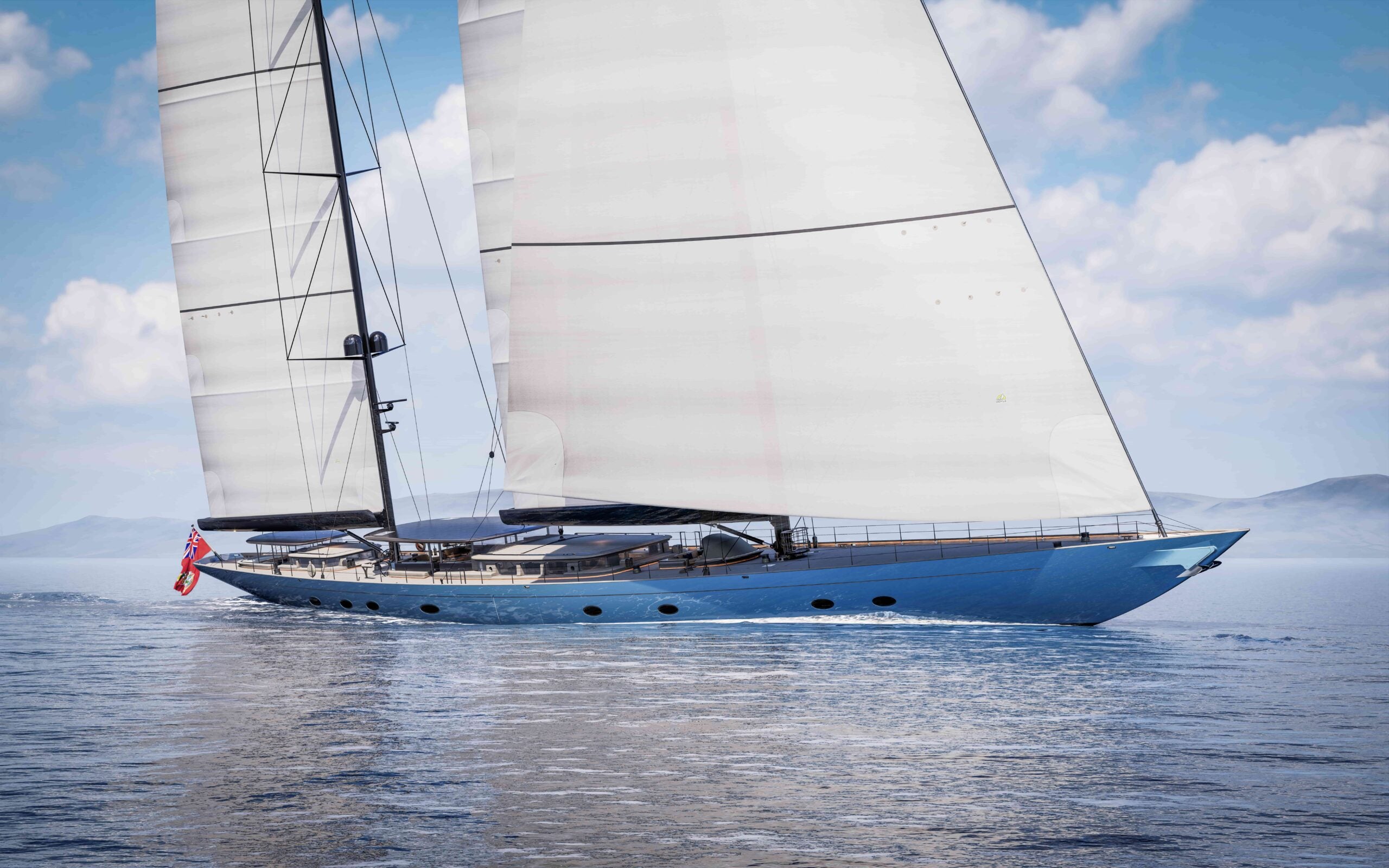
Zero sprung from the reality that superyachts are not inherently sustainable, but once delivered, she will be made available to qualifying research teams and select charters to allow guests the opportunity to experience her systems in operation first-hand. For a yacht that leaves no stone unturned, her biggest achievement is, and will continue to be, proof of concept.
Добавить комментарий