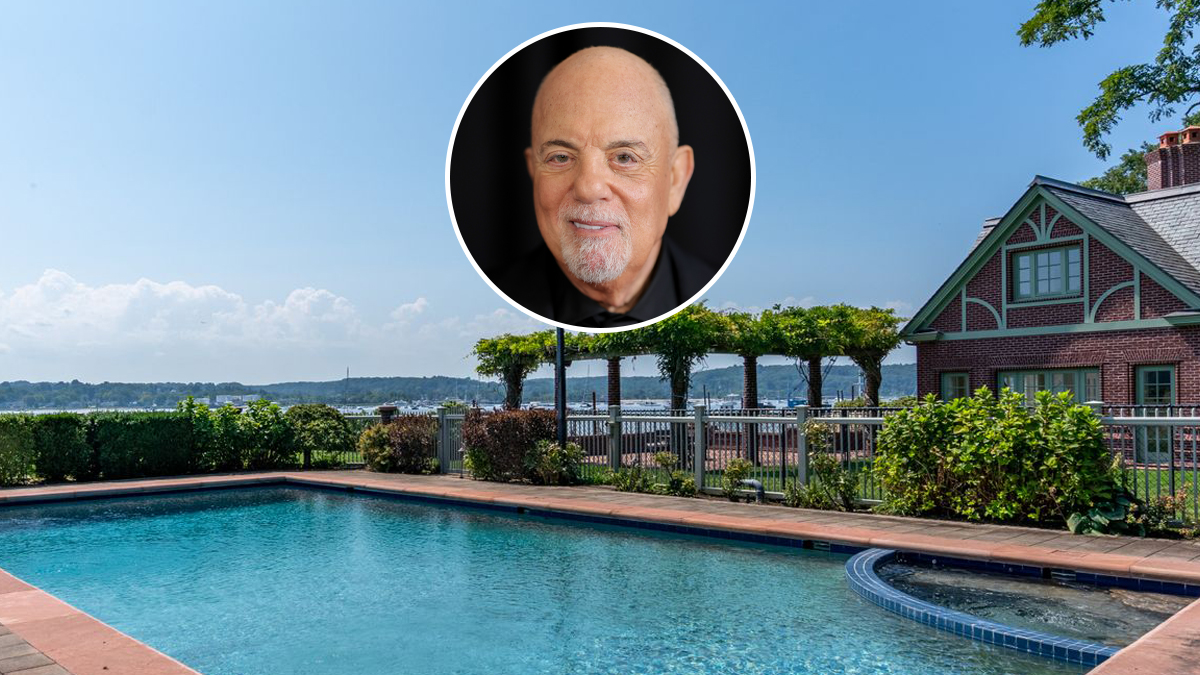
First offered for nearly $50 million, the singer and songwriter’s longtime home in New York’s Centre Island traded hands in a series of transactions in 2025 and 2026. First offered for nearly $50 million, the singer and songwriter’s longtime home in New York’s Centre Island traded hands in a series of transactions in 2025 and 2026.
Рубрика: General
-

The Last BMW Alpina XB7 Is Only for the U.S. and Canada
The ultimate expression of the marque’s most luxurious SUV will be limited to 120 examples. The ultimate expression of the marque’s most luxurious SUV will be limited to 120 examples.
-
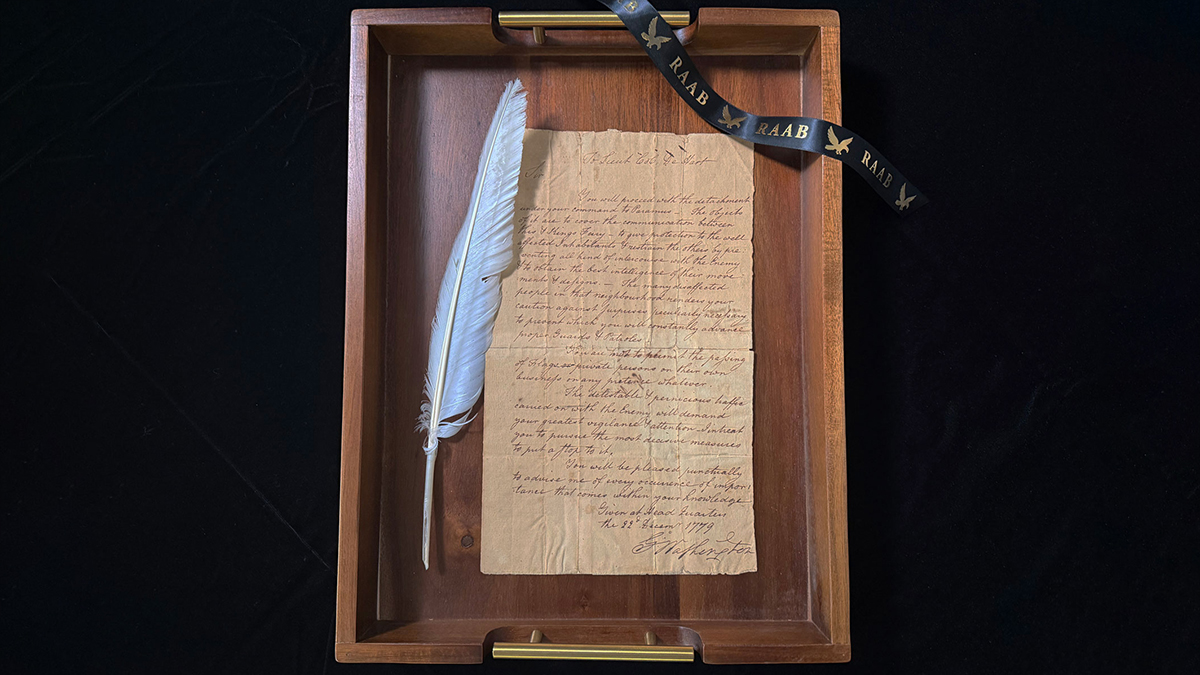
Two Letters George Washington Wrote During the Revolutionary War Can Be Yours for $230,000
Both notes contain battle orders for Lieutenant Colonel William De Hart. Both notes contain battle orders for Lieutenant Colonel William De Hart.
-

I Battled the Ice to Retrace Douglas Mawson’s Adventure to East Antarctica
In a battle between modern technology and elemental forces, the possibility of reaching the destination hangs in the balance.

-

The Japanese Island You’re Not Visiting (But Should Be)
Japan’s most northerly prefecture has it all – glorious nature, exceptional dining, a fascinating history, and a raft of new luxury hotel openings.

-
What’s the Best Sparkling Water for Cocktails? Experts Reveal Their Picks
From mineral content to carbonation level, experts explain how choosing the right sparkling water can elevate your highballs, Martinis, and other cocktails.

“The style of sparkling water is actually really important – it can dramatically alter the character of a drink,” says Zoe Burgess, founder Atelier Pip , a drinks consultancy whose clients have included ArtFarm and The Fat Duck. “It impacts flavor and texture and can influence acidity and bitterness. Bubbles also play an important role in carrying aroma.”
Two key considerations when choosing a water are the level of carbonation and the mineral content or TDS (this is short for ‘total dissolved solids’ and is measured in mg/l and usually stated on the back label).
Naturally sparkling mineral waters tend to have a fizz that’s finer and softer – a classy example is Chateldon 1650 (1882 mg/l) which has been bottled in the Auverne in central France since 1650, and was a favorite of Louis XIV. Its subtle taste and luxurious texture would make a really elegant white-wine spritzer.

©Shutterstock Artificially-carbonated waters – such as club soda – tend to have bigger bubbles with much more bite (the higher levels of CO2 also boost acidity and make the drink taste ‘brighter’). The Mexican brand Topo Chico (493-630mg/l) is naturally sparkling and carbonated for a really bold fizz – great in a thirst-slaking Ranch Water with tequila and a squeeze of fresh lime.
Waters with a high TDS will be more flavorsome – a great example is Vichy Catalan (3052g/l), which is packed with sodium and bicarbonates that give it its satisfying, salty taste.
See also: The Hunt for Paris’ Greatest Cocktail Bar
At Veau d’Or , a neo-bistro in New York City, they serve the house Martini with a ‘sidecar’ of Vichy Catalan, mixed with 2oz of González Dry Vermouth, a twist and the ice left over from stirring the Martini.
“Vichy is one of my favorite mineral waters,” says the sidecar’s creator Sarah Morrissey, “mainly for its salt/mineral content. It’s replacing the need for brine or an olive so that Dirty Martini drinkers can enjoy the Martini as well.”

©Veau D’Or The Japanese malt whisky Yamazaki makes a namesake sparkling water specifically designed for highballs, which comes from the same water source that supplies its Kyoto distillery. Suntory Yamazaki Premium Sparkling Water is a favorite of Tokyo’s Bar High Five: “It has bubbles that are small, gentle, and elegant – you can also feel some sweetness from the water,” says owner/head bartender Hidetsugu Ueno.
See also: I Spent a Week Tasting Tequila in Mexico – And Rated These Bars
The whisky-centric Apollo Bar, also in Ginza, carbonates all its water in-house, and adjusts the pressure of the fizz to the whisky that’s being served. “I think a light carbonation, that gives a sweeter taste, is preferable for a rich whiskey aged in sherry casks,” says owner Komatsu Hidenori. For a more refreshing highball he uses a gas pressure “the same as that of champagne.”
In Italy, spritzes are generally zhuzhed with water from a seltz gun – an innovation that made its debut in 1915 at Campari’s Camparino in Galleria bar in Milan. “At the time it was revolutionary,” says Camparino’s head of mixology Tommaso Cecca. “The continuous flow of chilled, pressurized seltz arriving directly from the cellars was something entirely unprecedented in Milan – and it helped turn Campari Seltz into an instantly recognisable experience, not just a recipe.”

©Shutterstock He describes the effervescence as “very fine yet powerful,” resulting in a “compact, creamy foam and a lively texture. Rather than sitting ‘on top’ of the drink, the carbonation actively works within it, reshaping the mouthfeel and enhancing aromatic perception.”
In addition, Campari’s signature seltz glass has a concave base which encourages turbulent mixing of the ingredients, further enhancing the frothy head.
The old-school soda siphon has also been making a return. At the Italianate bar and restaurant Martino’s in London’s Sloane Square, the white-jacketed bartenders use glass-and-chrome soda siphons straight out of the Roaring Twenties. For more vintage examples, keep an eye on The Italian Collector or 1stDibs.
However you serve your fizzy water, make sure it’s really, really cold, says the founder of Crucible drinks research lab, Stu Bale. “That will help keep the CO2 locked in – ensuring your drink stays fizzy for longer.” And ensuring your highballs don’t fall flat.
-

Young Collectors Are Driving Up Prices of Modern Supercars – Here’s Why
Car collectors are getting younger – as are the objects of their affections. And it’s
transforming the auction market, says Ben Oliver.
In 2023, the 10 most valuable cars sold at the Monterey Car Week auctions dated, on average, from 1950. A year later, their average was 1968. Last year it was 1984, meaning that the top 10 had become 34 years younger in just 36 months. The effect was even more marked among last year’s top five: four were from the 1990s onwards and two of them – including the top seller, the $26m 2025 Ferrari Daytona SP3 sold for charity – were from the 2020s.
Our notion of what constitutes a blue-chip collector car is changing rapidly. The best auctions are now awash with cars that are plainly neither ‘vintage’ nor ‘classic’ and are often fresh from the factory. They’re making huge money, drawing attention – not to mention cash – away from what were traditionally seen as the more beautiful, glamorous, and historically significant cars that have up to now dominated the collector-car market.
See also: Why Porsche 911 Restomods Are Every Collector’s Dream
Of RM Sotheby’s’ nine major auto auctions last year, three were almost exclusively for cars from the 1990s onwards. Its last sale of the year was held in December in Abu Dhabi, where it set a new world auction record for a 1994 McLaren F1, the most desirable and valuable modern classic, at over $25m. That’s around three times what it would have made 10 years ago and high into the value stratosphere once dominated by the great Ferraris of the 1950s and ’60s.
Some of this is down to a natural demographic shift. Collectors typically get started in their 40s, and the cars they buy first are those they wanted in their youth. You expect a car to start appreciating in value as it hits 30, when those who had pictures of it on their bedroom walls as teens acquire the means to put the real thing in their garage. But what’s different is how hard and fast these ‘young-timers’ are rising in value, and how the same effect now extends to the most recent releases.

©Shutterstock There are two things going on here. The first, somewhat obviously, is that people are getting rich younger. The new cars that a 25-year-old multi-millionaire coveted at 15 are only 10 years old now, and younger buyers are more likely to want cars laden with technology rather than history, as tech is what they understand (and it’s often how they made their money).
See also: I Took Bentley’s $396,000 Continental GT For A Spin – Here’s What Stood Out
The second is that the supercar-makers are manufacturing scarcity like never before. Around 15 years ago, Ferrari began producing more limited-production, even-higher-price models: think LaFerrari and the new F80, the Icona series referencing its historic models, the more extreme versions of its standard road cars such as the 812 Competizione, and the track-only FXX series. Greater supply of supposedly rare models has been more than counterbalanced by seemingly unlimited demand. These cars sell out instantly to loyal customers who also buy an example of every standard new Ferrari just to stay on the list for the special stuff. McLaren, Lamborghini, and Aston Martin are all now attempting the same trick, and the established supercar-makers have now been joined by low-volume producers such as Singer and Gordon Murray Automotive, whose cars sell out equally rapidly.
If you missed out on one of these models from the factory and one comes up at auction, you’ll try pretty hard not to miss out twice. The clamor for them is just as fierce on the secondary market as it is at the factory gates, and it’s transforming the auction scene. A $600,000 Ferrari 812 Competizione from 2024 is $2m at auction already, and a $2m LaFerrari Aperta from 2017 is now $7m. The final examples of the GMA T50 are only just being delivered but it made its auction debut at that Abu Dhabi sale. The car offered cost $3m new but was hammered at $5m: not a bad return for a few months’ ownership. The fact that all 100 sold within 48 hours should have been a clue.
See also: How I Learned to Become a Racing Driver in a Single Day
Steve Wakefield heads the Swiss-based Kidston K500 classic-car market intelligence service which spotted that stat from the Monterey sales. “Those cars, that scene: that’s where the buzz is now,” he told me as last year’s auction season ended in Abu Dhabi. But what does that mean for you, as a collector? If you’re offered a low-numbers Ferrari, take it. Be prepared to pay strong prices for almost anything rare, collectible, and recent. If you already have one of the greats, like a 1960s Ferrari 250 or a 1930s Alfa 8C, your many millions are probably safe, as those cars are currently seen more like Old Master paintings, their values less susceptible to changing tastes. But as the tide of interest and cash begins to wash away from the cars of the ’70s and earlier, many will be left unfairly ignored and undervalued, despite their beauty, rarity, and significance – and the way they sing when you drive them. Many of the younger crew might not know what a 1950s OSCA or Cisitalia is, yet. If you do, now would be time to buy one.
-

I Test-Drove the Corvette ZR1X Trying to Outrun Ferrari and McLaren
From record-breaking speed to hybrid power, here’s what makes this American hypercar a knock-out.

-

Van der Valk Just Launched Its Largest Superyacht Yet
Newcomer «Shine» measures 131 feet from raked bow to sculpted stern and offers an interior volume of 370 GT. Newcomer «Shine» measures 131 feet from raked bow to sculpted stern and offers an interior volume of 370 GT.
-
How to Master Perfume Layering, According to Fragrance Founders
Ready to reinvent your signature scent? Here’s how industry insiders do it.

Fast forward to 2026, and the notion of a singular signature feels almost reductive. Today, individuality is expressed not through one bottle, but through a blend. Smelling unique isn’t just about claiming a singular signature scent, but in the art of layering multiple.
“I first became aware of fragrance layering while traveling in the Middle East, where it is deeply rooted in perfume culture, and after talking with people and friends from the region who shared their knowledge with me,” says Thibauld Crivelli, founder of Maison Crivelli.
It’s a shift being driven by a younger, more experimental consumer. According to a 2,000-person Unilever survey, 29 percent of Gen Z respondents layer multiple scents, while Pinterest reports a 125 percent surge in searches for ‘perfume layering combinations.’
“After launching the brand [in 2018], many customers started to ask me how to layer Maison Crivelli perfumes altogether, and I started to look at the different combinations which could work well.”

©Unsplash For Aurélien Guichard, perfumer and founder of Matière Première, fragrance layering can be gratifying. “I think it’s important to keep in mind that layering is personal,” he says. “It’s always easier to enjoy layering two things that you already like on their own. You might be surprised by how well they work together.”
How to layer perfume like a pro
But where do you start? What notes are worth pairing? Is there a limit to how many you can layer? Elite Traveler asked Crivelli and Guichard to share their tips on how to master fragrance layering, whether you’re new to the trend or not.
See also: How Henry Jacques is Revitalizing the Fragrance World
Start with a base scent
Think about your favorite fragrance note and start with the perfume that really champions that scent profile. This might mean moving away from more complex fragrances and opting for a niche single-note scents that aren’t as layered.
Guichard likes to start with the base note, which can be “the part of the fragrance that lasts the longest. If that’s the case, then you should use ingredients that are long-lasting, such as woods, amber, musk, or notes that have heavier molecules. If the base scent is meant to define the main identity of the fragrance, then it has more to do with the olfactory profile and your personal taste.”
Crivelli adds that, from his experience, “deeper and warmer ingredients such as woody and amber notes are a great base for layering. They are textured and can welcome the additional facets brought by complementary ingredients.”
Don’t overdo the layers

©Unsplash “Start layering by spraying a perfume extract and topping it up with a lighter eau de parfum,” says Crivelli. “It’s a rule I always follow.
“Vivid notes (e.g. spices or citrusy florals) make a perfect top up as they add a hint of freshness,” he adds.
Guichard, meanwhile, argues that “you shouldn’t combine things that are too similar or too complex, in order to maintain a modernity to your layering. I usually like to combine ingredients that are long-lasting with others that are more transparent.” Think: smoky notes under a white musk scent. He recommends layering two or three scents as a maximum. “Balance is essential,” says Crivelli. “The idea is to enhance and amplify the characteristics of each fragrance without overpowering one another.”
But if you’re worried about overcomplicating things, consider sticking to what you already like. “I also prefer to combine perfumes which have a common ingredient or facet, as I believe that it creates a thread between the two formulas,” Crivelli adds. So if your base is a floral scent, try cutting it with another floral one.
Have fun with it
Ultimately, fragrance layering is about experimenting, and Guichard believes it shouldn’t be taken too seriously. “Layering is all about being yourself and being unique – it’s about how you feel. For me, combining ingredients is very personal.”
Fragrances react to your skin chemistry when they’re first applied, so layers will smell different on you than they will on a fragrance blotter.
“Now I follow my intuition,” Crivelli says about how he goes about layering fragrances. “This gives me a unique approach based on knowledge shared by friends in the Middle East, but also infused with a very personal perspective.”