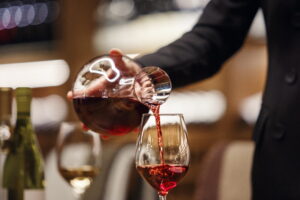
For both the novice and the specialist, discovering an unusual wine is a thrill – these experts share their tips for finding a new favorite.

For a seasoned oenophile, a restaurant wine list comes as no challenge. But even if you know your Burgundies from your Bordeauxes, your Screaming Eagle from your Harlan Estate, there is often a hidden gem to be discovered on a good wine list — and a sommelier will always be on hand to help you uncover it. We tapped into leading wine experts from some of the world’s best restaurants to hear about the most interesting wines on their list and get top tips on how to order a special bottle.
See also: Do You Need an AI Wine Cellar?
What wine to order, according to sommeliers
Sandia Chang – co-owner and sommelier, Kitchen Table, London

“It’s too easy for guests to open a list and order a Sauvignon Blanc or Chablis just because they recognize it,” says Sandia Chang, sommelier at Kitchen Table, which she co-owns with husband and chef James Knappett. “I want to be put to work, to enlighten and help our guests discover new wines or producers they may not have tried before.” At Kitchen Table, trying something new might be about reassessing your own perceptions of the winemaking world: “Because of my passion for Champagne, we have a few bottles on our list from Coteaux Champenoise, a still wine produced in Champagne,” Chang says. “Most people don’t realize that Champagne produces amazing still wines as well. We have a variety of Coteaux Champenoise wines, made from Pinot Noir, Chardonnay, and also Pinot Blanc.”
Chris McFall – wine director, SingleThread, California

One of the US’s most prominent farm-to-table restaurants, Healdsburg’s SingleThread pioneers sustainable fine dining. Embodying this, wine director Chris McFall prioritizes small-scale producers and sustainable practices, with emphasis on local Sonoma vineyards. A favorite from the list comes from further afield though: the 1998 Clos Joliette Sec. “It’s an incredible wine that is certainly polarizing,” he says. “It’s produced from one of the prized grape varieties from Jurançon in southwestern France known as Petit Manseng. The wine was elusive and almost impossible to attain, but every now and again a few references would be released.” When it comes to enlisting the help of a sommelier, “the most important tip that I can provide is to be up front and honest about your likes and dislikes,” McFall says. “Have an open and honest conversation on where you’d like to be budget-wise, and trust them to make a memorable choice.”
See also: The Surprising Return of High-Proof Spirits
Charles Carron Brown – sommelier and general manager, Aulis, London

At London’s Aulis – a sister restaurant to Simon Rogan’s inimitable L’Enclume – Charles Carron Brown echoes McFall’s advice on transparency, advising diners to “be honest about what you’re looking for, and don’t be afraid to mention a budget. It’s a lot easier for us to help you make an informed decision if we know how much you roughly want to spend.” Carron Brown’s wine list is considerate and intriguing, representing some of the finest local producers, as well as international names trying to innovate. “We’re big fans of English sparkling wines, having removed all champagne from the list when we won our first Michelin star,” he says. “I’m always on the hunt for new and smaller vineyards, and those who have a prioritised focus on sustainability.”
See also: Aulis: Simon Rogan’s London Restaurant Revived
Aldo Sohm – wine director, Le Bernardin and partner of Aldo Sohm Wine Bar, New York
For sommelier and author Aldo Sohm, the drinker comes first. “When I look to create a wine list, I think first about the guest: what are they looking for, what’s in demand, and how curious, or open-minded they are,” he says. In his near-19 year tender at the cult NYC restaurant, Sohm has created a 15,000-bottle wine list that hides many treasures. His favorite underrated option? “Palomino Fino. I find these wines are highly overlooked and incredibly cool to drink. One hesitation I often see when I recommend them is that people hear the broader category, Sherry, and get scared. But that’s not necessarily what you’re getting here.” And for guests looking to broaden their own wine-drinking journey, his advice is straightforward. “Ask, ‘Which bottle is drinking really well right now in the x-to-x price range?’” he says. “Don’t be afraid to ask questions. Sommeliers are passionate about wine, and they genuinely enjoy sharing their knowledge.”
See also: Why Runners Are Falling in Love with Wine, Beer, and Whisky Regions
Gabriel Veissaire – sommelier director at Restaurant Le Meurice Alain Ducasse, Paris

My top tip would be to see the sommelier as a guide rather than a teacher,” says Gabriel Veissaire, who has been helping to shape Restaurant Le Meurice Alain Ducasse’s wine program for seven years. “A sommelier’s role is to accompany the guest, listen to their tastes, and help them enjoy the experience – not to give a lesson. Sommeliers always have great personal favorites to suggest, so trust the dialogue and don’t hesitate to share what you enjoy.” The restaurant’s wine list might be 100 percent French, but that doesn’t stop Veissaire from sharing some lesser-known producers and bottles. “An underrated wine on the Meurice wine list is the Le Jurançon moelleux Au Capcèu from Domaine Camin Larredya,” he says. “It is a wine produced by a talented and humble winemaker. This cuvèe really stands out for its balance and personality […] perfectly illustrates how classic French appellations can offer unique and memorable experiences that sometimes go unnoticed.”
Louisa Smith – wine director, Wolfsbane, San Francisco

A new addition to SF’s restaurant scene, Wolfsbane bridges a gap between rigid fine dining and casual eateries with a tasting menu rooted in seasonality and reconnection with ingredients. To accompany it, Louisa Smith’s wine list highlights small-production wineries, importers, and farmers, with a focus on organic methods. “We find that the more ‘untouched’ a wine is, the more alive and expressive it is,” she says. “We really want to pour something guests may not have a chance to taste very often. This could include anything from a unique grape variety, a small wine region, or surprising styles of wines from familiar grapes.” One of Smith’s top recommendations right now is an Italian variety. “[It’s] from winemaker Ermes Pavese and made of the Prié grape high in the Alps near Mont Blanc in Valle d’Aoste, Italy. This small winery is isolated as one of the only vineyards at such a high altitude in all of Europe, reaching up to 1,200 meters (3,937 ft) above sea level. We offer several bright, high-acid white wines and this one stands out with its crystalline minerality and distinct Alpine character.”
Добавить комментарий