Would you dare to share?

“When food is passed around a table, something softens, and insecurity is removed,” says Ruth Kramer, director of hospitality, concept, and design at WildLand, a collection of boutique homes and hotels on rewilded estates in northern Scotland. “In a world that can sometimes feel lonely, these evenings rank among the most memorable parts of many guests’ stays.”
At two of WildLand’s existing properties, as well as the upcoming Hope (a hunting lodge turned hotel, launching this summer), guests are encouraged to dine en masse at shared tables. “Historically in the Highlands people gathered around one table — neighbors, travelers, and those working the land — sharing food and stories at the end of the day,” says Kramer. “In many ways we are simply continuing that tradition.”
See also: Is Dessert Back on the Menu? These Chefs Say So

While communal dining might come with valid concerns around privacy, security, or just being stuck next to a bore trying to befriend you — or worse, selling you something — the trend is nevertheless growing. WildLand is just one high-end venture leaning toward shared tables. In Italy, Puglia’s art-filled Palazzo Daniele emerged last summer from a careful restoration with an airy new common area where residents can meet over dinner. At boutique hotel Off Grid Girona, launched last September in a 17th-century farmhouse in Spain’s Pyrenean foothills, guests dine together at a poolside table. As at WildLand’s bases, they can opt out, yet few do.
“We’ve had brilliant feedback,” says Off Grid’s founder, the travel entrepreneur Gerard Greene. “My vision was for more of a home than a hotel; in replicating a family dinner, this experience allows guests to connect and share local food in an authentic, sincere way.” Other hotels arrange communal dining as part of pop-ups involving guest chefs or immersive gastronomic experiences alongside traditional restaurants. At Thailand’s forthcoming KAIA Koh Phangan, for instance, groups might sign up for open-fire beachside cooking experiences.

The offering is visible, too, at new restaurants such as Corridor 109 in Los Angeles, where Brian Baik lays on his seafood-centric creations at a 10-seat counter, or Restaurant Gordon Ramsay High, which sees just a dozen diners occupy one table on the 60th floor of a London skyscraper. Back in the supper-club world, upper-echelon chefs have begun providing haute cuisine in their homes. Examples include Otaku by North London-based Max Posener, previously of Michelin-starred establishments; Haawm in Bangkok, whose daring menus by Dylan Eitharong have enticed popstar Dua Lipa; Robz’ Chef’s Table, where hotly tipped German maestro Robin Höfer serves 13 courses in his Dubai apartment; and California’s Between the Vines initiative.
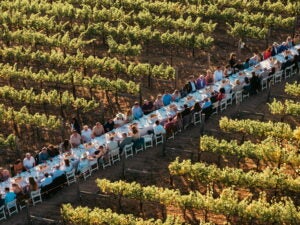
Launched last summer and set to continue this fall, the latter’s ticketed events see the renowned Napa Valley restaurant Press host long-table dinners amid the vines of prestigious wineries. “By gathering everyone around one table,” says Justin Williams, Press’s managing partner, “we can connect diners with the farmers, vintners, and chefs behind each course — creating a more story-driven experience.” Philip Tessier, the restaurant’s chef partner, adds: “Communal dining brings the opportunity to meet new people. The energy naturally builds, evolving from a more reserved start into something celebratory rarely seen in a traditional dining room. Time and again, our guests arrive as strangers and leave as friends.”
Добавить комментарий