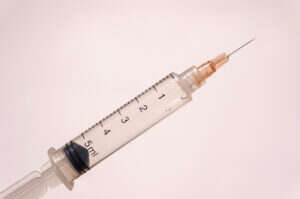
Bio-stimulatory injectables, amino acids, and skin boosters are changing the way we age, focusing on long-term skin health rather than temporary fixes.

Botox and filler aren’t for everyone. As a younger, health-conscious generation will concede, endlessly patching one’s face with cosmetic interventions that peak and fade is at odds with a world increasingly preoccupied with biohacking and longevity.
It should come as no surprise, then, that bio-stimulatory injections have captured the beauty zeitgeist over the last 12 months. Where Botox and filler provide retroactive rejuvenation, skin boosters take a different approach, strengthening cellular regeneration and boosting collagen so that aging becomes a slow, steady cruise rather than a headlong tumble down a flight of stairs.
”It’s wellness for your skin,” says Dr. Wassim Taktouk, one of London’s most sought-after aesthetic specialists. “People want to look like the best version of themselves; they don’t necessarily want to create proportions that weren’t there before.”

It’s a watershed moment in aesthetic medicine, resonating across age groups. “Younger people are coming in with concerns about texture, tone, inflammation, early laxity, and how their skin behaves under stress,” observes Dr. David Jack, an aesthetic doctor renowned for his light touch. “While more mature patients – many of whom have already had filler – are increasingly aware that volume alone does not age well if the architecture beneath it continues to degrade.”
The following interventions are best understood as long-term investments that will compound interest over time. Though, nota bene, maximum returns depend on topping up the coffers from time to time.
The regenerative skin boosters doctors use
Poly-L-lactic acid (PLLA)
Of all the regenerative injectables listed here, poly-L-lactic acid (PLLA) is the one most unequivocally concerned with creating structural support rather than surface shine. If skin needs its foundations reinforced rather than its paintwork refreshed, PLLA is the heavy machinery that boosts collagen to get the job done.
It’s not an entirely new invention, though. The biodegradable polymer has been used for decades in dissolvable stitches and cardiovascular stents, which is reassuring, albeit slightly less glamorous. That said, early formulations in aesthetics were cumbersome, and cruder particle design had an annoying habit of producing surprise nodules and lumps, which overshadowed the ingredient’s benefits.
“Imagine a piece of paper that’s been ripped up by a lunatic,” says Taktouk, simplifying molecular science with admirable restraint. “You get lots of jagged pieces that are all different shapes and sizes. Those pieces are like the molecules in older formulations; they were so big that they would routinely trigger inflammatory pathways to create collagen,” he says.
Enter Juläine, a Swedish formulation that has quietly rehabilitated the category. “Take that same piece of paper and use a hole puncher on it,” he continues, fully committing to the analogy. “You get microspheres that are smaller, less likely to stick together and use fewer of the inflammatory pathways.” In layman’s terms, this translates to fewer irregularities and a slow, civilized stimulation of collagen that can last for up to 24 months.
Juläine is £1,200 (approx. $1,616) per treatment at Taktouk Clinic; drwassimtaktouk.com

PDRN
The infamous ‘salmon sperm facial’, popularized by a certain Kardashian, was a masterclass in marketing. Sensationalist headlines focused on how unhinged the beauty world had become in its quest for youth, instead of focusing on the fact that (purified) salmon sperm is used for a very specific reason: its molecular structure is highly biocompatible with human DNA.
Polynucleotides’ long nucleic acid chains improve skin quality, cellular behaviour, and overall resilience. “It’s an ideal treatment for crepey or thinning skin, early laxity, and poor elasticity – especially in areas where filler would be inappropriate or counterproductive,” says Jack, pointing to the skin around the mouth and the neck.
But it’s PDRN (Polydeoxyribonucleotide), made from far shorter fragments of salmon DNA, that is set to define 2026. And while PDRN shares the same piscine source material, it has altogether different benefits. “The cleanest explanation is that polynucleotides are about long-term skin quality optimization, while PDRN is about repair and recovery,” says Jack.
Delivered via multiple micro injections into the dermis, PDRN is ideal for pacifying inflammation and accelerating wound-healing. “It’s appropriate when the skin is compromised or recovering from insult,” he clarifies.
PDRN has already started to find its way into topical products, though nothing will quite compare to the injectable treatment (Jack opts for a formulation that he sources directly from a manufacturer in South Korea). If it’s polynucleotides you require, look to Rejuran Healer, East Asia’s cult product, which is set to launch in the UK shortly.
PDRN from £350 (approx. $471) & Polynucleotides from £650 (approx. $875) per session; drdavidjack.com
Amino acids
Amino acids, as you may dimly recall from biology class, are the building blocks of proteins and essential to vital processes such as tissue repair and muscle growth. In aesthetic medicine, however, they’re responsible for something far more exciting: that elusive, well-rested, well-hydrated glow.
“They’re like Berocca for the skin,” says Taktouk. “They feed the skin everything it needs to look healthy and begin creating collagen,” he explains of his go-to products, Jalupro and Redensity 1. “Most biostimulants are slow burners, but these specific injectables give the skin a healthy glow relatively quickly, thanks in part to the hyaluronic acid found in the formulas.”
They’re particularly effective around the eyes, where paper-thin skin tends to show signs of wear and tear first. “Historically, we didn’t have much we could do around the peri-ocular area,” he says. “You could use tear trough filler in the right patient, but that wouldn’t address crepiness or skin quality. By contrast, amino acid-based revitalizers hydrate the skin and reduce the appearance of fine lines and wrinkles, all without creating a volumetric change.”
For younger patients not yet in need of structural reinforcement, amino acids are a smart early investment. Yes, superficial droplet injections leave (temporary) lizard-like bumps in their wake but once they subside you can expect that gratifying glow to kick in within two to three weeks.
Jalupro & Redensity 1 £495 (approx. $666) per session at Taktouk Clinic; drwassimtaktouk.com
Добавить комментарий