Oniku Karyu holds a Michelin star in Tokyo – now, its chef is taking on Miami.
Wagyu has quietly, confidently risen through the ranks to take its status as one of the world’s most coveted foods, counting only the likes of caviar, foie gras, and truffle as its contemporaries.
So then, being able to open a restaurant on the premise that you are the only one in the US serving wagyu from one Japanese cattle ranch comes with a certain amount of gravitas. A second offshoot of Tokyo’s Michelin-starred Oniku Karyu by chef Haruka Katayanagi, Karyu opened in Miami’s Design District last month, and in doing so became the only restaurant in the country that serves wagyu from Ueda Chikusan, a family-run farm in Japan’s mountainous Hyōgo Prefecture.
Ueda Chikusan exclusively rears Tajimaguro cattle, known for its intense marbling, its sweet flavor, and its melt-in-the-mouth softness. With a highly restricted number of animals raised each month, Tajimaguro is considered one of the rarest, most premium wagyu around the world.
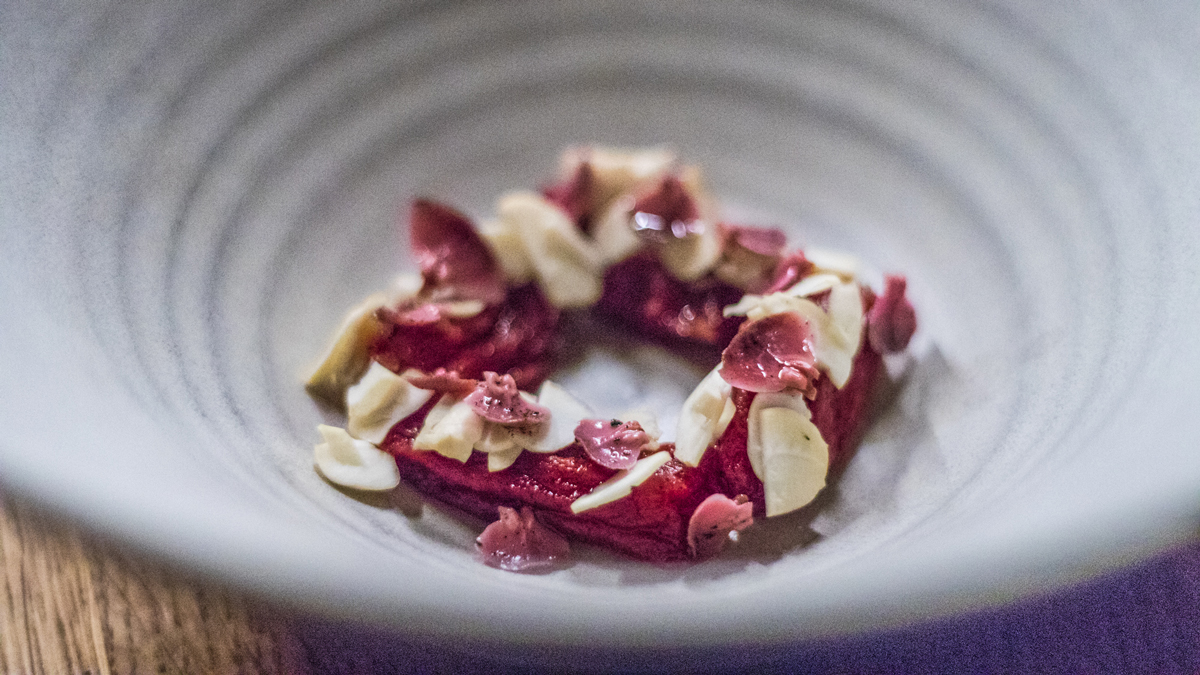
The exclusivity of the meat is honored in Karyu’s design. Just 12 spaces are available per sitting (6pm and and 9pm, Wednesday through Sunday), with each seat angled around an open kitchen, primed for views of the master chefs at work. The head chef is Haruka Katayanagi protege Hiroshi Morito, who has relocated from Tokyo to Miami to uphold his teacher’s vision. Throughout the evening, Morito and his team craft course after course, adhering to the traditional kaiseki conventions – a multi-course meal of small, artistic dishes that both celebrate ingredients and showcase skill.
Beef is interspersed throughout. It’s infused into the delicate opening broth, wedged between spongy bread for the cutlet sandwich, wrapped up in a lettuce ‘taco,’ and served on top of white rice and raw egg. Vegans and vegetarians should, in no uncertain terms, consider making a reservation elsewhere.
“Every dish tells a story,” says chef Katayanagi. “Wagyu is not just about richness – it’s about spirit. It carries the patience of the farmer, the precision of the butcher, and the sensitivity of the chef. Bringing that philosophy to Miami allows us to share the true heart of Japanese cuisine.”
In an industry that is – quite responsibly – moving away from imported ingredients and favoring local availability, Karyu is seemingly laughing at such conventions with a menu that honors Japan seasonality. Menus will change regularly to reflect this, highlighting international ingredients such as Japanese rice and French gruyere cheese. The drinks list naturally leans heavily toward Japan and is sake heavy.
Designed to echo the feel of the original Oniku Karyu in Tokyo, Karyu’s look is modest and minimal. Layers of linen curtain separate the entrance and the petite dining room, creating a degree of separateness between ‘out there’ and ‘in here.’ Inside, Japanese craft is duly honored, from the noren screens that conceal the grill to the authentic raku ceramics.
The brand’s invitation-based membership platform continues to grant rare access around the world.
A new wave of invitation-only travel clubs is emerging, promising an elusive commodity: access. But one leader dominated the market well before such an idea began trending: Scott Dunn.
The company has been operating for 40 years and has built its reputation over the decades for offering once-in-a-lifetime, tailor-made holidays again and again. But as a result of numerous client requests, an invitation-based membership aimed at those seeking deeper levels of personalization – Scott Dunn Private – was introduced in 2007 and has been leading the market ever since.
“From private island takeovers to silent expeditions across desert landscapes, every custom itinerary we’ve built has informed how we push the boundaries of luxury travel today,” says Dom Atterton, Scott Dunn Private (SDP) membership manager. “Experience has been our greatest architect.”
That may be true, but SDP’s (not so) secret weapon is its vast global network of travel experts, which, when combined, provide the most important piece of the puzzle: access to the impossible. Whether it’s a private art collection in New York, the not-yet-opened chef’s table in Tokyo, or an exceptionally appointed Venetian palazzo that doesn’t appear in the guidebooks, SDP’s concierge service has a seemingly magical way of opening doors.
As a member you are paired with a dedicated private relationship manager who acts as a personal advisor and single point of contact, getting to know not just where and how you like to travel, but what it is you and your family is really looking for. Think of them as your personal Chief Experience Officers, or family travel office (or should that be family out-of-office?). So whether what inspires you is elevated levels of luxury, an introduction to like-minded people or surprising twists and unexpected delights in an itinerary only revealed on the day, your advisor is able to anticipate your desires with unnerving accuracy.
For Atterton and the SDP team, it’s about finding ways to elevate already exceptional experiences: exploring the Great pyramid with a leading archaeologist by candlelight, for example, or foraging for native plants in the Peruvian Andes with the country’s most celebrated chef. Because what you take away from your travels is what stays with you for ever, after all.
Other times, it’s about cultivating a passion. For a member with a deep appreciation for High Renaissance art, the team recently arranged for them to unlock the doors to the Sistine Chapel with the Vatican’s Clavigero before whisking them off to Milan for a private viewing of The Last Supper. “To put this into perspective,” Atteron says, “this kind of uninterrupted access away from crowds is simply unheard of.”
As well as unrivalled travel access, membership provides a host of additional lifestyle benefits, including invitations to a calendar of global events with discrete luxury brands, chauffeur-driven transfers to and from your home, and 24/7 service from the international support team.
For some years now, Scott Dunn has spoken of transforming travel into an art form. Whether clients are wanting to bring multiple generations of family together, celebrate major milestones or simply reconnect with a partner while experiencing that wish-list adventure, SDP exists to push the boundaries of what’s possible. With offices in both New York and California, as well as San Diego, London, Hong Kong and Singapore, SDP’s network spans the globe, enabling it to unlock experiences and opportunities the world over. «It’s just the right amount of everything,» as one member memorably said after a trip to Iceland in 2024, proving that what is removed from an itinerary is sometimes just as important as what is added. It’s an effortless way to move through the world, exploring unique destinations and rediscovering favourite cultures and cities. «We expect a lot, and we got a lot,» said another member. «Everything was perfect.»
Discover the story behind the ambitious island project, as well the hopes for its future.
Floating just off Dubai‘s Jumeirah coastline, The World Islands have long embodied the emirate’s appetite for architectural spectacle. Conceived as a man-made archipelago shaped like a global map, the project – developed by Nakheel and completed in reclaimed land by 2008 – was once heralded as one of the most ambitious real-estate visions in modern history.
From rumored celebrity purchases to outlandish (and often abandoned) hotel projects, the controversial archipelago’s life has been a storied one, with hopes for completion looking slim after it was abandoned following the 2008 financial crash. For many years, what was once one of the United Arab Emirates’ most ambitious projects was a sandy ghost town.
After more than a decade of uneven progress, luxury hospitality brands, private developers and ultra-high-net-worth buyers are finally returning to the archipelago in meaningful numbers. What was once seen as Dubai’s most famous unfinished dream is increasingly taking shape as a niche luxury destination, defined by boutique resorts, private villas and highly curated island experiences.
In 2022, global hotel group Anantara opened the doors to the 70-room Anantara World Islands Dubai Resort. Since then the momentum has continued to build, with further hospitality and residential projects now underway or nearing completion, signalling one of the most significant revivals in the development’s history.
Sitting around 2.5 miles off the coast of Dubai in the Persian Gulf, The World Islands are a collection of smaller islands designed to replicate the world in miniature, with each island named after its corresponding country. First announced in 2003, The World Islands promised to be the next big thing in the luxury travel realm, with members of the global elite, including Richard Branson and the late Karl Lagerfeld, clamoring to have a piece of the action.
As is standard in the glittering city of Dubai, The World Islands are, of course, not a naturally occurring phenomenon; the man-made archipelago was created by Dubai-based development firm Nakheel Projects, a name associated with many high-profile projects across the region, including St. Regis Dubai, The Palm.
The artificial islands were created by dredging sand from the Gulf and transporting it to the designated spot, with several million tons of rocks used to keep it in place. In total, there are 300 islands in The World Islands, with each ranging from 250,000 to 900,000 sq ft. The entire collection covers some 5.4 miles across.
However, despite the buzz caused when The World Islands were first announced and the numerous individual island sales, the 2008 financial crash saw work on the ambitious development grind to a halt.
At this point, it was estimated that almost $15bn had already been spent, but just one island development was finished with the rest at varying stages of completion. Amongst the chaos of works halting, developers were also forced to deny rumors that The World Islands were sinking back into the ocean.
While large swathes of the island archipelago remain undeveloped, the last few years have marked the most substantive stretch of progress in years, led by new openings, major partnerships, and renewed investor interest.
Anantara World Islands Dubai Resort remains the most visible example of The World Islands’ potential. The 70-room resort provides a private-island experience with white-sand beaches, water-based activities and several dining venues, accessible via boat transfer from Dubai’s mainland.
Adding to that hospitality momentum, InterContinental Resort Portofino, the Heart of Europe – developed in partnership between IHG Hotels & Resorts and the Heart of Europe project – is scheduled to open in early 2026. Inspired by Italy’s Ligurian coastline, the resort will feature over 460 rooms and suites, Mediterranean-style architecture and multiple dining concepts. It will also integrate the Heart of Europe Coral Institute, a marine conservation initiative focused on coral rehabilitation and research – a growing priority in sustainable luxury development.
Luxury residential developments are also gaining traction. Amali Island, a private enclave of 24 beachfront villas, has emerged as one of the most exclusive residential launches in the emirate, attracting both regional and international buyers. With panoramic sea views, private beach access, and bespoke design, these homes exemplify the appeal of private island living in a global city.
Beyond Amali, projects clustered under the Heart of Europe theme – including Monaco, Venice and Sweden-inspired islands – are advancing as mixed-use developments combining boutique stays with waterfront homes and curated leisure.
For visitors staying elsewhere in Dubai who just want a glimpse at the fabled World Islands as opposed to an overnight stay, a visit to Lebanon Island – which was the only island to be completed when work on the project initially stopped back in 2008 – can be arranged. Guests can take a day trip to Lebanon Island where they can enjoy its beach club, swimming pool restaurant, and beaches.
The island is also available for exclusive hire for corporate events, weddings or private gatherings. It is also possible to organize boat tours around the deserted islands, with private yachts available.
For the most part, the development and purchase opportunities are a closely guarded secret. An old listing on Private Islands Inc for the entire collection harks back to when The World Islands was just an exciting concept, but at the time of publishing, there is only one individual island listed for sale.
Which island it actually is is not disclosed, but the listing advertises it as being 505,925 sq ft and undeveloped, with an asking price of $16m. While this may feel hefty considering the baggage associated with The World Islands project, if the Anantara resort lives up to expectations, the island could quickly increase in value.
Anyone wanting to own a slice of The World Islands can also look into private purchase opportunities within the Heart of Europe. The project is offering investors the chance to purchase either a second home on one of the resort islands, including luxury villas and mansions, as well as a highly exclusive selection of completely private islands, all of which will have the extensive amenities of the European-inspired hotels on their doorstep.
It’s important to be candid: The World Islands are not complete, and much of the archipelago still awaits infrastructure, permitting, and capital infusion before it reaches the scale once envisioned. Utilities, logistics, and construction timelines remain key hurdles.
Yet that is changing. The combination of Dubai’s luxury market strength, favourable tax policies, and global appetite for private islands and experiential travel has turned The World Islands from an idea on hold into a destination with real momentum.
Rather than becoming a densely populated resort zone, the archipelago in 2026 is evolving into a curated constellation of distinct luxury experiences, each with its own identity and audience. For those seeking true exclusivity – whether as a guest, buyer or investor – The World Islands now represent one of Dubai’s most intriguing and singular offerings.
There has been an 11 percent increase in Datejust sales on the platform since the show’s release. There has been an 11 percent increase in Datejust sales on the platform since the show’s release.
Consider this your insider handbook to scoring the perfect pair of vintage jeans.
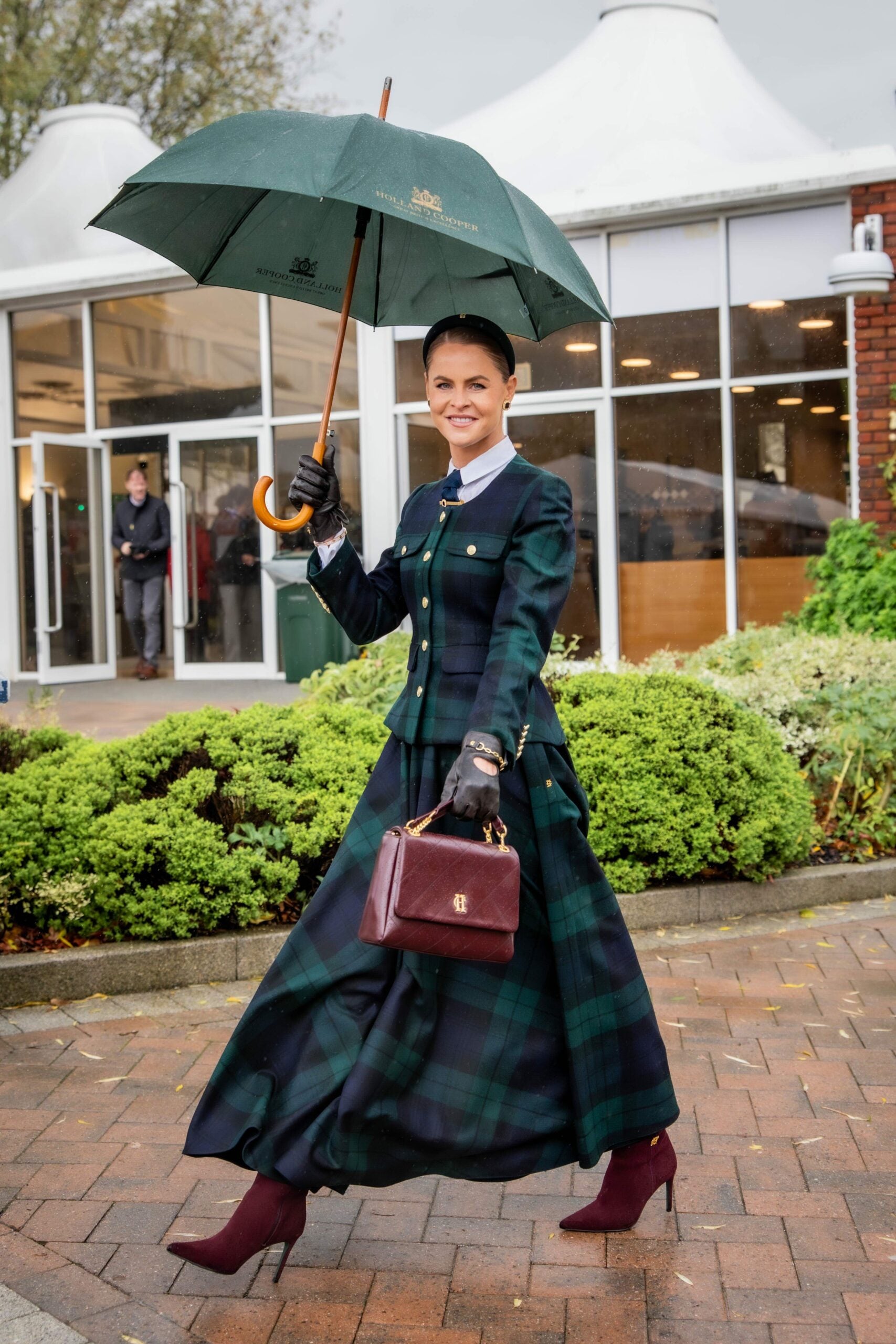
If you looked at those sitting at the front rows of London Fashion Week, you may have noticed a sea of blue. This season, fashion editors and stylists made a decisive case for denim – specifically, Levi’s 501 – as their trouser of choice for navigating a packed schedule of shows, presentations, and after-parties.
When it comes to denim, it’s no surprise the 501s are back in favor. Few garments balance fashion pedigree and everyday practicality quite like them. From Marilyn Monroe to Princess Diana and Blondie, cultural icons have long relied on their clean, straight-leg cut. They are timeless, unfussy, and endlessly wearable.
But today’s style set aren’t heading to the nearest Levi Strauss & Co. store for a fresh pair. They’re seeking out vintage – identifiable by that red-lettered tab and perfectly worn-in patina that only time can create.
“It’s the cult classic, the OG of straight legs,” says Chloë Culpin, founder of Pin Denim. With a background as a denim designer and personal shopper, she launched her brand in 2020 to help women find the perfect pair of vintage jeans. “Levi’s liked to change the cut slightly from era to era so there really is something for everyone. They’re a chameleon jean.”
Why go vintage over new? “There is a reason why vintage denim keeps going strong after thirty-plus years,” says Culpin. “It has longevity and durability. If you’re used to stretch, it can take a little adjustment – but 100 percent cotton denim is designed to last.»
Unlike modern blends, vintage washes have depth and character that only improve with time. “You can’t beat a vintage denim wash,” she adds. “It will only get better with wear. My love for some of my favorite pairs has grown as I’ve worn them in.”
How do you secure a pair of jeans you’ll reach for long after the trend cycle moves on? Culpin shares her expert advice.
Where to look for vintage finds
For those seeking the ultimate vintage denim, the search extends beyond the ordinary boutique. In Europe, Parisian destinations like Didier Ludot or Kiliwatch, and Tokyo’s Daikanyama and Harajuku neighborhoods, are known for hidden gems.
For those preferring digital discretion, luxury resale platforms such as Vestiaire Collective or Farfetch’s vintage sections provide access to authenticated denim with provenance guarantees. Even eBay or Vinted can yield rare finds, though a selective eye is essential. For collectors seeking exclusivity, private auctions or estate sales occasionally offer significant pieces.
It may sound obvious, but vintage jeans won’t look box-fresh – and that’s the point. “Vintage denim is going to have elements of imperfection, and everyone’s limit to what they’re comfortable with is different,” Culpin says. “Some marks or staining should be expected, but there is a level that can add character and vintage appeal.
“Something to keep an eye on is the weight of the denim. Softer, lighter-weight denim (especially in stonewash hues) tends to wear out quicker at the seat/crotch and at the knees. If you’re after a pair to stand the test of time, factor this in when purchasing.”
“Know your measurements. It’s a gamechanger,” says Culpin. “Vintage denim is smaller than modern day band sizing. The actual size will be roughly 1-2 inches smaller than what it says on the label. It may also have also been altered or tailored by the previous owner.”
As for the 501 itself, expect a mid-rise – typically around 10.5 to 11 inches – which will sit differently depending on your proportions. The upside? Vintage denim is more size-inclusive than many assume. “At Pin Denim, we’ve sourced anything from a 24” waist measurement through to a 42”, with leg lengths up to a 38” inseam.”
While you may not immediately find today’s trending silhouettes, experimentation is key. “A unisex fit can transform depending on the size you choose,” Culpin says. “Size up and go longer for a slouchy puddle hem. Stay true to size for a classic straight leg. Or size up slightly for a relaxed boyfriend feel.”
For those short on time – or patience – working with an expert can streamline the process. At her Chelsea studio, Culpin measures clients, discusses how they want their jeans to fall, and sources accordingly. Zip or button fly? Cropped or pooling? A specific era? The details matter. “Doing this removes disappointment or being left with something that doesn’t fit or you don’t like,” she says.
While platforms like eBay or Vinted – or hours spent combing vintage stores – can pay off for the dedicated, going straight to a vintage specialist ensures you get exactly what you want with minimal effort.
A similar experience awaits at LOV’D in Boulder, Colorado, where founder Melissa Keosann welcomes clients into a lime-washed studio lined floor-to-ceiling with denim. Book an appointment, and you could walk out the same day with your perfect pair in hand.
Elite Traveler breaks down what makes it so special.
It’s probably best to describe Chile’s Vik winery and hotel by numbers: 11,000 acres of vineyards; 360-degree views across those vines and the Andes mountain range beyond; 22 themed rooms; seven private glass-walled bungalows; roughly 13,000 barriques of wine. And it has the title of number one vineyard, according to World’s 50 Best Vineyards who gave it the top spot in 2025 after steadily climbing the ranks in previous years.
In Chile’s Millahue Valley — or Lugar de Oro, meaning Golden Place, as the Mapuche people call it — Vik stretches across 12 distinct valleys, each with its own microclimate and sun exposure. Pacific breezes meet winds from the Andes here, creating a natural wind tunnel that gives the grapes remarkable complexity. Everything is hand-harvested, fermented with native yeasts, and aged in a mix of new and seasoned French oak.
The flagship wine, simply named Vik 2021, is the estate’s prized red blend that features Cabernet Sauvignon, Carmenere, Syrah, Merlot, and Cabernet. It was awarded 100 points by James Suckling (he described it as ‘perfect’) and 99 points by the influential Descorchados guide.
Stonevik is one of the newer wines in the Vik portfolio and is defined by its unconventional production. It is described as a “natural wine created in nature by nature.” The grapes are fermented in oak barrels made from fallen trees found on the estate. After fermentation, the wine is transferred to handmade clay amphorae produced from the estate’s own soil rather than being aged in a traditional cellar. These amphorae are buried in a forested area on the property, where the wine matures underground under naturally stable conditions and seasonal temperature changes. It remains buried until bottling, which typically takes place around the summer solstice. The objective of this process is to reduce technological intervention and emphasize terroir expression.
Beyond the wines, the winery’s architecture is a case study in form and function. In 2007, the estate’s Norwegian husband-and-wife owners held an international competition for architects around the world to submit design ideas for the winery. The brief was to create a structure that fit the landscape, used sustainable design, and supported viticulture.
Chilean architect Smiljan Radic won the competition, and spent the next several years developing and refining the concept that would ultimately become the completed winery. It opened in 2014, and the result is quietly arresting: a seemingly ‘floating’ roof of reflective bronzed titanium hovers above walls of glass, and the building sits mostly underground to reduce impact on the land.
The entry, pictured above, is a criss-cross walkway with a gentle slope of shallow running water designed to act as a mirror, poetically interrupted by some 90 granite boulders. Created in collaboration with Chilean artist Marcela Correa, the installation serves a practical purpose as well as an aesthetic one: it doubles as a natural cooling system for the fermentation room housed below.
An upcoming expansion, set to debut later this year, will introduce Puro Vik Wellness, two new glass wine-tasting rooms, five new suites, and eight additional bungalows.
She speaks exclusively to Elite Traveler about the bold new vision she’s bringing to the LVMH house.
Fashion loves nothing more than a debut. And the key one from LVMH was in Milan last week, with Maria Grazia Chiuri now at the helm of Fendi.
Probably the most important feminist designer working today, Chiuri is known for working with female artists, craftspeople, and collaborators, and prized for turning the brands she leads into commercial hits.
In 2008, she and Pierpaolo Piccioli took over at Valentino, growing the business threefold in just seven years. Subsequently she was named the couturier of Christian Dior, tripling revenues to €10bn (approx. $11.7bn) before departing last year.
After a brief break, when she opened her own pocket theater in Rome across the street from the ancient capital or Campidoglio, she was appointed creative director of Fendi, LVMH’s most famous marque in Italy.
The world’s most influential fur brand, famed for inventing knitted fur and the Baguette bag, Fendi is the luxury goods label of Rome, its facing double F logo invented by Karl Lagerfeld who was there for some 60 years until his passing. LVMH chairman and CEO Bernard Arnault acquired Fendi in a series of deals over a few years for around €800m (approx. $938m). Underlining the importance of Chiuri’s debut, Arnault was present with his wife, Helen, as was LVMH Fashion Group CEO Pietro Beccari.
Fendi, which celebrated its centenary last year, has created the clothes for Once Upon a Time in America, Evita, and The Royal Tenebaums. The brand’s continued pulling power was evident from the front row, where Uma Thurman and Monica Bellucci joined Iris Law and Korean-Australian superstar Bang Chan. All of them wearing Fendi looks designed by Chiuri.
How did Chiuri perform? Admirably. The Rome-born designer showed softer shapes and silhouettes for both men and women, with matching blazers. “I wanted one wardrobe, not two,” she said in an exclusive pre-show interview with Elite Traveler.
Above all, she took the skills she’d learned at Valentino and Dior and injecting them into a new seductive Latin look at Fendi – some 70 percent of the collection was in black.
“I am tired of looking at colors on Instagram,” she told me. “Fashion is not entertainment. Fashion is a job. I am a worker in fashion. So, I want to do clothes that the people love to use. I don’t want to do entertainment.”
She also placed big cats – lions and leopards – on mink scarves and stoles, which also read “Sisters.” Expect that look to ignite a major trend, just as her fabric totes for Dior became worldwide best-sellers. And don’t forget that her rock-stud shoes and bags boosted Valentino from a sleepy couture house to a billion-euro marque. Chiuri is known for taking risks. Early shows at Dior celebrated the student marches of 1968 and militant feminism of that decade, appalling many bourgeois Parisians. But when the Me Too movement suddenly emerged, Chiuri’s stance seemed prescient. And brilliantly timed.
In Milan, models walked a catwalk stenciled in giant letters that read Meno Io, Piu Noi – Less Me, More us – wearing mid-calf negligée dresses and semi-sheer cocktails in lace or perforated leather. It was another savvy collaboration with female artist SAGG Napoli with whom she worked at Dior, while the jewelry was developed with the estate of a late great Italian artist Mirella Bentivoglio.
Post-show, a clearly enthusiastic and relieved Arnault embraced Chiuri. Fendi had stalled badly in the past three years under her predecessor, British-born Kim Jones. Despite the fact Arnault attended Donald Trump’s second inauguration in Washington last year, few companies have been hurt as much by the US president’s tariffs as LVMH.
The collection marked a return to the house for Chiuri, who began her career in Fendi in 1989, working with the five Fendi sisters whose parents founded a small leather goods shop in the Eternal City back in 1925.
“They were my mentors. They gave me my career. And I felt part of their teamwork. I would like people to remember all that they created at Fendi. It’s about time we mentioned someone else besides Karl Lagerfeld,” she said.
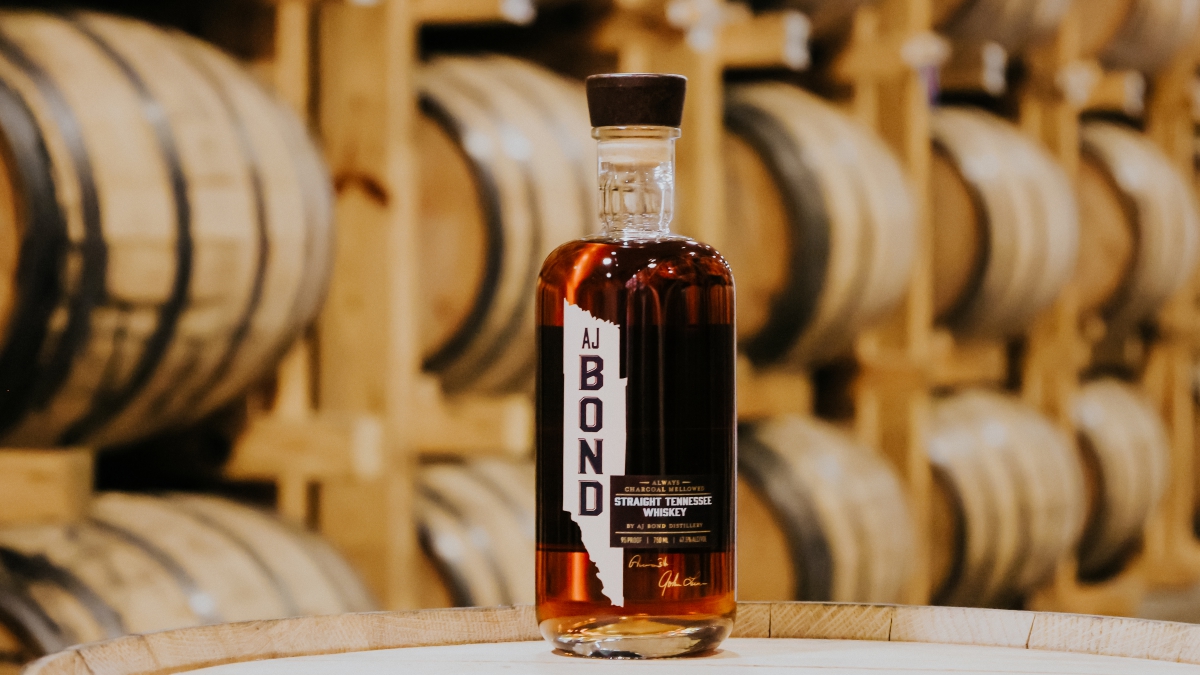
In Hobart, Sullivans Cove Distillery unveils two 25-year-old single malts – we had a tasting of each cast.
In the quiet maritime air of Hobart, Tasmania, where the Derwent River meets the Southern Ocean, patience has always been the guiding principle at Sullivans Cove Distillery. Established in 1994, the distillery helped ignite what would become one of the most exciting movements in modern spirits: the rise of new world whisky. Now, more than three decades later, Sullivans Cove marks a milestone that few could have imagined possible at the dawn of its journey, the release of two 25-year-old whiskies, the oldest single malt ever to emerge from Australia, and one of the oldest from any continuously operating new world distillery.
In the 1990s, single malt whisky was facing tough times. Scotland saw 20 distilleries close their gates in the 1980s, with seven more falling to the same fate in the early 1990s. In the same period, just two new distilleries opened. Over in Ireland, only a duo of distilleries were making single malt: Bushmills in the North, and Cooley in the Republic. Japanese whisky was ticking along domestically, but global recognition was another two decades away. The notion that this island off the southeast of Australia might carve a name for itself in world whisky was quietly radical.
Yet, as one of the earliest exponents of single malt whisky-making outside of Scotland, Ireland and Japan, Sullivans Cove built a dream on local grain and water, and on the belief that time would be the truest ingredient of quality single malt.
That conviction was rewarded in 2014, when a Sullivans Cove French oak cask, HH0525, was named World’s Best Single Malt at the World Whiskies Awards (on which I sat as a judge), the first time a whisky from outside the traditional heartlands had claimed the title. I remember well the shock on the faces of my assembled fellow judges, which included some of the most experienced and celebrated whisky makers from Scotland, Ireland and Japan, when the winner was announced. And the world took notice, too. More awards followed in 2018 and 2019, confirming what Tasmanians had long suspected: that patience pays great dividends.
Now, after a quarter of century maturing, Sullivans Cove is releasing two of their oldest casks to close that circle.
The two barrels, both American oak ex-bourbon, one a refill, the other freshly filled, have been anointed as ready for bottling a generation after distillation. A statement of just how far both Sullivans Cove, and the wider world of whisky have come in 25 years; a chapter in the story of world whisky itself. Proof that time, when granted the right company, can turn a dream into legend.
The first of these two extraordinary releases, both filled in 1999, is Cask HH0056, which has yielded just 134 bottles and is available to purchase by invitation only. Cask HH0010, drawn from a 300-liter American oak refill barrel, has produced 349 bottles, to be offered by ballot. Both will be priced at $4,500 AUD ($2,930). Just 50 bottles have been reserved for the global market, to be shared across London, Paris, Hong Kong, and Singapore.
“To see two of our casks mature out to 25 years is something we did not expect,” recalls former distillery manager Patrick Maguire, who filled them. “We had hopes that our locally grown barley and pure Tasmanian water would be the basis for great things.”
Those hopes, long sealed in oak, have been vindicated. Current distillery manager Heather Tillott calls HH0056 “a seamless expression of spirit, oak and cask integration,” and HH0010 “a profound display of age and character.”
Samples of each arrived on my desk, having made their way around the world from the far reaches of the Southern Hemisphere. The rarest of the pair, Cask HH0056 is listed as being filled on November 16, 1999 (decanted into the sample bottle on the May 6, 2025) and carries tropical fruit notes on the nose, with hints of banana, coconut, and jasmine. The ABV sits at 47.6% and gives a vibrancy to the floral notes. They list apple pie and vanilla on the official notes, and a creamy vanilla custard rounds off the aroma.
On the palate, there is more of the jasmine notes, but this time as jasmine tea. French pastry richness, with a thick, silky texture come next, followed by runny honey and a slight nutty note of almonds and praline. The finish is long, with peaches, white chocolate and a hint of oak spices. New world, or old is moot here: this is a fantastic dram, whatever the lineage.
The ‘older’ of these two siblings, Cask HH0010 was filled on October 12, 1999 and is a touch stronger at 47.8% ABV. This delivers a more robust nose, with hints of candied red cherry, dates, dark chocolate and fig leaf. The palate gives sweet sticky toffee pudding, nut brittle, honeycomb chocolate bar, and some leather notes. The finish is long, with liquorice and lime pickle. A different beast, with broader shoulders than the one-month younger cask, carrying more depth, but less elegance. One for before dinner, the other for after. At a push, I’d favour the elegance of Cask HH0056.
Tasmania’s mild, maritime climate, has done its work here. The island’s slow, steady seasons have allowed the whisky to evolve with grace, deepening in complexity without losing freshness; a rare gift in whisky, new world or otherwise.